
 My Inquiry
 My Account


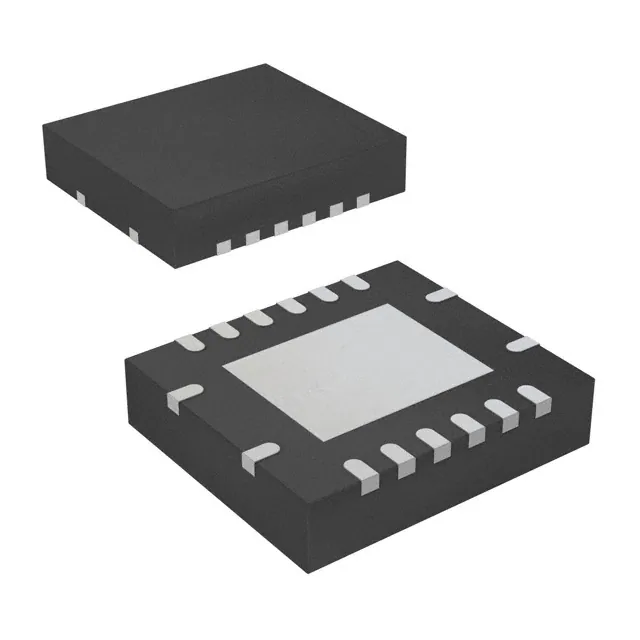
Texas Instruments SN74LV123ARGYR
- Part No.:
- SN74LV123ARGYR
- Manufacturer:
- Texas Instruments
- Category:
- Multivibrators
- Package:
- 16-VFQFN Exposed Pad
- Datasheet:
-
 SN74LV123ARGYR.pdf
- Description:
- IC MULTIVIBRATOR 13NS 16VQFN
- Quantity:
- Payment:

- Shipping:

Inventory:645
Please send an inquiry. Send us your inquiry, and we will respond immediately.
Product details
Overview
SN74LV123ARGYR from Texas Instruments is a dual retriggerable monostable multivibrator IC with Schmitt-trigger inputs, operating from 2 V to 5.5 V supply, delivering ≤11 ns propagation delay at 5 V, ±1% pulse-duration matching between channels, and programmable output pulse width up to 100% duty cycle via external R/C network - used for edge-sensitive timing control in digital interrupt conditioning and signal debouncing circuits.
For engineers reviewing the SN74LV123ARGYR datasheet, SN74LV123ARGYR pinout, SN74LV123ARGYR application, or SN74LV123ARGYR equivalent, key selection criteria include its retriggerable monostable behavior, Ioff partial-power-down support, mixed-mode voltage interface capability, and VQFN-16 (3.5 mm × 4.0 mm) package suitability for space-constrained embedded timing designs.
Technical Context
The SN74LV123ARGYR integrates two independent monostable multivibrators, each triggered by rising-edge (A=H, B=L), falling-edge (A=L, B=H), or gated logic (A=L, B=H, CLR↑). Pulse duration is set externally via Rext/Cext network with tw = K × RT × CT, where K ≈ 1.0 for CT ≥ 1000 pF. Retriggering occurs with minimum input interval tMIR = 0.30 × tw.
Each channel features separate Cext, Rext/Cext, A, B, and CLR terminals, with complementary Q and Q outputs. Schmitt-trigger inputs on A, B, and CLR tolerate slow transitions and noise; Ioff circuitry disables outputs during power-down to prevent backflow current.
Key Specifications
| Parameter | Value and Actual Design Meaning |
|---|---|
| VCC Range | 2 V to 5.5 V - supports mixed-voltage system interfacing and battery-backed operation down to 2 V logic levels. |
| Max tpd @ 5 V | 11 ns - enables high-speed timing resolution in real-time interrupt generation and pulse shaping. |
| Pulse Duration | Programmable from ~100 ns to >1 ms via external R/C - accommodates both short glitch suppression and long event hold-off. |
| Output Matching | ±1% Δtw between Q/Q outputs - ensures precise dual-channel synchronization in differential timing applications. |
| Ioff Support | Active at VCC = 0 V - prevents current backflow during partial power-down, critical for hot-swap and low-power standby modes. |
| ESD Rating | ±2000 V HBM - meets industrial-grade robustness requirements without external protection components. |
| Operating Temp | –40°C to +125°C - qualified for automotive under-hood and industrial control environments. |
Pinout & Package
VQFN-16 (RGY) package, 3.5 mm × 4.0 mm body, 0.5 mm pitch, exposed thermal pad - optimized for thermal performance (RθJA = 39°C/W) and PCB area efficiency in compact timing modules.
| Pin/Terminal | Circuit Role | Design Meaning |
|---|---|---|
| 1A, 2A | Falling-edge trigger input (active-low when corresponding B = L) | Enables edge-selectable triggering without external inverters; Schmitt input rejects noise on slow signals. |
| 1B, 2B | Rising-edge trigger input (active-high when corresponding A = H) | Supports dual-edge sensitivity per channel - simplifies interface to pushbutton, encoder, or sensor edges. |
| 1CLR, 2CLR | Asynchronous clear input | Terminates ongoing output pulse immediately - used for priority override or fault-driven reset. |
| 1Q, 2Q | Inverting output (active-low pulse) | Provides direct drive for enable/disable logic; complements non-inverted Q for differential signaling. |
| 1Q, 2Q | Non-inverting output (active-high pulse) | Delivers standard monostable output polarity; matches legacy '123A family timing behavior. |
| 1Cext, 2Cext | External capacitor negative terminal | Connects to GND side of timing cap - defines RC time constant reference point for stable pulse width. |
| 1Rext/Cext, 2Rext/Cext | RC junction node | Shared connection point for timing resistor (to VCC) and capacitor (to GND) - sets tw = K × RT × CT. |
| VCC, GND | Power supply and ground | Single-supply operation; requires local 100 nF decoupling per VCC pin due to fast switching transients. |
Key Features
| Feature | Design Value |
|---|---|
| Retriggerable monostable operation | Allows indefinite pulse extension via repeated triggers - essential for variable-duration event capture (e.g., keypress hold detection). |
| Schmitt-trigger inputs on A/B/CLR | Eliminates need for external RC filters on noisy mechanical switch or encoder inputs - reduces BOM count and layout complexity. |
| Glitch-free power-up reset | Q outputs initialize low, Q outputs high at power-on - prevents spurious interrupts or latch-up during system boot. |
| Mixed-mode voltage interface | Accepts 1.8-V, 3.3-V, or 5-V inputs while powered from 2–5.5 V - enables seamless bridging between legacy and modern logic families. |
| 100% duty-cycle capability | Supports continuous output assertion via sustained retriggering - used in watchdog timeout extension or dynamic clock gating. |
Applications
| AV Receivers | Desktop PCs or Notebook PCs |
|---|---|
Use Scenario: Debounce front-panel button presses and generate clean interrupt pulses for microcontroller wake-up. IC Role / Device Role / Timing Role: Dual monostable provides independent, retriggerable timing for power, mute, and volume keys with simultaneous edge detection. Use Value: Eliminates firmware debounce loops; ±1% inter-channel pulse matching ensures synchronized UI response across multiple controls. |
Use Scenario: Generate precise reset pulses for USB controller initialization and PCIe link training sequences. IC Role / Device Role / Timing Role: Monostable delivers programmable, glitch-free reset assertion timed to clock domain alignment. Use Value: Replaces discrete RC+Schmitt solutions; Ioff support maintains isolation during CPU suspend/resume transitions. |
| Digital Video Cameras (DVC) | Network Attached Storage (NAS) |
Use Scenario: Condition shutter release and autofocus trigger signals from mechanical switches subject to bounce and EMI. IC Role / Device Role / Timing Role: Dual-channel monostable acts as hardware-level edge detector and pulse stretcher for image capture timing. Use Value: Schmitt inputs reject camera motor noise; VQFN-16 footprint fits tight board space near lens actuator connectors. |
Use Scenario: Manage hot-swap sequencing and drive LED status indicators with synchronized on/off timing across multiple drive bays. IC Role / Device Role / Timing Role: One channel times SATA link-up delay; second channel drives multi-color status LED with programmable blink pattern. Use Value: Single IC replaces two discrete timers; 2–5.5 V operation supports both 3.3-V management MCU and 5-V LED drivers. |
Equivalent & Alternatives
The following parts are listed as comparable options for similar monostable multivibrator applications.
| Alternative Part | Technical Difference | Application Difference | Selection Advice |
|---|---|---|---|
| SN74LVC1G123DBVR | Single-channel, SOT-23-6 package; identical VCC range and Schmitt inputs but no dual-channel integration. | Requires two units for dual functionality; lacks inter-channel pulse matching spec. | Select when board space permits discrete implementation or only one timing channel is needed. |
| 74AHC123PW | Higher VCC max (5.5 V), but narrower operating range (2–5.5 V vs. LV's 2–5.5 V); 10 ns tpd at 5 V, no Ioff support. | No partial-power-down capability; unsuitable for systems requiring hot-swap or deep-sleep isolation. | Choose for legacy AHC compatibility where Ioff is not required and thermal performance is secondary. |
Compared with SN74LVC1G123DBVR and 74AHC123PW, SN74LV123ARGYR uniquely combines dual-channel integration, ±1% pulse matching, Ioff-enabled power-down safety, and VQFN thermal efficiency - making it optimal for space- and reliability-critical embedded timing.
Availability
SN74LV123ARGYR is available at Aetrix Electronics and suitable for AV receivers, desktop PCs or notebook PCs, digital video cameras (DVC), and network attached storage (NAS) requiring stable component supply, long-term lifecycle assurance, and RoHS-compliant packaging.
Supply support for SN74LV123ARGYR includes scheduled delivery planning, volume procurement assistance, BOM continuity management, traceable sourcing, and lifecycle availability coordination for OEM customers, industrial embedded developers, connected-device designers, and electronics production programs.
Manufacturer
Texas Instruments is a global semiconductor leader specializing in analog, embedded processing, and connectivity technologies, with over 90 years of innovation in precision timing, power management, and signal chain solutions.
The SN74LV123A product line is designed for robust, low-voltage monostable timing in consumer, computing, and industrial systems - emphasizing noise immunity, wide supply flexibility, and seamless integration into mixed-voltage architectures.
FAQ
What is the maximum output pulse duration achievable with SN74LV123ARGYR?
The SN74LV123ARGYR supports output pulse durations from approximately 100 ns up to several milliseconds, determined by external Rext and Cext values using tw = K × RT × CT. With CT = 0.1 µF and RT = 10 kΩ, tw reaches ~1 ms; larger values extend duration further, enabling 100% duty-cycle operation via retriggering. The VQFN package's low parasitic capacitance preserves timing accuracy at extremes.
Does SN74LV123ARGYR support true dual-edge triggering per channel?
Yes - each channel of SN74LV123ARGYR supports three distinct trigger methods: (1) falling edge on A with B held low, (2) rising edge on B with A held high, or (3) gated logic with A low, B high, and CLR rising. This enables flexible edge detection without external logic, and Schmitt-trigger inputs ensure jitter-free response even with slow or noisy signals.
How does the Ioff feature function in SN74LV123ARGYR during system power-down?
In SN74LV123ARGYR, the Ioff circuitry actively disables all outputs when VCC = 0 V, blocking current flow from powered I/O lines into the unpowered device. This prevents damaging back-current through input protection diodes - critical for hot-swap interfaces and multi-rail systems where logic domains power up/down asynchronously.
Can SN74LV123ARGYR be used with 1.8-V input signals while powered from 3.3 V?
Yes - SN74LV123ARGYR supports mixed-mode voltage operation: its Schmitt-trigger inputs accept 1.8-V signals (VIH min = 0.7 × VCC = 2.31 V at 3.3 V) and interpret them correctly, while outputs swing rail-to-rail at 3.3 V. This allows direct interfacing with 1.8-V FPGAs or sensors without level shifters, reducing design complexity and signal integrity risk.
What is the thermal performance advantage of the RGY (VQFN-16) package for SN74LV123ARGYR?
The SN74LV123ARGYR in VQFN-16 (RGY) package achieves RθJA = 39°C/W - significantly lower than SOIC (73°C/W) or TSSOP (64°C/W) variants. This enables higher sustained pulse rates or operation in thermally constrained enclosures without derating, and the exposed thermal pad improves heat transfer to the PCB ground plane for reliable long-term timing stability.
SN74LV123ARGYR Specifications
- Product attributes
- Attribute value
- Manufacturer:
- Texas Instruments
- Series:
- 74LV
- Package/Case:
- 16-VFQFN Exposed Pad
- Packaging:
- Tape & Reel (TR)
- Product Status:
- Active
- Logic Type:
- Monostable
- Independent Circuits:
- 2
- Schmitt Trigger Input:
- Yes
- Propagation Delay:
- 13 ns
- Current - Output High, Low:
- 12mA, 12mA
- Voltage - Supply:
- 2 V ~ 5.5 V
- Operating Temperature:
- -40°C ~ 125°C
- Grade:
- -
- Qualification:
- -
- Mounting Type:
- Surface Mount
- Supplier Device Package:
- 16-VQFN (4x3.5)
SN74LV123ARGYR FAQ
1.How can I place an order for SN74LV123ARGYR through Aetrix?
Please submit a Request for Quotation (RFQ) for SN74LV123ARGYR on Aetrix. Our sales agent will provide a competitive quotation and guide you through the order confirmation once you accept the terms.
2.Are the price and stock information for SN74LV123ARGYR reliable?
The price and inventory of SN74LV123ARGYR are updated periodically and may fluctuate due to market conditions. Stock and pricing data are typically refreshed every 24 hours. Quotation validity for SN74LV123ARGYR is usually 5 days.
3.What payment methods are accepted for SN74LV123ARGYR?
We accept Wire Transfer, PayPal, Credit Card, Western Union, MoneyGram, and Escrow for SN74LV123ARGYR transactions.
Note: Certain payment methods may incur a processing fee.
4.How is shipping managed for SN74LV123ARGYR?
SN74LV123ARGYR orders can be shipped via leading logistics carriers, including DHL, UPS, FedEx, TNT, or Registered Mail.
Once your SN74LV123ARGYR order is processed, you will receive an email with the shipment details and tracking number.
Note: Tracking information may take up to 24 hours to appear. Express delivery typically takes 3–5 business days.
5.How can I obtain technical support or documentation for SN74LV123ARGYR?
For technical support, including SN74LV123ARGYR datasheets, pinout diagrams, or application guidance, please contact our engineering support team. They can provide detailed documentation and assistance for your SN74LV123ARGYR requirements.
6.How does Aetrix verify that SN74LV123ARGYR is sourced from the original manufacturer or authorized distributors?
All SN74LV123ARGYR products on Aetrix are procured from qualified distributors and authorized channels. Our dedicated quality assurance team conducts strict verification, including traceability checks and, if necessary, third-party testing. This ensures that SN74LV123ARGYR meets industry standards.
7.What is the process for return or replacement of SN74LV123ARGYR?
All SN74LV123ARGYR units undergo pre-shipment inspection (PSI). If there is an issue with SN74LV123ARGYR, returns or replacements are accepted under the following conditions:
1.Quantity discrepancies, incorrect items, or visible external defects (such as breakage or corrosion), acknowledged by Aetrix.
2.The issue is reported within 90 days of delivery.
3.The SN74LV123ARGYR part is unused and in its original packaging.
Return procedure for SN74LV123ARGYR:
1.Submit a request within 90 days.
2.Obtain a Return Material Authorization (RMA) from Aetrix.
SN74LV123ARGYR Tags
-
SN74LVC1G123DCUR
Texas Instruments
-
CD4047BM96
Texas Instruments
-
SN74LVC1G123DCTR
Texas Instruments
-
CD74HC221M96
Texas Instruments
-
CD14538BE
Texas Instruments
-
SN74LVC1G123YZPR
Texas Instruments
-
SN74LVC1G123DCUT
Texas Instruments
-
MC14538BDR2G
onsemi
-
74VHC123AMX
onsemi
-
LTC6993CS6-2#TRMPBF
Analog Devices Inc.
-
LTC6993CS6-3#TRMPBF
Analog Devices Inc.
-
LTC6993CS6-1#TRMPBF
Analog Devices Inc.
Tech Hub

A practical engineering guide to 3.3V and 5V logic compatibility, input thresholds, resistor dividers, translator ICs, MOSFET level shifting, I2C pull-ups, timing limits and power-sequencing risks.

The 74HC595 uses push-pull logic outputs, while the TPIC6B595 uses 50 V open-drain DMOS sinks for higher-power loads. This guide compares timing, current limits, 3.3 V interfacing, load wiring, thermal…

The 74HC595 converts serial data into eight stable parallel outputs. This guide covers pin functions, shift and storage timing, OE and MR behavior, drive-current limits, cascading, voltage compatibilit…

A technical comparison of level-sensitive latches and edge-triggered flip-flops, covering timing windows, setup and hold limits, master–slave operation, time borrowing, race-through, HDL inference and…

A D latch stores one bit while Enable controls when data can pass. This reference covers gate-level operation, truth tables, transparency, setup and hold timing, LE versus OE, common ICs and practical …

An SR latch stores one bit through cross-coupled feedback. This engineering reference covers NOR and NAND implementations, truth tables, forbidden-state recovery, gated operation, switch debouncing, fa…

Latch circuits retain one bit through feedback. This technical reference covers SR and D latches, truth tables, transparency, timing limits, latch-versus-flip-flop behavior, applications and common log…

An engineering guide to LED driver operation, constant-current and constant-voltage outputs, linear and switching topologies, dimming, IC selection, calculations, replacement compatibility, and fault c…

Operational amplifier guide covering op amp basics, feedback, ideal vs real op amps, common configurations, buffer circuits, offset, bias current, gain-bandwidth, slew rate, rail-to-rail limits and sel…

Jumper cables guide covering safe connection order, red and black clamp placement, final ground connection, cable gauge, length, clamp quality, copper vs CCA cables, jump starter comparison and battery…


