
 My Inquiry
 My Account


Texas Instruments SN75176BP
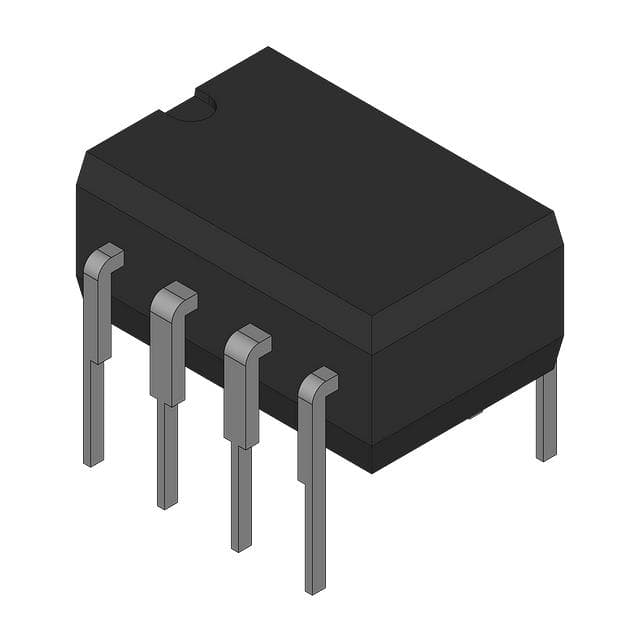
- Part No.:
- SN75176BP
- Manufacturer:
- Texas Instruments
- Category:
- Drivers, Receivers, Transceivers
- Package:
- 8-DIP (0.300", 7.62mm)
- Datasheet:
-
 SN75176BP.pdf
- Description:
- IC TRANSCEIVER HALF 1/1 8PDIP
- Quantity:
- Payment:

- Shipping:

Inventory:4,199
Please send an inquiry. Send us your inquiry, and we will respond immediately.
Product details
Overview
SN75176BP from Texas Instruments is a half-duplex RS-485/RS-422 differential bus transceiver in an 8-pin PDIP package, operating from a single 5V supply. It features ±200mV receiver input sensitivity, 12kΩ minimum receiver input impedance, ±60mA driver output capability, and thermal shutdown protection at ~150°C - enabling robust multipoint communication in industrial motor controls and remote telemetry systems.
For engineers reviewing the SN75176BP datasheet, SN75176BP pinout, SN75176BP application, or SN75176BP equivalent, key selection considerations include its active-high driver enable (DE), active-low receiver enable (RE), wide –7V to +12V common-mode bus voltage range, 35ns typical receiver propagation delay, and compatibility with TIA/EIA-485-A and TIA/EIA-422-B standards.
Technical Context
The SN75176BP integrates a 3-state differential line driver and a differential line receiver on a single die, both powered from 5V. Its driver supports up to 60mA sink/source current with positive/negative current limiting and thermal shutdown, while the receiver delivers ±200mV input sensitivity and 50mV typical hysteresis for noise immunity in noisy factory environments.
Pin DE (driver enable) and RE (receiver enable) are independently controlled, allowing flexible direction management - including external tie-together for single-wire direction control. The A/B bus terminals support balanced transmission lines with –7V to +12V common-mode voltage tolerance, making it suitable for long-cable party-line configurations without bus loading when disabled.
Key Specifications
| Parameter | Value and Actual Design Meaning |
|---|---|
| Supply Voltage | 4.75V to 5.25V - ensures stable operation across standard 5V rail tolerances in industrial power supplies |
| Receiver Input Sensitivity | ±200mV - reliably detects valid logic states under high-noise conditions on long bus runs |
| Driver Output Current | ±60mA - drives 54Ω or 100Ω termination loads per ANSI TIA/EIA-485-A requirements |
| Receiver Input Impedance | ≥12kΩ - supports up to 32 unit loads on a single RS-485 bus segment |
| Propagation Delay (Receiver) | 21–35ns - enables reliable data rates up to 10Mbps over 100ft CAT-5e cable |
| Common-Mode Range | –7V to +12V - accommodates ground potential differences between nodes in distributed systems |
| Thermal Shutdown Threshold | ~150°C - protects against sustained short-circuit or overload faults on A/B bus lines |
Pinout & Package
SN75176BP uses an 8-pin Plastic Dual Inline Package (PDIP) measuring 9.81mm × 6.35mm, optimized for through-hole mounting in industrial control panels and legacy board designs.
| Pin/Terminal | Circuit Role | Design Meaning |
|---|---|---|
| 1 (R) | Receiver output | TTL-level logic output (active high) reflecting differential A–B state; high-impedance when RE = high |
| 2 (RE) | Receiver enable | Active-low control: drives R low-impedance when low; places R in high-Z when high |
| 3 (DE) | Driver enable | Active-high control: enables A/B differential output when high; disables (high-Z) when low |
| 4 (D) | Driver input | TTL-level logic input (0.8V/2.0V thresholds) controlling A/B polarity during driver activation |
| 5 (GND) | Ground reference | Primary return path for internal circuitry and I/O biasing; must be low-impedance connection |
| 6 (A) | Differential bus terminal | Non-inverting RS-485/422 bus line; connects to A-line of twisted-pair; withstands –7V to +12V common-mode |
| 7 (B) | Differential bus terminal | Inverting RS-485/422 bus line; complements A for noise-rejecting differential signaling |
| 8 (VCC) | Power supply | 5V DC input; requires local 1.5μF bypass capacitor per layout guidelines to suppress switching noise |
Key Features
| Feature | Design Value |
|---|---|
| Bidirectional RS-485/422 compliance | Fully meets TIA/EIA-485-A and TIA/EIA-422-B electrical specifications for interoperability with industry-standard transceivers |
| Independent driver/receiver enables | DE (active-high) and RE (active-low) allow asymmetric control - e.g., receiver always active while driver gated by microcontroller |
| Thermal shutdown + current limiting | Prevents latch-up or destruction during bus shorts or ESD events; self-recovering after junction cools below ~135°C |
| High-impedance bus disconnect | A/B terminals present minimal loading (<1µA) when VCC = 0 or driver disabled - essential for hot-swap and fail-safe bus architectures |
| Wide common-mode voltage range | –7V to +12V tolerance enables operation across large ground potential differences in multi-node factory networks |
Applications
| Industrial Motor Control | Remote Telemetry Systems |
|---|---|
Use Scenario: Bidirectional command and status exchange between PLC and AC induction or stepper motor drives over 300m unshielded twisted pair. IC Role / Device Role / Timing Role: Physical layer transceiver handling RS-485 half-duplex framing at 115.2kbps, managing direction via microcontroller GPIO tied to DE/RE. Use Value: ±200mV receiver sensitivity and 12kΩ input impedance ensure reliable detection despite EMI from variable-frequency drives and contactor switching. |
Use Scenario: Data aggregation from distributed gas sensors and weigh scales in chemical processing plants using daisy-chained RS-485 nodes. IC Role / Device Role / Timing Role: Bus interface IC converting TTL UART signals to differential RS-485 for noise-immune long-haul transmission to central SCADA controller. Use Value: –7V to +12V common-mode range accommodates ground offsets between sensor enclosures mounted on different structural steel frames. |
| Human Machine Interface (HMI) | Telecom Tower RET Units |
Use Scenario: Communication between touchscreen HMI panel and embedded controller in packaging machinery with high ambient EMI. IC Role / Device Role / Timing Role: Isolated RS-485 transceiver (with external isolation) relaying configuration commands and real-time I/O status over 20m cable runs. Use Value: 50mV receiver hysteresis suppresses false triggering from fast-edge noise induced on cables near servo motor wiring. |
Use Scenario: Remote Electrical Tilt (RET) control in cellular base stations, where tilt actuators are commanded via RS-485 from tower-mounted radios. IC Role / Device Role / Timing Role: Robust bus transceiver interfacing microcontroller UART to outdoor-rated RS-485 trunk line exposed to lightning-induced surges. Use Value: Thermal shutdown and ±60mA driver output sustain operation during transient overloads caused by actuator startup currents on shared bus segments. |
Equivalent & Alternatives
The following parts are listed as comparable options for similar RS-485 transceiver applications.
| Alternative Part | Technical Difference | Application Difference | Selection Advice |
|---|---|---|---|
| MAX485CPA+ | Lower driver output (±12mA), no thermal shutdown, 0°C to +70°C temp range matches SN75176BP | Suitable only for short, low-node-count buses without fault stress; lacks bus-fault protection | Select when cost sensitivity outweighs robustness needs and bus length < 50m |
| SN65176BP | Same pinout and function but rated for –40°C to +105°C industrial temperature range | Required for outdoor or high-ambient-temperature deployments like solar inverters or engine compartments | Choose for extended temperature reliability; drop-in replacement with identical layout |
Compared with MAX485CPA+, SN75176BP provides superior fault resilience and noise immunity for industrial fieldbus use; versus SN65176BP, it trades extended temperature range for lower cost in commercial-grade applications.
Availability
SN75176BP is available at Aetrix Electronics and suitable for industrial motor controls, remote telemetry systems, and human-machine interfaces requiring stable component supply across multi-year production cycles.
Supply support for SN75176BP includes scheduled delivery planning, volume procurement assistance, BOM continuity management, traceable sourcing, and lifecycle availability coordination for OEM customers, industrial embedded developers, connected-device designers, and electronics production programs.
Manufacturer
Texas Instruments is a global semiconductor leader delivering analog, embedded processing, and connectivity solutions with emphasis on industrial, automotive, and communications markets.
SN75176BP belongs to TI's legacy RS-485 transceiver product line, engineered specifically for noise-tolerant, multipoint data communication in harsh industrial environments - prioritizing robustness, interoperability, and long-term manufacturability.
FAQ
What is the operating temperature range of the SN75176BP?
The SN75176BP is specified for 0°C to +70°C ambient operation, making it suitable for commercial and indoor industrial applications. This contrasts with the SN65176BP variant, which extends to –40°C to +105°C for demanding outdoor or under-hood deployments. All electrical characteristics in the datasheet are guaranteed within this 0°C to +70°C range.
Does the SN75176BP support full-duplex or half-duplex communication?
The SN75176BP supports half-duplex RS-485 communication only. It integrates one differential driver and one differential receiver sharing the same A/B bus terminals - requiring external direction control via the DE and RE pins. Full-duplex operation would require separate transmit and receive pairs, as implemented in devices like the SN75179.
Can the SN75176BP be used with RS-422 standards?
Yes, the SN75176BP meets both TIA/EIA-422-B and TIA/EIA-485-A standards. Its differential driver output voltage (|VOD1| ≥1.5V), receiver input sensitivity (±200mV), and 12kΩ input impedance satisfy RS-422 point-to-point requirements. However, its 32-unit-load capability and fail-safe design are optimized for RS-485 multidrop topologies.
What is the purpose of the DE and RE pins on the SN75176BP?
DE (Driver Enable, active-high) controls whether the differential driver outputs A and B are active or in high-impedance state. RE (Receiver Enable, active-low) controls whether the receiver output R reflects the A–B differential voltage or enters high-impedance. They can be tied together with an inverter to create a single-direction control signal, simplifying microcontroller GPIO usage.
Is external fail-safe biasing required for the SN75176BP?
The SN75176BP does not include internal fail-safe biasing. When the A/B bus is open or idle, the receiver output R becomes undefined. To ensure a known logic state (typically high) under idle conditions, external pull-up on A and pull-down on B - or a dedicated fail-safe bias network - must be added per application requirements and noise environment.
SN75176BP Specifications
- Product attributes
- Attribute value
- Manufacturer:
- Texas Instruments
- Series:
- -
- Package/Case:
- 8-DIP (0.300", 7.62mm)
- Packaging:
- Tube
- Product Status:
- Active
- Type:
- Transceiver
- Protocol:
- RS422, RS485
- Number of Drivers/Receivers:
- 1/1
- Duplex:
- Half
- Receiver Hysteresis:
- 50 mV
- Data Rate:
- -
- Voltage - Supply:
- 4.75V ~ 5.25V
- Operating Temperature:
- 0°C ~ 70°C
- Grade:
- -
- Qualification:
- -
- Mounting Type:
- Through Hole
- Supplier Device Package:
- 8-PDIP
SN75176BP FAQ
1.How can I place an order for SN75176BP through Aetrix?
Please submit a Request for Quotation (RFQ) for SN75176BP on Aetrix. Our sales agent will provide a competitive quotation and guide you through the order confirmation once you accept the terms.
2.Are the price and stock information for SN75176BP reliable?
The price and inventory of SN75176BP are updated periodically and may fluctuate due to market conditions. Stock and pricing data are typically refreshed every 24 hours. Quotation validity for SN75176BP is usually 5 days.
3.What payment methods are accepted for SN75176BP?
We accept Wire Transfer, PayPal, Credit Card, Western Union, MoneyGram, and Escrow for SN75176BP transactions.
Note: Certain payment methods may incur a processing fee.
4.How is shipping managed for SN75176BP?
SN75176BP orders can be shipped via leading logistics carriers, including DHL, UPS, FedEx, TNT, or Registered Mail.
Once your SN75176BP order is processed, you will receive an email with the shipment details and tracking number.
Note: Tracking information may take up to 24 hours to appear. Express delivery typically takes 3–5 business days.
5.How can I obtain technical support or documentation for SN75176BP?
For technical support, including SN75176BP datasheets, pinout diagrams, or application guidance, please contact our engineering support team. They can provide detailed documentation and assistance for your SN75176BP requirements.
6.How does Aetrix verify that SN75176BP is sourced from the original manufacturer or authorized distributors?
All SN75176BP products on Aetrix are procured from qualified distributors and authorized channels. Our dedicated quality assurance team conducts strict verification, including traceability checks and, if necessary, third-party testing. This ensures that SN75176BP meets industry standards.
7.What is the process for return or replacement of SN75176BP?
All SN75176BP units undergo pre-shipment inspection (PSI). If there is an issue with SN75176BP, returns or replacements are accepted under the following conditions:
1.Quantity discrepancies, incorrect items, or visible external defects (such as breakage or corrosion), acknowledged by Aetrix.
2.The issue is reported within 90 days of delivery.
3.The SN75176BP part is unused and in its original packaging.
Return procedure for SN75176BP:
1.Submit a request within 90 days.
2.Obtain a Return Material Authorization (RMA) from Aetrix.
SN75176BP Tags

-
ATA6561-GAQW-N
Microchip Technology
-
ATA6561-GBQW-N
Microchip Technology
-
AM26LS32ACDR
Texas Instruments

-
SP485CN-L/TR
MaxLinear, Inc.
-
SP485EN-L/TR
MaxLinear, Inc.
-
SP485EEN-L/TR
MaxLinear, Inc.
-
SP485ECN-L/TR
MaxLinear, Inc.
-
THVD1400DR
Texas Instruments
-
AM26C31IDR
Texas Instruments

-
TLIN1021ADRQ1
Texas Instruments
-
MAX232IDR
Texas Instruments
-
AM26C32IDR
Texas Instruments
Tech Hub

A practical engineering guide to 3.3V and 5V logic compatibility, input thresholds, resistor dividers, translator ICs, MOSFET level shifting, I2C pull-ups, timing limits and power-sequencing risks.

The 74HC595 uses push-pull logic outputs, while the TPIC6B595 uses 50 V open-drain DMOS sinks for higher-power loads. This guide compares timing, current limits, 3.3 V interfacing, load wiring, thermal…

The 74HC595 converts serial data into eight stable parallel outputs. This guide covers pin functions, shift and storage timing, OE and MR behavior, drive-current limits, cascading, voltage compatibilit…

A technical comparison of level-sensitive latches and edge-triggered flip-flops, covering timing windows, setup and hold limits, master–slave operation, time borrowing, race-through, HDL inference and…

A D latch stores one bit while Enable controls when data can pass. This reference covers gate-level operation, truth tables, transparency, setup and hold timing, LE versus OE, common ICs and practical …

An SR latch stores one bit through cross-coupled feedback. This engineering reference covers NOR and NAND implementations, truth tables, forbidden-state recovery, gated operation, switch debouncing, fa…

Latch circuits retain one bit through feedback. This technical reference covers SR and D latches, truth tables, transparency, timing limits, latch-versus-flip-flop behavior, applications and common log…

An engineering guide to LED driver operation, constant-current and constant-voltage outputs, linear and switching topologies, dimming, IC selection, calculations, replacement compatibility, and fault c…

Operational amplifier guide covering op amp basics, feedback, ideal vs real op amps, common configurations, buffer circuits, offset, bias current, gain-bandwidth, slew rate, rail-to-rail limits and sel…

Jumper cables guide covering safe connection order, red and black clamp placement, final ground connection, cable gauge, length, clamp quality, copper vs CCA cables, jump starter comparison and battery…


