
 My Inquiry
 My Account


STMicroelectronics SPC560B64L7C6E0Y
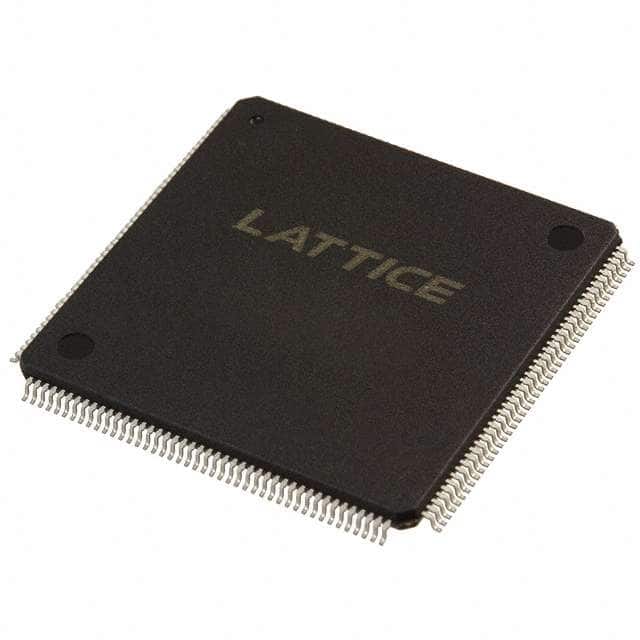
- Part No.:
- SPC560B64L7C6E0Y
- Manufacturer:
- STMicroelectronics
- Category:
- Microcontrollers
- Package:
- 176-LQFP
- Datasheet:
-
 SPC560B64L7C6E0Y.pdf
- Description:
- IC MCU 32BIT 1.5MB FLASH 176LQFP
- Quantity:
- Payment:

- Shipping:

Inventory:4,874
Please send an inquiry. Send us your inquiry, and we will respond immediately.
Product details
Overview
SPC560B64L7C6E0Y from STMicroelectronics is a 32-bit automotive MCU based on the Power Architecture® e200z0h core, operating at 64 MHz with up to 60 DMIPs. It integrates 1.5 MB Code Flash with ECC, 64 KB Data Flash with ECC, 96 KB SRAM with ECC, and supports -40 to 125 °C operation in LQFP144 package. Designed for body electronics control, it delivers real-time PWM-synchronized ADC measurements and time-triggered diagnostics for lighting systems.
For engineers reviewing the SPC560B64L7C6E0Y datasheet, SPC560B64L7C6E0Y pinout, SPC560B64L7C6E0Y application, or SPC560B64L7C6E0Y equivalent, key selection considerations include its dual 10-/12-bit ADC (up to 81 channels), six FlexCAN 2.0B interfaces with 64 message buffers each, and dedicated lighting diagnostic module supporting advanced PWM generation and CTU-triggered conversions.
Technical Context
The SPC560B64L7C6E0Y implements a variable-length encoding (VLE) Power Architecture® core enabling high code density and deterministic real-time execution. Its memory subsystem includes ECC-protected flash and SRAM, an 8-entry MPU, and hardware cross-triggering between ADC, eMIOS, and PWM units for synchronized timing-critical operations.
Peripheral integration centers on automotive functional safety: six FlexCAN controllers with independent message RAM, ten LINFlex/UART channels, six DSPI interfaces, and a dedicated lighting diagnostic module featuring time-triggered diagnostics and PWM-synchronized sampling via CTU-enabling precise LED current regulation and fault detection in headlight and interior lighting modules.
Key Specifications
| Parameter | Value and Actual Design Meaning |
|---|---|
| CPU Core | e200z0h 32-bit Power Architecture® with VLE, 64 MHz max - enables deterministic real-time control with reduced code footprint vs. fixed-length encoding. |
| Flash Memory | 1.5 MB Code Flash + 64 KB Data Flash, both with ECC - ensures robust firmware storage and parameter retention in harsh automotive environments. |
| RAM | 96 KB SRAM with ECC - supports safe data buffering and runtime variables for ASIL-B–capable applications. |
| ADC System | One 10-bit + one 12-bit ADC, up to 81 total channels with individual conversion registers - allows simultaneous monitoring of multiple sensors (e.g., ambient light, temperature, voltage rails) with flexible sequencing. |
| Communication | 6 × FlexCAN 2.0B (64 msg buffers each), 10 × LINFlex/UART, 6 × DSPI, I²C - meets full vehicle body domain networking requirements including gateway and node-level communication. |
| Timers & PWM | 8-channel PIT, 4-channel system timer, watchdog, RTC, eMIOS with 64 PWM/MC/IC/OC channels - provides precise timing for lighting dimming, motor control, and system supervision. |
| Operating Range | -40 °C to +125 °C, single 3.3 V or 5 V supply - qualified for under-hood and cabin-mounted automotive body control modules. |
Pinout & Package
LQFP144 (24 mm × 24 mm × 1.4 mm) package with 121 GPIOs, including dedicated pins for CANH/CANL, LIN transceivers, DSPI chip selects, ADC reference inputs (VREFH/VREFL), and Nexus 1 debug interface (TMS/TCK/TDI/TDO).
| Pin/Terminal | Circuit Role | Design Meaning |
|---|---|---|
| VDD_HV / VDD_BV | Main power supply inputs | Accepts 3.3 V or 5 V; internal regulator generates core voltages - simplifies board power architecture and supports legacy 5 V automotive systems. |
| CAN0_TX / CAN0_RX | FlexCAN 0 differential bus interface | Direct connection to external CAN transceiver; supports ISO 11898-2 compliant signaling at up to 1 Mbps - enables robust communication in body domain networks. |
| ADC0_VREFH / ADC0_VREFL | Analog reference voltage inputs | Enable precise ratiometric measurement of sensor signals (e.g., potentiometers, thermistors); referenced to internal or external stable voltage source. |
| EMIOS_0_CH0 / EMIOS_0_CH1 | eMIOS channel 0/1 outputs | Configurable as PWM, input capture, or output compare - used for LED dimming control and motor phase timing in lighting and seat control modules. |
| TMS / TCK / TDI / TDO | Nexus 1 debug interface | Supports real-time trace, breakpoint, and register access during development and field diagnostics - essential for ISO 26262-compliant software validation. |
Key Features
| Feature | Design Value |
|---|---|
| Dedicated lighting diagnostic module | Enables time-triggered PWM generation, synchronized ADC sampling, and open/short circuit detection - reduces BOM cost by eliminating external analog monitoring ICs in LED headlight drivers. |
| Cross Triggering Unit (CTU) | Hardware link between ADC, eMIOS, and PWM peripherals - eliminates CPU overhead for synchronized signal acquisition and actuation in closed-loop lighting control. |
| On-chip CAN/UART bootstrap loader | Allows field firmware updates over CAN or UART without external programming hardware - supports OTA-like reprogramming in production vehicles. |
| Ultra-low-power standby with RTC | Retains real-time clock and wake-up capability while consuming <10 µA - enables always-on functions (e.g., door handle proximity sensing) with minimal battery drain. |
| 8-entry Memory Protection Unit (MPU) | Enforces memory access permissions per task or interrupt context - supports partitioning of safety-critical and non-safety software in ASIL-B designs. |
Applications
| Automotive Interior Lighting Control | Body Control Module (BCM) |
|---|---|
Use Scenario: Precise dimming and color mixing of RGB LED clusters in dashboard and ambient lighting. IC Role / Device Role / Timing Role: Real-time PWM generation with CTU-synchronized ADC feedback for closed-loop brightness correction. Use Value: Achieves <±1% luminance stability across temperature and voltage variation using on-chip 12-bit ADC and eMIOS PWM with sub-microsecond jitter. |
Use Scenario: Centralized management of door locks, window lifts, mirror adjustment, and interior lamps. IC Role / Device Role / Timing Role: Main controller coordinating LIN slave nodes, CAN messaging with gateway, and local sensor polling (e.g., rain/light sensors). Use Value: Integrates 10 LINFlex channels and 6 FlexCAN interfaces to eliminate external bus controllers, reducing PCB area and system latency. |
| Adaptive Front-Lighting System (AFS) | Seat Position & Heating Control |
Use Scenario: Dynamic headlight beam steering and leveling based on vehicle speed, yaw rate, and pitch angle. IC Role / Device Role / Timing Role: Sensor fusion hub processing CAN-sourced vehicle dynamics and ADC-measured motor position feedback. Use Value: Uses dual ADC (10-bit + 12-bit) with 81-channel multiplexing to concurrently sample IMU, potentiometer, and temperature sensors without external mux. |
Use Scenario: Closed-loop control of seat motor position and PTC heater output based on user-set profiles and cabin temperature. IC Role / Device Role / Timing Role: Motor driver interface via eMIOS PWM and current sensing via high-resolution ADC with diagnostic trigger. Use Value: Leverages dedicated lighting diagnostic module's time-triggered diagnostics to monitor heater resistance drift and detect open-circuit faults before thermal runaway. |
Equivalent & Alternatives
The following parts are listed as comparable options for similar automotive microcontroller applications.
| Alternative Part | Technical Difference | Application Difference | Selection Advice |
|---|---|---|---|
| SPC560B60L5C6E0Y | 1 MB Code Flash, 64 KB SRAM, LQFP144 - lacks 512 KB additional flash and 32 KB extra SRAM. | Suitable for simpler BCM variants with fewer features or smaller firmware footprints. | Select when firmware size remains below 900 KB and diagnostic data logging requirements are minimal. |
| SPC560P50L5C6E0Y | e200z0h core, 48 MHz, 768 KB Flash, no Data Flash - lower performance and no EEPROM-equivalent nonvolatile storage. | Targeted at cost-sensitive entry-level lighting modules without complex calibration or OTA update needs. | Choose only if CAN count ≤4, ADC channel count ≤40, and no requirement for field-upgradable calibration tables. |
Compared with SPC560B60L5C6E0Y and SPC560P50L5C6E0Y, the SPC560B64L7C6E0Y provides higher memory capacity, integrated Data Flash for runtime parameter storage, and enhanced peripheral set-making it the optimal choice for ASIL-B–compliant, feature-rich automotive body electronics requiring long-term field updates and multi-sensor fusion.
Availability
SPC560B64L7C6E0Y is available at Aetrix Electronics and suitable for automotive body control modules, adaptive lighting systems, seat control units, and electronic junction boxes requiring stable component supply across extended product lifecycles.
Supply support for SPC560B64L7C6E0Y includes scheduled delivery planning, volume procurement assistance, BOM continuity management, traceable sourcing, and lifecycle availability coordination for OEM customers, industrial embedded developers, connected-device designers, and electronics production programs.
Manufacturer
STMicroelectronics is a global semiconductor leader headquartered in Geneva, Switzerland, specializing in automotive, industrial, and power management solutions with broad IP portfolio and AEC-Q100–qualified manufacturing.
The SPC560B series belongs to ST's automotive-qualified Power Architecture® MCU family, designed specifically for body electronics applications demanding functional safety, real-time responsiveness, and robustness in 12 V vehicle electrical environments.
FAQ
What is the maximum operating frequency and core architecture of the SPC560B64L7C6E0Y?
The SPC560B64L7C6E0Y features a 32-bit e200z0h CPU core based on Power Architecture® technology, operating at up to 64 MHz with Variable Length Encoding (VLE). It delivers up to 60 DMIPs and includes an 8-entry Memory Protection Unit (MPU) and hardware floating-point unit support via compiler-assisted emulation.
Does this MCU support functional safety standards such as ISO 26262?
Yes - the SPC560B64L7C6E0Y is AEC-Q100 qualified and includes hardware features required for ASIL-B compliance: ECC on all memory blocks (Code Flash, Data Flash, SRAM), lockstep-capable peripherals, memory protection unit, and comprehensive clock/failure monitoring via Clock Monitoring Unit (CMU) and Low Voltage Detector (LVD).
How many CAN interfaces does the SPC560B64L7C6E0Y support, and what protocol versions are implemented?
The device integrates six FlexCAN controllers compliant with CAN 2.0B specification, each with 64 dedicated message buffers and support for both standard (11-bit) and extended (29-bit) identifiers. All controllers operate at up to 1 Mbps and include self-test modes and error counters for diagnostic coverage.
What packaging and thermal specifications apply to the SPC560B64L7C6E0Y?
The SPC560B64L7C6E0Y is supplied in LQFP144 package (24 mm × 24 mm × 1.4 mm) with JEDEC-standard lead finish. Its thermal resistance θJA is 35 °C/W (typical, still air), and it operates across -40 °C to +125 °C ambient temperature with junction temperature limited to +150 °C per datasheet Section 4.5.
SPC560B64L7C6E0Y Specifications
- Product attributes
- Attribute value
- Manufacturer:
- STMicroelectronics
- Package/Case:
- 176-LQFP
- Series:
- SPC56
- Packaging:
- Tray
- Product Status:
- Active
- Programmable:
- Not Verified
- Core Processor:
- e200z0h
- Core Size:
- 32-Bit Single-Core
- Speed:
- 64MHz
- Connectivity:
- CANbus, I2C, LINbus, SCI, SPI, UART/USART
- Peripherals:
- DMA, LVD, POR, PWM, WDT
- Number of I/O:
- 149
- Program Memory Size:
- 1.5MB (1.5M x 8)
- Program Memory Type:
- FLASH
- EEPROM Size:
- -
- RAM Size:
- 96K x 8
- Voltage - Supply (Vcc/Vdd):
- 3V ~ 5.5V
- Data Converters:
- A/D 53x10/12b
- Oscillator Type:
- Internal
- Operating Temperature:
- -40°C ~ 125°C (TA)
- Grade:
- Automotive
- Qualification:
- AEC-Q100
- Mounting Type:
- Surface Mount
- Supplier Device Package:
SPC560B64L7C6E0Y FAQ
1.How can I place an order for SPC560B64L7C6E0Y through Aetrix?
Please submit a Request for Quotation (RFQ) for SPC560B64L7C6E0Y on Aetrix. Our sales agent will provide a competitive quotation and guide you through the order confirmation once you accept the terms.
2.Are the price and stock information for SPC560B64L7C6E0Y reliable?
The price and inventory of SPC560B64L7C6E0Y are updated periodically and may fluctuate due to market conditions. Stock and pricing data are typically refreshed every 24 hours. Quotation validity for SPC560B64L7C6E0Y is usually 5 days.
3.What payment methods are accepted for SPC560B64L7C6E0Y?
We accept Wire Transfer, PayPal, Credit Card, Western Union, MoneyGram, and Escrow for SPC560B64L7C6E0Y transactions.
Note: Certain payment methods may incur a processing fee.
4.How is shipping managed for SPC560B64L7C6E0Y?
SPC560B64L7C6E0Y orders can be shipped via leading logistics carriers, including DHL, UPS, FedEx, TNT, or Registered Mail.
Once your SPC560B64L7C6E0Y order is processed, you will receive an email with the shipment details and tracking number.
Note: Tracking information may take up to 24 hours to appear. Express delivery typically takes 3–5 business days.
5.How can I obtain technical support or documentation for SPC560B64L7C6E0Y?
For technical support, including SPC560B64L7C6E0Y datasheets, pinout diagrams, or application guidance, please contact our engineering support team. They can provide detailed documentation and assistance for your SPC560B64L7C6E0Y requirements.
6.How does Aetrix verify that SPC560B64L7C6E0Y is sourced from the original manufacturer or authorized distributors?
All SPC560B64L7C6E0Y products on Aetrix are procured from qualified distributors and authorized channels. Our dedicated quality assurance team conducts strict verification, including traceability checks and, if necessary, third-party testing. This ensures that SPC560B64L7C6E0Y meets industry standards.
7.What is the process for return or replacement of SPC560B64L7C6E0Y?
All SPC560B64L7C6E0Y units undergo pre-shipment inspection (PSI). If there is an issue with SPC560B64L7C6E0Y, returns or replacements are accepted under the following conditions:
1.Quantity discrepancies, incorrect items, or visible external defects (such as breakage or corrosion), acknowledged by Aetrix.
2.The issue is reported within 90 days of delivery.
3.The SPC560B64L7C6E0Y part is unused and in its original packaging.
Return procedure for SPC560B64L7C6E0Y:
1.Submit a request within 90 days.
2.Obtain a Return Material Authorization (RMA) from Aetrix.
SPC560B64L7C6E0Y Tags

-
ATTINY4-TSHR
Microchip Technology
-
ATTINY10-TSHR
Microchip Technology
-
ATTINY10-TS8R
Microchip Technology

-
ATTINY202-SSNR
Microchip Technology
-
ATTINY202-SSFR
Microchip Technology
-
ATTINY402-SSNR
Microchip Technology
-
PIC16F15213T-I/MF
Microchip Technology
-
PIC16F15213-E/MF
Microchip Technology

-
PIC10F200T-I/OT
Microchip Technology
-
ATTINY412-SSNR
Microchip Technology
-
PIC10F202T-I/OT
Microchip Technology
-
ATTINY404-SSNR
Microchip Technology
Tech Hub

A practical engineering and sourcing framework covering lifecycle verification, lifetime-buy calculations, replacement qualification, supplier checks and counterfeit-risk controls.

TTL and CMOS logic families differ in thresholds, loading, output drive, power and timing. This engineering guide compares 74HC and 74HCT, calculates noise margins and checks 3.3 V/5 V compatibility.

A practical engineering guide to 3.3V and 5V logic compatibility, input thresholds, resistor dividers, translator ICs, MOSFET level shifting, I2C pull-ups, timing limits and power-sequencing risks.

The 74HC595 uses push-pull logic outputs, while the TPIC6B595 uses 50 V open-drain DMOS sinks for higher-power loads. This guide compares timing, current limits, 3.3 V interfacing, load wiring, thermal…

The 74HC595 converts serial data into eight stable parallel outputs. This guide covers pin functions, shift and storage timing, OE and MR behavior, drive-current limits, cascading, voltage compatibilit…

A technical comparison of level-sensitive latches and edge-triggered flip-flops, covering timing windows, setup and hold limits, master–slave operation, time borrowing, race-through, HDL inference and…

A D latch stores one bit while Enable controls when data can pass. This reference covers gate-level operation, truth tables, transparency, setup and hold timing, LE versus OE, common ICs and practical …

An SR latch stores one bit through cross-coupled feedback. This engineering reference covers NOR and NAND implementations, truth tables, forbidden-state recovery, gated operation, switch debouncing, fa…

Latch circuits retain one bit through feedback. This technical reference covers SR and D latches, truth tables, transparency, timing limits, latch-versus-flip-flop behavior, applications and common log…

An engineering guide to LED driver operation, constant-current and constant-voltage outputs, linear and switching topologies, dimming, IC selection, calculations, replacement compatibility, and fault c…


