
 My Inquiry
 My Account


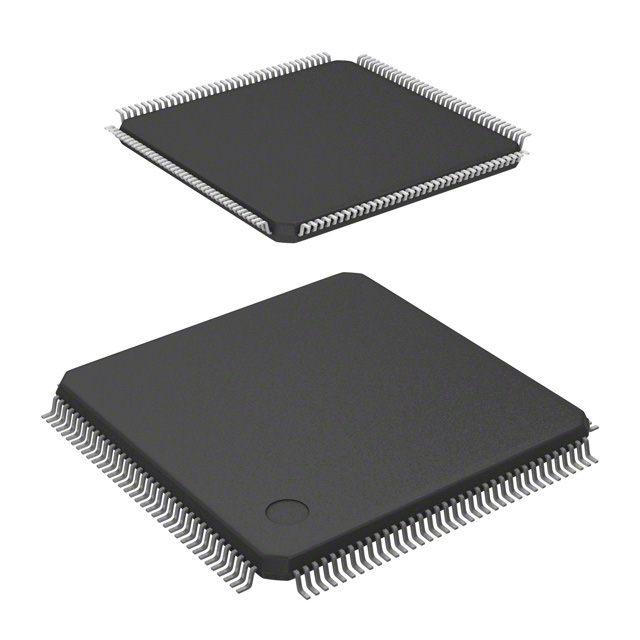
STMicroelectronics SPC560P54L5BEABY
- Part No.:
- SPC560P54L5BEABY
- Manufacturer:
- STMicroelectronics
- Category:
- Microcontrollers
- Package:
- 144-LQFP
- Datasheet:
-
 SPC560P54L5BEABY.pdf
- Description:
- IC MCU 32BIT 768KB FLASH 144LQFP
- Quantity:
- Payment:

- Shipping:

Inventory:2,396
Please send an inquiry. Send us your inquiry, and we will respond immediately.
Product details
Overview
SPC560P54L5BEABY from STMicroelectronics is a 32-bit Power Architecture® e200z0h-based automotive MCU with 1088 KB Flash (1024 KB code + 64 KB EEPROM emulation), 80 KB ECC-protected SRAM, and AEC-Q100 qualification for chassis/safety systems. It integrates dual FlexCAN 2.0B interfaces, FlexRay V2.1, LINFlex, DSPI, eTimer, 10-bit ADC with 27 channels, and fail-safe features including FCCU, safety port, and SWT with pseudo-random servicing.
For engineers reviewing the SPC560P54L5BEABY datasheet, SPC560P54L5BEABY pinout, SPC560P54L5BEABY application, or SPC560P54L5BEABY equivalent, key selection criteria include its 64 MHz single-issue CPU, -40 to 125 °C ambient operation, LQFP144 package with 80 GPIO + 26 GPI, and functional safety support via ECC, Nexus® L2+, and fault collection architecture.
Technical Context
The SPC560P54L5BEABY implements a deterministic, safety-critical execution environment using the e200z0h core with Variable Length Encoding (VLE), FMPLL clock generation, and dual interrupt controllers (INTC). Its memory subsystem includes ECC-protected Flash and SRAM, with dedicated error correction status monitoring and safe boot via CAN/UART bootstrap loader with BAM.
System-level safety is enforced through hardware mechanisms: Fault Collection and Control Unit (FCCU) for fault logging and response, Safety Port configured as a third CAN channel or dedicated safety interface, and register protection schemes that prevent unauthorized access to critical control registers during runtime.
Key Specifications
| Parameter | Value and Actual Design Meaning |
|---|---|
| CPU Core | e200z0h, 64 MHz single-issue 32-bit Power Architecture® core with VLE support for compact code footprint |
| Flash Memory | 1024 KB on-chip code Flash + 64 KB data Flash for EEPROM emulation, both with ECC and integrated erase/program controller |
| SRAM | 80 KB on-chip SRAM with full ECC protection for data integrity in safety-critical contexts |
| ADC | 10-bit SAR ADC with 27 input channels, <1 µs conversion time at full precision, and programmable CTU for synchronized sampling |
| Communication | 2 × FlexCAN 2.0B (32 MBs each), 1 × FlexRay V2.1 (dual/single channel, 64 MBs, up to 10 Mbit/s), 5 × DSPI, 2 × LINFlex |
| Safety Features | FCCU, safety port, SWT with pseudo-random servicing sequence, non-maskable interrupts, and register protection scheme |
| Operating Temp | -40 to 125 °C ambient, qualified per AEC-Q100 Grade 0 for under-hood automotive chassis and safety applications |
Pinout & Package
LQFP144 (20 × 20 mm, 0.5 mm pitch) package with 144 pins, supporting 80 general-purpose I/Os and 26 general-purpose inputs. Power supply includes separate VDD/VSS pairs for core, I/O (3.3 V or 5 V selectable), and ADC domains.
| Pin/Terminal | Circuit Role | Design Meaning |
|---|---|---|
| VDDA / VSSA | Analog power supply/ground | Independent 3.3 V analog domain for ADC reference stability and noise isolation |
| VDDIO / VSSIO | I/O power supply/ground | Selectable 3.3 V or 5 V I/O voltage via NVUSRO[PAD3V5V], enabling mixed-voltage system interfacing |
| RESET | Asynchronous reset input | Active-low reset with internal pull-up; supports external reset assertion and brown-out detection sequencing |
| CLKIN | Main oscillator input | Accepts external crystal (4–20 MHz) or CMOS clock source for primary system timing reference |
| CAN0_TX / CAN0_RX | FlexCAN 0 differential bus interface | Direct connection to CAN transceiver; supports ISO 11898-1 compliant physical layer signaling |
| FRAY_TxD / FRAY_RxD | FlexRay transmit/receive data | Differential pair for FlexRay communication; requires external bus driver and termination per V2.1 spec |
Key Features
| Feature | Design Value |
|---|---|
| Nexus® L2+ debug interface | Real-time trace, hardware breakpoints, and non-intrusive debugging compatible with industry-standard tools (Lauterbach, iSYSTEM) |
| Fail-safe boot loader | On-chip CAN/UART bootstrap loader with Boot Assist Module (BAM) enabling secure field firmware updates without external programmer |
| eDMA controller | 16-channel enhanced DMA with multiple request sources, reducing CPU load during peripheral data transfers (e.g., ADC → RAM, SPI → buffer) |
| Quadrature decode timers | eTimer units support hardware quadrature decoding with rotation direction flag and double-buffered capture for motor position sensing |
| Programmable CTU | Cross-triggering unit enables precise synchronization between ADC sampling, PWM events, and timer captures without software intervention |
Applications
| Electric Power Steering (EPS) | Brake-by-Wire Control Unit |
|---|---|
Use Scenario: Real-time torque assist calculation and motor phase current control in column-assist or rack-assist EPS systems. IC Role / Device Role / Timing Role: Primary safety-critical controller executing ASIL-C algorithms with dual-core lockstep not required but ECC and FCCU used for fault detection. Use Value: 10-bit ADC with <1 µs conversion and CTU synchronization ensures accurate current sampling aligned with PWM switching edges for low-noise FOC. | Use Scenario: Closed-loop pressure control and valve actuation in electro-hydraulic brake (EHB) modules with redundancy monitoring. IC Role / Device Role / Timing Role: Master controller managing dual independent hydraulic circuits, communicating via FlexRay for deterministic latency and FlexCAN for diagnostics. Use Value: FlexRay V2.1 (64 MBs, 10 Mbit/s) provides guaranteed bandwidth and time-triggered scheduling essential for brake command arbitration and fail-operational behavior. |
| Air Suspension Control | Advanced Driver Assistance Systems (ADAS) Sensor Fusion Hub |
Use Scenario: Height and leveling control across four corners using solenoid valves and pressure sensors in premium vehicle platforms. IC Role / Device Role / Timing Role: Central chassis controller interfacing with LIN sensors, CAN actuators, and analog pressure/temperature inputs. Use Value: 27-channel 10-bit ADC with pre-sampling and 4 analog watchdogs enable simultaneous monitoring of all corner sensors with fault reporting before timeout. | Use Scenario: Aggregation and preprocessing of radar, camera, and ultrasonic sensor data prior to transmission to central ADAS ECU. IC Role / Device Role / Timing Role: Edge-processing node performing time-aligned timestamping, basic filtering, and protocol translation (e.g., LVDS-to-CAN). Use Value: Dual FlexCAN interfaces (32 MBs each) and 5 DSPI ports allow concurrent high-speed sensor streaming while maintaining diagnostic and configuration CAN channels. |
Equivalent & Alternatives
The following parts are listed as comparable options for similar automotive microcontroller applications.
| Alternative Part | Technical Difference | Application Difference | Selection Advice |
|---|---|---|---|
| SPC560P54L5CEABY | Same die, identical peripherals and memory, but rated for -40 to 105 °C ambient (Grade 1) instead of -40 to 125 °C (Grade 0) | Not suitable for under-hood locations requiring Grade 0 thermal range; appropriate for cabin or less thermally stressed chassis modules | Select only if ambient temperature stays ≤105 °C and AEC-Q100 Grade 1 suffices for functional safety requirements |
| SPC560P60L5BEABY | Same package and pinout, but with 1 MB Flash (1024 KB code + 64 KB data) and same 80 KB ECC SRAM - higher code density for complex safety stacks | Enables larger AUTOSAR BSW, more diagnostic routines, or dual-application partitioning (e.g., main + safe state manager) | Choose when >1024 KB Flash is needed for ASIL-D software decomposition or future-proofing against feature creep |
Compared with SPC560P54L5BEABY, the SPC560P54L5CEABY trades thermal grade for cost in milder environments, while the SPC560P60L5BEABY retains full Grade 0 qualification but adds 128 KB Flash-critical for layered safety software and extended diagnostic coverage without compromising real-time determinism.
Availability
SPC560P54L5BEABY is available at Aetrix Electronics and suitable for electric power steering, brake-by-wire, and air suspension systems requiring stable component supply, long-term automotive lifecycle support, and AEC-Q100-compliant traceability.
Supply support for SPC560P54L5BEABY includes scheduled delivery planning, volume procurement assistance, BOM continuity management, traceable sourcing, and lifecycle availability coordination for OEM customers, industrial embedded developers, connected-device designers, and electronics production programs.
Manufacturer
STMicroelectronics is a global semiconductor leader headquartered in Geneva, Switzerland, designing and manufacturing microcontrollers, power ICs, sensors, and automotive-grade SoCs since 1987.
The SPC56xP series targets ASIL-B/C automotive chassis and safety applications, emphasizing hardware-based functional safety, multi-protocol connectivity (FlexRay/CAN/LIN), and deterministic real-time performance for distributed vehicle control systems.
FAQ
What is the maximum operating frequency of the SPC560P54L5BEABY CPU core?
The SPC560P54L5BEABY features a single-issue e200z0h core running at a maximum frequency of 64 MHz. This speed is achieved using the on-chip FMPLL with configurable multiplication/division ratios and is validated across the full -40 to 125 °C temperature range and 3.3 V/5 V supply conditions specified in the datasheet.
Does the SPC560P54L5BEABY support JTAG and Nexus® debug interfaces simultaneously?
Yes - the device implements IEEE 1149.1 (JTAG) for boundary scan and Nexus® L2+ for real-time instruction trace and hardware-assisted debugging. Both interfaces share physical pins (TCK/TMS/TDI/TDO/TRACESCLK/TRACECTL) and are multiplexed; Nexus mode requires specific configuration of the NEXUS_CTL register and is active only when the JTAG TAP controller is in RUN-TEST/IDLE state.
How is EEPROM functionality implemented given there is no discrete EEPROM memory?
The SPC560P54L5BEABY uses 64 KB of dedicated data Flash memory emulating EEPROM behavior via ST's embedded EEPROM emulation library. This area supports byte-write and block-erase operations with wear leveling, data retention >20 years, and ECC protection - meeting automotive EEPROM requirements without external components.
Can the FlexRay module operate in single-channel mode, and what is the minimum supported baud rate?
Yes - the FlexRay module supports both dual-channel (CH0 + CH1) and single-channel (CH0 only) configurations via the FRAY_CR register. The minimum supported baud rate is 2.5 Mbit/s, verified per FlexRay V2.1 specification with 10 Mbit/s as the maximum; timing parameters for all rates are fully characterized in Section 3.18.5 of the datasheet.
SPC560P54L5BEABY Specifications
- Product attributes
- Attribute value
- Manufacturer:
- STMicroelectronics
- Package/Case:
- 144-LQFP
- Series:
- SPC56
- Packaging:
- Tray
- Product Status:
- Active
- Programmable:
- Not Verified
- Core Processor:
- e200z0h
- Core Size:
- 32-Bit Single-Core
- Speed:
- 64MHz
- Connectivity:
- CANbus, LINbus, SPI, UART/USART
- Peripherals:
- DMA, POR, PWM, WDT
- Number of I/O:
- 80
- Program Memory Size:
- 768KB (768K x 8)
- Program Memory Type:
- FLASH
- EEPROM Size:
- 64K x 8
- RAM Size:
- 64K x 8
- Voltage - Supply (Vcc/Vdd):
- 3V ~ 3.6V
- Data Converters:
- A/D 26x10b
- Oscillator Type:
- Internal
- Operating Temperature:
- -40°C ~ 105°C (TA)
- Grade:
- Automotive
- Qualification:
- AEC-Q100
- Mounting Type:
- Surface Mount
- Supplier Device Package:
SPC560P54L5BEABY FAQ
1.How can I place an order for SPC560P54L5BEABY through Aetrix?
Please submit a Request for Quotation (RFQ) for SPC560P54L5BEABY on Aetrix. Our sales agent will provide a competitive quotation and guide you through the order confirmation once you accept the terms.
2.Are the price and stock information for SPC560P54L5BEABY reliable?
The price and inventory of SPC560P54L5BEABY are updated periodically and may fluctuate due to market conditions. Stock and pricing data are typically refreshed every 24 hours. Quotation validity for SPC560P54L5BEABY is usually 5 days.
3.What payment methods are accepted for SPC560P54L5BEABY?
We accept Wire Transfer, PayPal, Credit Card, Western Union, MoneyGram, and Escrow for SPC560P54L5BEABY transactions.
Note: Certain payment methods may incur a processing fee.
4.How is shipping managed for SPC560P54L5BEABY?
SPC560P54L5BEABY orders can be shipped via leading logistics carriers, including DHL, UPS, FedEx, TNT, or Registered Mail.
Once your SPC560P54L5BEABY order is processed, you will receive an email with the shipment details and tracking number.
Note: Tracking information may take up to 24 hours to appear. Express delivery typically takes 3–5 business days.
5.How can I obtain technical support or documentation for SPC560P54L5BEABY?
For technical support, including SPC560P54L5BEABY datasheets, pinout diagrams, or application guidance, please contact our engineering support team. They can provide detailed documentation and assistance for your SPC560P54L5BEABY requirements.
6.How does Aetrix verify that SPC560P54L5BEABY is sourced from the original manufacturer or authorized distributors?
All SPC560P54L5BEABY products on Aetrix are procured from qualified distributors and authorized channels. Our dedicated quality assurance team conducts strict verification, including traceability checks and, if necessary, third-party testing. This ensures that SPC560P54L5BEABY meets industry standards.
7.What is the process for return or replacement of SPC560P54L5BEABY?
All SPC560P54L5BEABY units undergo pre-shipment inspection (PSI). If there is an issue with SPC560P54L5BEABY, returns or replacements are accepted under the following conditions:
1.Quantity discrepancies, incorrect items, or visible external defects (such as breakage or corrosion), acknowledged by Aetrix.
2.The issue is reported within 90 days of delivery.
3.The SPC560P54L5BEABY part is unused and in its original packaging.
Return procedure for SPC560P54L5BEABY:
1.Submit a request within 90 days.
2.Obtain a Return Material Authorization (RMA) from Aetrix.
SPC560P54L5BEABY Tags

-
ATTINY4-TSHR
Microchip Technology
-
ATTINY10-TSHR
Microchip Technology
-
ATTINY10-TS8R
Microchip Technology

-
ATTINY202-SSNR
Microchip Technology
-
ATTINY202-SSFR
Microchip Technology
-
ATTINY402-SSNR
Microchip Technology

-
PIC16F15213T-I/MF
Microchip Technology
-
PIC16F15213-E/MF
Microchip Technology

-
PIC10F200T-I/OT
Microchip Technology
-
ATTINY412-SSNR
Microchip Technology
-
PIC10F202T-I/OT
Microchip Technology

-
ATTINY404-SSNR
Microchip Technology
Tech Hub

A practical engineering and sourcing framework covering lifecycle verification, lifetime-buy calculations, replacement qualification, supplier checks and counterfeit-risk controls.

TTL and CMOS logic families differ in thresholds, loading, output drive, power and timing. This engineering guide compares 74HC and 74HCT, calculates noise margins and checks 3.3 V/5 V compatibility.

A practical engineering guide to 3.3V and 5V logic compatibility, input thresholds, resistor dividers, translator ICs, MOSFET level shifting, I2C pull-ups, timing limits and power-sequencing risks.

The 74HC595 uses push-pull logic outputs, while the TPIC6B595 uses 50 V open-drain DMOS sinks for higher-power loads. This guide compares timing, current limits, 3.3 V interfacing, load wiring, thermal…

The 74HC595 converts serial data into eight stable parallel outputs. This guide covers pin functions, shift and storage timing, OE and MR behavior, drive-current limits, cascading, voltage compatibilit…

A technical comparison of level-sensitive latches and edge-triggered flip-flops, covering timing windows, setup and hold limits, master–slave operation, time borrowing, race-through, HDL inference and…

A D latch stores one bit while Enable controls when data can pass. This reference covers gate-level operation, truth tables, transparency, setup and hold timing, LE versus OE, common ICs and practical …

An SR latch stores one bit through cross-coupled feedback. This engineering reference covers NOR and NAND implementations, truth tables, forbidden-state recovery, gated operation, switch debouncing, fa…

Latch circuits retain one bit through feedback. This technical reference covers SR and D latches, truth tables, transparency, timing limits, latch-versus-flip-flop behavior, applications and common log…

An engineering guide to LED driver operation, constant-current and constant-voltage outputs, linear and switching topologies, dimming, IC selection, calculations, replacement compatibility, and fault c…


