
 My Inquiry
 My Account


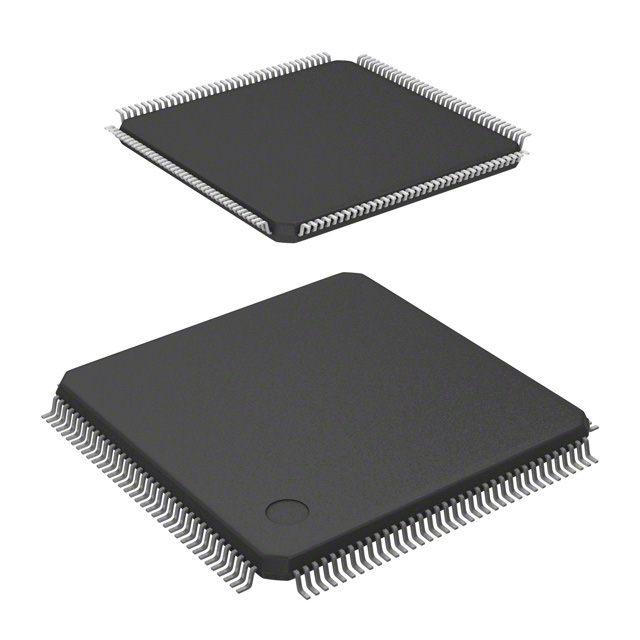
STMicroelectronics SPC563M64L5COBR
- Part No.:
- SPC563M64L5COBR
- Manufacturer:
- STMicroelectronics
- Category:
- Microcontrollers
- Package:
- 144-LQFP
- Datasheet:
-
 SPC563M64L5COBR.pdf
- Description:
- IC MCU 32BIT 1.5MB FLASH 144LQFP
- Quantity:
- Payment:

- Shipping:

Inventory:2,455
Please send an inquiry. Send us your inquiry, and we will respond immediately.
Product details
Overview
SPC563M64L5COBR from STMicroelectronics is a 32-bit Power Architecture® automotive MCU designed for engine control units (ECUs) and transmission control modules. It features an e200z335 CPU core with VLE, 1.5 MB on-chip Flash, 94 KB SRAM (including 32 KB standby), dual FlexCAN 2.0B interfaces, and operates at up to 80 MHz across −40 °C to +150 °C junction temperature.
For engineers reviewing the SPC563M64L5COBR datasheet, SPC563M64L5COBR pinout, SPC563M64L5COBR application, or SPC563M64L5COBR equivalent, key selection criteria include FMPLL frequency modulation support, eTPU2 real-time timing precision, eQADC decimation filtering, and Nexus Class 2+ debug capability for ISO 26262-compliant powertrain development.
Technical Context
The SPC563M64L5COBR implements a single-issue, in-order e200z335 core compliant with Power Architecture Book E, featuring Variable Length Encoding (VLE) for reduced code footprint and integrated Signal Processing Extension (SPE) + FPU for embedded DSP tasks. Its memory hierarchy includes unified 1.5 MB Flash with Fetch Accelerator enabling single-cycle access at 80 MHz and 94 KB SRAM with 32 KB battery-backed retention.
Real-time peripheral subsystems include a 32-channel eTPU2 for deterministic engine timing events, 16-channel eMIOS for flexible PWM/IC/OC generation, dual FlexCAN controllers (64+32 message buffers), and an eQADC with decimation filter supporting up to 34 analog inputs - all synchronized via a 64-bit AMBA crossbar switch and managed by a 364-source INTC with sub-120 ns interrupt latency at full speed.
Key Specifications
| Parameter | Value and Actual Design Meaning |
|---|---|
| CPU Core | e200z335 Power Architecture Book E, 32-bit, VLE-enabled, SPE+FPU, 80 MHz max operation |
| Flash Memory | 1536 KB on-chip, with Fetch Accelerator for zero-wait-state access @80 MHz |
| SRAM | 94 KB total on-chip static RAM, including 32 KB low-power standby RAM with battery backup |
| Operating Temp | −40 °C to +150 °C junction temperature, qualified for automotive powertrain under AEC-Q100 Grade 0 |
| Peripherals | Dual FlexCAN 2.0B (64+32 msg buffers), dual eSCI (LIN-compatible), dual DSPI (Microsecond Bus), 32-channel eTPU2, 16-channel eMIOS, eQADC with decimation filter |
| Clock System | FMPLL with triangle-wave frequency modulation, lock detect, CQM loss-of-clock monitoring, and programmable bypass modes |
| Debug Interface | Nexus port controller (IEEE-ISTO 5001-2003 Class 2+), JTAG (IEEE 1149.1), and NMI/Critical Interrupt support |
Pinout & Package
LQFP144 package (20 mm × 20 mm), RoHS-compliant, with 144 leads and 0.5 mm pitch. Pin assignments follow STMicroelectronics' standardized SPC563Mxx LQFP144 mechanical drawing and signal mapping per reference manual RM0317.
| Pin/Terminal | Circuit Role | Design Meaning |
|---|---|---|
| VDDA / VDDB | Analog & Backup Power Supply | Provides regulated 3.3 V for ADC, eQADC, and temperature sensor; supports battery-backed SRAM retention |
| VDD / VSS | Digital Core Power/Ground | 1.2 V core supply generated internally from 5 V input; enables low-power stop mode with clocks halted |
| XTAL / EXTAL | Crystal Oscillator Input/Output | Supports 4–20 MHz crystal or external clock source for FMPLL reference; critical for ASIL-B timing integrity |
| CANH / CANL (x2) | Controller Area Network Differential Pair | Dual isolated CAN 2.0B physical layers with built-in bus-off recovery and error counters for ECU interconnect |
| NEXUS_TDI / TDO / TCK / TMS | Nexus Debug Interface | Class 2+ trace-capable debug port supporting real-time instruction trace, data watchpoints, and calibration via Nexus protocol |
| ADC0_IN0–ADC0_IN23 | Analog Input Channels | 24 dedicated eQADC input pins (of up to 34 total) routed to decimation filter for high-resolution engine sensor sampling |
Key Features
| Feature | Design Value |
|---|---|
| FMPLL Frequency Modulation | Triangle-wave modulation reduces EMI emissions by spreading spectral energy - essential for automotive EMC compliance |
| eTPU2 Real-Time Timing | 32 independent channels with <100 ns jitter enable precise spark/fuel injection timing without CPU intervention |
| eQADC Decimation Filter | Integrated digital filter oversamples and averages analog inputs (e.g., throttle position, O2 sensors) to improve SNR by >12 dB |
| Fetch Accelerator | Enables deterministic 80 MHz instruction fetch from Flash with zero wait states - eliminates pipeline stalls in safety-critical ISRs |
| Standby SRAM Retention | 32 KB SRAM retains calibration data and fault logs during stop mode using VBAT, reducing wake-up latency to <10 µs |
Applications
| Gasoline Engine Control Unit | Diesel Common Rail Control |
|---|---|
|
Use Scenario: Real-time management of fuel injection timing, ignition spark advance, and air-fuel ratio feedback loops in inline-4 gasoline engines. IC Role / Device Role / Timing Role: Primary MCU executing ASIL-B control algorithms with eTPU2 handling cylinder-specific timing events and eQADC sampling wideband O2 sensors at 100 kS/s. Use Value: Sub-microsecond eTPU2 jitter and FMPLL-spread spectrum reduce radiated emissions below CISPR 25 Class 5 limits while maintaining closed-loop control stability. |
Use Scenario: High-precision pressure regulation and multi-pulse injection sequencing for Bosch CRIN3 common rail systems in light-duty diesel vehicles. IC Role / Device Role / Timing Role: Safety-monitored master controller coordinating dual FlexCAN networks (powertrain + chassis), with eMIOS generating 10 ns-resolution PWM for solenoid drivers. Use Value: Dual CAN interfaces with independent message buffers isolate critical injection commands from diagnostic traffic, preventing bus contention-induced timing violations. |
| Transmission Control Module | Electric Power Steering (EPS) ECU |
|
Use Scenario: Closed-loop hydraulic pressure control and shift scheduling in 8-speed automatic transmissions with torque converter lockup logic. IC Role / Device Role / Timing Role: Deterministic real-time processor running ISO 26262 ASIL-C software, using eTPU2 for gear engagement timing and DSPI for valve driver SPI communication. Use Value: 32 KB standby SRAM preserves adaptive shift maps across ignition cycles, enabling learned behavior without external EEPROM. |
Use Scenario: Torque assist calculation and motor phase commutation in brushless DC EPS systems requiring <5 ms end-to-end latency. IC Role / Device Role / Timing Role: Safety-certified MCU interfacing with torque sensor, vehicle speed CAN bus, and 3-phase inverter gate drivers via eMIOS PWM outputs. Use Value: Nexus Class 2+ trace enables runtime verification of functional safety monitors (e.g., SW watchdog, clock failure detection) per ISO 26262 Part 6. |
Equivalent & Alternatives
The following parts are listed as comparable options for similar automotive powertrain microcontroller applications.
| Alternative Part | Technical Difference | Application Difference | Selection Advice |
|---|---|---|---|
| NXP MPC5634M | Same e200z335 core, but 1 MB Flash, no eTPU2 (only eTPU), lower CAN buffer count (32+16), no decimation filter in QADC | Limited to mid-tier powertrain applications without aggressive emission requirements or complex multi-pulse injection | Select when cost sensitivity outweighs need for eTPU2-level timing resolution or FMPLL EMI reduction |
| Renesas RH850/F1L | 32-bit RXv2 core, 1.5 MB Flash, 192 KB RAM, but no hardware decimation filter, no FMPLL, and LIN-only serial interfaces (no FlexCAN) | Suitable for non-CAN-based chassis modules (e.g., body control), not certified for ASIL-D powertrain control | Prefer only for mixed-domain ECUs where CAN is handled externally or where Renesas toolchain integration is mandated |
Compared with MPC5634M and RH850/F1L, the SPC563M64L5COBR uniquely combines eTPU2 deterministic timing, FMPLL spectral spreading, and eQADC decimation - making it the only option among the three qualified for ASIL-B gasoline ECU designs requiring <100 ns timing jitter and CISPR 25 Class 5 compliance.
Availability
SPC563M64L5COBR is available at Aetrix Electronics and suitable for automotive powertrain ECUs, transmission control modules, electric power steering systems, and diesel common rail controllers requiring stable component supply across extended product lifecycles.
Supply support for SPC563M64L5COBR includes scheduled delivery planning, volume procurement assistance, BOM continuity management, traceable sourcing, and lifecycle availability coordination for OEM customers, industrial embedded developers, connected-device designers, and electronics production programs.
Manufacturer
STMicroelectronics is a global semiconductor leader headquartered in Geneva, Switzerland, specializing in automotive-grade MCUs, power management, and sensing solutions with broad AEC-Q100 qualification coverage.
The SPC563Mxx family was developed specifically for cost-optimized, ASIL-B-compliant automotive powertrain applications - integrating eTPU2, FMPLL, and Nexus 2+ to replace discrete timing peripherals and simplify ECU architecture.
FAQ
What is the maximum operating frequency and temperature rating of the SPC563M64L5COBR?
The SPC563M64L5COBR operates at up to 80 MHz with ±2% frequency modulation (82 MHz peak), and is rated for −40 °C to +150 °C junction temperature. It meets AEC-Q100 Grade 0 qualification, making it suitable for under-hood engine control applications where thermal stress is extreme.
Does the SPC563M64L5COBR support functional safety standards like ISO 26262?
Yes - the device includes hardware safety mechanisms such as FMPLL lock detection, clock quality monitor (CQM), Nexus Class 2+ trace for runtime verification, and dual-core lockstep not required due to its ASIL-B target scope. ST provides ISO 26262-ready safety manuals and FMEDA reports for system-level certification.
How many CAN interfaces does the SPC563M64L5COBR provide, and what are their capabilities?
The SPC563M64L5COBR integrates two FlexCAN 2.0B modules: one with 64 message buffers and another with 32. Both support bit rates up to 1 Mbps, hardware acceptance filtering, loopback self-test, and bus-off recovery - enabling redundant CAN paths for critical powertrain communication.
Is external memory supported, and if so, under what conditions?
The Calibration External Bus Interface (EBI) supports 16-bit external memory access but is only enabled in calibration packages (e.g., CSP496), not in production LQFP144 devices like SPC563M64L5COBR. Production use relies entirely on on-chip Flash (1.5 MB) and SRAM (94 KB).
SPC563M64L5COBR Specifications
- Product attributes
- Attribute value
- Manufacturer:
- STMicroelectronics
- Package/Case:
- 144-LQFP
- Series:
- SPC56
- Packaging:
- Tape & Reel (TR)
- Product Status:
- Active
- Programmable:
- Not Verified
- Core Processor:
- e200z3
- Core Size:
- 32-Bit Single-Core
- Speed:
- 64MHz
- Connectivity:
- CANbus, EBI/EMI, LINbus, SCI, SPI, UART/USART
- Peripherals:
- DMA, POR, PWM, WDT
- Number of I/O:
- 80
- Program Memory Size:
- 1.5MB (1.5M x 8)
- Program Memory Type:
- FLASH
- EEPROM Size:
- -
- RAM Size:
- 94K x 8
- Voltage - Supply (Vcc/Vdd):
- 1.14V ~ 1.32V
- Data Converters:
- A/D 32x12b
- Oscillator Type:
- Internal
- Operating Temperature:
- -40°C ~ 125°C (TA)
- Grade:
- -
- Qualification:
- -
- Mounting Type:
- Surface Mount
- Supplier Device Package:
SPC563M64L5COBR FAQ
1.How can I place an order for SPC563M64L5COBR through Aetrix?
Please submit a Request for Quotation (RFQ) for SPC563M64L5COBR on Aetrix. Our sales agent will provide a competitive quotation and guide you through the order confirmation once you accept the terms.
2.Are the price and stock information for SPC563M64L5COBR reliable?
The price and inventory of SPC563M64L5COBR are updated periodically and may fluctuate due to market conditions. Stock and pricing data are typically refreshed every 24 hours. Quotation validity for SPC563M64L5COBR is usually 5 days.
3.What payment methods are accepted for SPC563M64L5COBR?
We accept Wire Transfer, PayPal, Credit Card, Western Union, MoneyGram, and Escrow for SPC563M64L5COBR transactions.
Note: Certain payment methods may incur a processing fee.
4.How is shipping managed for SPC563M64L5COBR?
SPC563M64L5COBR orders can be shipped via leading logistics carriers, including DHL, UPS, FedEx, TNT, or Registered Mail.
Once your SPC563M64L5COBR order is processed, you will receive an email with the shipment details and tracking number.
Note: Tracking information may take up to 24 hours to appear. Express delivery typically takes 3–5 business days.
5.How can I obtain technical support or documentation for SPC563M64L5COBR?
For technical support, including SPC563M64L5COBR datasheets, pinout diagrams, or application guidance, please contact our engineering support team. They can provide detailed documentation and assistance for your SPC563M64L5COBR requirements.
6.How does Aetrix verify that SPC563M64L5COBR is sourced from the original manufacturer or authorized distributors?
All SPC563M64L5COBR products on Aetrix are procured from qualified distributors and authorized channels. Our dedicated quality assurance team conducts strict verification, including traceability checks and, if necessary, third-party testing. This ensures that SPC563M64L5COBR meets industry standards.
7.What is the process for return or replacement of SPC563M64L5COBR?
All SPC563M64L5COBR units undergo pre-shipment inspection (PSI). If there is an issue with SPC563M64L5COBR, returns or replacements are accepted under the following conditions:
1.Quantity discrepancies, incorrect items, or visible external defects (such as breakage or corrosion), acknowledged by Aetrix.
2.The issue is reported within 90 days of delivery.
3.The SPC563M64L5COBR part is unused and in its original packaging.
Return procedure for SPC563M64L5COBR:
1.Submit a request within 90 days.
2.Obtain a Return Material Authorization (RMA) from Aetrix.
SPC563M64L5COBR Tags

-
ATTINY4-TSHR
Microchip Technology
-
ATTINY10-TSHR
Microchip Technology
-
ATTINY10-TS8R
Microchip Technology

-
ATTINY202-SSNR
Microchip Technology
-
ATTINY202-SSFR
Microchip Technology
-
ATTINY402-SSNR
Microchip Technology

-
PIC16F15213T-I/MF
Microchip Technology
-
PIC16F15213-E/MF
Microchip Technology

-
PIC10F200T-I/OT
Microchip Technology
-
ATTINY412-SSNR
Microchip Technology
-
PIC10F202T-I/OT
Microchip Technology

-
ATTINY404-SSNR
Microchip Technology
Tech Hub

A practical engineering and sourcing framework covering lifecycle verification, lifetime-buy calculations, replacement qualification, supplier checks and counterfeit-risk controls.

TTL and CMOS logic families differ in thresholds, loading, output drive, power and timing. This engineering guide compares 74HC and 74HCT, calculates noise margins and checks 3.3 V/5 V compatibility.

A practical engineering guide to 3.3V and 5V logic compatibility, input thresholds, resistor dividers, translator ICs, MOSFET level shifting, I2C pull-ups, timing limits and power-sequencing risks.

The 74HC595 uses push-pull logic outputs, while the TPIC6B595 uses 50 V open-drain DMOS sinks for higher-power loads. This guide compares timing, current limits, 3.3 V interfacing, load wiring, thermal…

The 74HC595 converts serial data into eight stable parallel outputs. This guide covers pin functions, shift and storage timing, OE and MR behavior, drive-current limits, cascading, voltage compatibilit…

A technical comparison of level-sensitive latches and edge-triggered flip-flops, covering timing windows, setup and hold limits, master–slave operation, time borrowing, race-through, HDL inference and…

A D latch stores one bit while Enable controls when data can pass. This reference covers gate-level operation, truth tables, transparency, setup and hold timing, LE versus OE, common ICs and practical …

An SR latch stores one bit through cross-coupled feedback. This engineering reference covers NOR and NAND implementations, truth tables, forbidden-state recovery, gated operation, switch debouncing, fa…

Latch circuits retain one bit through feedback. This technical reference covers SR and D latches, truth tables, transparency, timing limits, latch-versus-flip-flop behavior, applications and common log…

An engineering guide to LED driver operation, constant-current and constant-voltage outputs, linear and switching topologies, dimming, IC selection, calculations, replacement compatibility, and fault c…


