Vishay General Semiconductor - Diodes Division SS2P4HM3/84A
- Part No.:
- SS2P4HM3/84A
- Manufacturer:
- Vishay General Semiconductor - Diodes Division
- Category:
- Single Diodes
- Package:
- DO-220AA
- Datasheet:
-
SS2P4HM3/84A.pdf
- Description:
- DIODE SCHOTTKY 40V 2A DO220AA
- Quantity:
- Payment:

- Shipping:

Inventory:2,291
Please send an inquiry. Send us your inquiry, and we will respond immediately.
Product details
Overview
SS2P4HM3/84A from Vishay General Semiconductor is a high-current-density surface-mount Schottky barrier rectifier rated for 40 V reverse voltage, 2.0 A average forward current, and 50 A non-repetitive surge current. It features a low 0.50 V forward voltage at 2 A and 25 °C, operates up to 150 °C junction temperature, and is packaged in the ultra-low-profile SMP (DO-220AA) case for DC/DC converters and polarity protection circuits.
For engineers reviewing the SS2P4HM3/84A datasheet, SS2P4HM3/84A pinout, SS2P4HM3/84A application, or SS2P4HM3/84A equivalent, key selection criteria include its automotive-grade HM3 suffix (AEC-Q101 qualified), 1.0 mm typical height, 110 pF junction capacitance at 4.0 V/1 MHz, and J-STD-020 MSL Level 1 moisture sensitivity rating.
Technical Context
This Schottky rectifier uses a planar metal-semiconductor junction optimized for low VF and fast switching in low-voltage power conversion. Its single-diode configuration supports unidirectional current flow with cathode band polarity marking and exhibits 10,000 V/μs voltage rate of change capability.
Thermal performance is defined by RθJA = 115 °C/W, RθJL = 15 °C/W, and RθJC = 20 °C/W - measured at the cathode band terminal and body center - enabling efficient heat dissipation on PCBs with 6.0 mm × 6.0 mm copper pads.
Key Specifications
| Parameter | Value and Actual Design Meaning |
|---|---|
| VRRM | 40 V - maximum repetitive reverse blocking voltage; defines safe operating range in DC/DC output stages |
| IF(AV) | 2.0 A - continuous forward current rating at 25 °C ambient; derates linearly above 25 °C per Fig. 1 |
| VF @ 2 A, 25 °C | 0.50 V - low conduction loss enabling >90 % efficiency in 3.3–12 V buck converters |
| IFSM | 50 A - peak surge current handling for 10 ms half-sine; supports inrush and fault transients |
| EAS | 11.25 mJ - non-repetitive avalanche energy at IAS = 1.5 A, L = 10 mH; enables robust freewheeling |
| TJ max. | 150 °C - maximum junction temperature; allows operation in under-hood automotive environments |
| CJ @ 4 V, 1 MHz | 110 pF - low junction capacitance minimizes switching losses and EMI in high-frequency (>100 kHz) topologies |
Pinout & Package
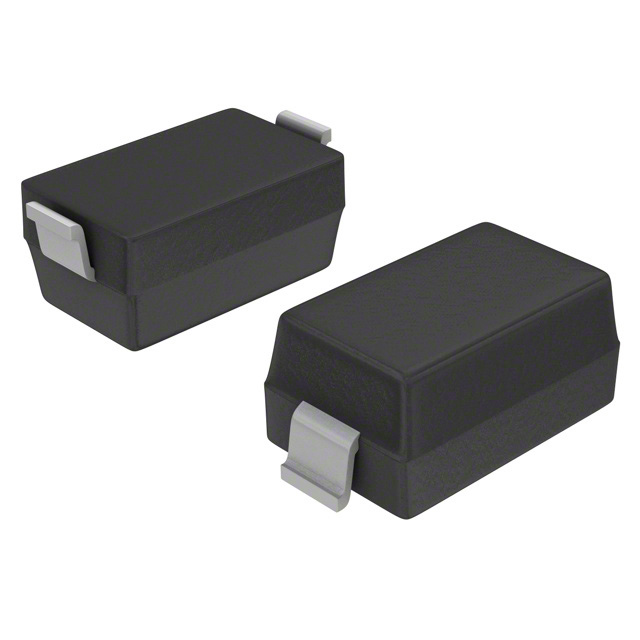
Package: SMP (DO-220AA), halogen-free, RoHS-compliant, automotive-grade (HM3 suffix), 1.0 mm typical height, UL 94 V-0 molding compound, matte tin-plated terminals solderable per J-STD-002.
| Pin/Terminal | Circuit Role | Design Meaning |
|---|---|---|
| Anode | Current input terminal | Connected to source-side of load or switch node; accepts forward current into device |
| Cathode | Current output terminal | Marked with color band; connects to return path or ground; carries forward current out of device |
Key Features
| Feature | Design Value |
|---|---|
| AEC-Q101 qualified | Validated for automotive applications including engine control units and ADAS power rails |
| MSL Level 1 (260 °C peak) | Compatible with standard lead-free reflow profiles without baking or special handling |
| Low thermal resistance (RθJL = 15 °C/W) | Enables direct thermal coupling to PCB copper, reducing need for external heatsinking |
| 110 pF junction capacitance | Reduces reverse recovery charge and switching noise in high-frequency synchronous rectification |
| 0.50 V forward voltage at 2 A | Lowers conduction loss by ~30 % vs. comparable 40 V Si diodes, improving system thermal margin |
Applications
| Automotive DC/DC Converters | USB-C Power Delivery Protection |
|---|---|
Use Scenario: Step-down conversion from 12 V battery to 5 V/9 V/15 V rails in infotainment and telematics modules. IC Role / Device Role / Timing Role: Output rectifier in synchronous buck converter secondary side. Use Value: Low VF and 150 °C TJ rating ensure stable operation during engine-off battery drain and under-hood thermal cycling. | Use Scenario: Polarity protection and reverse-current blocking in USB-C PD sink designs. IC Role / Device Role / Timing Role: Unidirectional current gate between VBUS and system input. Use Value: 40 V VRRM exceeds USB-C PD 20 V max, while 110 pF CJ prevents high-frequency coupling during hot-plug events. |
| Industrial SMPS Freewheeling | Low-Voltage LED Driver Outputs |
Use Scenario: Freewheeling path in 24 V industrial switch-mode power supplies driving solenoids and PLC I/O. IC Role / Device Role / Timing Role: Clamp diode across inductive loads to suppress flyback voltage spikes. Use Value: 50 A IFSM and 11.25 mJ EAS absorb energy from 24 V/2 A inductive transients without failure. | Use Scenario: Output rectification in constant-current LED drivers for signage and architectural lighting. IC Role / Device Role / Timing Role: Secondary-side rectifier delivering regulated DC to LED strings. Use Value: 1.0 mm profile fits tight board spacing; low VF minimizes voltage drop across multiple parallel strings. |
Equivalent & Alternatives
The following parts are listed as comparable options for similar Schottky rectifier applications.
| Alternative Part | Technical Difference | Application Difference | Selection Advice |
|---|---|---|---|
| SS2P4-M3/84A | Commercial grade (M3), not AEC-Q101 qualified; identical electrical specs and package | Suitable for consumer and industrial use only; not validated for automotive temperature cycling or vibration | Select when automotive qualification is unnecessary and cost optimization is prioritized |
| SB240-E3/52T | DO-214AA package (higher profile, 2.3 mm), 40 V VRRM, 2.0 A IF(AV), VF = 0.55 V @ 2 A | Less space-constrained layouts; higher thermal resistance limits power density in compact designs | Choose when existing DO-214AA footprint must be retained and height is not constrained |
Compared with SS2P4HM3/84A, the SS2P4-M3/84A offers identical performance at lower qualification cost, while SB240-E3/52T provides legacy footprint compatibility at the expense of size and thermal efficiency.
Availability
SS2P4HM3/84A is available at Aetrix Electronics and suitable for automotive power management, USB-C PD protection, and industrial DC/DC converter designs requiring stable component supply and long-term lifecycle support.
Supply support for SS2P4HM3/84A includes scheduled delivery planning, volume procurement assistance, BOM continuity management, traceable sourcing, and lifecycle availability coordination for OEM customers, industrial embedded developers, connected-device designers, and electronics production programs.
Manufacturer
Vishay General Semiconductor is a global leader in discrete semiconductors, specializing in diodes, rectifiers, MOSFETs, and optoelectronics with emphasis on reliability and power efficiency.
The eSMP® Series, including SS2P4HM3/84A, was developed specifically for space-constrained, high-efficiency power conversion in automotive and industrial systems where low profile and AEC-Q101 compliance are mandatory.
FAQ
What is the maximum junction temperature rating for SS2P4HM3/84A?
The SS2P4HM3/84A has a maximum junction temperature (TJ max.) of +150 °C, verified per Vishay Document Number 88910. This rating enables reliable operation in under-hood automotive environments and thermally demanding industrial enclosures. Derating curves in Figure 1 define allowable average forward current versus lead temperature, with full 2.0 A rating maintained up to 125 °C lead temperature.
Is SS2P4HM3/84A suitable for automotive applications?
Yes, SS2P4HM3/84A is AEC-Q101 qualified and designated as automotive grade via the HM3 suffix. It meets JESD201 Class 2 whisker testing, J-STD-020 MSL Level 1, and operates across -55 °C to +150 °C. These qualifications make SS2P4HM3/84A appropriate for engine control units, body electronics, and ADAS power supplies where reliability under thermal and mechanical stress is critical.
What does the "84A" in SS2P4HM3/84A indicate?
The "84A" in SS2P4HM3/84A is the preferred package code denoting 7-inch diameter plastic tape and reel packaging with a base quantity of 3000 units. This delivery mode is optimized for automated SMT placement equipment and aligns with industry-standard feeder configurations. The "HM3" portion confirms halogen-free, RoHS-compliant, automotive-grade construction.
How does the forward voltage of SS2P4HM3/84A compare at elevated temperatures?
At 125 °C junction temperature, SS2P4HM3/84A exhibits a typical forward voltage of 0.43 V at 2 A, decreasing from 0.50 V at 25 °C. This negative temperature coefficient improves thermal stability in parallel configurations and reduces conduction loss in high-ambient environments such as automotive cabins or enclosed industrial drives.
What is the polarity marking convention for SS2P4HM3/84A?
SS2P4HM3/84A uses a color band on the cathode end to denote polarity, consistent with DO-220AA package standards. The banded end is the cathode terminal, and the opposite end is the anode. This marking is visible after reflow and matches the pinout diagram in Vishay Document Number 88910, ensuring correct orientation during automated placement and manual inspection.
SS2P4HM3/84A Specifications
- Product attributes
- Attribute value
- Manufacturer:
- Vishay General Semiconductor - Diodes Division
- Series:
- eSMP®
- Package/Case:
- DO-220AA
- Packaging:
- Tape & Reel (TR)
- Product Status:
- Active
- Technology:
- Schottky
- Voltage - DC Reverse (Vr) (Max):
- 40 V
- Current - Average Rectified (Io):
- 2A
- Voltage - Forward (Vf) (Max) @ If:
- 550 mV @ 2 A
- Speed:
- Fast Recovery =< 500ns, > 200mA (Io)
- Reverse Recovery Time (trr):
- -
- Current - Reverse Leakage @ Vr:
- 150 µA @ 40 V
- Capacitance @ Vr, F:
- 110pF @ 4V, 1MHz
- Grade:
- Automotive
- Qualification:
- AEC-Q101
- Mounting Type:
- Surface Mount
- Supplier Device Package:
- DO-220AA (SMP)
- Operating Temperature - Junction:
- -55°C ~ 150°C
SS2P4HM3/84A FAQ
1.How can I place an order for SS2P4HM3/84A through Aetrix?
Please submit a Request for Quotation (RFQ) for SS2P4HM3/84A on Aetrix. Our sales agent will provide a competitive quotation and guide you through the order confirmation once you accept the terms.
2.Are the price and stock information for SS2P4HM3/84A reliable?
The price and inventory of SS2P4HM3/84A are updated periodically and may fluctuate due to market conditions. Stock and pricing data are typically refreshed every 24 hours. Quotation validity for SS2P4HM3/84A is usually 5 days.
3.What payment methods are accepted for SS2P4HM3/84A?
We accept Wire Transfer, PayPal, Credit Card, Western Union, MoneyGram, and Escrow for SS2P4HM3/84A transactions.
Note: Certain payment methods may incur a processing fee.
4.How is shipping managed for SS2P4HM3/84A?
SS2P4HM3/84A orders can be shipped via leading logistics carriers, including DHL, UPS, FedEx, TNT, or Registered Mail.
Once your SS2P4HM3/84A order is processed, you will receive an email with the shipment details and tracking number.
Note: Tracking information may take up to 24 hours to appear. Express delivery typically takes 3–5 business days.
5.How can I obtain technical support or documentation for SS2P4HM3/84A?
For technical support, including SS2P4HM3/84A datasheets, pinout diagrams, or application guidance, please contact our engineering support team. They can provide detailed documentation and assistance for your SS2P4HM3/84A requirements.
6.How does Aetrix verify that SS2P4HM3/84A is sourced from the original manufacturer or authorized distributors?
All SS2P4HM3/84A products on Aetrix are procured from qualified distributors and authorized channels. Our dedicated quality assurance team conducts strict verification, including traceability checks and, if necessary, third-party testing. This ensures that SS2P4HM3/84A meets industry standards.
7.What is the process for return or replacement of SS2P4HM3/84A?
All SS2P4HM3/84A units undergo pre-shipment inspection (PSI). If there is an issue with SS2P4HM3/84A, returns or replacements are accepted under the following conditions:
1.Quantity discrepancies, incorrect items, or visible external defects (such as breakage or corrosion), acknowledged by Aetrix.
2.The issue is reported within 90 days of delivery.
3.The SS2P4HM3/84A part is unused and in its original packaging.
Return procedure for SS2P4HM3/84A:
1.Submit a request within 90 days.
2.Obtain a Return Material Authorization (RMA) from Aetrix.
SS2P4HM3/84A Tags
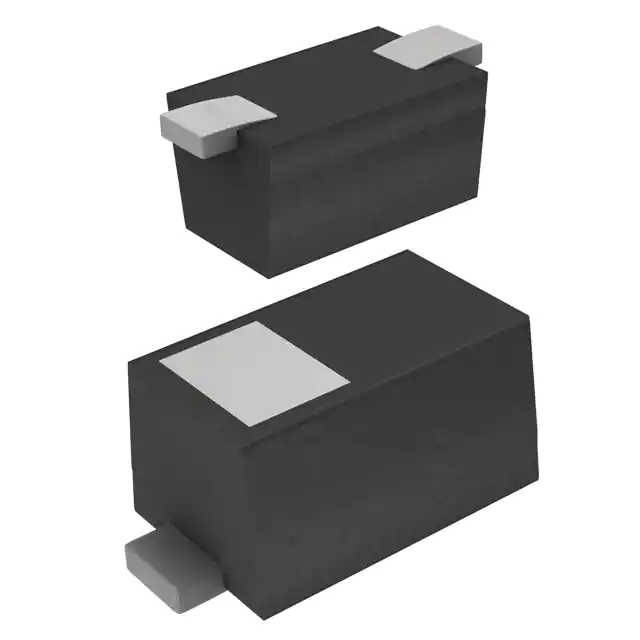
-
1N4448X-TP
Micro Commercial Co
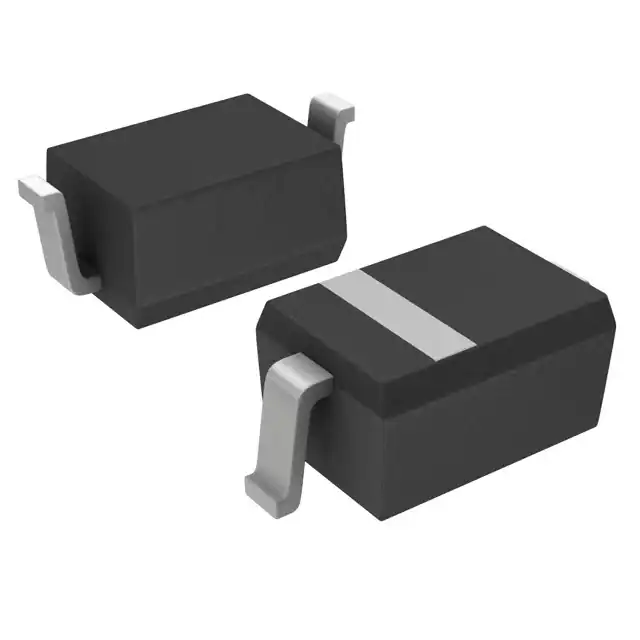
-
1N4148WX-TP
Micro Commercial Co

-
1N4148TR
onsemi
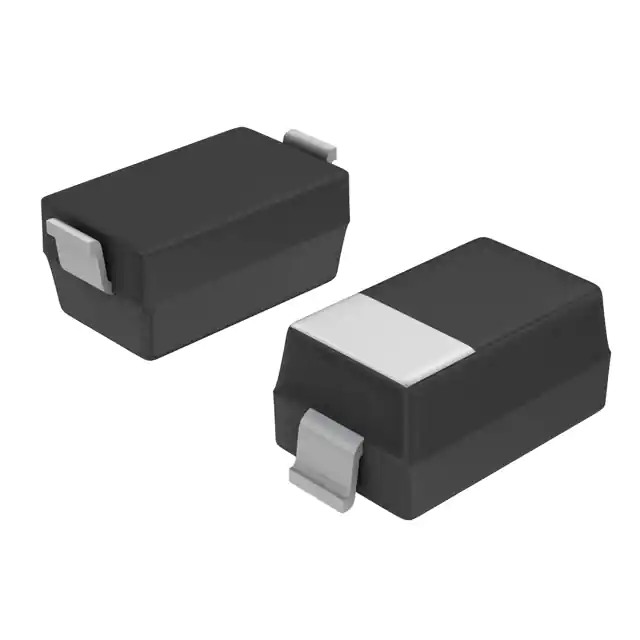
-
MMSD4148T1G
onsemi
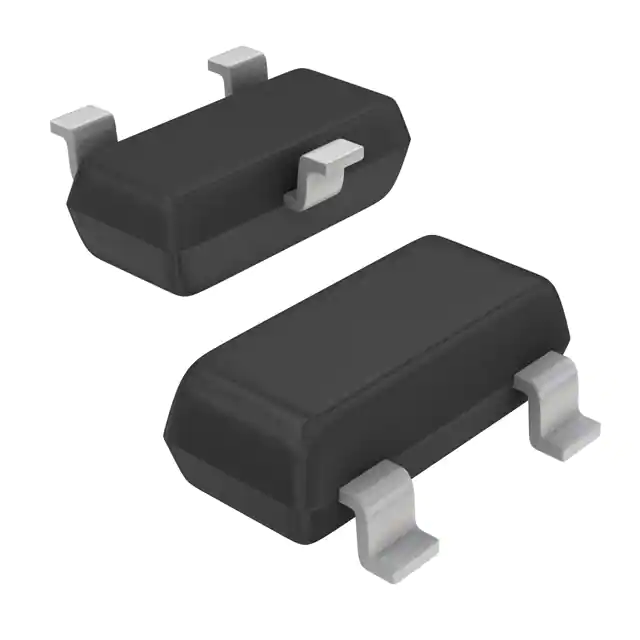
-
MMBD914LT3G
onsemi
-
BAS16HT1G
onsemi
-
1N914BWT
onsemi

-
BAS21LT1G
onsemi
-
LL4148
onsemi
-
BAS16LT1G
onsemi

-
MMSD914T1G
onsemi
-
BAV21W-7-F
Diodes Incorporated
Tech Hub
Comparator circuit design covering voltage thresholds, input limits, open-collector outputs, LM393 wiring, op-amp differences, hysteresis, timing, window detection and practical fault diagnosis.
Schmitt triggers use separate rising and falling thresholds to stabilize slow or noisy signals. This guide covers hysteresis, 74HC14 and 74HCT14 selection, comparator calculations, RC oscillators and p…
Counterfeit components can hide behind convincing markings and passing basic function tests. This engineering reference covers source traceability, external inspection, X-ray, XRF, electrical testing, …
A practical engineering and sourcing framework covering lifecycle verification, lifetime-buy calculations, replacement qualification, supplier checks and counterfeit-risk controls.
TTL and CMOS logic families differ in thresholds, loading, output drive, power and timing. This engineering guide compares 74HC and 74HCT, calculates noise margins and checks 3.3 V/5 V compatibility.
A practical engineering guide to 3.3V and 5V logic compatibility, input thresholds, resistor dividers, translator ICs, MOSFET level shifting, I2C pull-ups, timing limits and power-sequencing risks.
The 74HC595 uses push-pull logic outputs, while the TPIC6B595 uses 50 V open-drain DMOS sinks for higher-power loads. This guide compares timing, current limits, 3.3 V interfacing, load wiring, thermal…
The 74HC595 converts serial data into eight stable parallel outputs. This guide covers pin functions, shift and storage timing, OE and MR behavior, drive-current limits, cascading, voltage compatibilit…
A technical comparison of level-sensitive latches and edge-triggered flip-flops, covering timing windows, setup and hold limits, master–slave operation, time borrowing, race-through, HDL inference and…
A D latch stores one bit while Enable controls when data can pass. This reference covers gate-level operation, truth tables, transparency, setup and hold timing, LE versus OE, common ICs and practical …

~~2.jpg)