
 My Inquiry
 My Account


NXP Semiconductors SSL1623PH/N1,112
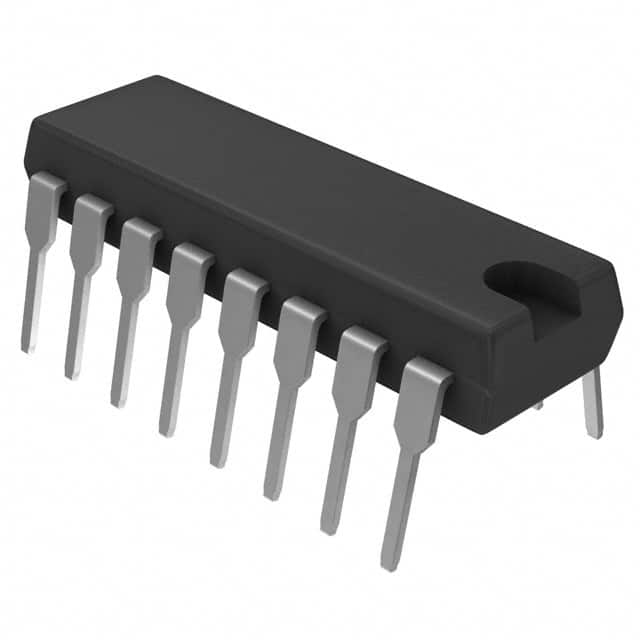
- Part No.:
- SSL1623PH/N1,112
- Manufacturer:
- NXP Semiconductors
- Category:
- LED Drivers
- Package:
- 16-DIP (0.300", 7.62mm)
- Datasheet:
-
 SSL1623PH/N1,112.pdf
- Description:
- IC LED DRIVER OFFL 2A 16DIP
- Quantity:
- Payment:

- Shipping:

Inventory:1,895
Please send an inquiry. Send us your inquiry, and we will respond immediately.
Product details
Overview
SSL1623PH/N1,112 from NXP Semiconductors is a high-voltage SMPS controller IC for primary-side-controlled flyback LED drivers, integrating a 650 V/6.5 Ω power MOSFET and valley-switching logic. It operates directly from universal AC mains (80–276 V), delivers up to 25 W output power, and supports both constant-voltage and constant-current LED operation with primary or optocoupler feedback.
For engineers reviewing the SSL1623PH/N1,112 datasheet, SSL1623PH/N1,112 pinout, SSL1623PH/N1,112 application, or SSL1623PH/N1,112 equivalent, key selection criteria include its integrated 650 V switch, valley-switching efficiency optimization, adjustable oscillator frequency (10–200 kHz), undervoltage/overtemperature/short-winding protection, and DIP16 package compatibility with mains-isolated LED ballast designs.
Technical Context
The SSL1623PH/N1,112 implements voltage-mode control in a self-oscillating or fixed-frequency flyback topology, using auxiliary winding demagnetization sensing via pin AUX and regulation feedback via pin REG. Its valley-switching circuit detects drain ringing minima (200–800 kHz) to minimize capacitive turn-on losses, with timing governed by RC oscillator charge/discharge and internal 20 dB error amplifier gain.
Start-up occurs from rectified mains at VCC ≥ 9.5 V; operation transitions to auxiliary winding supply once VCC exceeds 8.5 V, with undervoltage lockout at ≤7.5 V. Protection includes cycle-by-cycle overcurrent detection (via SOURCE pin voltage threshold of 0.50 V), short-winding detection (0.75 V), thermal shutdown at 160 °C, and safe restart after fault clearance.
Key Specifications
| Parameter | Value and Actual Design Meaning |
|---|---|
| VDRAIN max | 650 V - Withstands full rectified universal AC mains peak (≈390 V) with margin for surge and ringing |
| RDS(on) | 6.5 Ω @ Tj = 25 °C - Enables efficient 25 W operation without external HV switch |
| fosc | 10–200 kHz - Adjustable via RRC/CRC for EMI tuning and transformer size optimization |
| VCC startup | 9.5 V typical - Ensures reliable start-up across 80–276 V AC input range |
| δmax | 75 % @ 100 kHz - Limits peak primary current and maintains stable regulation under load transients |
| Tprot | 160 °C typical - Thermal shutdown prevents permanent damage during sustained overload or poor heatsinking |
| VSOURCE(max) | 0.50 V - Sets precise overcurrent trip point using external sense resistor RI |
Pinout & Package
SSL1623PH/N1,112 is housed in a plastic dual in-line package (DIP16, SOT38-1), 300 mil wide, with 16 leads and long body profile. Pin 1 index and seating plane comply with JEDEC MO-001 and IEC standards.
| Pin/Terminal | Circuit Role | Design Meaning |
|---|---|---|
| VCC (pin 3) | Supply input | Receives start-up current from rectified mains; transitions to auxiliary winding supply above 8.5 V |
| GND (pin 4) | Power ground | Reference for all internal circuits; must be connected to SGND (pin 8) for stable regulation |
| RC (pin 5) | Oscillator timing | Controls fosc via external R/C; exponential discharge enables constant loop gain across duty cycle |
| REG (pin 6) | Regulation input | Accepts feedback voltage (2.5 V typical); internal 20 dB gain sets duty factor for CV/CC control |
| SGND (pin 8) | Signal ground | Low-noise reference for REG, AUX, SOURCE; must be tied to GND (pin 4) on PCB |
| AUX (pin 11) | Demagnetization sense | Detects transformer reset via auxiliary winding; triggers valley switching when VAUX > 100 mV |
| SOURCE (pin 12) | MOSFET source | Current-sense node for overcurrent/short-winding protection; connects to external sense resistor RI |
| DRAIN (pin 14) | Integrated switch drain | Connects to primary winding; withstands 650 V; carries full primary current and ringing energy |
Key Features
| Feature | Design Value |
|---|---|
| Integrated 650 V / 6.5 Ω MOSFET | Eliminates need for external HV switch and gate driver, reducing BOM count and layout complexity in LED drivers |
| Valley switching | Reduces switch-on losses by triggering primary stroke at minimum drain voltage, improving efficiency up to 80 % at full load |
| Self-supply transition | Starts from rectified mains then seamlessly switches to auxiliary winding supply, enabling high-efficiency operation without auxiliary bias winding |
| Multi-level protection | Combines overcurrent (SOURCE pin), short-winding (SOURCE pin), thermal (160 °C), and undervoltage (7.5 V) protection with safe restart behavior |
| Primary + opto feedback support | Enables both low-cost primary-sensing (±8 % accuracy) and high-accuracy secondary-sensing topologies with fail-safe overvoltage backup |
Applications
| LED Ballasts | Contour Lighting |
|---|---|
Use Scenario: Mains-powered linear LED fixtures requiring compact, isolated power conversion with no secondary-side components. IC Role / Device Role / Timing Role: Primary-side SMPS controller implementing valley-switched flyback with auxiliary winding timing and regulation feedback via REG pin. Use Value: Achieves >80 % efficiency and ±8 % output voltage accuracy using only primary sensing, eliminating optocoupler and secondary regulator. | Use Scenario: Low-profile architectural lighting strips powered directly from AC mains, needing robust thermal and overcurrent protection. IC Role / Device Role / Timing Role: Integrated HV controller managing constant-current LED drive with automatic valley detection and safe restart on fault. Use Value: Enables slim mechanical design with built-in 650 V switch and thermal shutdown at 160 °C, reducing external protection components. |
| LED Spotlights | Commercial Lighting |
Use Scenario: Directional retrofit lamps (e.g., GU10, PAR30) requiring high PF, low THD, and dimmable-ready topology. IC Role / Device Role / Timing Role: Voltage-mode flyback controller supporting both CV and CC modes, with RC-adjustable frequency for EMI compliance. Use Value: Delivers up to 25 W output with adjustable fosc (10–200 kHz) to meet EN55015 conducted emission limits without added filtering. | Use Scenario: Retail display lighting systems operating continuously in ambient temperatures up to 50 °C, demanding long-term reliability. IC Role / Device Role / Timing Role: Mains-connected LED driver IC with thermal protection, short-winding detection, and auxiliary-supply stability for 24/7 operation. Use Value: Maintains regulation integrity under thermal stress via junction temperature monitoring and hysteresis (2 °C), preventing premature failure in enclosed fixtures. |
Equivalent & Alternatives
The following parts are listed as comparable options for similar SMPS controller applications.
| Alternative Part | Technical Difference | Application Difference | Selection Advice |
|---|---|---|---|
| SSL1523PH/N1,112 | Lower power rating (≤15 W), same DIP16 package and pinout, but reduced RDS(on) (8.5 Ω) and VDRAIN (500 V) | Optimized for sub-15 W LED spotlights and channel letters; not rated for 25 W or 276 V AC peak | Select when output power ≤15 W and cost sensitivity outweighs headroom requirements |
| UCC28810DR | TI controller with 700 V start-up, no integrated MOSFET, requires external HV FET and gate driver | Supports higher power (>30 W) and wider input (85–265 V AC), but increases component count and layout area | Choose for designs needing >25 W or where external FET selection enables custom RDS(on)/Qg trade-offs |
Compared with SSL1623PH/N1,112, SSL1523PH/N1,112 offers lower system cost below 15 W but sacrifices voltage margin and power capability, while UCC28810DR provides greater scalability beyond 25 W at the expense of integration and board space.
Availability
SSL1623PH/N1,112 is available at Aetrix Electronics and suitable for LED ballasts, contour lighting, and commercial retail displays requiring stable component supply, long-lifecycle assurance, and consistent parametric performance across production batches.
Supply support for SSL1623PH/N1,112 includes scheduled delivery planning, volume procurement assistance, BOM continuity management, traceable sourcing, and lifecycle availability coordination for OEM customers, industrial embedded developers, connected-device designers, and electronics production programs.
Manufacturer
NXP Semiconductors is a global semiconductor company headquartered in Eindhoven, Netherlands, specializing in secure connectivity solutions for automotive, industrial, and IoT applications.
The SSL1623PH/N1,112 belongs to NXP's SSL (Smart Lighting Solutions) family, designed specifically for cost-sensitive, high-efficiency AC-DC LED drivers targeting residential, architectural, and commercial lighting markets.
FAQ
What is the maximum continuous output power supported by the SSL1623PH/N1,112?
The SSL1623PH/N1,112 is rated for LED applications up to 25 W output power. This limit is determined by its integrated 650 V/6.5 Ω MOSFET's thermal and conduction capabilities, validated under universal AC mains (80–276 V) and ambient temperatures ≤50 °C. Applications below 15 W are more suited to the SSL152x family, per NXP's design guidance.
How does valley switching improve efficiency in the SSL1623PH/N1,112?
Valley switching in the SSL1623PH/N1,112 reduces capacitive turn-on losses by initiating each primary stroke near the minimum drain voltage point of the transformer's secondary ringing waveform. At 480 kHz ringing frequency, it achieves exact valley switching; even at 200 kHz, it starts 33° before the valley-still delivering significant loss reduction and enabling >80 % system efficiency at full load.
Can the SSL1623PH/N1,112 operate without an optocoupler?
Yes, the SSL1623PH/N1,112 supports primary-side regulation without an optocoupler by using the auxiliary winding for demagnetization sensing and feedback via the REG pin. This configuration achieves approximately ±8 % output voltage accuracy. An optocoupler may be added for tighter regulation, with primary sensing remaining active as a safety backup if opto feedback fails.
What protection features are built into the SSL1623PH/N1,112?
The SSL1623PH/N1,112 integrates cycle-by-cycle overcurrent protection (via SOURCE pin voltage threshold of 0.50 V), short-winding protection (0.75 V threshold), undervoltage lockout (7.5 V stop level), and thermal shutdown at 160 °C with 2 °C hysteresis. All protections trigger safe restart mode upon fault clearance, ensuring system resilience in real-world LED lighting deployments.
What is the recommended oscillator capacitor value for the SSL1623PH/N1,112 RC pin?
NXP specifies that the oscillator capacitor connected to the RC pin of the SSL1623PH/N1,112 should be limited to approximately 1 nF to ensure full charging within the oscillator's charge time. Larger values risk incomplete charging, leading to unstable frequency control and potential regulation errors-particularly critical at low duty factors where timing precision is essential.
SSL1623PH/N1,112 Specifications
- Product attributes
- Attribute value
- Manufacturer:
- NXP Semiconductors
- Series:
- -
- Package/Case:
- 16-DIP (0.300", 7.62mm)
- Packaging:
- Tube
- Product Status:
- Obsolete
- Type:
- AC DC Offline Switcher
- Topology:
- Flyback
- Internal Switch(s):
- Yes
- Number of Outputs:
- 1
- Voltage - Supply (Min):
- 80V
- Voltage - Supply (Max):
- 276V
- Voltage - Output:
- -
- Current - Output / Channel:
- 2A
- Frequency:
- 10kHz ~ 200kHz
- Dimming:
- -
- Applications:
- Lighting
- Operating Temperature:
- -20°C ~ 145°C (TJ)
- Grade:
- -
- Qualification:
- -
- Mounting Type:
- Through Hole
- Supplier Device Package:
- 16-DIP
SSL1623PH/N1,112 FAQ
1.How can I place an order for SSL1623PH/N1,112 through Aetrix?
Please submit a Request for Quotation (RFQ) for SSL1623PH/N1,112 on Aetrix. Our sales agent will provide a competitive quotation and guide you through the order confirmation once you accept the terms.
2.Are the price and stock information for SSL1623PH/N1,112 reliable?
The price and inventory of SSL1623PH/N1,112 are updated periodically and may fluctuate due to market conditions. Stock and pricing data are typically refreshed every 24 hours. Quotation validity for SSL1623PH/N1,112 is usually 5 days.
3.What payment methods are accepted for SSL1623PH/N1,112?
We accept Wire Transfer, PayPal, Credit Card, Western Union, MoneyGram, and Escrow for SSL1623PH/N1,112 transactions.
Note: Certain payment methods may incur a processing fee.
4.How is shipping managed for SSL1623PH/N1,112?
SSL1623PH/N1,112 orders can be shipped via leading logistics carriers, including DHL, UPS, FedEx, TNT, or Registered Mail.
Once your SSL1623PH/N1,112 order is processed, you will receive an email with the shipment details and tracking number.
Note: Tracking information may take up to 24 hours to appear. Express delivery typically takes 3–5 business days.
5.How can I obtain technical support or documentation for SSL1623PH/N1,112?
For technical support, including SSL1623PH/N1,112 datasheets, pinout diagrams, or application guidance, please contact our engineering support team. They can provide detailed documentation and assistance for your SSL1623PH/N1,112 requirements.
6.How does Aetrix verify that SSL1623PH/N1,112 is sourced from the original manufacturer or authorized distributors?
All SSL1623PH/N1,112 products on Aetrix are procured from qualified distributors and authorized channels. Our dedicated quality assurance team conducts strict verification, including traceability checks and, if necessary, third-party testing. This ensures that SSL1623PH/N1,112 meets industry standards.
7.What is the process for return or replacement of SSL1623PH/N1,112?
All SSL1623PH/N1,112 units undergo pre-shipment inspection (PSI). If there is an issue with SSL1623PH/N1,112, returns or replacements are accepted under the following conditions:
1.Quantity discrepancies, incorrect items, or visible external defects (such as breakage or corrosion), acknowledged by Aetrix.
2.The issue is reported within 90 days of delivery.
3.The SSL1623PH/N1,112 part is unused and in its original packaging.
Return procedure for SSL1623PH/N1,112:
1.Submit a request within 90 days.
2.Obtain a Return Material Authorization (RMA) from Aetrix.
SSL1623PH/N1,112 Tags
-
BCR402RE6327HTSA1
Infineon Technologies

-
BCR430UXTSA2
Infineon Technologies
-
BCR420UE6433HTMA1
Infineon Technologies
-
BCR420UE6327HTSA1
Infineon Technologies
-
BCR421UE6327HTSA1
Infineon Technologies
-
LYT1604D-TL
Power Integrations

-
HV9910CLG-G
Microchip Technology
-
CL2N8-G
Microchip Technology
-
BCR420UW6-7
Diodes Incorporated
-
BCR421UW6-7
Diodes Incorporated
-
BCR420UFD-7
Diodes Incorporated
-
BCR421UFD-7
Diodes Incorporated
Tech Hub

A practical engineering guide to 3.3V and 5V logic compatibility, input thresholds, resistor dividers, translator ICs, MOSFET level shifting, I2C pull-ups, timing limits and power-sequencing risks.

The 74HC595 uses push-pull logic outputs, while the TPIC6B595 uses 50 V open-drain DMOS sinks for higher-power loads. This guide compares timing, current limits, 3.3 V interfacing, load wiring, thermal…

The 74HC595 converts serial data into eight stable parallel outputs. This guide covers pin functions, shift and storage timing, OE and MR behavior, drive-current limits, cascading, voltage compatibilit…

A technical comparison of level-sensitive latches and edge-triggered flip-flops, covering timing windows, setup and hold limits, master–slave operation, time borrowing, race-through, HDL inference and…

A D latch stores one bit while Enable controls when data can pass. This reference covers gate-level operation, truth tables, transparency, setup and hold timing, LE versus OE, common ICs and practical …

An SR latch stores one bit through cross-coupled feedback. This engineering reference covers NOR and NAND implementations, truth tables, forbidden-state recovery, gated operation, switch debouncing, fa…

Latch circuits retain one bit through feedback. This technical reference covers SR and D latches, truth tables, transparency, timing limits, latch-versus-flip-flop behavior, applications and common log…

An engineering guide to LED driver operation, constant-current and constant-voltage outputs, linear and switching topologies, dimming, IC selection, calculations, replacement compatibility, and fault c…

Operational amplifier guide covering op amp basics, feedback, ideal vs real op amps, common configurations, buffer circuits, offset, bias current, gain-bandwidth, slew rate, rail-to-rail limits and sel…

Jumper cables guide covering safe connection order, red and black clamp placement, final ground connection, cable gauge, length, clamp quality, copper vs CCA cables, jump starter comparison and battery…


