
 My Inquiry
 My Account


NXP Semiconductors SSL4101/1,518
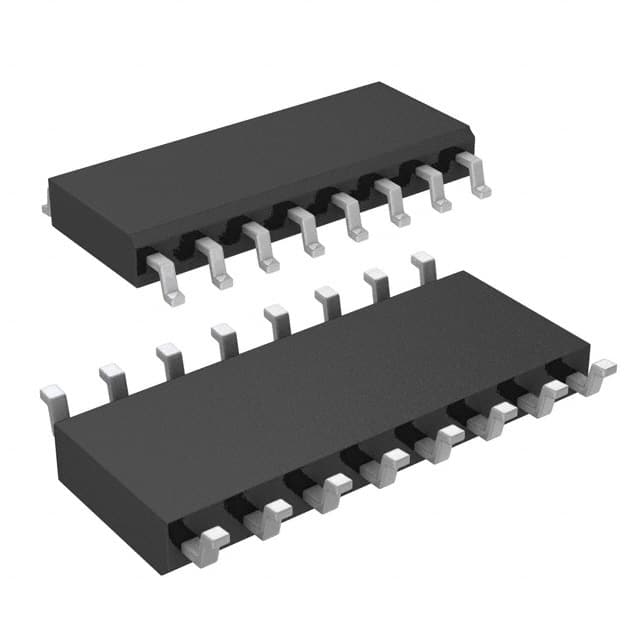
- Part No.:
- SSL4101/1,518
- Manufacturer:
- NXP Semiconductors
- Category:
- LED Drivers
- Package:
- 16-SOIC (0.154", 3.90mm Width)
- Datasheet:
-
 SSL4101/1,518.pdf
- Description:
- IC LED DRIVER OFFL SWITCHER 16SO
- Quantity:
- Payment:

- Shipping:

Inventory:3,281
Please send an inquiry. Send us your inquiry, and we will respond immediately.
Product details
Overview
SSL4101/1,518 from NXP Semiconductors is a GreenChip III+ multi-chip SMPS controller IC integrating PFC and quasi-resonant flyback control in a single SO16 package. It delivers 92–94 % efficiency at 10–300 W LED lighting power supplies, supports universal AC input (70–305 V), and achieves <20 % THD with 0.978–0.998 power factor. Its valley-switching architecture and frequency-reduction mode enable high efficiency across load range while minimizing audible noise.
For engineers reviewing the SSL4101/1,518 datasheet, SSL4101/1,518 pinout, SSL4101/1,518 application, or SSL4101/1,518 equivalent, key selection criteria include integrated dual-stage control, PFC disable at low load, latched/safe-restart protection, and HV start-up capability directly from rectified mains - critical for cost-sensitive, high-reliability LED driver designs.
Technical Context
The SSL4101/1,518 implements two independent controllers on a MultiChip Module: a BCD800 high-voltage chip handling PFC start-up, valley detection, and gate drive, and an SOI low-voltage chip managing precision timing, protection logic, and current-mode flyback regulation. Both converters operate in quasi-resonant or discontinuous conduction mode with patented valley switching.
Control is tightly coupled via shared signals: FBCTRL voltage governs flyback frequency reduction and triggers PFC disable below ~1.4 V; VINSENSE enables mains voltage compensation for constant loop bandwidth; and LATCH provides unified fault latching across both stages. Protection includes demagnetization-based open-loop detection, adjustable OVP on VOSENSE/FBAUX, and OTP with HV-supplied bias during VCC dropout.
Key Specifications
| Parameter | Value and Actual Design Meaning |
|---|---|
| Topology | Integrated PFC + quasi-resonant flyback controller - eliminates need for separate ICs and reduces BOM count by ≥30 % |
| Input Voltage Range | 70–305 V AC universal - enables single design for global markets without hardware variants |
| Efficiency | 92–94 % at full load - sustains thermal reliability in enclosed LED fixtures with minimal heatsinking |
| THD | <20 % at full load across 100–277 V AC - meets IEC 61000-3-2 Class D requirements without external filters |
| Standby Power | <350 mW at 277 V AC - eliminates need for auxiliary housekeeping supply in smart lighting systems |
| Peak Current Limit (Flyback) | 25 % of max at low load - maintains high light-output efficacy and silent operation below 10 W |
| PFC Disable Threshold | Automatically disabled when flyback output power drops - prevents efficiency collapse below ~20 % load |
Pinout & Package
SSL4101/1,518 is housed in a plastic small outline package (SO16) per SOT109-1 standard, 3.9 mm body width, with two internal high-voltage safety spacers (pins 14 & 15) not electrically connected.
| Pin/Terminal | Circuit Role | Design Meaning |
|---|---|---|
| VCC (1) | IC supply rail | Powered initially via HV pin; later sustained by flyback auxiliary winding - enables self-biasing after start-up |
| GND (2) | Power ground reference | Common return for analog and digital blocks - requires low-inductance layout to avoid protection false triggers |
| FBCTRL (3) | Flyback control voltage input | Directly sets frequency reduction threshold and enables PFC disable - 50 mV hysteresis prevents oscillation at transition |
| FBAUX (4) | Flyback demagnetization sense | Detects secondary stroke end and enables valley switching - open-circuit causes immediate shutdown |
| LATCH (5) | Unified fault latch input | Sources 80 μA; pulls down <1.25 V to halt both converters - used for system-level OTP or overvoltage flags |
| PFCCOMP (6) | PFC loop compensation | Connects RC network to set regulation bandwidth - maintains stable PF and THD across full input voltage range |
| VINSENSE (7) | Mains voltage sensing | Enables real-time input voltage compensation - ensures consistent harmonic performance from 70–305 V AC |
| PFCAUX (8) | PFC demagnetization sense | Provides ZCS and valley signals for PFC MOSFET - unconnected or noisy input disables PFC stage |
| VOSENSE (9) | PFC output voltage sense | Monitors bus voltage for OVP and open-loop protection - resistor open triggers immediate PFC shutdown |
| FBSENSE (10) | Flyback current sense | Measures primary peak current for cycle-by-cycle OCP - sets maximum power and soft-start ramp rate |
| PFCSENSE (11) | PFC current sense | Controls PFC peak current limit and soft-start - clamped to 2.7–3.9 V in low-power mode |
| PFCDRIVER (12) | PFC gate driver output | −500 mA source / 1.2 A sink - drives 1 Ω gate impedance with <100 ns rise/fall for low switching loss |
| FBDRIVER (13) | Flyback gate driver output | Same drive strength as PFCDRIVER - supports fast turn-on of 600 V MOSFETs in high-frequency QR mode |
| HVS (14,15) | High-voltage safety spacer | No electrical connection - provides creepage/clearance isolation between HV and LV sections |
| HV (16) | High-voltage start-up & valley sense | Charges VCC from rectified mains; senses drain valley for flyback QR timing - eliminates external HV resistor |
Key Features
| Feature | Design Value |
|---|---|
| Integrated PFC + Flyback Control | Reduces external component count by ≥40 % versus discrete controller solutions - cuts PCB area and assembly cost |
| Valley Switching (Patented) | Minimizes capacitive switching losses in both PFC and flyback stages - enables >125 kHz operation with low EMI |
| Frequency Reduction Mode | Lowers flyback switching frequency to near-zero at standby - eliminates transformer buzz and meets <0.5 W no-load mandates |
| PFC Disable at Low Load | Shuts down PFC stage when flyback output falls below threshold - avoids 10–15 % efficiency penalty at light loads |
| Safe Restart Protection | Resets automatically after VCC discharge and HV reapplication - prevents latch-up during transient faults without manual intervention |
| Demagnetization-Based OLP | Detects missing FBAUX/PFCAUX signal to halt switching - protects against open secondary or broken feedback |
Applications
| LED Street Lighting | Commercial Downlight Drivers |
|---|---|
Use Scenario: Outdoor 150 W LED luminaire operating from 120–277 V AC mains with IP66 enclosure and passive cooling. IC Role / Device Role / Timing Role: Dual-stage SMPS controller managing PFC bus regulation and isolated flyback output with synchronous rectification. Use Value: Achieves 94 % efficiency at 277 V AC and <350 mW standby - eliminates forced-air cooling and meets DLC Premium requirements. | Use Scenario: Indoor 36 W architectural downlight requiring flicker-free dimming, low THD, and zero-audible-noise operation. IC Role / Device Role / Timing Role: Integrated controller enabling valley-switched QR flyback with automatic PFC disable below 10 % load. Use Value: Maintains >92 % efficiency from 100 % to 10 % load while eliminating transformer whine - satisfies IEEE 1789 flicker guidelines. |
| Industrial High-Bay Fixtures | Smart LED Panel Lights |
Use Scenario: 200 W warehouse high-bay fixture with 0–10 V dimming, operating in ambient temperatures up to 65 °C. IC Role / Device Role / Timing Role: Primary controller providing OTP-latched shutdown, UVLO recovery, and robust demagnetization sensing under thermal stress. Use Value: Sustains full output with no derating up to 65 °C junction temperature - extends lifetime beyond 50,000 hours in sealed enclosures. | Use Scenario: 48 V DC output panel light with integrated Zigbee module, requiring ultra-low standby power and compact board space. IC Role / Device Role / Timing Role: Enables direct powering of wireless MCU from flyback output while maintaining <190 mW standby at 120 V AC. Use Value: Eliminates separate buck converter for MCU supply - reduces BoM cost and improves system-level energy certification scores. |
Equivalent & Alternatives
The following parts are listed as comparable options for similar dual-stage SMPS controller applications.
| Alternative Part | Technical Difference | Application Difference | Selection Advice |
|---|---|---|---|
| ICE3PCS01G | Standalone PFC controller only - requires external flyback IC; no integrated valley detection for flyback stage | Needs additional IC, gate drivers, and compensation networks - increases layout complexity and BOM cost | Choose only if PFC-only control is sufficient or legacy flyback design must be retained |
| UCC28070 | Interleaved PFC controller with no flyback integration - lacks frequency reduction, low-noise modes, and HV start-up | Cannot replace SSL4101/1,518 in single-stage LED drivers - requires complete redesign of power stage topology | Select only for high-power (>300 W) industrial PFC front-ends where flyback is handled separately |
Compared with ICE3PCS01G and UCC28070, SSL4101/1,518 uniquely integrates both PFC and QR flyback control with unified protection, HV start-up, and adaptive low-power modes - delivering lowest component count and highest efficiency in 10–300 W LED lighting applications.
Availability
SSL4101/1,518 is available at Aetrix Electronics and suitable for LED street lighting, commercial downlights, industrial high-bay fixtures, smart panel lights, and architectural lighting systems requiring stable component supply, long-term lifecycle support, and compliance with global energy standards.
Supply support for SSL4101/1,518 includes scheduled delivery planning, volume procurement assistance, BOM continuity management, traceable sourcing, and lifecycle availability coordination for OEM customers, industrial embedded developers, connected-device designers, and electronics production programs.
Manufacturer
NXP Semiconductors is a Dutch semiconductor company specializing in secure connectivity solutions, automotive processors, and energy-efficient power management ICs.
The GreenChip III+ product line was designed specifically for high-efficiency, low-THD, universal-input AC-DC conversion in solid-state lighting - prioritizing integration, thermal resilience, and regulatory compliance.
FAQ
What is the maximum output power supported by the SSL4101/1,518 in LED lighting applications?
The SSL4101/1,518 is validated for LED lighting power supplies ranging from 10 W to 300 W. At 150 W (universal input, 48 V DC output), it achieves 92–94 % efficiency depending on AC input voltage. Its dual-stage architecture, valley switching, and thermal protection ensure reliable operation across this full range without derating in typical enclosed fixtures.
Does the SSL4101/1,518 support true universal AC input voltage?
Yes, the SSL4101/1,518 supports true universal AC input from 70 V AC to 305 V AC. This is enabled by its proprietary high-voltage BCD800 process and HV pin, which allows direct start-up from rectified mains without external HV resistors. The VINSENSE pin provides real-time mains voltage compensation to maintain consistent THD and PF across the entire range.
How does the SSL4101/1,518 achieve low audible noise in LED drivers?
The SSL4101/1,518 minimizes audible noise through three mechanisms: (1) frequency reduction mode lowers flyback switching frequency to near-zero at standby, (2) valley switching eliminates hard-switching spikes that excite transformer windings, and (3) PFC disable at low load removes high-frequency PFC ripple from the bus. These features collectively eliminate transformer buzz across all operating conditions.
What protection features are built into the SSL4101/1,518?
The SSL4101/1,518 includes continuous demagnetization detection for open-loop protection on both PFC and flyback stages, latched and safe-restart modes for system faults, adjustable OVP on VOSENSE and FBAUX, OTP with HV-supplied bias, UVLO with hysteresis, and cycle-by-cycle OCP on FBSENSE and PFCSENSE. All protections are implemented in hardware with no firmware dependency.
Can the SSL4101/1,518 be used without an auxiliary winding on the flyback transformer?
No - the SSL4101/1,518 requires the auxiliary winding connected to the FBAUX pin for demagnetization detection and valley timing. If FBAUX is left open or disconnected, the flyback controller immediately halts switching. The auxiliary winding also powers the IC after start-up, replacing the need for a separate bias supply.
SSL4101/1,518 Specifications
- Product attributes
- Attribute value
- Manufacturer:
- NXP Semiconductors
- Series:
- GreenChip™ III
- Package/Case:
- 16-SOIC (0.154", 3.90mm Width)
- Packaging:
- Tape & Reel (TR)
- Product Status:
- Discontinued at Digi-Key
- Type:
- AC DC Offline Switcher
- Topology:
- Flyback
- Internal Switch(s):
- No
- Number of Outputs:
- 1
- Voltage - Supply (Min):
- 15V
- Voltage - Supply (Max):
- 38V
- Voltage - Output:
- -
- Current - Output / Channel:
- -
- Frequency:
- 380kHz
- Dimming:
- -
- Applications:
- Lighting
- Operating Temperature:
- -40°C ~ 150°C (TJ)
- Grade:
- -
- Qualification:
- -
- Mounting Type:
- Surface Mount
- Supplier Device Package:
- 16-SO
SSL4101/1,518 FAQ
1.How can I place an order for SSL4101/1,518 through Aetrix?
Please submit a Request for Quotation (RFQ) for SSL4101/1,518 on Aetrix. Our sales agent will provide a competitive quotation and guide you through the order confirmation once you accept the terms.
2.Are the price and stock information for SSL4101/1,518 reliable?
The price and inventory of SSL4101/1,518 are updated periodically and may fluctuate due to market conditions. Stock and pricing data are typically refreshed every 24 hours. Quotation validity for SSL4101/1,518 is usually 5 days.
3.What payment methods are accepted for SSL4101/1,518?
We accept Wire Transfer, PayPal, Credit Card, Western Union, MoneyGram, and Escrow for SSL4101/1,518 transactions.
Note: Certain payment methods may incur a processing fee.
4.How is shipping managed for SSL4101/1,518?
SSL4101/1,518 orders can be shipped via leading logistics carriers, including DHL, UPS, FedEx, TNT, or Registered Mail.
Once your SSL4101/1,518 order is processed, you will receive an email with the shipment details and tracking number.
Note: Tracking information may take up to 24 hours to appear. Express delivery typically takes 3–5 business days.
5.How can I obtain technical support or documentation for SSL4101/1,518?
For technical support, including SSL4101/1,518 datasheets, pinout diagrams, or application guidance, please contact our engineering support team. They can provide detailed documentation and assistance for your SSL4101/1,518 requirements.
6.How does Aetrix verify that SSL4101/1,518 is sourced from the original manufacturer or authorized distributors?
All SSL4101/1,518 products on Aetrix are procured from qualified distributors and authorized channels. Our dedicated quality assurance team conducts strict verification, including traceability checks and, if necessary, third-party testing. This ensures that SSL4101/1,518 meets industry standards.
7.What is the process for return or replacement of SSL4101/1,518?
All SSL4101/1,518 units undergo pre-shipment inspection (PSI). If there is an issue with SSL4101/1,518, returns or replacements are accepted under the following conditions:
1.Quantity discrepancies, incorrect items, or visible external defects (such as breakage or corrosion), acknowledged by Aetrix.
2.The issue is reported within 90 days of delivery.
3.The SSL4101/1,518 part is unused and in its original packaging.
Return procedure for SSL4101/1,518:
1.Submit a request within 90 days.
2.Obtain a Return Material Authorization (RMA) from Aetrix.
SSL4101/1,518 Tags
-
BCR402RE6327HTSA1
Infineon Technologies

-
BCR430UXTSA2
Infineon Technologies
-
BCR420UE6433HTMA1
Infineon Technologies
-
BCR420UE6327HTSA1
Infineon Technologies
-
BCR421UE6327HTSA1
Infineon Technologies
-
LYT1604D-TL
Power Integrations

-
HV9910CLG-G
Microchip Technology
-
CL2N8-G
Microchip Technology
-
BCR420UW6-7
Diodes Incorporated
-
BCR421UW6-7
Diodes Incorporated
-
BCR420UFD-7
Diodes Incorporated
-
BCR421UFD-7
Diodes Incorporated
Tech Hub

A practical engineering guide to 3.3V and 5V logic compatibility, input thresholds, resistor dividers, translator ICs, MOSFET level shifting, I2C pull-ups, timing limits and power-sequencing risks.

The 74HC595 uses push-pull logic outputs, while the TPIC6B595 uses 50 V open-drain DMOS sinks for higher-power loads. This guide compares timing, current limits, 3.3 V interfacing, load wiring, thermal…

The 74HC595 converts serial data into eight stable parallel outputs. This guide covers pin functions, shift and storage timing, OE and MR behavior, drive-current limits, cascading, voltage compatibilit…

A technical comparison of level-sensitive latches and edge-triggered flip-flops, covering timing windows, setup and hold limits, master–slave operation, time borrowing, race-through, HDL inference and…

A D latch stores one bit while Enable controls when data can pass. This reference covers gate-level operation, truth tables, transparency, setup and hold timing, LE versus OE, common ICs and practical …

An SR latch stores one bit through cross-coupled feedback. This engineering reference covers NOR and NAND implementations, truth tables, forbidden-state recovery, gated operation, switch debouncing, fa…

Latch circuits retain one bit through feedback. This technical reference covers SR and D latches, truth tables, transparency, timing limits, latch-versus-flip-flop behavior, applications and common log…

An engineering guide to LED driver operation, constant-current and constant-voltage outputs, linear and switching topologies, dimming, IC selection, calculations, replacement compatibility, and fault c…

Operational amplifier guide covering op amp basics, feedback, ideal vs real op amps, common configurations, buffer circuits, offset, bias current, gain-bandwidth, slew rate, rail-to-rail limits and sel…

Jumper cables guide covering safe connection order, red and black clamp placement, final ground connection, cable gauge, length, clamp quality, copper vs CCA cables, jump starter comparison and battery…


