
 My Inquiry
 My Account


NXP Semiconductors SSL5301T/1J
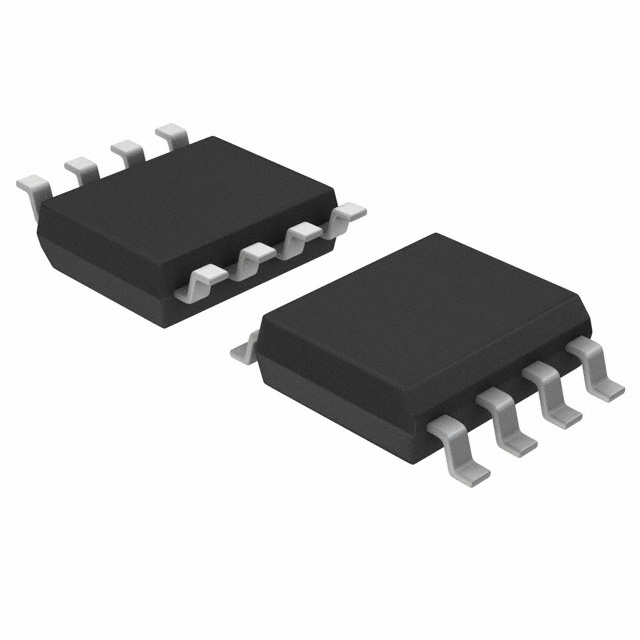
- Part No.:
- SSL5301T/1J
- Manufacturer:
- NXP Semiconductors
- Category:
- LED Drivers
- Package:
- 8-SOIC (0.154", 3.90mm Width)
- Datasheet:
-
 SSL5301T/1J.pdf
- Description:
- IC LED DRIVER OFFL SWITCHER 8SO
- Quantity:
- Payment:

- Shipping:

Inventory:3,590
Please send an inquiry. Send us your inquiry, and we will respond immediately.
Product details
Overview
SSL5301T/1J from NXP Semiconductors is a mains-dimmable LED controller IC designed for single-stage flyback, buck, and buck-boost topologies in compact AC-powered LED lamps. It delivers ±4 % LED current accuracy across line/load/temperature, supports 4–25 W output power, and enables high dimmer compatibility with leading/trailing-edge and intelligent dimmers in 100/120/230 VAC systems.
For engineers reviewing the SSL5301T/1J datasheet, SSL5301T/1J pinout, SSL5301T/1J application, or SSL5301T/1J equivalent, this page provides verified technical context on valley-switching operation, selectable LTHD/low-ripple modes, integrated HV start-up JFET, primary-side sensing, and full protection suite including OCP, OTP, OVP, and mains synchronization loss detection.
Technical Context
The SSL5301T/1J implements Discontinuous Conduction Mode (DCM) peak-current control with valley detection to minimize switching losses. It uses RMAINS pin sensing for mains voltage and phase angle acquisition, enabling accurate dimming translation across three built-in curves and two frequency ranges (55–78 kHz LF / 84–117 kHz HF).
Its dual-mode architecture allows tradeoffs between THD (<0.9 PF in LTHD mode) and LED current ripple (±0.5 % in low-ripple mode), while internal protections-including bleeder dissipation limiting, CCM prevention, and brownout-triggered ton(high) clamping-ensure robust operation in multi-lamp and wall-switch-compatible applications.
Key Specifications
| Parameter | Value and Actual Design Meaning |
|---|---|
| VCC Range | 8.8 V to 32 V - powers IC after startup; UVLO triggers at 9.3 V (typ), restarts at 18.5 V (typ) |
| fsw (LF Mode) | 55–78 kHz - optimized for lower EMI and higher efficiency in 50/60 Hz mains |
| fsw (HF Mode) | 84–117 kHz - reduces magnetics size for compact PAR/GU10/A19 lamp designs |
| LED Current Accuracy | ±4 % - maintained across component tolerances, temperature, and input voltage variation |
| VI(DRAIN) | 700 V (non-repetitive) - supports direct connection to rectified mains without external HV clamp |
| Dimmer Detection | Leading-edge, trailing-edge, and smart dimmers - no external circuitry required for universal compatibility |
| Protections | UVLO, OCP, OTP, OVP (latched), OSP, BLS-based bleeder control, mains sync loss, LEB - all integrated, no external components needed |
Pinout & Package
SSL5301T/1J is housed in an SO8 package (SOT96-1), 3.9 mm body width, suitable for high-density LED driver PCBs with thermal resistance Rth(j-a) = 159 K/W (free air, 2-layer 2 cm × 3 cm PCB).
| Pin/Terminal | Circuit Role | Design Meaning |
|---|---|---|
| RMAINS (1) | Mains voltage/phase sensing input | Directly interfaces rectified AC via external resistor; enables dimmer type detection and zero-cross synchronization |
| VCC (2) | IC supply rail | Charged by internal HV JFET from DRAIN at startup; supplies internal logic and gate drivers during operation |
| BLDRV (3) | Bleeder transistor driver output | Drives external NPN to generate modulated bleed current for dimmer hold-on and compatibility |
| BLS (4) | Bleeder loop sense input | Monitors total application current via external sense resistor; regulates weak bleed current to maintain dimmer conduction |
| ISNS (5) | Peak current sense input | Detects voltage across external sense resistor to regulate LED current; threshold varies by mode (0.35 V to 1.24 V) |
| PWRDRV (6) | External MOSFET gate driver | Delivers 360 mA source / 900 mA sink drive; supports fast, controlled switching with slope control |
| GND (7) | Signal and power ground reference | Common return for ISNS, BLS, RMAINS, and internal regulation loops; requires low-impedance layout |
| DRAIN (8) | High-voltage drain sense input | Provides energy for VCC startup; detects demagnetization and valley points for ZVS operation |
Key Features
| Feature | Design Value |
|---|---|
| Valley-switching operation | Reduces capacitive switching losses and EMI by triggering MOSFET turn-on at drain voltage minima |
| Selectable LTHD vs. low-ripple modes | Configured via RCTRL; achieves PF > 0.9 (LTHD) or <0.5 % LED ripple (low-ripple) without topology change |
| Integrated HV start-up JFET | Eliminates external start-up resistor network; draws 5.5 mA (typ) from DRAIN at 675 V to charge VCC |
| Primary-side constant current regulation | Enables transformerless feedback; removes optocoupler and secondary-side references for smaller BOM |
| Multi-lamp compatible design | Supports parallel lamp configurations via shared RMAINS/BLS sensing and synchronized valley detection |
| Wall-switch indicator light support | Draws defined ICC (1.25 mA typ) from VCC during standby window to power LED indicators without flicker |
Applications
| PAR30 LED Retrofit Lamp | GU10 Dimmable Spotlight |
|---|---|
Use Scenario: Mains-powered directional lamp replacing halogen GU10 with TRIAC dimmer compatibility. IC Role / Device Role / Timing Role: SSL5301T/1J acts as primary-side dimmable LED current controller, synchronizing switching to mains zero-cross and adjusting peak current per dimmer phase angle. Use Value: Delivers smooth 1–100 % dimming with <1 % flicker, ±4 % current stability, and 230 VAC input support in <12 mm height form factor. |
Use Scenario: Compact 120 VAC retrofit spotlight with integrated heat sink and visible indicator LED. IC Role / Device Role / Timing Role: SSL5301T/1J manages buck topology, drives external MOSFET, and sources precise current to 12–18 V LED string while powering wall-switch indicator via VCC timing window. Use Value: Enables 290 mA output at 37 V with 0.92 PF and <5 % THD using only 12 external components and SO8 footprint. |
| A19 Smart Bulb Base | Candle-Form LED Lamp |
Use Scenario: E26 base LED bulb operating from 120 VAC with trailing-edge ELV dimmer support. IC Role / Device Role / Timing Role: SSL5301T/1J executes flyback conversion with primary-side sensing, detects ELV dimmer waveform, and applies lin-log limited dim curve for thermal-safe low-end dimming. Use Value: Achieves 250 mA @ 36 V output with 0.95 PF, no LED binning required, and automatic bleeder current reduction below 30 % dim level. |
Use Scenario: Small-diameter candle-shaped lamp (E12 base) requiring minimal PCB area and low thermal mass. IC Role / Device Role / Timing Role: SSL5301T/1J configures buck-boost topology with HF switching (91 kHz typ) to shrink inductor size and fit within 15 mm diameter envelope. Use Value: Supports 50 mA @ 90 V output with 4–25 W scalability, integrated OTP release at 102 °C, and lifetime matching >25,000 hours. |
Equivalent & Alternatives
The following parts are listed as comparable options for similar mains-dimmable LED controller applications.
| Alternative Part | Technical Difference | Application Difference | Selection Advice |
|---|---|---|---|
| ON Semiconductor NCL30001DR2G | Fixed 65 kHz fsw; no HF/LF mode selection; requires external HV start-up resistor | Limited dimmer compatibility (no intelligent dimmer detection); no bleeder stage drive (BLDRV) | Choose for cost-sensitive 120 VAC-only designs where LTHD mode suffices and board space allows extra start-up components |
| Infineon ICE2QS03G | Quasi-resonant flyback only; no buck/buck-boost support; no RMAINS-based mains sync | Requires secondary-side feedback; incompatible with single-stage topologies and multi-lamp arrangements | Prefer when designing isolated 230 VAC drivers with optocoupler feedback and no requirement for wall-switch indicator support |
Compared with NCL30001DR2G and ICE2QS03G, the SSL5301T/1J uniquely integrates HV start-up, bleeder drive, RMAINS-based synchronization, and topology flexibility-enabling smaller BOM, broader dimmer coverage, and single-stage designs across 100–230 VAC inputs without layout or component compromises.
Availability
SSL5301T/1J is available at Aetrix Electronics and suitable for compact LED retrofit lamps, GU10 spotlights, A19 bulbs, and candle-form lighting requiring stable component supply, long-lifecycle assurance, and global mains voltage support.
Supply support for SSL5301T/1J includes scheduled delivery planning, volume procurement assistance, BOM continuity management, traceable sourcing, and lifecycle availability coordination for OEM customers, industrial embedded developers, connected-device designers, and electronics production programs.
Manufacturer
NXP Semiconductors is a global semiconductor leader focused on secure connectivity solutions for automotive, industrial, and IoT applications, with deep expertise in power management and lighting control ICs.
The SSL5301T/1J belongs to NXP's mains-dimmable LED controller product line, engineered specifically for cost-effective, compact, single-stage AC/DC LED drivers that eliminate optocouplers, reduce BOM count, and deliver consistent dimming performance across global AC mains standards.
FAQ
What dimmer types does the SSL5301T/1J support?
The SSL5301T/1J natively detects leading-edge (TRIAC), trailing-edge (ELV), and intelligent dimmers with pulse-based supply. It uses RMAINS pin sensing and internal algorithms to translate phase-cut waveforms into precise LED current levels across two selectable dim curves-lin-log and lin-log limited-without external dimmer identification circuitry.
How does the SSL5301T/1J achieve primary-side constant current regulation?
The SSL5301T/1J regulates LED current by monitoring the voltage across the ISNS sense resistor during each switching cycle. Its internal peak-current comparator adjusts the MOSFET on-time based on real-time inductor current, while valley detection and DCM operation ensure accurate average current control without secondary-side feedback or optocouplers-reducing BOM count and improving reliability.
What protection features are integrated into the SSL5301T/1J?
The SSL5301T/1J integrates eight protections: UnderVoltage LockOut (UVLO), OverCurrent Protection (OCP), Brownout protection, Output Short Protection (OSP), Output open OverVoltage Protection (OVP), Internal OverTemperature Protection (OTP), Mains synchronization loss protection, and Bleeder dissipation protection. All are implemented internally-no external components required for basic fault coverage.
Can the SSL5301T/1J be used in both buck and flyback topologies?
Yes-the SSL5301T/1J supports buck, flyback, and buck-boost topologies. Mode selection resistors (RTF on PWRDRV, RDIM on BLDRV, RCTL on ISNS) configure topology, frequency range, dim curve, and control mode. For example, 15 kΩ RTF enables flyback/LF mode, while 56 kΩ selects buck/HF mode-allowing one IC to serve multiple lamp architectures.
Does the SSL5301T/1J require an external start-up circuit?
No-the SSL5301T/1J includes an integrated high-voltage JFET that draws up to 5.5 mA from the DRAIN pin to charge the VCC capacitor at power-up. This eliminates the need for external high-voltage start-up resistors or auxiliary windings, reducing component count and improving startup reliability across 100–230 VAC inputs.
SSL5301T/1J Specifications
- Product attributes
- Attribute value
- Manufacturer:
- NXP Semiconductors
- Series:
- GreenChip™
- Package/Case:
- 8-SOIC (0.154", 3.90mm Width)
- Packaging:
- Tape & Reel (TR)
- Product Status:
- Discontinued at Digi-Key
- Type:
- AC DC Offline Switcher
- Topology:
- Flyback, Step-Down (Buck), Step-Up (Boost)
- Internal Switch(s):
- No
- Number of Outputs:
- 1
- Voltage - Supply (Min):
- 8.8V
- Voltage - Supply (Max):
- 32V
- Voltage - Output:
- -
- Current - Output / Channel:
- -
- Frequency:
- -
- Dimming:
- -
- Applications:
- Lighting
- Operating Temperature:
- -40°C ~ 125°C (TA)
- Grade:
- -
- Qualification:
- -
- Mounting Type:
- Surface Mount
- Supplier Device Package:
- 8-SO
SSL5301T/1J FAQ
1.How can I place an order for SSL5301T/1J through Aetrix?
Please submit a Request for Quotation (RFQ) for SSL5301T/1J on Aetrix. Our sales agent will provide a competitive quotation and guide you through the order confirmation once you accept the terms.
2.Are the price and stock information for SSL5301T/1J reliable?
The price and inventory of SSL5301T/1J are updated periodically and may fluctuate due to market conditions. Stock and pricing data are typically refreshed every 24 hours. Quotation validity for SSL5301T/1J is usually 5 days.
3.What payment methods are accepted for SSL5301T/1J?
We accept Wire Transfer, PayPal, Credit Card, Western Union, MoneyGram, and Escrow for SSL5301T/1J transactions.
Note: Certain payment methods may incur a processing fee.
4.How is shipping managed for SSL5301T/1J?
SSL5301T/1J orders can be shipped via leading logistics carriers, including DHL, UPS, FedEx, TNT, or Registered Mail.
Once your SSL5301T/1J order is processed, you will receive an email with the shipment details and tracking number.
Note: Tracking information may take up to 24 hours to appear. Express delivery typically takes 3–5 business days.
5.How can I obtain technical support or documentation for SSL5301T/1J?
For technical support, including SSL5301T/1J datasheets, pinout diagrams, or application guidance, please contact our engineering support team. They can provide detailed documentation and assistance for your SSL5301T/1J requirements.
6.How does Aetrix verify that SSL5301T/1J is sourced from the original manufacturer or authorized distributors?
All SSL5301T/1J products on Aetrix are procured from qualified distributors and authorized channels. Our dedicated quality assurance team conducts strict verification, including traceability checks and, if necessary, third-party testing. This ensures that SSL5301T/1J meets industry standards.
7.What is the process for return or replacement of SSL5301T/1J?
All SSL5301T/1J units undergo pre-shipment inspection (PSI). If there is an issue with SSL5301T/1J, returns or replacements are accepted under the following conditions:
1.Quantity discrepancies, incorrect items, or visible external defects (such as breakage or corrosion), acknowledged by Aetrix.
2.The issue is reported within 90 days of delivery.
3.The SSL5301T/1J part is unused and in its original packaging.
Return procedure for SSL5301T/1J:
1.Submit a request within 90 days.
2.Obtain a Return Material Authorization (RMA) from Aetrix.
SSL5301T/1J Tags
-
BCR402RE6327HTSA1
Infineon Technologies

-
BCR430UXTSA2
Infineon Technologies
-
BCR420UE6433HTMA1
Infineon Technologies
-
BCR420UE6327HTSA1
Infineon Technologies
-
BCR421UE6327HTSA1
Infineon Technologies
-
LYT1604D-TL
Power Integrations

-
HV9910CLG-G
Microchip Technology

-
CL2N8-G
Microchip Technology
-
BCR420UW6-7
Diodes Incorporated
-
BCR421UW6-7
Diodes Incorporated
-
BCR420UFD-7
Diodes Incorporated
-
BCR421UFD-7
Diodes Incorporated
Tech Hub

A practical engineering guide to 3.3V and 5V logic compatibility, input thresholds, resistor dividers, translator ICs, MOSFET level shifting, I2C pull-ups, timing limits and power-sequencing risks.

The 74HC595 uses push-pull logic outputs, while the TPIC6B595 uses 50 V open-drain DMOS sinks for higher-power loads. This guide compares timing, current limits, 3.3 V interfacing, load wiring, thermal…

The 74HC595 converts serial data into eight stable parallel outputs. This guide covers pin functions, shift and storage timing, OE and MR behavior, drive-current limits, cascading, voltage compatibilit…

A technical comparison of level-sensitive latches and edge-triggered flip-flops, covering timing windows, setup and hold limits, master–slave operation, time borrowing, race-through, HDL inference and…

A D latch stores one bit while Enable controls when data can pass. This reference covers gate-level operation, truth tables, transparency, setup and hold timing, LE versus OE, common ICs and practical …

An SR latch stores one bit through cross-coupled feedback. This engineering reference covers NOR and NAND implementations, truth tables, forbidden-state recovery, gated operation, switch debouncing, fa…

Latch circuits retain one bit through feedback. This technical reference covers SR and D latches, truth tables, transparency, timing limits, latch-versus-flip-flop behavior, applications and common log…

An engineering guide to LED driver operation, constant-current and constant-voltage outputs, linear and switching topologies, dimming, IC selection, calculations, replacement compatibility, and fault c…

Operational amplifier guide covering op amp basics, feedback, ideal vs real op amps, common configurations, buffer circuits, offset, bias current, gain-bandwidth, slew rate, rail-to-rail limits and sel…

Jumper cables guide covering safe connection order, red and black clamp placement, final ground connection, cable gauge, length, clamp quality, copper vs CCA cables, jump starter comparison and battery…


