
 My Inquiry
 My Account


Analog Devices Inc. SSM2160P
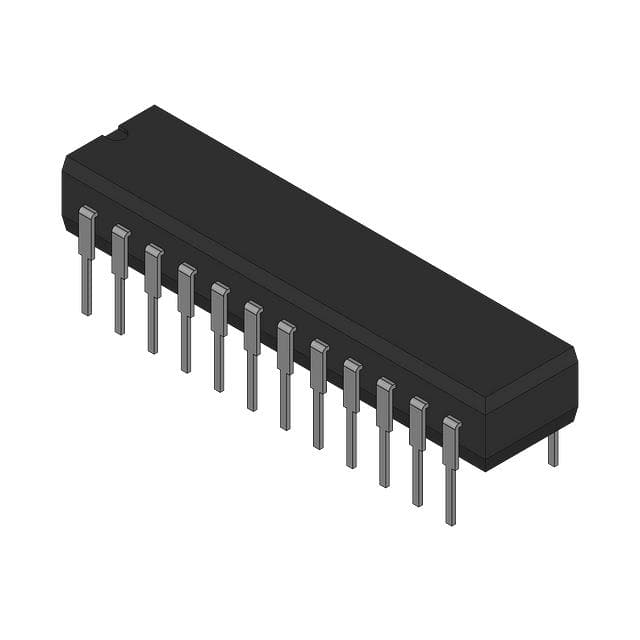
- Part No.:
- SSM2160P
- Manufacturer:
- Analog Devices Inc.
- Category:
- Audio Special Purpose
- Package:
- 24-DIP (0.300", 7.62mm)
- Datasheet:
-
 SSM2160P.pdf
- Description:
- 6-CHANNEL MASTER VOLUME CONTROL
- Quantity:
- Payment:

- Shipping:

Inventory:60,039
Please send an inquiry. Send us your inquiry, and we will respond immediately.
Product details
Overview
SSM2160P from Analog Devices is a 6-channel digitally controlled audio volume controller with master/balance functionality, implemented using voltage-controlled amplifiers (VCAs) and dual DAC architecture (7-bit master + six 5-bit channel DACs), delivering 100 dB gain range, –100 dBu noise floor, and clickless level adjustment for professional audio systems operating from ±4 V to ±7 V or +8 V to +14 V supplies.
For engineers reviewing the SSM2160P datasheet, SSM2160P pinout, SSM2160P application, or SSM2160P equivalent, key selection considerations include its 24-pin DIP package, serial 3-wire interface (CLK/DATA/LD), power-on mute behavior, analog common (ACOM) generation for single-supply use, and precise channel-to-channel gain matching within 0.25 dB at nominal settings.
Technical Context
The SSM2160P integrates six independent VCAs each driven by a dedicated 5-bit DAC (32 steps, 1 dB/step), plus a shared 7-bit master DAC (128 steps, 1 dB/step) that scales all channels simultaneously while preserving balance. Its control logic uses negative-edge-triggered serial shift register addressing with MSB-first data format and supports SPI/microwire compatibility via WRITE/LD tie.
Analog performance is anchored by on-chip buffered ACOM generation for single-supply operation, ±2 mA output drive capability, 5 Ω output impedance, and THD+N of 0.008% at 1 kHz with –10 dBu input and unity gain-enabled by high-precision resistor ladder design and controlled DAC slew rate to eliminate switching transients.
Key Specifications
| Parameter | Value and Actual Design Meaning |
|---|---|
| Channel Count | 6 independent audio channels with individual gain control and shared master attenuation |
| Gain Range | –80 dB to +20 dB per channel; master adjusts full range while maintaining channel balance |
| Step Resolution | Master: 128 × 1 dB steps; Channel: 32 × 1 dB steps; step size adjustable via external resistor |
| Audio Performance | –100 dBu SNR, +10 dBu headroom, 0.008% THD+N @ 1 kHz, –80 dB crosstalk |
| Supply Range | Dual: ±4 V to ±7 V; Single: +8 V to +14 V; includes internal ACOM buffer for rail-splitting |
| Interface | 3-wire serial (CLK, DATA, LD); negative-edge clocked; MSB-first; no external microcontroller required |
| Power-On Behavior | Automatic mute with –100 dB attenuation; prevents startup pop in audio signal path |
Pinout & Package
SSM2160P is housed in a 24-lead plastic DIP package (0.300" wide), with through-hole mounting, JEDEC MS-001 compliant footprint, and thermal resistance θJA = 60°C/W.
| Pin/Terminal | Circuit Role | Design Meaning |
|---|---|---|
| V+ | Positive analog supply | Accepts +8 V to +14 V (single) or ±4 V to ±7 V (dual); powers VCAs and DACs |
| V– | Negative analog supply | Required for dual-supply operation; tied to GND in single-supply mode with ACOM active |
| ACOM | Analog common reference | Internally generated midpoint voltage (V+/2) for single-supply biasing of AC-coupled signals |
| AGND | Analog ground reference | Separate low-noise return path for analog signal chain; must be isolated from DGND |
| DGND | Digital ground reference | Return for CLK, DATA, LD, WRITE; kept separate from AGND to minimize digital noise coupling |
| CLK | Serial clock input | Negative-edge triggered; supports 1 kHz to 2 MHz; defines timing for shift register loading |
| DATA | Serial data input | MSB-first stream carrying DAC address and gain value; latched on CLK falling edge |
| LD | Load strobe input | Active-high pulse that transfers shift register contents to selected DAC latch; enables synchronous update |
| WRITE | Write enable input | Alternative to LD; when tied together, WRITE pulse generates internal LD for microwire compatibility |
| MSTR SET | Master DAC set input | Analog voltage input used to adjust master DAC step size via external resistor network |
| MSTR OUT | Master DAC output | Buffered analog control voltage feeding all six VCA control ports; sets global gain scaling |
| CH SET | Channel DAC set input | Analog voltage input used to adjust individual channel DAC step size independently |
| VIN1–VIN6 | Channel analog inputs | Differential-capable inputs accepting line-level audio; each routed to dedicated VCA stage |
| VOUT1–VOUT6 | Channel analog outputs | Low-impedance buffered outputs (5 Ω); capable of driving ≥1 kΩ resistive load or moderate capacitance |
Key Features
| Feature | Design Value |
|---|---|
| Clickless digital volume control | Eliminates audible pop/click during gain changes via slew-limited DAC outputs driving VCAs |
| Independent channel + master gain architecture | Enables precise balance adjustment across 6 channels while applying global level correction without disturbing relative levels |
| On-chip analog common generator | Provides stable, buffered mid-rail reference (ACOM) for single-supply operation-no external op-amp needed |
| High-accuracy gain matching | Channel-to-channel gain error ≤0.25 dB at 0 dB and –20 dB master settings ensures consistent stereo imaging and surround field integrity |
| Robust power-up mute | Guarantees –100 dB attenuation at power-on, preventing damaging transient output in connected amplifiers or speakers |
Applications
| Dolby Pro-Logic Master Volume/Balance Control | Home THX Audio Systems |
|---|---|
Use Scenario: Integrated into AV receivers supporting Dolby Pro-Logic decoding to provide user-adjustable master volume and left/right channel balance without analog potentiometers. IC Role / Device Role / Timing Role: SSM2160P acts as the primary analog gain control element for decoded L/R front channels, with master DAC setting overall listening level and channel DACs trimming inter-channel amplitude offset. Use Value: Delivers <1 dB step resolution and <0.25 dB channel matching to preserve Dolby-certified channel separation and dynamic range integrity. | Use Scenario: Used in THX-certified home theater preamplifiers to manage gain staging across all 5.1 channels before power amplification. IC Role / Device Role / Timing Role: SSM2160P serves as the central analog volume and balance controller for front left/right, center, surround left/right, and LFE paths-each assigned to one of its six VCAs. Use Value: Achieves –100 dBu noise floor and +10 dBu headroom to meet THX Reference Level (85 dB SPL) requirements with clean signal integrity at full scale. |
| DSP Soundfield Processors | Automotive Audio Head Units |
Use Scenario: Embedded in real-time DSP-based soundfield processors (e.g., virtual surround, room correction) where analog output gain must be dynamically adjusted based on algorithm output. IC Role / Device Role / Timing Role: SSM2160P receives serial commands from DSP host to update channel gains in sync with processed audio frames, acting as final analog conditioning stage before DAC output buffering. Use Value: Serial interface allows tight timing coordination with DSP frame clocks; power-on mute prevents burst noise during boot sequence of complex audio pipelines. | Use Scenario: Deployed in automotive infotainment head units requiring robust, ESD-hardened analog volume control across multiple speaker zones (front/rear, subwoofer). IC Role / Device Role / Timing Role: SSM2160P functions as the main analog gain manager for OEM audio subsystems, interfacing directly with microcontroller GPIOs over 3-wire bus under extended temperature (–40°C to +85°C). Use Value: Specified for –40°C to +85°C operation and features proprietary ESD protection (8 kV HBM), meeting automotive environmental and reliability requirements without added protection circuitry. |
Equivalent & Alternatives
The following parts are listed as comparable options for similar multi-channel analog volume control applications.
| Alternative Part | Technical Difference | Application Difference | Selection Advice |
|---|---|---|---|
| PGA2310U | 2-channel, I²C interface, 96 dB dynamic range, no integrated ACOM generator | Limited to stereo applications; requires external rail-splitter for single-supply use | Choose PGA2310U only when dual-channel count and I²C protocol align with system architecture |
| CS4361-KQZ | 6-channel DAC with integrated analog output filters; no VCA-based gain control; fixed 24-bit resolution | Replaces analog volume control with digital attenuation upstream of DAC-loss of analog headroom management | Select CS4361-KQZ if digital-domain volume control suffices and analog signal path gain staging is not required |
Compared with PGA2310U and CS4361-KQZ, the SSM2160P uniquely combines 6-channel VCA-based analog gain control, on-chip ACOM generation, and serial 3-wire simplicity-making it irreplaceable for legacy or hybrid audio systems requiring true analog signal path conditioning with zero-latency, clickless adjustment.
Availability
SSM2160P is available at Aetrix Electronics and suitable for Dolby Pro-Logic receivers, Home THX preamplifiers, and automotive infotainment head units requiring stable component supply across extended temperature ranges and long production lifecycles.
Supply support for SSM2160P includes scheduled delivery planning, volume procurement assistance, BOM continuity management, traceable sourcing, and lifecycle availability coordination for OEM customers, industrial embedded developers, connected-device designers, and electronics production programs.
Manufacturer
Analog Devices is a global semiconductor leader specializing in high-performance analog, mixed-signal, and digital signal processing technologies for precision instrumentation, industrial automation, and audio applications.
The SSM2160P belongs to Analog Devices' legacy audio signal conditioning product line, designed specifically for high-fidelity, multi-channel analog volume and balance control in professional and consumer audio equipment where clickless operation and channel-matched gain accuracy are critical.
FAQ
What is the function of the ACOM pin on the SSM2160P?
The ACOM pin on the SSM2160P provides an internally generated, buffered analog common reference voltage-nominally half the difference between V+ and V–-enabling single-supply operation without external rail-splitting circuitry. This allows the SSM2160P to bias AC-coupled audio signals correctly when powered from +8 V to +14 V, eliminating the need for discrete op-amp splitters and reducing board space and component count in compact audio designs.
Does the SSM2160P support both single-supply and dual-supply operation?
Yes, the SSM2160P supports both configurations: dual supply from ±4 V to ±7 V, or single supply from +8 V to +14 V. In single-supply mode, the on-chip ACOM generator creates a stable mid-rail reference, while AGND and DGND remain separate to maintain analog signal integrity. The device's absolute maximum ratings extend to ±18 V dual or +18 V single, providing design margin for transient conditions.
How does the SSM2160P achieve "clickless" volume adjustment?
The SSM2160P achieves clickless volume adjustment by combining high-linearity voltage-controlled amplifiers (VCAs) with slew-rate-limited DAC outputs. The 7-bit master and six 5-bit channel DACs drive VCA control ports with controlled rate-of-change, preventing abrupt voltage steps that cause audible transients. This architecture eliminates the switching noise typical of resistor-ladder attenuators-verified by 0.008% THD+N and –100 dBu SNR measurements in the official datasheet.
What is the purpose of the MSTR SET and CH SET pins on the SSM2160P?
The MSTR SET and CH SET pins on the SSM2160P allow external resistor networks to adjust the step size of the master DAC (7-bit) and individual channel DACs (5-bit), respectively. Using the formula RM = 1400X/(1−X), where X is the desired step size in dB, designers can reduce default 1 dB steps to finer resolutions (e.g., 0.5 dB) for applications demanding higher granularity in volume or balance control without modifying firmware or interface timing.
Is the SSM2160P still in active production, and what is its temperature rating?
The SSM2160P is marked obsolete in the official Analog Devices documentation but remains available through authorized distributors and Aetrix Electronics with full traceability. It is rated for operation from –40°C to +85°C and packaged in a 24-lead plastic DIP-making it suitable for industrial and automotive audio applications where long-term availability and proven reliability outweigh the need for newest-generation silicon.
SSM2160P Specifications
- Product attributes
- Attribute value
- Manufacturer:
- Analog Devices Inc.
- Series:
- -
- Package/Case:
- 24-DIP (0.300", 7.62mm)
- Packaging:
- Bulk
- Product Status:
- Active
- Function:
- Volume Control
- Applications:
- Audio Systems
- Number of Channels:
- 6
- Interface:
- Serial
- Voltage - Supply:
- 8V, ±4V ~ 15V
- Operating Temperature:
- -40°C ~ 85°C (TA)
- Specifications:
- -
- Mounting Type:
- Through Hole
- Grade:
- -
SSM2160P FAQ
1.How can I place an order for SSM2160P through Aetrix?
Please submit a Request for Quotation (RFQ) for SSM2160P on Aetrix. Our sales agent will provide a competitive quotation and guide you through the order confirmation once you accept the terms.
2.Are the price and stock information for SSM2160P reliable?
The price and inventory of SSM2160P are updated periodically and may fluctuate due to market conditions. Stock and pricing data are typically refreshed every 24 hours. Quotation validity for SSM2160P is usually 5 days.
3.What payment methods are accepted for SSM2160P?
We accept Wire Transfer, PayPal, Credit Card, Western Union, MoneyGram, and Escrow for SSM2160P transactions.
Note: Certain payment methods may incur a processing fee.
4.How is shipping managed for SSM2160P?
SSM2160P orders can be shipped via leading logistics carriers, including DHL, UPS, FedEx, TNT, or Registered Mail.
Once your SSM2160P order is processed, you will receive an email with the shipment details and tracking number.
Note: Tracking information may take up to 24 hours to appear. Express delivery typically takes 3–5 business days.
5.How can I obtain technical support or documentation for SSM2160P?
For technical support, including SSM2160P datasheets, pinout diagrams, or application guidance, please contact our engineering support team. They can provide detailed documentation and assistance for your SSM2160P requirements.
6.How does Aetrix verify that SSM2160P is sourced from the original manufacturer or authorized distributors?
All SSM2160P products on Aetrix are procured from qualified distributors and authorized channels. Our dedicated quality assurance team conducts strict verification, including traceability checks and, if necessary, third-party testing. This ensures that SSM2160P meets industry standards.
7.What is the process for return or replacement of SSM2160P?
All SSM2160P units undergo pre-shipment inspection (PSI). If there is an issue with SSM2160P, returns or replacements are accepted under the following conditions:
1.Quantity discrepancies, incorrect items, or visible external defects (such as breakage or corrosion), acknowledged by Aetrix.
2.The issue is reported within 90 days of delivery.
3.The SSM2160P part is unused and in its original packaging.
Return procedure for SSM2160P:
1.Submit a request within 90 days.
2.Obtain a Return Material Authorization (RMA) from Aetrix.
SSM2160P Tags
-
SA571DR2G
onsemi
-
ADAU7002ACBZ-R7
Analog Devices Inc.

-
DRV135UA/2K5
Texas Instruments
-
DRV134UA/1K
Texas Instruments
-
DRV134PA
Texas Instruments
-
DRV134UA
Texas Instruments
-
DRV135UA
Texas Instruments
-
SA572DR2G
onsemi
-
PGA2311U/1K
Texas Instruments
-
SI8244BB-D-IS1R
Skyworks Solutions Inc.

-
CS8416K-CZZR
Cirrus Logic Inc.
-
SRC4392IPFBR
Texas Instruments
Tech Hub

A practical engineering guide to 3.3V and 5V logic compatibility, input thresholds, resistor dividers, translator ICs, MOSFET level shifting, I2C pull-ups, timing limits and power-sequencing risks.

The 74HC595 uses push-pull logic outputs, while the TPIC6B595 uses 50 V open-drain DMOS sinks for higher-power loads. This guide compares timing, current limits, 3.3 V interfacing, load wiring, thermal…

The 74HC595 converts serial data into eight stable parallel outputs. This guide covers pin functions, shift and storage timing, OE and MR behavior, drive-current limits, cascading, voltage compatibilit…

A technical comparison of level-sensitive latches and edge-triggered flip-flops, covering timing windows, setup and hold limits, master–slave operation, time borrowing, race-through, HDL inference and…

A D latch stores one bit while Enable controls when data can pass. This reference covers gate-level operation, truth tables, transparency, setup and hold timing, LE versus OE, common ICs and practical …

An SR latch stores one bit through cross-coupled feedback. This engineering reference covers NOR and NAND implementations, truth tables, forbidden-state recovery, gated operation, switch debouncing, fa…

Latch circuits retain one bit through feedback. This technical reference covers SR and D latches, truth tables, transparency, timing limits, latch-versus-flip-flop behavior, applications and common log…

An engineering guide to LED driver operation, constant-current and constant-voltage outputs, linear and switching topologies, dimming, IC selection, calculations, replacement compatibility, and fault c…

Operational amplifier guide covering op amp basics, feedback, ideal vs real op amps, common configurations, buffer circuits, offset, bias current, gain-bandwidth, slew rate, rail-to-rail limits and sel…

Jumper cables guide covering safe connection order, red and black clamp placement, final ground connection, cable gauge, length, clamp quality, copper vs CCA cables, jump starter comparison and battery…


