
 My Inquiry
 My Account


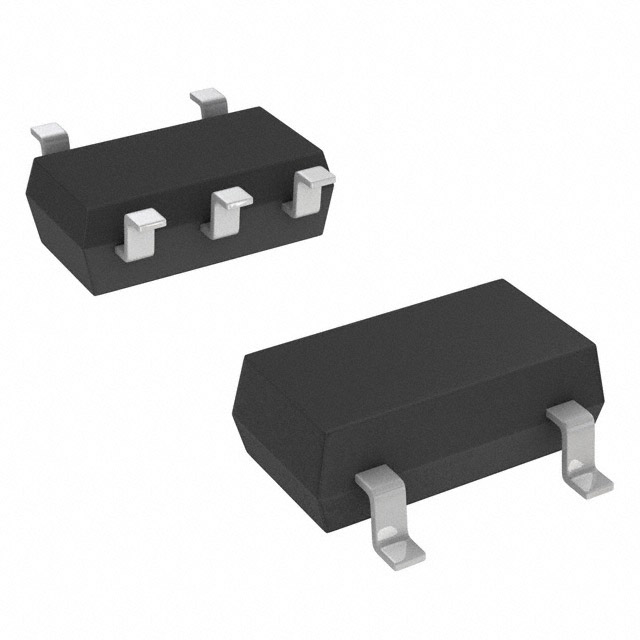
Microchip Technology SST26VF016-80-5I-QAE-T

- Part No.:
- SST26VF016-80-5I-QAE-T
- Manufacturer:
- Microchip Technology
- Category:
- Memory
- Package:
- 8-WDFN Exposed Pad
- Datasheet:
-
 SST26VF016-80-5I-QAE-T.pdf
- Description:
- IC FLASH 16MBIT SPI/QUAD 8WSON
- Quantity:
- Payment:

- Shipping:

Inventory:1,835
Please send an inquiry. Send us your inquiry, and we will respond immediately.
Product details
Overview
SST26VF016-80-5I-QAE-T from Microchip Technology is a 16 Mbit Serial Quad I/O™ (SQI™) flash memory IC designed for high-speed, low-pin-count code storage in embedded systems. It operates at 2.7–3.6 V, supports 80 MHz clock frequency, delivers 320 Mbit/s sustained data rate in SQI mode, and features uniform 4 KByte sectors with 30 erasable blocks - used in boot code storage for portable GPS and Bluetooth headsets.
For engineers reviewing the SST26VF016-80-5I-QAE-T datasheet, SST26VF016-80-5I-QAE-T pinout, SST26VF016-80-5I-QAE-T application, or SST26VF016-80-5I-QAE-T equivalent, key selection criteria include SQI vs. SPI protocol compatibility, industrial temperature range (-40°C to +85°C), WSON-8 package footprint, 100,000 write/erase endurance, and security ID programmability.
Technical Context
The SST26VF016-80-5I-QAE-T implements a 4-bit multiplexed I/O serial interface using SIO[3:0] pins, supporting both Mode 0 and Mode 3 SPI-compatible timing while enabling quad-data-rate transfers. Its SuperFlash® technology uses split-gate cells and thick-oxide tunneling for enhanced reliability and lower energy per program/erase cycle.
It integrates a 256-byte page buffer, supports execute-in-place (XIP) with minimal latency, and provides flexible erase granularity: 4 KByte sectors, eight 8 KByte parameter blocks, two 32 KByte overlay blocks, and thirty 64 KByte overlay blocks - all configurable via software block protection and lock-down registers.
Key Specifications
| Parameter | Value and Actual Design Meaning |
|---|---|
| Memory Density | 16 Mbit (2 MByte), directly addressable for firmware image storage without external address latching |
| Interface Protocol | Serial Quad I/O™ (SQI™) with backward-compatible SPI mode; enables 4× throughput vs. standard SPI at same clock |
| Max Clock Frequency | 80 MHz - enables High-Speed Read at full speed with 1 dummy byte, critical for real-time XIP performance |
| Endurance & Retention | 100,000 program/erase cycles and >100 years data retention - suitable for field-upgradable firmware |
| Operating Voltage | 2.7–3.6 V - compatible with single-supply 3.3 V systems; no level-shifting required |
| Temperature Range | Industrial: -40°C to +85°C - validated for automotive infotainment and industrial control environments |
| Security Feature | 256-bit OTP Security ID (64-bit factory-unique + 192-bit user-programmable) - supports device authentication and secure boot |
Pinout & Package
Package: 8-contact WSON (6 mm × 5 mm), RoHS-compliant, moisture-sensitive level 3.
| Pin/Terminal | Circuit Role | Design Meaning |
|---|---|---|
| CE# | Chip Enable | Active-low command latch enable; must remain low during full instruction sequence including address/data transfer |
| SCK | Serial Clock | Timing reference; commands and addresses latched on rising edge, data shifted out on falling edge |
| SIO[0] | Serial I/O 0 | Multiplexed bidirectional signal; SI/SO in SPI mode, quad I/O lane 0 in SQI mode after EQIO command |
| SIO[1] | Serial I/O 1 | Multiplexed bidirectional signal; SO in SPI mode, quad I/O lane 1 in SQI mode |
| SIO[2] | Serial I/O 2 | Multiplexed bidirectional signal; VIH required during SPI Read/High-Speed Read; active quad lane in SQI mode |
| SIO[3] | Serial I/O 3 | Multiplexed bidirectional signal; VIH required during SPI Read/High-Speed Read; active quad lane in SQI mode |
| VDD | Power Supply | 2.7–3.6 V supply input; powers internal logic, charge pumps, and I/O buffers |
| VSS | Ground | Reference return path for all internal circuits and I/O signals |
Key Features
| Feature | Design Value |
|---|---|
| Quad I/O Interface | Enables 320 Mbit/s sustained read throughput at 80 MHz - eliminates need for parallel NOR flash in space-constrained designs |
| Index Jump Commands | Supports relative addressing (page/block/block-index) to reduce command overhead and improve random-access efficiency |
| Write-Suspend Capability | Allows interruption of active program/erase to service higher-priority reads - essential for real-time multitasking firmware |
| Flexible Block Protection | Software-configurable lock bits for 64 KByte, 32 KByte, and 8 KByte blocks - enables secure parameter storage and bootloader isolation |
| Security ID Lockout | One-time programmable 256-bit ID with hardware lockout (SEC bit) - prevents cloning and enforces license binding |
Applications
| GPS Navigation Devices | Bluetooth Audio Headsets |
|---|---|
Use Scenario: Storing map data, firmware updates, and calibration tables in compact handheld GPS units with limited PCB area. IC Role / Device Role / Timing Role: Non-volatile code and data storage with execute-in-place capability to minimize SRAM footprint and boot latency. Use Value: 80 MHz SQI interface enables fast map tile loading; 100K endurance supports frequent over-the-air map updates. | Use Scenario: Holding Bluetooth stack firmware, audio codec parameters, and user preference profiles in battery-powered headsets. IC Role / Device Role / Timing Role: Low-power serial flash providing reliable boot code and configuration storage with minimal quiescent current (8 µA standby). Use Value: WSON-8 package saves board space; industrial temp rating ensures operation in varying ambient conditions during outdoor use. |
| Optical Disk Drive Controllers | Industrial HMI Panels |
Use Scenario: Storing servo control algorithms, lens calibration data, and firmware patches in DVD/Blu-ray drive mainboards. IC Role / Device Role / Timing Role: High-reliability firmware storage with block-locking to prevent accidental corruption of critical motion control routines. Use Value: Uniform 4 KByte sectors allow precise firmware partitioning; write-suspend enables concurrent status polling during long erase operations. | Use Scenario: Hosting GUI assets, PLC configuration scripts, and safety-critical boot images in factory-floor HMIs exposed to thermal cycling. IC Role / Device Role / Timing Role: Industrial-grade serial flash delivering secure, long-life storage for mission-critical human-machine interface firmware. Use Value: -40°C to +85°C rating and >100-year data retention ensure unattended operation across equipment lifecycles. |
Equivalent & Alternatives
The following parts are listed as comparable options for similar serial flash memory applications.
| Alternative Part | Technical Difference | Application Difference | Selection Advice |
|---|---|---|---|
| Winbond W25Q16JVSIQ | 16 Mbit SPI-only (no native SQI); 133 MHz max clock; Quad Enable bit required to activate QPI mode | Lacks native SQI protocol - requires additional initialization and lacks Index Jump or Write-Suspend features | Choose when legacy SPI design reuse is prioritized over throughput and advanced command flexibility |
| Cypress S25FL116K0XMFI011 | 16 Mbit, 85 MHz, supports both SPI and QSPI; includes sector protection but no Security ID or Index Jump | No OTP Security ID or relative-addressing commands - limits secure boot and dynamic firmware patching capability | Prefer when QSPI timing compliance and Cypress ecosystem tooling outweigh need for Microchip-specific security and efficiency features |
Compared with W25Q16JVSIQ and S25FL116K0XMFI011, the SST26VF016-80-5I-QAE-T uniquely combines native SQI throughput, Index Jump addressing, and factory-programmed Security ID - making it optimal for compact, secure, real-time firmware storage where command efficiency and authentication are critical.
Availability
SST26VF016-80-5I-QAE-T is available at Aetrix Electronics and suitable for GPS navigation devices, Bluetooth audio headsets, and industrial HMI panels requiring stable component supply, long-term lifecycle support, and RoHS-compliant sourcing.
Supply support for SST26VF016-80-5I-QAE-T includes scheduled delivery planning, volume procurement assistance, BOM continuity management, traceable sourcing, and lifecycle availability coordination for OEM customers, industrial embedded developers, connected-device designers, and electronics production programs.
Manufacturer
Microchip Technology is a global semiconductor company specializing in microcontrollers, analog devices, and memory solutions, with leadership in embedded control and secure connectivity.
The SST26VF016-80-5I-QAE-T belongs to Microchip's Serial Quad I/O™ Flash family, engineered to replace parallel NOR flash in space-constrained, high-performance embedded systems requiring fast XIP, low power, and robust security.
FAQ
What interface protocols does the SST26VF016-80-5I-QAE-T support?
The SST26VF016-80-5I-QAE-T supports both standard SPI (Mode 0/3) and native Serial Quad I/O™ (SQI™) protocols. At power-on reset, it defaults to SPI mode for JEDEC ID, Read, and High-Speed Read. The EQIO command (0x38) enables SQI mode, activating all four SIO pins for quad-data-rate transfers. Unlike SPI-only alternatives, SST26VF016-80-5I-QAE-T requires no external quad-enable bit setting - SQI is a dedicated, optimized bus state.
Does the SST26VF016-80-5I-QAE-T support execute-in-place (XIP) operation?
Yes, the SST26VF016-80-5I-QAE-T supports true execute-in-place functionality due to its 80 MHz SQI interface and low-latency command structure. With 320 Mbit/s sustained read bandwidth and continuous linear burst modes, it enables direct CPU instruction fetch from flash without shadowing to SRAM - reducing system memory cost and boot time. This capability is validated in GPS and Bluetooth headset reference designs using the SST26VF016-80-5I-QAE-T.
What is the memory organization of the SST26VF016-80-5I-QAE-T?
The SST26VF016-80-5I-QAE-T organizes its 16 Mbit array into thirty 64 KByte erasable overlay blocks, eight 8 KByte parameter blocks, two 32 KByte overlay blocks, and uniform 4 KByte sectors. This hierarchical layout allows fine-grained firmware updates (sector-level), secure parameter storage (8 KByte blocks), and large-image storage (64 KByte blocks). The SST26VF016-80-5I-QAE-T datasheet confirms exactly 30 blocks for this density, distinct from the 62-block SST26VF032 variant.
How does the Security ID feature work on the SST26VF016-80-5I-QAE-T?
The SST26VF016-80-5I-QAE-T includes a 256-bit Security ID: 64 bits factory-programmed with a unique identifier (read-only), and 192 bits user-programmable. Programming uses the Program SID command (0xA5), and locking uses Lockout SID (0x85), which sets the SEC bit permanently. Once locked, no further writes to the Security ID are possible - ensuring immutable device identity for secure boot and anti-cloning. This feature is exclusive to the SST26VF016-80-5I-QAE-T within its family and not emulated by pin-compatible alternatives.
What package type is used for the SST26VF016-80-5I-QAE-T?
The SST26VF016-80-5I-QAE-T uses an 8-contact WSON (6 mm × 5 mm) package, specified in the official Microchip datasheet DS-25017A. This leadless, surface-mount package offers superior thermal performance and board-area efficiency versus SOIC-8, with exposed pad for enhanced heat dissipation. Pin assignments match Figure 2 in the datasheet, and the "QAE" suffix explicitly denotes the WSON-8 variant - confirmed by Microchip's packaging nomenclature and distributor listings.
SST26VF016-80-5I-QAE-T Specifications
- Product attributes
- Attribute value
- Manufacturer:
- Microchip Technology
- Series:
- SST26 SQI®
- Package/Case:
- 8-WDFN Exposed Pad
- Packaging:
- Tape & Reel (TR)
- Product Status:
- Active
- Programmable:
- Not Verified
- Memory Type:
- Non-Volatile
- Memory Format:
- FLASH
- Technology:
- FLASH
- Memory Size:
- 16Mbit
- Memory Organization:
- 2M x 8
- Memory Interface:
- SPI - Quad I/O
- Clock Frequency:
- 80 MHz
- Write Cycle Time - Word, Page:
- 1.5ms
- Access Time:
- -
- Voltage - Supply:
- 2.7V ~ 3.6V
- Operating Temperature:
- -40°C ~ 85°C (TA)
- Grade:
- -
- Qualification:
- -
- Mounting Type:
- Surface Mount
- Supplier Device Package:
- 8-WSON (6x5)
SST26VF016-80-5I-QAE-T FAQ
1.How can I place an order for SST26VF016-80-5I-QAE-T through Aetrix?
Please submit a Request for Quotation (RFQ) for SST26VF016-80-5I-QAE-T on Aetrix. Our sales agent will provide a competitive quotation and guide you through the order confirmation once you accept the terms.
2.Are the price and stock information for SST26VF016-80-5I-QAE-T reliable?
The price and inventory of SST26VF016-80-5I-QAE-T are updated periodically and may fluctuate due to market conditions. Stock and pricing data are typically refreshed every 24 hours. Quotation validity for SST26VF016-80-5I-QAE-T is usually 5 days.
3.What payment methods are accepted for SST26VF016-80-5I-QAE-T?
We accept Wire Transfer, PayPal, Credit Card, Western Union, MoneyGram, and Escrow for SST26VF016-80-5I-QAE-T transactions.
Note: Certain payment methods may incur a processing fee.
4.How is shipping managed for SST26VF016-80-5I-QAE-T?
SST26VF016-80-5I-QAE-T orders can be shipped via leading logistics carriers, including DHL, UPS, FedEx, TNT, or Registered Mail.
Once your SST26VF016-80-5I-QAE-T order is processed, you will receive an email with the shipment details and tracking number.
Note: Tracking information may take up to 24 hours to appear. Express delivery typically takes 3–5 business days.
5.How can I obtain technical support or documentation for SST26VF016-80-5I-QAE-T?
For technical support, including SST26VF016-80-5I-QAE-T datasheets, pinout diagrams, or application guidance, please contact our engineering support team. They can provide detailed documentation and assistance for your SST26VF016-80-5I-QAE-T requirements.
6.How does Aetrix verify that SST26VF016-80-5I-QAE-T is sourced from the original manufacturer or authorized distributors?
All SST26VF016-80-5I-QAE-T products on Aetrix are procured from qualified distributors and authorized channels. Our dedicated quality assurance team conducts strict verification, including traceability checks and, if necessary, third-party testing. This ensures that SST26VF016-80-5I-QAE-T meets industry standards.
7.What is the process for return or replacement of SST26VF016-80-5I-QAE-T?
All SST26VF016-80-5I-QAE-T units undergo pre-shipment inspection (PSI). If there is an issue with SST26VF016-80-5I-QAE-T, returns or replacements are accepted under the following conditions:
1.Quantity discrepancies, incorrect items, or visible external defects (such as breakage or corrosion), acknowledged by Aetrix.
2.The issue is reported within 90 days of delivery.
3.The SST26VF016-80-5I-QAE-T part is unused and in its original packaging.
Return procedure for SST26VF016-80-5I-QAE-T:
1.Submit a request within 90 days.
2.Obtain a Return Material Authorization (RMA) from Aetrix.
SST26VF016-80-5I-QAE-T Tags
-
M24C02-WMN6TP
STMicroelectronics
-
AT24C02C-XHM-T
Microchip Technology
-
AT21CS01-STUM10-T
Microchip Technology

-
AT24C02C-SSHM-T
Microchip Technology

-
24LC01BT-I/OT
Microchip Technology
-
M24C02-FMC6TG
STMicroelectronics
-
AT24CS02-SSHM-T
Microchip Technology

-
93LC46BT-I/OT
Microchip Technology
-
AT24C04C-SSHM-T
Microchip Technology

-
24LC01BT-I/SN
Microchip Technology
-
24AA02UIDT-I/OT
Microchip Technology
-
AT24C08C-STUM-T
Microchip Technology
Tech Hub

TTL and CMOS logic families differ in thresholds, loading, output drive, power and timing. This engineering guide compares 74HC and 74HCT, calculates noise margins and checks 3.3 V/5 V compatibility.

A practical engineering guide to 3.3V and 5V logic compatibility, input thresholds, resistor dividers, translator ICs, MOSFET level shifting, I2C pull-ups, timing limits and power-sequencing risks.

The 74HC595 uses push-pull logic outputs, while the TPIC6B595 uses 50 V open-drain DMOS sinks for higher-power loads. This guide compares timing, current limits, 3.3 V interfacing, load wiring, thermal…

The 74HC595 converts serial data into eight stable parallel outputs. This guide covers pin functions, shift and storage timing, OE and MR behavior, drive-current limits, cascading, voltage compatibilit…

A technical comparison of level-sensitive latches and edge-triggered flip-flops, covering timing windows, setup and hold limits, master–slave operation, time borrowing, race-through, HDL inference and…

A D latch stores one bit while Enable controls when data can pass. This reference covers gate-level operation, truth tables, transparency, setup and hold timing, LE versus OE, common ICs and practical …

An SR latch stores one bit through cross-coupled feedback. This engineering reference covers NOR and NAND implementations, truth tables, forbidden-state recovery, gated operation, switch debouncing, fa…

Latch circuits retain one bit through feedback. This technical reference covers SR and D latches, truth tables, transparency, timing limits, latch-versus-flip-flop behavior, applications and common log…

An engineering guide to LED driver operation, constant-current and constant-voltage outputs, linear and switching topologies, dimming, IC selection, calculations, replacement compatibility, and fault c…

Operational amplifier guide covering op amp basics, feedback, ideal vs real op amps, common configurations, buffer circuits, offset, bias current, gain-bandwidth, slew rate, rail-to-rail limits and sel…


