
 My Inquiry
 My Account


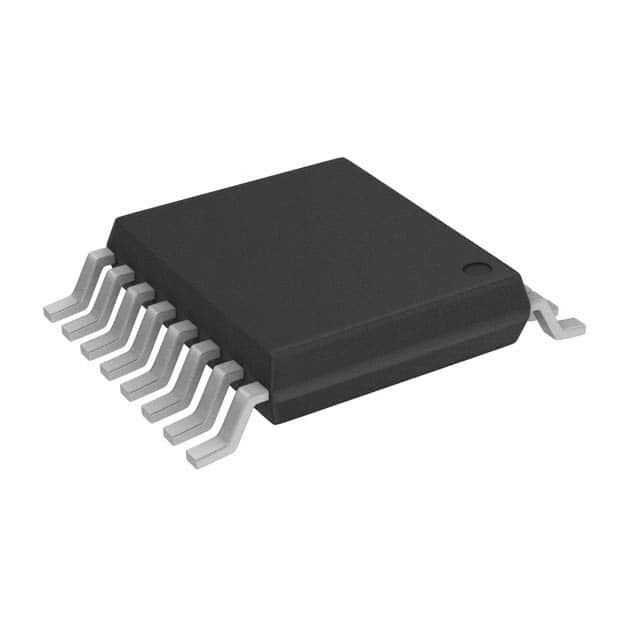
STMicroelectronics ST202ECTR
- Part No.:
- ST202ECTR
- Manufacturer:
- STMicroelectronics
- Category:
- Drivers, Receivers, Transceivers
- Package:
- 16-TSSOP (0.173", 4.40mm Width)
- Datasheet:
-
 ST202ECTR.pdf
- Description:
- IC TRANSCEIVER FULL 2/2 16TSSOP
- Quantity:
- Payment:

- Shipping:

Inventory:6,674
Please send an inquiry. Send us your inquiry, and we will respond immediately.
Product details
Overview
ST202ECTR from STMicroelectronics is a dual-transmitter/dual-receiver RS-232 transceiver IC operating from a single 5 V supply, featuring ±15 kV HBM ESD protection on I/O pins, guaranteed 230 kbps data rate, and 3–30 V/µs slew rate control for noise-immune serial communication in industrial and embedded systems.
For engineers reviewing the ST202ECTR datasheet, ST202ECTR pinout, ST202ECTR application, or ST202ECTR equivalent, this device supports robust point-to-point RS-232 links in space-constrained designs requiring low-cost 0.1 µF charge-pump capacitors, TTL/CMOS logic interfacing, and operation across 0 to 70 °C ambient temperature.
Technical Context
The ST202ECTR implements a charge-pump voltage converter using four external 0.1 µF capacitors to generate ±10 V RS-232 compliant output swings from 5 V input, enabling full-duplex communication without dual supplies. Its receiver inputs tolerate ±30 V common-mode range and feature 0.5 V hysteresis for noise rejection in electrically noisy environments.
Transmitter outputs drive 3 kΩ loads with ±5 V minimum swing and 300 Ω typical output resistance, while receiver outputs deliver TTL/CMOS-compatible levels (VOH ≥ 3.5 V, VOL ≤ 0.4 V) at up to 3.2 mA sink/source. Propagation delays are specified at 0.5–10 µs for receivers and 2 µs for transmitters under defined load conditions.
Key Specifications
| Parameter | Value and Actual Design Meaning |
|---|---|
| Supply Voltage | 5 V ±10% - enables direct connection to standard logic rails without regulation overhead |
| Data Rate | 230 kbps guaranteed - supports high-speed legacy serial interfaces including modem and industrial controller links |
| Slew Rate | 3–30 V/µs - adjustable edge control reduces EMI and improves signal integrity over long cables |
| ESD Protection | ±15 kV HBM on I/O pins - eliminates need for external TVS diodes in most industrial enclosures |
| Operating Temp | 0 to 70 °C - qualified for commercial and extended-temperature embedded applications |
| Capacitor Requirement | Four 0.1 µF - minimizes board area and BOM cost versus 1 µF alternatives like ST232 series |
| Receiver Input Range | ±30 V - withstands large ground potential differences between connected equipment |
Pinout & Package
ST202ECTR is housed in a 16-pin TSSOP package (JEDEC MO-153), measuring 5.0 × 4.4 × 1.05 mm, with 0.65 mm pitch and exposed pad for thermal enhancement. It complies with ECOPACK® environmental standards.
| Pin/Terminal | Circuit Role | Design Meaning |
|---|---|---|
| 1 C1+ | Charge pump capacitor positive terminal | Connects to + terminal of first 0.1 µF flying capacitor; critical for +2×VCC generation |
| 2 V+ | Doubled voltage output | Provides ~10 V rail for transmitter output stage; requires local decoupling |
| 3 C1− | Charge pump capacitor negative terminal | Completes first charge pump loop; ties to GND during phase switching |
| 4 C2+ | Second charge pump capacitor positive terminal | Connects to + terminal of second 0.1 µF capacitor; enables −VCC generation |
| 5 C2− | Second charge pump capacitor negative terminal | Completes inverting charge pump; referenced to V+ during inversion cycle |
| 6 V− | Inverted voltage output | Provides ~−10 V rail for RS-232 negative signaling; must be decoupled |
| 7 T2OUT | Second transmitter output | RS-232 level output (±5 V min); connects directly to DB9 pin 2 or 3 |
| 8 R2IN | Second receiver input | Accepts ±30 V RS-232 signals; internal hysteresis rejects line noise |
| 9 R2OUT | Second receiver output | TTL/CMOS logic-level output (0.4 V / 3.5 V); drives microcontroller UART RX |
| 10 T2IN | Second transmitter input | Accepts 0–5 V logic; active-high input compatible with standard UART TX |
| 11 T1IN | First transmitter input | Primary UART TX input; identical electrical behavior to T2IN |
| 12 R1OUT | First receiver output | Primary UART RX output; drives MCU or FPGA with rail-to-rail CMOS levels |
| 13 R1IN | First receiver input | Primary RS-232 input (e.g., DB9 pin 2); shares same ±30 V tolerance as R2IN |
| 14 T1OUT | First transmitter output | Primary RS-232 output (e.g., DB9 pin 3); matches T2OUT performance and drive strength |
| 15 GND | Analog/digital ground reference | Single ground plane required; separates charge pump return from signal ground |
| 16 VCC | Positive supply input | 5 V ±10% main power; bypassed with 100 nF ceramic capacitor near pin |
Key Features
| Feature | Design Value |
|---|---|
| Single 5 V operation | Eliminates need for ±12 V supplies, reducing system complexity and cost in battery-powered or compact designs |
| 0.1 µF capacitor support | Reduces total external capacitance by 90% vs. 1 µF solutions, saving PCB area and lowering BOM cost |
| ±15 kV HBM ESD protection | Meets IEC 61000-4-2 Level 4 without external protection components, simplifying layout and certification |
| Guaranteed 230 kbps timing | Ensures reliable communication at full speed across temperature and voltage extremes without derating |
| 3–30 V/µs slew rate control | Allows tuning of edge rates to balance EMI reduction against timing margin in cable-driven systems |
Applications
| Industrial PLC Serial Port | Point-of-Sale Terminal Interface |
|---|---|
Use Scenario: Connecting programmable logic controllers to HMI panels via RS-232 over 15 m shielded cable in factory-floor environments with high EMI. IC Role / Device Role / Timing Role: Dual-channel RS-232 level shifter converting TTL UART signals to ±10 V differential outputs and receiving ±30 V inputs with hysteresis. Use Value: ±15 kV ESD protection prevents field failures from operator contact discharge; 0.1 µF capacitors reduce footprint in dense control module layouts. | Use Scenario: Integrating receipt printers and barcode scanners into retail terminals using legacy RS-232 ports with tight space constraints. IC Role / Device Role / Timing Role: Full-duplex transceiver handling simultaneous print command transmission and scanner data reception at up to 115.2 kbps. Use Value: Guaranteed 230 kbps data rate provides headroom for future firmware upgrades; TSSOP16 package fits narrow PCBs behind display bezels. |
| Medical Diagnostic Equipment | Test & Measurement Instrumentation |
Use Scenario: Enabling configuration and data export from ultrasound or ECG devices to PCs via isolated RS-232 links compliant with IEC 60601-1 creepage requirements. IC Role / Device Role / Timing Role: Isolated interface buffer providing logic-level compatibility and ±30 V input tolerance for floating sensor subsystems. Use Value: Receiver input hysteresis (0.5 V typ.) rejects noise from adjacent high-voltage imaging circuits; single-supply operation simplifies isolated power design. | Use Scenario: Adding RS-232 connectivity to benchtop oscilloscopes and multimeters where board space and thermal management are critical. IC Role / Device Role / Timing Role: High-reliability transceiver supporting SCPI command sets with precise propagation delay matching (<10 µs variation). Use Value: Low 5 mA typical supply current extends battery life in portable instruments; TSSOP thermal resistance (95 °C/W on 2-layer board) enables passive cooling. |
Equivalent & Alternatives
The following parts are listed as comparable options for similar RS-232 transceiver applications.
| Alternative Part | Technical Difference | Application Difference | Selection Advice |
|---|---|---|---|
| MAX232CPE | Requires four 1 µF capacitors; no guaranteed 230 kbps rating; ±15 kV ESD not specified | Legacy through-hole design; lower cost but larger footprint and higher BOM count | Select when replacing older MAX232-based designs with existing 1 µF capacitor footprints |
| SP3222ECA | Supports 3.3 V and 5 V operation; 250 kbps guaranteed; ±15 kV IEC 61000-4-2 contact discharge | Wider supply range and enhanced ESD spec; pinout differs (16-pin SOIC only) | Select for new designs needing mixed-voltage interoperability or stricter ESD compliance beyond HBM |
Compared with MAX232CPE and SP3222ECA, ST202ECTR uniquely balances ultra-low capacitor count (0.1 µF), guaranteed high-speed operation, and industrial-grade HBM ESD in a surface-mount TSSOP package-making it optimal for cost-sensitive, space-constrained commercial applications.
Availability
ST202ECTR is available at Aetrix Electronics and suitable for industrial PLC serial ports, point-of-sale terminal interfaces, and medical diagnostic equipment requiring stable component supply, consistent TSSOP16 packaging, and long-term production continuity.
Supply support for ST202ECTR includes scheduled delivery planning, volume procurement assistance, BOM continuity management, traceable sourcing, and lifecycle availability coordination for OEM customers, industrial embedded developers, connected-device designers, and electronics production programs.
Manufacturer
STMicroelectronics is a global semiconductor leader headquartered in Geneva, Switzerland, designing and manufacturing analog, digital, and mixed-signal ICs for automotive, industrial, and consumer markets.
The ST202 series belongs to ST's legacy RS-232 interface product line, engineered specifically for robust, low-cost serial communication in commercial-temperature embedded systems with minimal external components.
FAQ
What is the minimum and maximum supply voltage for reliable operation of ST202ECTR?
The ST202ECTR operates reliably from 4.5 V to 5.5 V (5 V ±10%). Absolute maximum ratings allow up to 6 V, but exceeding 5.5 V risks violating the guaranteed 230 kbps data rate and may degrade ESD protection performance. Operation below 4.5 V causes insufficient charge-pump voltage generation, resulting in reduced RS-232 output swing and potential communication failure.
Can ST202ECTR be used with 3.3 V logic systems?
Yes, ST202ECTR accepts 3.3 V TTL/CMOS logic inputs on T1IN and T2IN (VIH min = 2.0 V, VIL max = 0.8 V), and its R1OUT/R2OUT outputs swing to 0.4 V (low) and ≥3.5 V (high) at 3.2 mA, making them compatible with 3.3 V microcontrollers. However, VCC must remain at 5 V to ensure proper RS-232 voltage generation.
How does the slew rate affect RS-232 signal integrity in long-cable applications?
The ST202ECTR's 3–30 V/µs slew rate directly controls edge steepness: slower rates (e.g., 3 V/µs) reduce radiated EMI and reflections on unterminated cables >15 m, while faster rates (e.g., 30 V/µs) preserve timing margins in short, terminated links. Slew rate is set by external load (RL = 3–7 kΩ) and capacitance (CL = 50–1000 pF), not internal configuration.
Is ST202ECTR pin-compatible with ST232ECTR?
No. Although both are 16-pin TSSOP RS-232 transceivers from ST, ST202ECTR uses 0.1 µF charge-pump capacitors and has different internal charge-pump architecture, resulting in distinct pin functions for C1+/C1−/C2+/C2− and incompatible capacitor networks. Direct replacement requires PCB redesign and capacitor value changes.
ST202ECTR Specifications
- Product attributes
- Attribute value
- Manufacturer:
- STMicroelectronics
- Series:
- -
- Package/Case:
- 16-TSSOP (0.173", 4.40mm Width)
- Packaging:
- Tape & Reel (TR)
- Product Status:
- Active
- Type:
- Transceiver
- Protocol:
- RS232
- Number of Drivers/Receivers:
- 2/2
- Duplex:
- Full
- Receiver Hysteresis:
- 500 mV
- Data Rate:
- 230kbps
- Voltage - Supply:
- 4.5V ~ 5.5V
- Operating Temperature:
- 0°C ~ 70°C
- Grade:
- -
- Qualification:
- -
- Mounting Type:
- Surface Mount
- Supplier Device Package:
- 16-TSSOP
ST202ECTR FAQ
1.How can I place an order for ST202ECTR through Aetrix?
Please submit a Request for Quotation (RFQ) for ST202ECTR on Aetrix. Our sales agent will provide a competitive quotation and guide you through the order confirmation once you accept the terms.
2.Are the price and stock information for ST202ECTR reliable?
The price and inventory of ST202ECTR are updated periodically and may fluctuate due to market conditions. Stock and pricing data are typically refreshed every 24 hours. Quotation validity for ST202ECTR is usually 5 days.
3.What payment methods are accepted for ST202ECTR?
We accept Wire Transfer, PayPal, Credit Card, Western Union, MoneyGram, and Escrow for ST202ECTR transactions.
Note: Certain payment methods may incur a processing fee.
4.How is shipping managed for ST202ECTR?
ST202ECTR orders can be shipped via leading logistics carriers, including DHL, UPS, FedEx, TNT, or Registered Mail.
Once your ST202ECTR order is processed, you will receive an email with the shipment details and tracking number.
Note: Tracking information may take up to 24 hours to appear. Express delivery typically takes 3–5 business days.
5.How can I obtain technical support or documentation for ST202ECTR?
For technical support, including ST202ECTR datasheets, pinout diagrams, or application guidance, please contact our engineering support team. They can provide detailed documentation and assistance for your ST202ECTR requirements.
6.How does Aetrix verify that ST202ECTR is sourced from the original manufacturer or authorized distributors?
All ST202ECTR products on Aetrix are procured from qualified distributors and authorized channels. Our dedicated quality assurance team conducts strict verification, including traceability checks and, if necessary, third-party testing. This ensures that ST202ECTR meets industry standards.
7.What is the process for return or replacement of ST202ECTR?
All ST202ECTR units undergo pre-shipment inspection (PSI). If there is an issue with ST202ECTR, returns or replacements are accepted under the following conditions:
1.Quantity discrepancies, incorrect items, or visible external defects (such as breakage or corrosion), acknowledged by Aetrix.
2.The issue is reported within 90 days of delivery.
3.The ST202ECTR part is unused and in its original packaging.
Return procedure for ST202ECTR:
1.Submit a request within 90 days.
2.Obtain a Return Material Authorization (RMA) from Aetrix.
ST202ECTR Tags

-
ATA6561-GAQW-N
Microchip Technology
-
ATA6561-GBQW-N
Microchip Technology
-
AM26LS32ACDR
Texas Instruments

-
SP485CN-L/TR
MaxLinear, Inc.
-
SP485EN-L/TR
MaxLinear, Inc.
-
SP485EEN-L/TR
MaxLinear, Inc.
-
SP485ECN-L/TR
MaxLinear, Inc.
-
THVD1400DR
Texas Instruments
-
AM26C31IDR
Texas Instruments

-
TLIN1021ADRQ1
Texas Instruments
-
MAX232IDR
Texas Instruments
-
AM26C32IDR
Texas Instruments
Tech Hub

Operational amplifier guide covering op amp basics, feedback, ideal vs real op amps, common configurations, buffer circuits, offset, bias current, gain-bandwidth, slew rate, rail-to-rail limits and sel…

Jumper cables guide covering safe connection order, red and black clamp placement, final ground connection, cable gauge, length, clamp quality, copper vs CCA cables, jump starter comparison and battery…

LDO regulator guide covering low dropout voltage, power dissipation, thermal design, PSRR, output noise, capacitor stability, adjustable LDO circuits, LDO vs buck converter and datasheet selection chec…

Conditional Access Module guide covering CAM meaning, CI/CI+ interface, smart card authorization, DVB security workflow, TV and set-top box compatibility, internal electronics, ESD protection, connecto…

Guide to electronic component obsolescence covering EOL risk, PCN/PDN notices, last-time buy planning, replacement options, form-fit-function validation, counterfeit risk and BOM lifecycle management.

18650 battery guide covering lithium-ion cell basics, 3.6V/3.7V voltage, 4.2V charging, mAh and Wh capacity, protected cells, chargers, BMS, series-parallel packs, holders, welding and sourcing checks.…

Hall effect sensor guide covering working principle, linear and digital sensors, Arduino circuits, current sensing, speed detection, automotive applications, A3144 examples, signal filtering and datash…

Product Change Notification guide for electronic components, covering PCN meaning, PCN vs PDN/EOL, common change types, risk levels, form-fit-function review, engineering validation, BOM control, LTB/L…

A practical guide to blend door actuators, covering HVAC function, symptoms, location, AC and heater issues, reset and calibration, replacement cost, electrical diagnosis, compatibility checks, and rep…

Engineering guide to Raspberry Pi alternatives, covering chip-level differences, Orange Pi, ROCK, Jetson, Banana Pi, NanoPi, Compute Module, Pico, GPIO, camera, HAT compatibility, and replacement risks…


