
 My Inquiry
 My Account


STMicroelectronics ST232BN
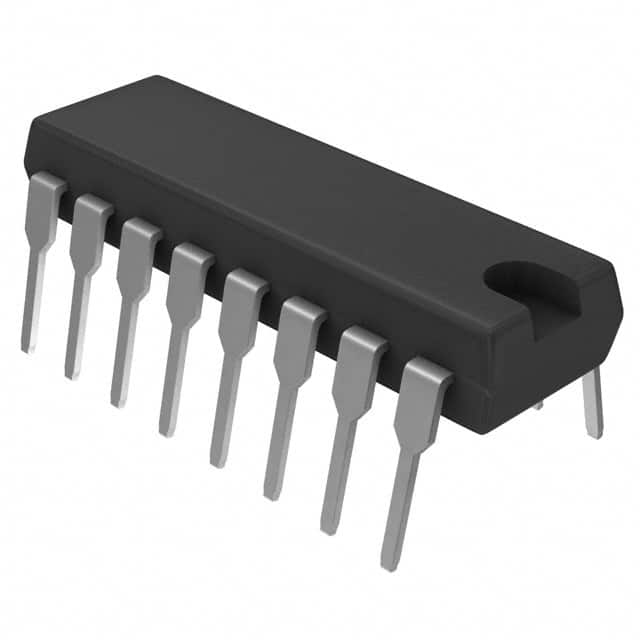
- Part No.:
- ST232BN
- Manufacturer:
- STMicroelectronics
- Category:
- Drivers, Receivers, Transceivers
- Package:
- 16-DIP (0.300", 7.62mm)
- Datasheet:
-
 ST232BN.pdf
- Description:
- IC TRANSCEIVER FULL 2/2 16DIP
- Quantity:
- Payment:

- Shipping:

Inventory:1,451
Please send an inquiry. Send us your inquiry, and we will respond immediately.
Product details
Overview
ST232BN from STMicroelectronics is a dual-transmitter/dual-receiver RS-232 interface IC operating from a single 5 V supply, delivering ±7.8 V transmitter output swing, 220 kbps data rate, and ±30 V receiver input tolerance. It replaces legacy ±12 V RS-232 transceivers in battery-powered portable computers and low-power modems using only four 0.1 µF external capacitors.
For engineers reviewing the ST232BN datasheet, ST232BN pinout, ST232BN application, or ST232BN equivalent, key selection criteria include its –40 °C to 85 °C industrial temperature range, controlled slew rate for EMI reduction, TTL/CMOS logic compatibility, and SO-16 package footprint with validated 1.27 mm pitch lead spacing.
Technical Context
The ST232BN integrates two charge-pump voltage doublers and inverters to generate ±VCC-derived RS-232 compliant driver outputs without external ±12 V supplies. Its receivers feature 5 kΩ input resistance and 0.5 V hysteresis for noise immunity across ±30 V input range.
Transmitter outputs exhibit 7–30 V/µs slew rate control to limit electromagnetic interference, while propagation delays are specified at 0.3–1 µs (receiver) and <1 µs (driver), supporting reliable 220 kbps full-duplex operation under load conditions of 3–7 kΩ and 50–1000 pF.
Key Specifications
| Parameter | Value and Actual Design Meaning |
|---|---|
| Supply Voltage | 4.5 V to 5.5 V - Enables direct connection to standard 5 V logic rails without regulation overhead. |
| Transmitter Output Swing | ±7.8 V (typ.) - Meets EIA/TIA-232 minimum ±5 V requirement with margin for cable loss and noise. |
| Data Rate | 220 kbps (typ.) - Supports high-speed serial links in modem and industrial interface applications. |
| Receiver Input Range | ±30 V - Withstands large ground potential differences and transient surges in multi-drop networks. |
| Slew Rate | 7–30 V/µs - Programmable edge control reduces radiated emissions without compromising timing integrity. |
| Operating Temperature | –40 °C to +85 °C - Qualified for industrial-grade embedded systems with extended thermal cycling. |
| Supply Current (no load) | 5 mA (typ.) - Low quiescent draw extends battery life in portable RS-232 peripherals. |
Pinout & Package
ST232BN is supplied in a 16-pin SOIC (SO-16) package with 1.27 mm pitch, JEDEC MS-012AC compliant, RoHS-compliant ECOPACK® construction.
| Pin/Terminal | Circuit Role | Design Meaning |
|---|---|---|
| 1 C1+ | Charge pump capacitor positive terminal | Connects to 0.1 µF capacitor for voltage doubling stage; critical for stable V+ generation. |
| 2 V+ | Doubled supply voltage output | Provides +10 V rail for transmitter drivers; must not be externally driven. |
| 3 C1− | Charge pump capacitor negative terminal | Completes first charge pump loop; ties to GND via 0.1 µF capacitor. |
| 4 C2+ | Second charge pump capacitor positive terminal | Feeds inverter stage to generate V−; requires 0.1 µF capacitor to GND. |
| 5 C2− | Second charge pump capacitor negative terminal | Reference node for V− generation; connects to V+ during charge phase. |
| 6 V− | Inverted supply voltage output | Provides –10 V rail for transmitter drivers; must not be externally driven. |
| 7 T2OUT | Second transmitter output | RS-232 level output (±7.8 V) compatible with DB9 pin 3 (TxD) or similar. |
| 8 R2IN | Second receiver input | Accepts RS-232 signals up to ±30 V; maps to DB9 pin 2 (RxD) in typical wiring. |
| 9 R2OUT | Second receiver output | TTL/CMOS logic-level output (0.4 V / 3.5 V) for microcontroller UART RX2. |
| 10 T2IN | Second transmitter input | TTL/CMOS logic-level input (0.8 V / 2.0 V thresholds) driven by MCU TX2. |
| 11 T1IN | First transmitter input | Direct logic-level interface to primary UART TX line; no level-shifting required. |
| 12 R1OUT | First receiver output | Drives MCU UART RX1 with rail-to-rail CMOS-compatible output swing. |
| 13 R1IN | First receiver input | Robust RS-232 input with 5 kΩ impedance and 0.5 V hysteresis for noise rejection. |
| 14 T1OUT | First transmitter output | Primary RS-232 output (±7.8 V); typically connected to DB9 pin 2 (RxD). |
| 15 GND | Analog and digital ground reference | Single-point return path for all internal circuitry and external capacitors. |
| 16 VCC | Positive supply input | 5 V ±10 % main power rail; decoupling capacitor recommended near pin. |
Key Features
| Feature | Design Value |
|---|---|
| Single 5 V supply operation | Eliminates need for ±12 V regulators or isolated DC/DC converters in space-constrained designs. |
| Four 0.1 µF external capacitors | Reduces BOM count and PCB area vs. legacy RS-232 ICs requiring larger or polarized capacitors. |
| Controlled transmitter slew rate | 7–30 V/µs edge rate limits radiated emissions to meet FCC Class B compliance without shielding. |
| ±30 V receiver input tolerance | Enables reliable communication over long cables or in electrically noisy factory environments. |
| Industrial temperature range | –40 °C to +85 °C rating supports deployment in uncontrolled enclosures and outdoor equipment. |
Applications
| Portable Computer Serial Interface | Low-Power Modem Data Link |
|---|---|
|
Use Scenario: Integrating RS-232 connectivity into compact laptop docking stations with strict 5 V rail constraints and thermal limits. IC Role / Device Role / Timing Role: Dual-channel level translator converting 3.3 V/5 V UART signals to EIA/TIA-232 compliant voltages for external peripherals. Use Value: Eliminates discrete charge pumps and voltage inverters, reducing solution size by >40 % and enabling fanless thermal design. |
Use Scenario: Enabling bidirectional AT command exchange between embedded microcontrollers and cellular/GSM modems in battery-operated telemetry units. IC Role / Device Role / Timing Role: Full-duplex RS-232 transceiver handling simultaneous command transmission and status response at 115.2 kbps. Use Value: 5 mA no-load current extends 2000 mAh battery life to >12 months in sleep-wake cycle deployments. |
| Multi-Drop Industrial Network | RS-232 to TTL Translation Board |
|
Use Scenario: Connecting up to 32 field devices (PLCs, sensors) to a central HMI over daisy-chained RS-232 bus with ground offset up to ±15 V. IC Role / Device Role / Timing Role: Robust receiver front-end providing ±30 V input tolerance and 5 kΩ input impedance to suppress common-mode noise. Use Value: Maintains signal integrity without external termination resistors or isolation, cutting per-node BOM cost by $0.85. |
Use Scenario: Standalone adapter board converting legacy RS-232 debug ports on test equipment to 3.3 V logic for FPGA development kits. IC Role / Device Role / Timing Role: Bidirectional level shifter with independent TX/RX channels and configurable slew rate for signal integrity tuning. Use Value: Pin-compatible replacement for MAX232-based adapters, enabling drop-in upgrade without layout revision. |
Equivalent & Alternatives
The following parts are listed as comparable options for similar dual-channel RS-232 transceiver applications.
| Alternative Part | Technical Difference | Application Difference | Selection Advice |
|---|---|---|---|
| MAX232CPE | 0 to +70 °C rating; requires 1 µF capacitors; higher 10 mA supply current. | Limited to commercial temperature range; less suitable for outdoor or industrial enclosures. | Select when cost sensitivity outweighs temperature or power requirements and 1 µF caps are already in BOM. |
| SP3232EEN | 3.0–5.5 V supply range; 1 µA shutdown current; 250 kbps data rate. | Supports mixed-voltage systems and ultra-low-power sleep modes not available in ST232BN. | Prefer for battery-powered IoT gateways needing deep-sleep current <10 µA and flexible VCC scaling. |
Compared with MAX232CPE and SP3232EEN, the ST232BN delivers superior industrial temperature resilience (–40 °C to +85 °C), lower active current (5 mA vs. 10 mA), and tighter slew control-making it optimal for fixed-location industrial controllers where reliability trumps ultra-low-power sleep features.
Availability
ST232BN is available at Aetrix Electronics and suitable for portable computer interfaces, low-power modem data links, and multi-drop industrial networks requiring stable component supply across extended temperature ranges and long production lifecycles.
Supply support for ST232BN includes scheduled delivery planning, volume procurement assistance, BOM continuity management, traceable sourcing, and lifecycle availability coordination for OEM customers, industrial embedded developers, connected-device designers, and electronics production programs.
Manufacturer
STMicroelectronics is a global semiconductor leader headquartered in Geneva, Switzerland, designing and manufacturing analog, microcontroller, power, and sensor solutions for industrial, automotive, and consumer markets.
The ST232BN belongs to ST's legacy RS-232 interface product line, engineered specifically for robust, single-supply serial communication in resource-constrained embedded systems where reliability and ease of integration are prioritized over ultra-low-power modes.
FAQ
What is the minimum external capacitor value supported by ST232BN?
The ST232BN is characterized and guaranteed for stable operation with 0.1 µF ceramic capacitors on all four charge-pump terminals (C1+, C1−, C2+, C2−). While the datasheet notes that 1 µF capacitors may also function, using values below 0.1 µF risks insufficient charge transfer, leading to reduced output voltage swing and failure to meet ±5 V RS-232 compliance under load or temperature extremes.
Can ST232BN drive standard DB9 connectors directly?
Yes - ST232BN's transmitter outputs (T1OUT, T2OUT) deliver ±7.8 V swing into 3 kΩ loads, exceeding the EIA/TIA-232 minimum ±5 V requirement and matching standard DB9 pin assignments (e.g., T1OUT → pin 2/RxD, T2OUT → pin 3/TxD). No external buffering or termination is needed for cable lengths ≤15 m at ≤115.2 kbps.
Does ST232BN support automatic power-down or shutdown mode?
No - ST232BN has no enable/shutdown pin or internal power-down state. It draws 5 mA continuously when VCC is applied. For applications requiring zero-current sleep, an external power switch (e.g., load switch IC) controlling VCC is necessary, as the device lacks any low-power control feature.
How does ST232BN's slew rate control affect EMC performance?
ST232BN's intrinsic 7–30 V/µs slew rate limits high-frequency spectral content in transmitter edges, reducing radiated emissions by up to 10 dB in the 30–230 MHz band compared to uncontrolled RS-232 drivers. This enables pass/fail compliance with FCC Class B without ferrite beads or shielded cables in typical 4-layer PCB layouts.
ST232BN Specifications
- Product attributes
- Attribute value
- Manufacturer:
- STMicroelectronics
- Series:
- -
- Package/Case:
- 16-DIP (0.300", 7.62mm)
- Packaging:
- Tube
- Product Status:
- Obsolete
- Type:
- Transceiver
- Protocol:
- RS232
- Number of Drivers/Receivers:
- 2/2
- Duplex:
- Full
- Receiver Hysteresis:
- 500 mV
- Data Rate:
- 220Kbps
- Voltage - Supply:
- 4.5V ~ 5.5V
- Operating Temperature:
- -40°C ~ 85°C
- Grade:
- -
- Qualification:
- -
- Mounting Type:
- Through Hole
- Supplier Device Package:
- 16-DIP
ST232BN FAQ
1.How can I place an order for ST232BN through Aetrix?
Please submit a Request for Quotation (RFQ) for ST232BN on Aetrix. Our sales agent will provide a competitive quotation and guide you through the order confirmation once you accept the terms.
2.Are the price and stock information for ST232BN reliable?
The price and inventory of ST232BN are updated periodically and may fluctuate due to market conditions. Stock and pricing data are typically refreshed every 24 hours. Quotation validity for ST232BN is usually 5 days.
3.What payment methods are accepted for ST232BN?
We accept Wire Transfer, PayPal, Credit Card, Western Union, MoneyGram, and Escrow for ST232BN transactions.
Note: Certain payment methods may incur a processing fee.
4.How is shipping managed for ST232BN?
ST232BN orders can be shipped via leading logistics carriers, including DHL, UPS, FedEx, TNT, or Registered Mail.
Once your ST232BN order is processed, you will receive an email with the shipment details and tracking number.
Note: Tracking information may take up to 24 hours to appear. Express delivery typically takes 3–5 business days.
5.How can I obtain technical support or documentation for ST232BN?
For technical support, including ST232BN datasheets, pinout diagrams, or application guidance, please contact our engineering support team. They can provide detailed documentation and assistance for your ST232BN requirements.
6.How does Aetrix verify that ST232BN is sourced from the original manufacturer or authorized distributors?
All ST232BN products on Aetrix are procured from qualified distributors and authorized channels. Our dedicated quality assurance team conducts strict verification, including traceability checks and, if necessary, third-party testing. This ensures that ST232BN meets industry standards.
7.What is the process for return or replacement of ST232BN?
All ST232BN units undergo pre-shipment inspection (PSI). If there is an issue with ST232BN, returns or replacements are accepted under the following conditions:
1.Quantity discrepancies, incorrect items, or visible external defects (such as breakage or corrosion), acknowledged by Aetrix.
2.The issue is reported within 90 days of delivery.
3.The ST232BN part is unused and in its original packaging.
Return procedure for ST232BN:
1.Submit a request within 90 days.
2.Obtain a Return Material Authorization (RMA) from Aetrix.
ST232BN Tags

-
ATA6561-GAQW-N
Microchip Technology
-
ATA6561-GBQW-N
Microchip Technology
-
AM26LS32ACDR
Texas Instruments

-
SP485CN-L/TR
MaxLinear, Inc.
-
SP485EN-L/TR
MaxLinear, Inc.
-
SP485EEN-L/TR
MaxLinear, Inc.
-
SP485ECN-L/TR
MaxLinear, Inc.
-
THVD1400DR
Texas Instruments
-
AM26C31IDR
Texas Instruments

-
TLIN1021ADRQ1
Texas Instruments
-
MAX232IDR
Texas Instruments
-
AM26C32IDR
Texas Instruments
Tech Hub

An engineering guide to LED driver operation, constant-current and constant-voltage outputs, linear and switching topologies, dimming, IC selection, calculations, replacement compatibility, and fault c…

Operational amplifier guide covering op amp basics, feedback, ideal vs real op amps, common configurations, buffer circuits, offset, bias current, gain-bandwidth, slew rate, rail-to-rail limits and sel…

Jumper cables guide covering safe connection order, red and black clamp placement, final ground connection, cable gauge, length, clamp quality, copper vs CCA cables, jump starter comparison and battery…

LDO regulator guide covering low dropout voltage, power dissipation, thermal design, PSRR, output noise, capacitor stability, adjustable LDO circuits, LDO vs buck converter and datasheet selection chec…

Conditional Access Module guide covering CAM meaning, CI/CI+ interface, smart card authorization, DVB security workflow, TV and set-top box compatibility, internal electronics, ESD protection, connecto…

Guide to electronic component obsolescence covering EOL risk, PCN/PDN notices, last-time buy planning, replacement options, form-fit-function validation, counterfeit risk and BOM lifecycle management.

18650 battery guide covering lithium-ion cell basics, 3.6V/3.7V voltage, 4.2V charging, mAh and Wh capacity, protected cells, chargers, BMS, series-parallel packs, holders, welding and sourcing checks.…

Hall effect sensor guide covering working principle, linear and digital sensors, Arduino circuits, current sensing, speed detection, automotive applications, A3144 examples, signal filtering and datash…

Product Change Notification guide for electronic components, covering PCN meaning, PCN vs PDN/EOL, common change types, risk levels, form-fit-function review, engineering validation, BOM control, LTB/L…

A practical guide to blend door actuators, covering HVAC function, symptoms, location, AC and heater issues, reset and calibration, replacement cost, electrical diagnosis, compatibility checks, and rep…


