
 My Inquiry
 My Account


STMicroelectronics ST26C31BDR
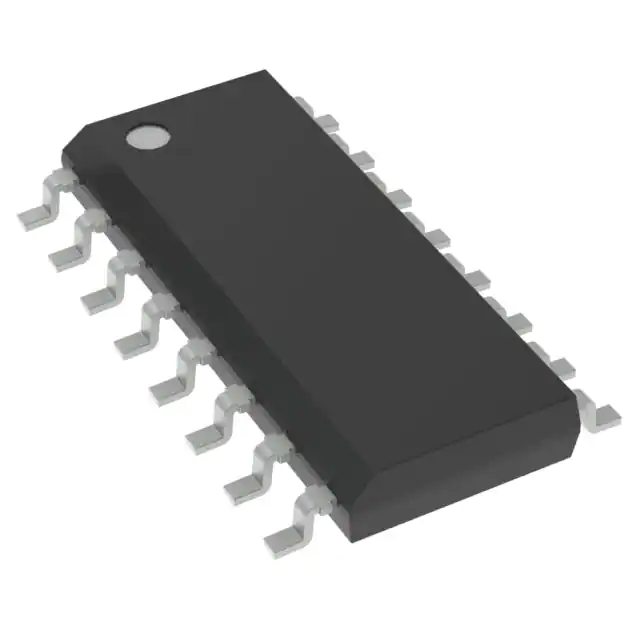
- Part No.:
- ST26C31BDR
- Manufacturer:
- STMicroelectronics
- Category:
- Drivers, Receivers, Transceivers
- Package:
- 16-SOIC (0.154", 3.90mm Width)
- Datasheet:
-
 ST26C31BDR.pdf
- Description:
- IC TRANSCEIVER 4/0 16SO
- Quantity:
- Payment:

- Shipping:

Inventory:45,613
Please send an inquiry. Send us your inquiry, and we will respond immediately.
Product details
Overview
ST26C31BDR from STMicroelectronics is a quad 3-state differential line driver compliant with EIA RS-422, operating from a single 5 V supply, featuring 6 ns typical propagation delay, 0.5 ns typical output skew, and TTL/CMOS input compatibility for balanced digital data transmission in industrial serial interfaces.
For engineers reviewing the ST26C31BDR datasheet, ST26C31BDR pinout, ST26C31BDR application, or ST26C31BDR equivalent, key selection criteria include RS-422 differential drive capability, 3-state bus interface support, low quiescent current (200–500 µA), and SO-16 package suitability for high-density PCB layouts.
Technical Context
The ST26C31BDR implements four independent differential drivers with shared enable logic per pair (pins 4 & 12), each translating TTL/CMOS inputs into RS-422-compliant differential outputs (AOUT/AOUT, BOUT/BOUT, etc.). All outputs feature diode-based ESD protection to VCC and ground.
It operates within 4.5–5.5 V supply range and -40°C to +85°C ambient, with guaranteed differential output voltage ≥2 V (min) into 100 Ω load and common-mode output voltage between 1.8–3 V - meeting RS-422 common-mode tolerance and noise immunity requirements.
Key Specifications
| Parameter | Value and Actual Design Meaning |
|---|---|
| Supply Voltage | 4.5–5.5 V - ensures compatibility with standard 5 V logic systems and margin against rail droop. |
| Propagation Delay | 2–11 ns (typ 6 ns) - enables reliable operation up to ~80 Mbps in point-to-point RS-422 links. |
| Output Skew | 0.5–2 ns (typ 0.5 ns) - minimizes timing mismatch between complementary outputs, critical for signal integrity. |
| Differential Output Voltage | 2–3.1 V (min 2 V) - meets RS-422 minimum differential swing for robust noise rejection (>200 mV margin). |
| Quiescent Supply Current | 200–500 µA - supports low-power system standby modes without disabling transceivers. |
| 3-State Leakage | ±0.5 µA (typ) - prevents bus contention and signal corruption when outputs are disabled. |
| Power-Off Leakage | ±100 µA at VCC = 0 V - allows safe hot-plug or partial power-down without loading downstream lines. |
Pinout & Package
ST26C31BDR is housed in a 16-pin SOIC (SO-16) surface-mount package with 1.27 mm pitch, JEDEC MS-012AC compliant, RoHS-compliant and ECOPACK® certified.
| Pin/Terminal | Circuit Role | Design Meaning |
|---|---|---|
| 1, 7, 9, 15 | AIN / BIN / CIN / DIN | TTL/CMOS-compatible digital inputs driving respective differential channels. |
| 2–3, 5–6, 10–11, 13–14 | AOUT/AOUT / BOUT/BOUT / COUT/COUT / DOUT/DOUT | Complementary RS-422 differential outputs; require 100 Ω termination across pair. |
| 4, 12 | EN | Active-high enable control per channel pair; drives all four outputs into high-impedance when low. |
| 8 | GND | System ground reference for all I/O and supply return paths. |
| 16 | VCC | Single 5 V supply powering internal CMOS logic and output stage biasing. |
Key Features
| Feature | Design Value |
|---|---|
| RS-422 Compliance | Fully meets EIA-422 electrical specifications including differential swing, common-mode range, and loading behavior. |
| Bus-Friendly 3-State Outputs | Independent EN pins per pair allow selective channel disabling without affecting other drivers on shared bus lines. |
| Zero-Voltage Line Isolation | Outputs remain high-impedance even when VCC = 0 V, preventing back-driving of powered-down systems. |
| ESD Protection | Integrated diodes to VCC and GND provide ±2 kV HBM ESD robustness per IEC 61000-4-2 Level 2. |
Applications
| Industrial PLC Backplane | Point-to-Point Serial Link |
|---|---|
Use Scenario: Transmitting synchronized I/O status between CPU and remote I/O modules over 10–30 m twisted-pair cabling in noisy factory environments. IC Role / Device Role / Timing Role: Differential line driver converting parallel controller outputs into noise-immune RS-422 signals for long-haul transmission. Use Value: 2 V min differential swing and 0.5 ns skew ensure bit-error-free communication at 10 Mbps under 2 kV EFT interference. | Use Scenario: Interfacing an FPGA UART peripheral to a remote sensor node via shielded twisted pair in building automation systems. IC Role / Device Role / Timing Role: Level-shifting and driving isolated RS-422 physical layer from 3.3 V or 5 V logic domain. Use Value: TTL-compatible inputs eliminate need for external level shifters; 6 ns propagation delay preserves timing margins in full-duplex designs. |
| Multidrop Data Bus | Test Equipment Interface |
Use Scenario: Driving multiple RS-422 receivers from a single master controller in semiconductor ATE rack systems. IC Role / Device Role / Timing Role: Quad driver enabling simultaneous transmission to four independent receiver branches with matched timing. Use Value: Per-pair EN control allows dynamic bus arbitration; 0.5 ns skew maintains inter-channel synchronization across 4 channels. | Use Scenario: Integrating legacy GPIB or RS-232 instruments into modern PXI chassis using RS-422 bridging modules. IC Role / Device Role / Timing Role: Reliable physical layer driver for SCPI command streams requiring deterministic latency and error resilience. Use Value: Low quiescent current (200 µA) reduces thermal load in densely packed test enclosures; SO-16 footprint eases rework and layout. |
Equivalent & Alternatives
The following parts are listed as comparable options for similar differential line driver applications.
| Alternative Part | Technical Difference | Application Difference | Selection Advice |
|---|---|---|---|
| SN65LVD11DR | Lower supply range (3–3.6 V), higher speed (250 Mbps), no TTL input compatibility. | Designed for LVDS, not RS-422; requires external level translation for TTL inputs. | Select only if migrating to 3.3 V systems and LVDS signaling; not drop-in for ST26C31BDR's 5 V/RS-422 use case. |
| MAX3080CSA+ | Higher ESD rating (±15 kV), integrated fail-safe biasing, but 10 ns max propagation delay. | Includes RS-485 half-duplex support and open-circuit detection; more complex control interface. | Prefer when system-level fault tolerance (fail-safe, hot-swap) is required beyond basic RS-422 drive. |
Compared with SN65LVD11DR and MAX3080CSA+, the ST26C31BDR uniquely balances 5 V TTL compatibility, RS-422 compliance, low skew, and minimal quiescent power - making it optimal for cost-sensitive, noise-prone industrial serial backplanes where 5 V infrastructure dominates.
Availability
ST26C31BDR is available at Aetrix Electronics and suitable for industrial PLC backplanes, point-to-point serial links, and multidrop data buses requiring stable component supply, long-term manufacturability, and RoHS-compliant SO-16 packaging.
Supply support for ST26C31BDR includes scheduled delivery planning, volume procurement assistance, BOM continuity management, traceable sourcing, and lifecycle availability coordination for OEM customers, industrial embedded developers, connected-device designers, and electronics production programs.
Manufacturer
STMicroelectronics is a global semiconductor leader headquartered in Geneva, Switzerland, designing and manufacturing microcontrollers, analog ICs, power management devices, and discrete components for industrial, automotive, and consumer markets.
The ST26C31BDR belongs to ST's legacy RS-422/RS-485 interface portfolio, engineered specifically for robust, low-power differential data transmission in electrically noisy industrial control and instrumentation systems.
FAQ
What is the maximum data rate supported by ST26C31BDR?
The ST26C31BDR supports reliable operation up to approximately 80 Mbps, derived from its 2 ns minimum propagation delay and 0.5 ns typical output skew - enabling clean eye diagrams at 10–20 Mbps in real-world 100 Ω terminated lines with 10–30 m cable runs. Higher rates depend on layout, termination, and noise conditions.
Can ST26C31BDR drive RS-485 networks?
No - ST26C31BDR is an RS-422 driver only: it provides four unidirectional differential outputs without built-in receiver or tri-state control for half-duplex RS-485 bus sharing. It lacks the DE/RE control logic and fail-safe biasing required for RS-485 compliance, though its outputs meet RS-485 voltage thresholds when used in point-to-point mode.
Does ST26C31BDR require external pull-up/pull-down resistors on inputs?
No - the ST26C31BDR inputs are TTL-compatible with defined VIH (≥2 V) and VIL (≤0.8 V) thresholds and ≤1 µA input current; they do not float and require no external biasing unless interfacing with open-drain or high-impedance sources. Unused inputs should be tied to VCC or GND for noise immunity.
Is the SO-16 package of ST26C31BDR lead-free and RoHS compliant?
Yes - ST26C31BDR uses an ECOPACK®-certified SO-16 package with lead-free second-level interconnect, compliant with RoHS Directive 2011/65/EU and JEDEC J-STD-020 moisture sensitivity level MSL3. The inner box label confirms lead-free marking per JEDEC Standard JESD97.
ST26C31BDR Specifications
- Product attributes
- Attribute value
- Manufacturer:
- STMicroelectronics
- Series:
- -
- Package/Case:
- 16-SOIC (0.154", 3.90mm Width)
- Packaging:
- Tape & Reel (TR)
- Product Status:
- Active
- Type:
- Driver
- Protocol:
- RS422, RS485
- Number of Drivers/Receivers:
- 4/0
- Duplex:
- -
- Receiver Hysteresis:
- -
- Data Rate:
- -
- Voltage - Supply:
- 4.5V ~ 5.5V
- Operating Temperature:
- -40°C ~ 85°C
- Grade:
- -
- Qualification:
- -
- Mounting Type:
- Surface Mount
- Supplier Device Package:
- 16-SO
ST26C31BDR FAQ
1.How can I place an order for ST26C31BDR through Aetrix?
Please submit a Request for Quotation (RFQ) for ST26C31BDR on Aetrix. Our sales agent will provide a competitive quotation and guide you through the order confirmation once you accept the terms.
2.Are the price and stock information for ST26C31BDR reliable?
The price and inventory of ST26C31BDR are updated periodically and may fluctuate due to market conditions. Stock and pricing data are typically refreshed every 24 hours. Quotation validity for ST26C31BDR is usually 5 days.
3.What payment methods are accepted for ST26C31BDR?
We accept Wire Transfer, PayPal, Credit Card, Western Union, MoneyGram, and Escrow for ST26C31BDR transactions.
Note: Certain payment methods may incur a processing fee.
4.How is shipping managed for ST26C31BDR?
ST26C31BDR orders can be shipped via leading logistics carriers, including DHL, UPS, FedEx, TNT, or Registered Mail.
Once your ST26C31BDR order is processed, you will receive an email with the shipment details and tracking number.
Note: Tracking information may take up to 24 hours to appear. Express delivery typically takes 3–5 business days.
5.How can I obtain technical support or documentation for ST26C31BDR?
For technical support, including ST26C31BDR datasheets, pinout diagrams, or application guidance, please contact our engineering support team. They can provide detailed documentation and assistance for your ST26C31BDR requirements.
6.How does Aetrix verify that ST26C31BDR is sourced from the original manufacturer or authorized distributors?
All ST26C31BDR products on Aetrix are procured from qualified distributors and authorized channels. Our dedicated quality assurance team conducts strict verification, including traceability checks and, if necessary, third-party testing. This ensures that ST26C31BDR meets industry standards.
7.What is the process for return or replacement of ST26C31BDR?
All ST26C31BDR units undergo pre-shipment inspection (PSI). If there is an issue with ST26C31BDR, returns or replacements are accepted under the following conditions:
1.Quantity discrepancies, incorrect items, or visible external defects (such as breakage or corrosion), acknowledged by Aetrix.
2.The issue is reported within 90 days of delivery.
3.The ST26C31BDR part is unused and in its original packaging.
Return procedure for ST26C31BDR:
1.Submit a request within 90 days.
2.Obtain a Return Material Authorization (RMA) from Aetrix.
ST26C31BDR Tags

-
ATA6561-GAQW-N
Microchip Technology
-
ATA6561-GBQW-N
Microchip Technology
-
AM26LS32ACDR
Texas Instruments

-
SP485CN-L/TR
MaxLinear, Inc.
-
SP485EN-L/TR
MaxLinear, Inc.
-
SP485EEN-L/TR
MaxLinear, Inc.
-
SP485ECN-L/TR
MaxLinear, Inc.
-
THVD1400DR
Texas Instruments
-
AM26C31IDR
Texas Instruments

-
TLIN1021ADRQ1
Texas Instruments
-
MAX232IDR
Texas Instruments
-
AM26C32IDR
Texas Instruments
Tech Hub

A practical engineering and sourcing framework covering lifecycle verification, lifetime-buy calculations, replacement qualification, supplier checks and counterfeit-risk controls.

TTL and CMOS logic families differ in thresholds, loading, output drive, power and timing. This engineering guide compares 74HC and 74HCT, calculates noise margins and checks 3.3 V/5 V compatibility.

A practical engineering guide to 3.3V and 5V logic compatibility, input thresholds, resistor dividers, translator ICs, MOSFET level shifting, I2C pull-ups, timing limits and power-sequencing risks.

The 74HC595 uses push-pull logic outputs, while the TPIC6B595 uses 50 V open-drain DMOS sinks for higher-power loads. This guide compares timing, current limits, 3.3 V interfacing, load wiring, thermal…

The 74HC595 converts serial data into eight stable parallel outputs. This guide covers pin functions, shift and storage timing, OE and MR behavior, drive-current limits, cascading, voltage compatibilit…

A technical comparison of level-sensitive latches and edge-triggered flip-flops, covering timing windows, setup and hold limits, master–slave operation, time borrowing, race-through, HDL inference and…

A D latch stores one bit while Enable controls when data can pass. This reference covers gate-level operation, truth tables, transparency, setup and hold timing, LE versus OE, common ICs and practical …

An SR latch stores one bit through cross-coupled feedback. This engineering reference covers NOR and NAND implementations, truth tables, forbidden-state recovery, gated operation, switch debouncing, fa…

Latch circuits retain one bit through feedback. This technical reference covers SR and D latches, truth tables, transparency, timing limits, latch-versus-flip-flop behavior, applications and common log…

An engineering guide to LED driver operation, constant-current and constant-voltage outputs, linear and switching topologies, dimming, IC selection, calculations, replacement compatibility, and fault c…


