
 My Inquiry
 My Account


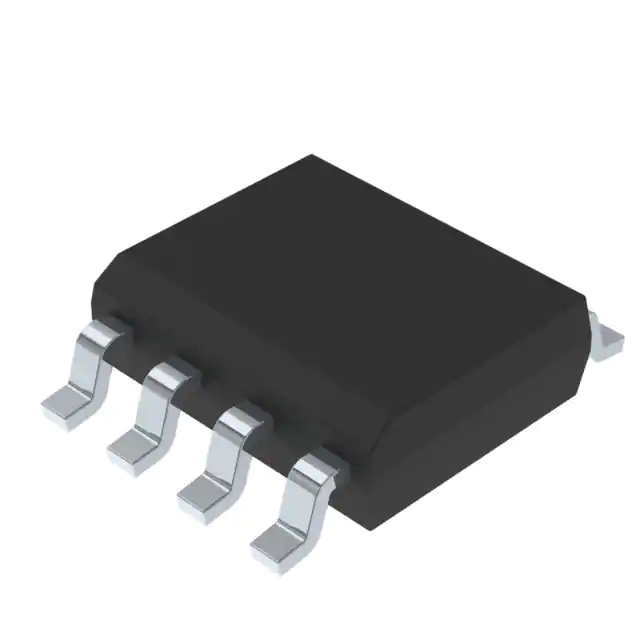
STMicroelectronics ST3485EBDR
- Part No.:
- ST3485EBDR
- Manufacturer:
- STMicroelectronics
- Category:
- Drivers, Receivers, Transceivers
- Package:
- 8-SOIC (0.154", 3.90mm Width)
- Datasheet:
-
 ST3485EBDR.pdf
- Description:
- IC TRANSCEIVER HALF 1/1 8SOIC
- Quantity:
- Payment:

- Shipping:

Inventory:15,639
Please send an inquiry. Send us your inquiry, and we will respond immediately.
Product details
Overview
ST3485EBDR from STMicroelectronics is a half-duplex, 3.3 V RS-485/RS-422 transceiver with ±15 kV IEC 61000-4-2 ESD protection, guaranteed 12 Mbps data rate, -7 to +12 V common-mode input range, and 1 µA shutdown current. It integrates one driver and one receiver in an SO8 package and is rated for -40 °C to +85 °C industrial operation-used in factory automation serial backbones requiring robust noise immunity and bus termination flexibility.
For engineers reviewing the ST3485EBDR datasheet, ST3485EBDR pinout, ST3485EBDR application, or ST3485EBDR equivalent, key selection criteria include its 3.3 V single-supply operation without charge pump, industry-standard 75176 pinout compatibility, thermal shutdown protection, floating-input fail-safe receiver, and support for up to 64 nodes on a multidrop bus.
Technical Context
This transceiver implements a half-duplex RS-485/RS-422 interface with independent driver enable (DE) and receiver enable (RE) controls, enabling precise bus arbitration. Its driver delivers ≥1.5 V differential output voltage into 54 Ω (RS-485) and supports short-circuit current limiting plus thermal shutdown.
The receiver features a ±0.2 V differential threshold with 70 mV hysteresis, guaranteed high output for open inputs, and 24 kΩ input resistance. Logic inputs (DE, RE, DI) operate at 3.3 V levels but are interoperable with 5 V systems via TTL-compatible thresholds (VIL ≤ 0.8 V, VIH ≥ 2.0 V).
Key Specifications
| Parameter | Value and Actual Design Meaning |
|---|---|
| Data rate | 12 Mbps minimum - supports high-speed industrial fieldbus links without signal integrity compromise |
| ESD protection | ±15 kV air discharge (IEC 61000-4-2) - eliminates need for external TVS diodes in harsh EMI environments |
| Supply voltage | 3.0–3.6 V - enables direct integration with 3.3 V FPGA/CPU I/O domains without level-shifting |
| Common-mode range | -7 V to +12 V - accommodates ground potential differences across long cable runs in distributed control systems |
| Shutdown current | ≤1 µA - allows low-power sleep mode in battery-backed or energy-sensitive remote nodes |
| Bus node count | Up to 64 units - supports large-scale multidrop networks without repeaters or segment isolation |
| Driver output | ≥1.5 VOD into 54 Ω - meets RS-485 standard drive strength for 1200 m cable at full rate |
| Receiver hysteresis | 70 mV - prevents chatter on noisy differential lines near switching threshold |
Pinout & Package
ST3485EBDR uses an SO8 (Small Outline 8-pin) package with standard 1.27 mm pitch, 4.9 mm × 6.0 mm body, and ECOPACK® RoHS-compliant construction.
| Pin/Terminal | Circuit Role | Design Meaning |
|---|---|---|
| 1 RO | Receiver output | Active-high logic output reflecting A–B differential state; high impedance when RE = high |
| 2 RE | Receiver enable | Active-low control: RO enabled when low; high impedance when high; combines with DE = low for shutdown |
| 3 DE | Driver enable | Active-high control: driver outputs A/B enabled when high; high impedance when low; pairs with RE = high for shutdown |
| 4 DI | Driver input | Logic-level input controlling driver polarity: DI = high → A high / B low; DI = low → A low / B high |
| 5 GND | Ground reference | Primary return path for VCC, driver, receiver, and logic circuits; must be low-impedance for ESD and noise immunity |
| 6 A | Non-inverting I/O | Transmit/receive node for non-inverting signal; connects to RS-485 bus A line; ±14 V absolute max rating |
| 7 B | Inverting I/O | Transmit/receive node for inverting signal; connects to RS-485 bus B line; ±14 V absolute max rating |
| 8 VCC | Power supply | 3.0–3.6 V input; powers all internal circuitry; bypass capacitor required per datasheet layout guidelines |
Key Features
| Feature | Design Value |
|---|---|
| Fail-safe receiver | Guaranteed high RO output with floating A/B inputs - prevents undefined logic states during bus idle or disconnection |
| Thermal shutdown | Driver enters high-Z state upon overtemperature - protects against sustained short-circuit faults on long cables |
| Interoperable logic | VIH ≥ 2.0 V, VIL ≤ 0.8 V - accepts 5 V CMOS/TTL signals directly without external level shifters |
| Current-limited driver | ±250 mA short-circuit output limit - prevents damage during bus contention or miswiring |
| Low-power shutdown | 1 µA max supply current with DE = low & RE = high - enables rapid power gating in duty-cycled nodes |
Applications
| Industrial PLC Backplane | Smart Meter Communication |
|---|---|
Use Scenario: Serial communication between CPU module and I/O expansion cards in modular PLC chassis with shared RS-485 backplane. IC Role / Device Role / Timing Role: Half-duplex transceiver managing bidirectional command/response traffic under master-slave protocol with strict timing margins. Use Value: 12 Mbps capability ensures sub-millisecond cycle times across 32-slot backplanes; ±15 kV ESD withstands relay switching transients. | Use Scenario: Two-way AMI (Advanced Metering Infrastructure) data exchange between utility meter and concentrator over twisted-pair distribution lines. IC Role / Device Role / Timing Role: Bus interface IC handling DLMS/COSEM frame transmission and reception in ANSI C12.18 or IEC 62056-21 protocols. Use Value: -7 to +12 V common-mode range rejects induced noise from nearby power lines; 64-node capacity scales to neighborhood-level deployments. |
| Railway Signaling Node | Building Automation Controller |
Use Scenario: Interlocking system node communicating status and commands across trackside cabinets using EN 50155-compliant RS-485 links. IC Role / Device Role / Timing Role: Robust physical layer transceiver ensuring deterministic message delivery in vibration-prone, wide-temperature rail environments. Use Value: -40 °C to +85 °C rating meets EN 50155 Class TX; thermal shutdown prevents latch-up during conductor fault events. | Use Scenario: BACnet MS/TP controller interfacing with HVAC actuators, sensors, and thermostats over daisy-chained RS-485 wiring in commercial buildings. IC Role / Device Role / Timing Role: Half-duplex bus transceiver implementing token-passing MAC layer with collision-free deterministic latency. Use Value: Industry-standard 75176 pinout simplifies PCB reuse across legacy and new controllers; 1 µA shutdown extends battery life in wireless gateway variants. |
Equivalent & Alternatives
The following parts are listed as comparable options for similar RS-485 transceiver applications.
| Alternative Part | Technical Difference | Application Difference | Selection Advice |
|---|---|---|---|
| MAX3485ESA+ | Same 3.3 V supply, 12 Mbps, SO8, but only ±12 kV HBM ESD (not IEC 61000-4-2) | Lacks certified air/contact discharge rating - requires external protection in high-ESD zones | Select when cost sensitivity outweighs certified ESD robustness and ambient temperature stays within 0–70 °C |
| SN65HVD3486DR | 3.3 V, 12 Mbps, SO8, ±16 kV IEC 61000-4-2, but no shutdown mode (3 µA quiescent vs. 1 µA) | Higher static current reduces battery lifetime in portable gateways | Select when maximum ESD margin is critical and continuous operation is preferred over deep-sleep cycling |
Compared with MAX3485ESA+ and SN65HVD3486DR, ST3485EBDR uniquely combines automotive-grade temperature range (-40 to +85 °C), certified ±15 kV IEC ESD, and sub-µA shutdown - making it optimal for industrial edge nodes where reliability, longevity, and power budget co-constrain design.
Availability
ST3485EBDR is available at Aetrix Electronics and suitable for industrial PLC backplanes, smart meter AMI networks, railway signaling nodes, and building automation controllers requiring stable component supply across extended temperature and ESD stress conditions.
Supply support for ST3485EBDR includes scheduled delivery planning, volume procurement assistance, BOM continuity management, traceable sourcing, and lifecycle availability coordination for OEM customers, industrial embedded developers, connected-device designers, and electronics production programs.
Manufacturer
STMicroelectronics is a global semiconductor leader headquartered in Geneva, Switzerland, designing and manufacturing microcontrollers, analog ICs, power devices, and sensors for industrial, automotive, and consumer markets.
The ST3485EBDR belongs to ST's RS-485/422 transceiver product line, engineered specifically for noise-immune, multi-drop serial communication in harsh industrial environments with emphasis on ESD resilience, low power, and interoperability.
FAQ
What is the maximum cable length supported at 12 Mbps?
At 12 Mbps, ST3485EBDR supports up to 15 meters of standard 120 Ω twisted-pair cable per the RS-485 specification. Longer distances require reduced data rates: e.g., 1200 meters at 100 kbps. Signal integrity depends on proper termination, stub length control, and cable quality-not solely on transceiver capability.
Does ST3485EBDR require external biasing resistors on the A/B bus lines?
No external biasing resistors are required for basic operation, as the receiver includes internal fail-safe biasing that forces RO high when A/B float. However, for improved noise immunity in unterminated or lightly loaded buses, 560 Ω pull-up on A and pull-down on B (or vice versa) may be added per application note AN4825.
Can ST3485EBDR interface directly with 5 V microcontrollers?
Yes - its logic inputs (DI, DE, RE) accept 5 V TTL/CMOS levels: VIL ≤ 0.8 V and VIH ≥ 2.0 V are guaranteed over temperature. The RO output swings rail-to-rail (0 V to VCC), so a level shifter is needed if the MCU reads RO at 5 V logic thresholds.
How does the shutdown mode function, and what triggers it?
Shutdown is activated when DE = low AND RE = high simultaneously for ≥300 ns. This places both driver and receiver in high-impedance states and reduces supply current to ≤1 µA. Inputs must remain stable for at least 300 ns to guarantee entry; shorter pulses (<80 ns) will not trigger shutdown per datasheet timing spec.
ST3485EBDR Specifications
- Product attributes
- Attribute value
- Manufacturer:
- STMicroelectronics
- Series:
- -
- Package/Case:
- 8-SOIC (0.154", 3.90mm Width)
- Packaging:
- Tape & Reel (TR)
- Product Status:
- Active
- Type:
- Transceiver
- Protocol:
- RS422, RS485
- Number of Drivers/Receivers:
- 1/1
- Duplex:
- Half
- Receiver Hysteresis:
- 70 mV
- Data Rate:
- 15Mbps
- Voltage - Supply:
- 3V ~ 3.6V
- Operating Temperature:
- -40°C ~ 85°C
- Grade:
- -
- Qualification:
- AEC-Q100
- Mounting Type:
- Surface Mount
- Supplier Device Package:
- 8-SOIC
ST3485EBDR FAQ
1.How can I place an order for ST3485EBDR through Aetrix?
Please submit a Request for Quotation (RFQ) for ST3485EBDR on Aetrix. Our sales agent will provide a competitive quotation and guide you through the order confirmation once you accept the terms.
2.Are the price and stock information for ST3485EBDR reliable?
The price and inventory of ST3485EBDR are updated periodically and may fluctuate due to market conditions. Stock and pricing data are typically refreshed every 24 hours. Quotation validity for ST3485EBDR is usually 5 days.
3.What payment methods are accepted for ST3485EBDR?
We accept Wire Transfer, PayPal, Credit Card, Western Union, MoneyGram, and Escrow for ST3485EBDR transactions.
Note: Certain payment methods may incur a processing fee.
4.How is shipping managed for ST3485EBDR?
ST3485EBDR orders can be shipped via leading logistics carriers, including DHL, UPS, FedEx, TNT, or Registered Mail.
Once your ST3485EBDR order is processed, you will receive an email with the shipment details and tracking number.
Note: Tracking information may take up to 24 hours to appear. Express delivery typically takes 3–5 business days.
5.How can I obtain technical support or documentation for ST3485EBDR?
For technical support, including ST3485EBDR datasheets, pinout diagrams, or application guidance, please contact our engineering support team. They can provide detailed documentation and assistance for your ST3485EBDR requirements.
6.How does Aetrix verify that ST3485EBDR is sourced from the original manufacturer or authorized distributors?
All ST3485EBDR products on Aetrix are procured from qualified distributors and authorized channels. Our dedicated quality assurance team conducts strict verification, including traceability checks and, if necessary, third-party testing. This ensures that ST3485EBDR meets industry standards.
7.What is the process for return or replacement of ST3485EBDR?
All ST3485EBDR units undergo pre-shipment inspection (PSI). If there is an issue with ST3485EBDR, returns or replacements are accepted under the following conditions:
1.Quantity discrepancies, incorrect items, or visible external defects (such as breakage or corrosion), acknowledged by Aetrix.
2.The issue is reported within 90 days of delivery.
3.The ST3485EBDR part is unused and in its original packaging.
Return procedure for ST3485EBDR:
1.Submit a request within 90 days.
2.Obtain a Return Material Authorization (RMA) from Aetrix.
ST3485EBDR Tags

-
ATA6561-GAQW-N
Microchip Technology
-
ATA6561-GBQW-N
Microchip Technology
-
AM26LS32ACDR
Texas Instruments

-
SP485CN-L/TR
MaxLinear, Inc.
-
SP485EN-L/TR
MaxLinear, Inc.
-
SP485EEN-L/TR
MaxLinear, Inc.
-
SP485ECN-L/TR
MaxLinear, Inc.
-
THVD1400DR
Texas Instruments
-
AM26C31IDR
Texas Instruments

-
TLIN1021ADRQ1
Texas Instruments
-
MAX232IDR
Texas Instruments
-
AM26C32IDR
Texas Instruments
Tech Hub

A practical engineering and sourcing framework covering lifecycle verification, lifetime-buy calculations, replacement qualification, supplier checks and counterfeit-risk controls.

TTL and CMOS logic families differ in thresholds, loading, output drive, power and timing. This engineering guide compares 74HC and 74HCT, calculates noise margins and checks 3.3 V/5 V compatibility.

A practical engineering guide to 3.3V and 5V logic compatibility, input thresholds, resistor dividers, translator ICs, MOSFET level shifting, I2C pull-ups, timing limits and power-sequencing risks.

The 74HC595 uses push-pull logic outputs, while the TPIC6B595 uses 50 V open-drain DMOS sinks for higher-power loads. This guide compares timing, current limits, 3.3 V interfacing, load wiring, thermal…

The 74HC595 converts serial data into eight stable parallel outputs. This guide covers pin functions, shift and storage timing, OE and MR behavior, drive-current limits, cascading, voltage compatibilit…

A technical comparison of level-sensitive latches and edge-triggered flip-flops, covering timing windows, setup and hold limits, master–slave operation, time borrowing, race-through, HDL inference and…

A D latch stores one bit while Enable controls when data can pass. This reference covers gate-level operation, truth tables, transparency, setup and hold timing, LE versus OE, common ICs and practical …

An SR latch stores one bit through cross-coupled feedback. This engineering reference covers NOR and NAND implementations, truth tables, forbidden-state recovery, gated operation, switch debouncing, fa…

Latch circuits retain one bit through feedback. This technical reference covers SR and D latches, truth tables, transparency, timing limits, latch-versus-flip-flop behavior, applications and common log…

An engineering guide to LED driver operation, constant-current and constant-voltage outputs, linear and switching topologies, dimming, IC selection, calculations, replacement compatibility, and fault c…


