
 My Inquiry
 My Account


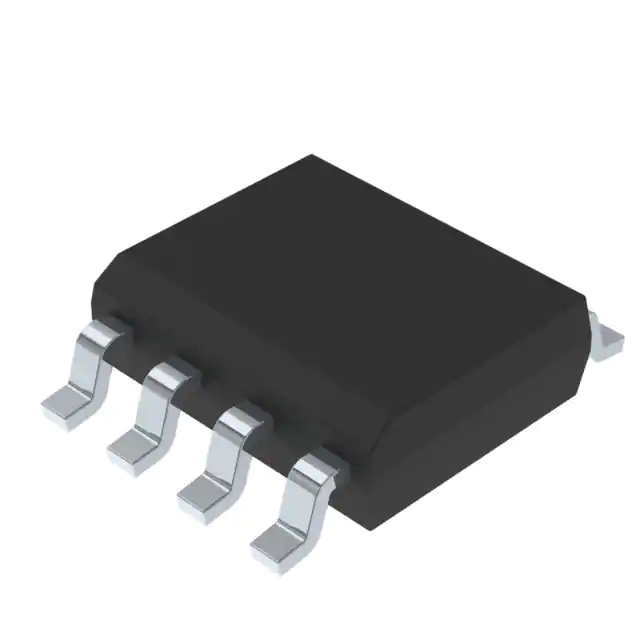
STMicroelectronics ST485ABDR
- Part No.:
- ST485ABDR
- Manufacturer:
- STMicroelectronics
- Category:
- Drivers, Receivers, Transceivers
- Package:
- 8-SOIC (0.154", 3.90mm Width)
- Datasheet:
-
 ST485ABDR.pdf
- Description:
- IC TRANSCEIVER HALF 1/1 8SOIC
- Quantity:
- Payment:

- Shipping:

Inventory:34,684
Please send an inquiry. Send us your inquiry, and we will respond immediately.
Product details
Overview
ST485ABDR from STMicroelectronics is a half-duplex RS-485/RS-422 transceiver in SO-8 package, featuring 30 Mbps max data rate, ±4 kV ESD protection, -7 V to +12 V common-mode input range, 5 mA max supply current, and thermal shutdown with current limiting. It serves as a robust physical-layer interface for industrial serial bus networks.
For engineers reviewing the ST485ABDR datasheet, ST485ABDR pinout, ST485ABDR application, or ST485ABDR equivalent, key selection criteria include differential output voltage (1.5–2.7 V), receiver hysteresis (70 mV typ), driver enable/disable timing (7–30 ns), fail-safe open-circuit detection, and SO-8 thermal performance in extended temperature (-40°C to +85°C) environments.
Technical Context
The ST485ABDR integrates one driver and one receiver in a single half-duplex configuration, supporting bidirectional communication on multipoint transmission lines. Its driver features short-circuit current limiting and thermal shutdown, forcing outputs into high-impedance state under overload-preventing bus contention and damage.
The receiver includes fail-safe biasing that guarantees logic-high RO when A and B inputs are open or shorted, and delivers 70 mV typical hysteresis to reject noise near switching thresholds. Logic-level control (DE/RE) enables precise timing coordination between transmit/receive states without external sequencing.
Key Specifications
| Parameter | Value and Actual Design Meaning |
|---|---|
| Data rate | 30 Mbps min - supports high-speed industrial automation links with low jitter (<5%) |
| Supply current | 5 mA max - enables low-power operation in battery-backed or energy-constrained nodes |
| Common-mode range | -7 V to +12 V - tolerates ground potential differences across long cable runs |
| Differential output | 1.5–2.7 V (RL = 54 Ω) - ensures reliable signal detection over noisy industrial environments |
| Input hysteresis | 70 mV typ - suppresses false triggering from EMI-induced signal ringing |
| ESD protection | ±4 kV HBM - meets IEC 61000-4-2 Level 2 for system-level surge immunity |
| Propagation delay | 18–30 ns - enables tight timing budgets in real-time deterministic networks |
| Driver disable time | 7–30 ns - minimizes bus turnaround latency in half-duplex master-slave protocols |
Pinout & Package
ST485ABDR is housed in an SO-8 (Small Outline Integrated Circuit, 8-pin) package with gull-wing leads, RoHS-compliant and ECOPACK® certified. Dimensions conform to JEDEC MS-012AA: body width 3.9–4.1 mm, lead pitch 1.27 mm, total length 4.8–5.0 mm.
| Pin/Terminal | Circuit Role | Design Meaning |
|---|---|---|
| 1 RO | Receiver output | CMOS-compatible logic-level output; high when A > B by ≥200 mV, low when A < B by ≥200 mV |
| 2 RE | Receiver enable | Active-low control; disables RO (high-Z) when high; enables low-power shutdown when high + DE low |
| 3 DE | Driver enable | Active-high control; enables A/B outputs when high; forces high-Z when low; enters shutdown with RE high |
| 4 DI | Driver input | Logic-level input controlling differential polarity: DI low → A low / B high; DI high → A high / B low |
| 5 GND | Ground reference | Common return path for supply, driver, and receiver circuits; critical for noise rejection and common-mode stability |
| 6 A | Non-inverting I/O | Transmits/receives non-inverted signal; connects to bus A line; differential pair with B |
| 7 B | Inverting I/O | Transmits/receives inverted signal; connects to bus B line; differential pair with A |
| 8 VCC | Power supply | Single 4.75–5.25 V rail; powers both driver and receiver; bypass capacitor required at pin |
Key Features
| Feature | Design Value |
|---|---|
| Fail-safe receiver | Guarantees RO = high when A/B inputs are open, shorted, or unterminated - prevents undefined bus states |
| Thermal shutdown | Automatically disables driver outputs during sustained overload, recovering automatically after cooldown |
| High-impedance driver disable | Driver outputs enter true high-Z state when DE = low - eliminates bus contention in multi-node networks |
| Low-power shutdown mode | RE = high + DE = low reduces supply current to <5 µA - ideal for sleep/wake protocols |
| ESD-hardened I/O | All A, B, DI, RE, DE pins rated to ±4 kV HBM - reduces need for external TVS diodes |
Applications
| Industrial PLC Backplane | Building Automation Network |
|---|---|
Use Scenario: Serial communication between CPU and I/O modules over 10+ meter backplane traces with shared ground noise. IC Role / Device Role / Timing Role: Physical layer transceiver managing half-duplex RS-485 signaling with precise DE/RE timing control. Use Value: -7 V to +12 V common-mode range rejects ground bounce; 30 ns propagation delay ensures cycle-accurate polling in scan-based architectures. | Use Scenario: Daisy-chained HVAC controllers communicating via twisted-pair cabling across floors with variable grounding. IC Role / Device Role / Timing Role: Robust bus interface providing fail-safe idle-state detection and ESD resilience at node endpoints. Use Value: 70 mV input hysteresis prevents spurious interrupts from cable coupling; ±4 kV ESD rating eliminates field failures from static discharge. |
| Motor Drive Command Link | Energy Meter Data Aggregation |
Use Scenario: Real-time torque/speed commands sent from motion controller to servo drives in electrically noisy factory settings. IC Role / Device Role / Timing Role: High-speed differential driver enabling sub-100 ns turnaround for closed-loop command-response cycles. Use Value: 7–30 ns driver enable/disable times minimize dead time; thermal shutdown protects against motor stall-induced bus faults. | Use Scenario: AMI (Advanced Metering Infrastructure) concentrators collecting hourly consumption data from 32+ smart meters over RS-485. IC Role / Device Role / Timing Role: Low-quiescent-current transceiver maintaining bus readiness during extended idle periods between polls. Use Value: 5 mA max supply current extends backup battery life; high-impedance disable prevents loading of dormant bus segments. |
Equivalent & Alternatives
The following parts are listed as comparable options for similar RS-485 transceiver applications.
| Alternative Part | Technical Difference | Application Difference | Selection Advice |
|---|---|---|---|
| MAX13487EESA+ | Lower quiescent current (120 µA vs 5 mA), integrated slew-rate limiting (250 kbps max), no thermal shutdown | Better for ultra-low-power remote sensors; unsuitable for 30 Mbps or high-noise motor drive links | Select when power budget <200 µA dominates; avoid where high speed or fault protection is required |
| SN65HVD72DR | Higher ESD rating (±16 kV), 50 Mbps data rate, 3.3 V operation only, no 5 V compatibility | Required for automotive-grade ESD compliance; incompatible with legacy 5 V systems or mixed-voltage designs | Select for new 3.3 V designs needing enhanced surge immunity; not drop-in for ST485ABDR's 5 V infrastructure |
Compared with MAX13487EESA+ and SN65HVD72DR, the ST485ABDR uniquely balances 30 Mbps speed, 5 V operation, thermal protection, and industrial-grade common-mode tolerance-making it optimal for retrofitting legacy 5 V RS-485 infrastructure requiring reliability over extreme ground offsets.
Availability
ST485ABDR is available at Aetrix Electronics and suitable for industrial PLC backplanes, building automation networks, motor drive command links, and energy meter data aggregation requiring stable component supply across extended temperature ranges and long production lifecycles.
Supply support for ST485ABDR includes scheduled delivery planning, volume procurement assistance, BOM continuity management, traceable sourcing, and lifecycle availability coordination for OEM customers, industrial embedded developers, connected-device designers, and electronics production programs.
Manufacturer
STMicroelectronics is a global semiconductor leader headquartered in Geneva, Switzerland, designing and manufacturing microcontrollers, power ICs, sensors, and analog/mixed-signal components for industrial, automotive, and consumer markets.
The ST485ABDR belongs to ST's RS-485/422 transceiver product line, engineered specifically for robust, high-speed serial communication in electrically harsh industrial environments with wide ground potential variation.
FAQ
What is the minimum load resistance supported for full 30 Mbps operation?
The ST485ABDR achieves its rated 30 Mbps data rate with a 54 Ω termination load, matching standard RS-422 point-to-point configurations. For RS-485 multidrop buses, the effective load must remain ≥54 Ω per segment; lower values degrade signal integrity and reduce achievable bitrate due to increased edge distortion and reflection.
Does the ST485ABDR support automatic direction control (Auto-DE)?
No-the ST485ABDR requires explicit logic-level control of DE and RE pins; it does not integrate auto-direction circuitry. External microcontroller GPIO or dedicated direction-control logic must coordinate DE activation before transmission and RE activation before reception to prevent bus collisions in half-duplex mode.
Can ST485ABDR operate with a 3.3 V supply?
No-it is specified only for 4.75 V to 5.25 V operation. Attempting 3.3 V supply results in undefined behavior: driver output swing collapses below RS-485 compliance thresholds, receiver thresholds shift unpredictably, and internal biasing fails-leading to intermittent communication or complete failure.
How does the fail-safe feature behave when A and B are shorted together?
When A and B are shorted, the differential input (A–B) equals zero, falling within the receiver's hysteresis band (±0.2 V). The fail-safe design asserts RO = high regardless-ensuring a defined logic state instead of oscillation or metastability, which is critical for safe default behavior in wiring fault conditions.
ST485ABDR Specifications
- Product attributes
- Attribute value
- Manufacturer:
- STMicroelectronics
- Series:
- -
- Package/Case:
- 8-SOIC (0.154", 3.90mm Width)
- Packaging:
- Tape & Reel (TR)
- Product Status:
- Active
- Type:
- Transceiver
- Protocol:
- RS422, RS485
- Number of Drivers/Receivers:
- 1/1
- Duplex:
- Half
- Receiver Hysteresis:
- 70 mV
- Data Rate:
- 50Mbps
- Voltage - Supply:
- 4.5V ~ 5.5V
- Operating Temperature:
- -40°C ~ 85°C
- Grade:
- -
- Qualification:
- -
- Mounting Type:
- Surface Mount
- Supplier Device Package:
- 8-SOIC
ST485ABDR FAQ
1.How can I place an order for ST485ABDR through Aetrix?
Please submit a Request for Quotation (RFQ) for ST485ABDR on Aetrix. Our sales agent will provide a competitive quotation and guide you through the order confirmation once you accept the terms.
2.Are the price and stock information for ST485ABDR reliable?
The price and inventory of ST485ABDR are updated periodically and may fluctuate due to market conditions. Stock and pricing data are typically refreshed every 24 hours. Quotation validity for ST485ABDR is usually 5 days.
3.What payment methods are accepted for ST485ABDR?
We accept Wire Transfer, PayPal, Credit Card, Western Union, MoneyGram, and Escrow for ST485ABDR transactions.
Note: Certain payment methods may incur a processing fee.
4.How is shipping managed for ST485ABDR?
ST485ABDR orders can be shipped via leading logistics carriers, including DHL, UPS, FedEx, TNT, or Registered Mail.
Once your ST485ABDR order is processed, you will receive an email with the shipment details and tracking number.
Note: Tracking information may take up to 24 hours to appear. Express delivery typically takes 3–5 business days.
5.How can I obtain technical support or documentation for ST485ABDR?
For technical support, including ST485ABDR datasheets, pinout diagrams, or application guidance, please contact our engineering support team. They can provide detailed documentation and assistance for your ST485ABDR requirements.
6.How does Aetrix verify that ST485ABDR is sourced from the original manufacturer or authorized distributors?
All ST485ABDR products on Aetrix are procured from qualified distributors and authorized channels. Our dedicated quality assurance team conducts strict verification, including traceability checks and, if necessary, third-party testing. This ensures that ST485ABDR meets industry standards.
7.What is the process for return or replacement of ST485ABDR?
All ST485ABDR units undergo pre-shipment inspection (PSI). If there is an issue with ST485ABDR, returns or replacements are accepted under the following conditions:
1.Quantity discrepancies, incorrect items, or visible external defects (such as breakage or corrosion), acknowledged by Aetrix.
2.The issue is reported within 90 days of delivery.
3.The ST485ABDR part is unused and in its original packaging.
Return procedure for ST485ABDR:
1.Submit a request within 90 days.
2.Obtain a Return Material Authorization (RMA) from Aetrix.
ST485ABDR Tags

-
ATA6561-GAQW-N
Microchip Technology
-
ATA6561-GBQW-N
Microchip Technology
-
AM26LS32ACDR
Texas Instruments

-
SP485CN-L/TR
MaxLinear, Inc.
-
SP485EN-L/TR
MaxLinear, Inc.
-
SP485EEN-L/TR
MaxLinear, Inc.
-
SP485ECN-L/TR
MaxLinear, Inc.
-
THVD1400DR
Texas Instruments
-
AM26C31IDR
Texas Instruments

-
TLIN1021ADRQ1
Texas Instruments
-
MAX232IDR
Texas Instruments
-
AM26C32IDR
Texas Instruments
Tech Hub

A practical engineering and sourcing framework covering lifecycle verification, lifetime-buy calculations, replacement qualification, supplier checks and counterfeit-risk controls.

TTL and CMOS logic families differ in thresholds, loading, output drive, power and timing. This engineering guide compares 74HC and 74HCT, calculates noise margins and checks 3.3 V/5 V compatibility.

A practical engineering guide to 3.3V and 5V logic compatibility, input thresholds, resistor dividers, translator ICs, MOSFET level shifting, I2C pull-ups, timing limits and power-sequencing risks.

The 74HC595 uses push-pull logic outputs, while the TPIC6B595 uses 50 V open-drain DMOS sinks for higher-power loads. This guide compares timing, current limits, 3.3 V interfacing, load wiring, thermal…

The 74HC595 converts serial data into eight stable parallel outputs. This guide covers pin functions, shift and storage timing, OE and MR behavior, drive-current limits, cascading, voltage compatibilit…

A technical comparison of level-sensitive latches and edge-triggered flip-flops, covering timing windows, setup and hold limits, master–slave operation, time borrowing, race-through, HDL inference and…

A D latch stores one bit while Enable controls when data can pass. This reference covers gate-level operation, truth tables, transparency, setup and hold timing, LE versus OE, common ICs and practical …

An SR latch stores one bit through cross-coupled feedback. This engineering reference covers NOR and NAND implementations, truth tables, forbidden-state recovery, gated operation, switch debouncing, fa…

Latch circuits retain one bit through feedback. This technical reference covers SR and D latches, truth tables, transparency, timing limits, latch-versus-flip-flop behavior, applications and common log…

An engineering guide to LED driver operation, constant-current and constant-voltage outputs, linear and switching topologies, dimming, IC selection, calculations, replacement compatibility, and fault c…


