
 My Inquiry
 My Account


STMicroelectronics ST485ABN
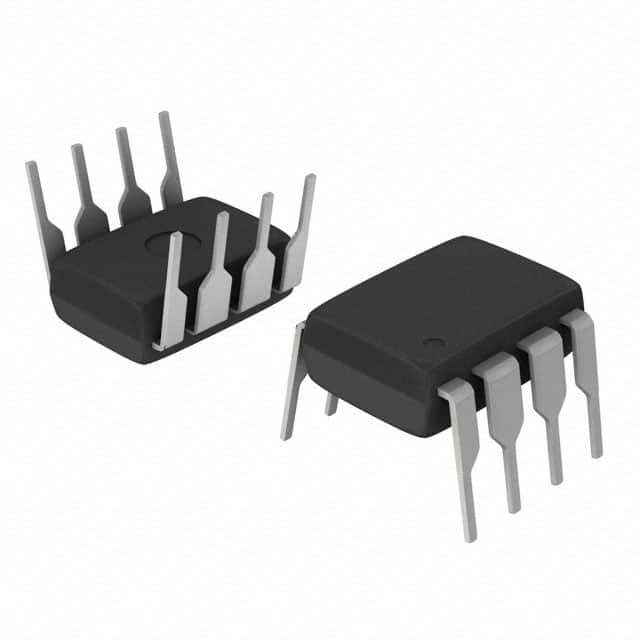
- Part No.:
- ST485ABN
- Manufacturer:
- STMicroelectronics
- Category:
- Drivers, Receivers, Transceivers
- Package:
- 8-DIP (0.300", 7.62mm)
- Datasheet:
-
 ST485ABN.pdf
- Description:
- IC TRANSCEIVER HALF 1/1 8DIP
- Quantity:
- Payment:

- Shipping:

Inventory:4,212
Please send an inquiry. Send us your inquiry, and we will respond immediately.
Product details
Overview
ST485ABN from STMicroelectronics is a half-duplex RS-485/RS-422 transceiver in DIP-8 package, featuring 30 Mbps max data rate, ±4 kV ESD protection, -7 to +12 V common-mode input range, and 5 mA max supply current. It integrates one driver and one receiver for industrial bus communication with thermal shutdown and fail-safe receiver logic.
For engineers reviewing the ST485ABN datasheet, ST485ABN pinout, ST485ABN application, or ST485ABN equivalent, key selection criteria include high-speed differential signaling capability, low-power shutdown mode (RE high + DE low), fail-safe open-circuit receiver behavior, and robust driver short-circuit/thermal protection.
Technical Context
The ST485ABN implements a single-ended logic interface (DI, RE, DE) controlling a differential driver (A/B) and receiver (RO), with independent enable control for each function. Its receiver includes 70 mV typical hysteresis and guaranteed logic-high output under open-wire conditions.
Driver operation supports short-circuit current limiting (±250 mA) and automatic thermal shutdown that forces A/B into high-impedance state. The device operates from a single 4.75–5.25 V supply and maintains functional integrity across -40°C to +85°C ambient temperature.
Key Specifications
| Parameter | Value and Actual Design Meaning |
|---|---|
| Max Data Rate | 30 Mbps - supports high-speed industrial fieldbus and backplane links without signal integrity degradation |
| Supply Current | 5 mA max - enables low-power node design in battery-backed or energy-constrained systems |
| Common-Mode Range | -7 V to +12 V - ensures reliable operation in electrically noisy factory environments with ground potential differences |
| ESD Protection | ±4 kV HBM - provides robust handling during board assembly and system integration |
| Differential Threshold | ±0.2 V - guarantees clean logic decision margins despite cable-induced noise and skew |
| Propagation Delay | 18–30 ns - enables precise timing alignment in synchronous multi-node networks |
| Input Hysteresis | 70 mV typical - prevents chatter on slow-rising/falling bus signals due to noise or reflections |
Pinout & Package
DIP-8 package with through-hole mounting; 0.3-inch body width; lead-free ECOPACK® compliant; JEDEC MS-001AC mechanical standard.
| Pin/Terminal | Circuit Role | Design Meaning |
|---|---|---|
| 1 RO | Receiver output | CMOS-compatible logic-level output reflecting differential voltage polarity between A and B |
| 2 RE | Receiver enable | Active-low control: RO enabled when low; high-impedance when high; enables low-power shutdown with DE low |
| 3 DE | Driver enable | Active-high control: A/B driven when high; high-impedance when low; pairs with RE for power management |
| 4 DI | Driver input | Logic-level input determining A/B output state: DI low → A low/B high; DI high → A high/B low |
| 5 GND | Ground reference | Primary return path for VCC, driver, receiver, and logic circuits; must be low-impedance connection |
| 6 A | Differential bus line | Non-inverting driver output and receiver input; connects to RS-485 bus A line |
| 7 B | Differential bus line | Inverting driver output and receiver input; connects to RS-485 bus B line |
| 8 VCC | Power supply | Single 4.75–5.25 V supply; powers all internal circuitry including driver output stage and receiver comparator |
Key Features
| Feature | Design Value |
|---|---|
| Fail-safe receiver | Guarantees RO = high when A and B are open or shorted, preventing undefined bus states in idle or fault conditions |
| Thermal shutdown | Automatically disables driver outputs during overload, eliminating need for external current-limiting or heatsinking |
| 3-state driver control | Independent DE pin allows precise timing of driver activation/deactivation to avoid bus contention in multi-drop networks |
| High-impedance shutdown mode | RE high + DE low reduces supply current to <5 mA while maintaining bus isolation and logic readiness |
| Robust ESD immunity | ±4 kV HBM rating protects against electrostatic discharge during handling and system integration without external TVS diodes |
Applications
| Industrial PLC Networks | Building Automation Systems |
|---|---|
Use Scenario: Multi-node Modbus RTU network connecting programmable logic controllers, I/O modules, and HMIs over twisted-pair cabling up to 1200 m. IC Role / Device Role / Timing Role: Half-duplex RS-485 transceiver managing bidirectional command/response traffic with deterministic timing and noise immunity. Use Value: 30 Mbps capability exceeds Modbus RTU timing requirements, while -7 to +12 V common-mode range accommodates ground shifts across large factory floors. | Use Scenario: Distributed HVAC controller network linking thermostats, valve actuators, and environmental sensors via RS-485 daisy-chain topology. IC Role / Device Role / Timing Role: Bus interface IC enabling reliable long-distance communication in electrically noisy building infrastructure with shared grounding. Use Value: Fail-safe receiver ensures default logic-high state during sensor disconnection or wiring faults, preventing uncontrolled actuator behavior. |
| Energy Metering Gateways | Factory Floor Test Equipment |
Use Scenario: Smart meter concentrator collecting consumption data from 32+ electricity meters using RS-485 multi-drop bus in substation cabinets. IC Role / Device Role / Timing Role: Isolated bus transceiver (when paired with digital isolator) providing galvanic separation and ESD-hardened interface to utility-grade meters. Use Value: ±4 kV ESD protection withstands repeated hot-plug events during field maintenance; thermal shutdown prevents latch-up during transient bus faults. | Use Scenario: Automated test fixture communicating with DUTs (devices under test) via RS-485 to configure settings, trigger measurements, and retrieve results. IC Role / Device Role / Timing Role: High-speed serial interface IC synchronizing command execution and response capture with sub-30 ns propagation delay. Use Value: 18–30 ns propagation delay and <2 ns skew ensure precise timing correlation between stimulus and measurement timestamps. |
Equivalent & Alternatives
The following parts are listed as comparable options for similar RS-485 transceiver applications.
| Alternative Part | Technical Difference | Application Difference | Selection Advice |
|---|---|---|---|
| MAX485CPA+ | Slower max data rate (2.5 Mbps); no thermal shutdown; lower ESD rating (±2 kV) | Suitable only for legacy low-speed Modbus or point-to-point links; lacks fault resilience for dense multi-drop networks | Select when cost sensitivity outweighs speed and protection requirements; verify thermal margin under sustained bus contention |
| SN65HVD72DR | Higher data rate (50 Mbps); integrated 120 Ω termination; wider supply range (3–5.5 V) | Optimized for high-density PCB layouts where board space is constrained and termination matching is critical | Prefer for new designs requiring >30 Mbps or integrated termination; requires layout review for stub length compliance |
Compared with MAX485CPA+ and SN65HVD72DR, the ST485ABN delivers balanced performance: higher speed than legacy parts without demanding layout constraints of ultra-high-speed variants, while offering superior fault protection and fail-safe behavior for industrial reliability.
Availability
ST485ABN is available at Aetrix Electronics and suitable for industrial PLC networks, building automation systems, energy metering gateways, and factory floor test equipment requiring stable component supply and long-term manufacturability.
Supply support for ST485ABN includes scheduled delivery planning, volume procurement assistance, BOM continuity management, traceable sourcing, and lifecycle availability coordination for OEM customers, industrial embedded developers, connected-device designers, and electronics production programs.
Manufacturer
STMicroelectronics is a global semiconductor leader headquartered in Geneva, Switzerland, designing and manufacturing microcontrollers, analog ICs, power devices, and sensors for industrial, automotive, and consumer markets.
The ST485ABN belongs to ST's RS-485/RS-422 transceiver product line, engineered specifically for robust, low-power, high-speed industrial communications in harsh electromagnetic environments.
FAQ
What is the minimum supply voltage required for reliable operation of the ST485ABN?
The ST485ABN operates reliably from 4.75 V to 5.25 V. Operation below 4.75 V is not guaranteed per datasheet specifications: driver output swing degrades, receiver threshold accuracy drifts, and thermal shutdown may become non-functional. For 5 V nominal systems, ensure regulator tolerance and PCB trace drop maintain VCC ≥4.75 V under full load.
Does the ST485ABN support full-duplex communication?
No, the ST485ABN is strictly a half-duplex transceiver with one driver and one receiver sharing the same A/B bus terminals. Full-duplex operation requires separate driver and receiver pairs (e.g., ST3485 or isolated dual-channel transceivers). Attempting full-duplex use will cause bus contention and signal corruption.
How does the fail-safe feature behave when the A and B lines are shorted together?
When A and B are shorted, the differential input voltage is 0 V, which falls within the receiver's undefined region (|VID| < 0.2 V). However, the internal fail-safe bias network pulls RO high regardless-ensuring a defined logic state. This behavior is confirmed in Table 4 (Truth table – receiver) and applies to both open and shorted line conditions.
Can the ST485ABN be used without external termination resistors?
Yes, but only for short bus runs (<10 m) at ≤10 Mbps. For longer distances or higher data rates, a 120 Ω termination resistor must be placed at each bus end to prevent reflections. The ST485ABN itself does not integrate termination; omission in multi-drop or long-cable deployments causes signal ringing and bit errors, especially above 10 Mbps.
ST485ABN Specifications
- Product attributes
- Attribute value
- Manufacturer:
- STMicroelectronics
- Series:
- -
- Package/Case:
- 8-DIP (0.300", 7.62mm)
- Packaging:
- Tube
- Product Status:
- Obsolete
- Type:
- Transceiver
- Protocol:
- RS422, RS485
- Number of Drivers/Receivers:
- 1/1
- Duplex:
- Half
- Receiver Hysteresis:
- 70 mV
- Data Rate:
- 50Mbps
- Voltage - Supply:
- 4.5V ~ 5.5V
- Operating Temperature:
- -40°C ~ 85°C
- Grade:
- -
- Qualification:
- -
- Mounting Type:
- Through Hole
- Supplier Device Package:
- 8-DIP
ST485ABN FAQ
1.How can I place an order for ST485ABN through Aetrix?
Please submit a Request for Quotation (RFQ) for ST485ABN on Aetrix. Our sales agent will provide a competitive quotation and guide you through the order confirmation once you accept the terms.
2.Are the price and stock information for ST485ABN reliable?
The price and inventory of ST485ABN are updated periodically and may fluctuate due to market conditions. Stock and pricing data are typically refreshed every 24 hours. Quotation validity for ST485ABN is usually 5 days.
3.What payment methods are accepted for ST485ABN?
We accept Wire Transfer, PayPal, Credit Card, Western Union, MoneyGram, and Escrow for ST485ABN transactions.
Note: Certain payment methods may incur a processing fee.
4.How is shipping managed for ST485ABN?
ST485ABN orders can be shipped via leading logistics carriers, including DHL, UPS, FedEx, TNT, or Registered Mail.
Once your ST485ABN order is processed, you will receive an email with the shipment details and tracking number.
Note: Tracking information may take up to 24 hours to appear. Express delivery typically takes 3–5 business days.
5.How can I obtain technical support or documentation for ST485ABN?
For technical support, including ST485ABN datasheets, pinout diagrams, or application guidance, please contact our engineering support team. They can provide detailed documentation and assistance for your ST485ABN requirements.
6.How does Aetrix verify that ST485ABN is sourced from the original manufacturer or authorized distributors?
All ST485ABN products on Aetrix are procured from qualified distributors and authorized channels. Our dedicated quality assurance team conducts strict verification, including traceability checks and, if necessary, third-party testing. This ensures that ST485ABN meets industry standards.
7.What is the process for return or replacement of ST485ABN?
All ST485ABN units undergo pre-shipment inspection (PSI). If there is an issue with ST485ABN, returns or replacements are accepted under the following conditions:
1.Quantity discrepancies, incorrect items, or visible external defects (such as breakage or corrosion), acknowledged by Aetrix.
2.The issue is reported within 90 days of delivery.
3.The ST485ABN part is unused and in its original packaging.
Return procedure for ST485ABN:
1.Submit a request within 90 days.
2.Obtain a Return Material Authorization (RMA) from Aetrix.
ST485ABN Tags

-
ATA6561-GAQW-N
Microchip Technology
-
ATA6561-GBQW-N
Microchip Technology

-
AM26LS32ACDR
Texas Instruments

-
SP485CN-L/TR
MaxLinear, Inc.
-
SP485EN-L/TR
MaxLinear, Inc.
-
SP485EEN-L/TR
MaxLinear, Inc.
-
SP485ECN-L/TR
MaxLinear, Inc.
-
THVD1400DR
Texas Instruments
-
AM26C31IDR
Texas Instruments

-
TLIN1021ADRQ1
Texas Instruments
-
MAX232IDR
Texas Instruments
-
AM26C32IDR
Texas Instruments
Tech Hub

An engineering guide to LED driver operation, constant-current and constant-voltage outputs, linear and switching topologies, dimming, IC selection, calculations, replacement compatibility, and fault c…

Operational amplifier guide covering op amp basics, feedback, ideal vs real op amps, common configurations, buffer circuits, offset, bias current, gain-bandwidth, slew rate, rail-to-rail limits and sel…

Jumper cables guide covering safe connection order, red and black clamp placement, final ground connection, cable gauge, length, clamp quality, copper vs CCA cables, jump starter comparison and battery…

LDO regulator guide covering low dropout voltage, power dissipation, thermal design, PSRR, output noise, capacitor stability, adjustable LDO circuits, LDO vs buck converter and datasheet selection chec…

Conditional Access Module guide covering CAM meaning, CI/CI+ interface, smart card authorization, DVB security workflow, TV and set-top box compatibility, internal electronics, ESD protection, connecto…

Guide to electronic component obsolescence covering EOL risk, PCN/PDN notices, last-time buy planning, replacement options, form-fit-function validation, counterfeit risk and BOM lifecycle management.

18650 battery guide covering lithium-ion cell basics, 3.6V/3.7V voltage, 4.2V charging, mAh and Wh capacity, protected cells, chargers, BMS, series-parallel packs, holders, welding and sourcing checks.…

Hall effect sensor guide covering working principle, linear and digital sensors, Arduino circuits, current sensing, speed detection, automotive applications, A3144 examples, signal filtering and datash…

Product Change Notification guide for electronic components, covering PCN meaning, PCN vs PDN/EOL, common change types, risk levels, form-fit-function review, engineering validation, BOM control, LTB/L…

A practical guide to blend door actuators, covering HVAC function, symptoms, location, AC and heater issues, reset and calibration, replacement cost, electrical diagnosis, compatibility checks, and rep…


