
 My Inquiry
 My Account


STMicroelectronics ST485ERBN
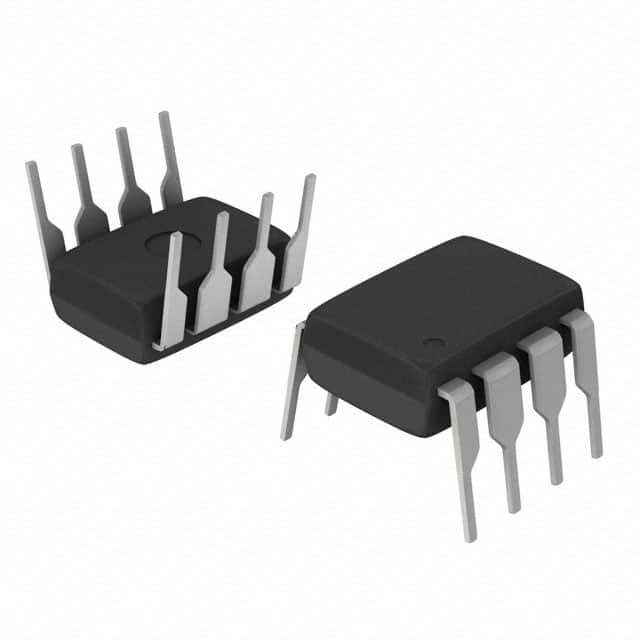
- Part No.:
- ST485ERBN
- Manufacturer:
- STMicroelectronics
- Category:
- Drivers, Receivers, Transceivers
- Package:
- 8-DIP (0.300", 7.62mm)
- Datasheet:
-
 ST485ERBN.pdf
- Description:
- IC TRANSCEIVER HALF 1/1 8DIP
- Quantity:
- Payment:

- Shipping:

Inventory:1,378
Please send an inquiry. Send us your inquiry, and we will respond immediately.
Product details
Overview
ST485ERBN from STMicroelectronics is a half-duplex, ±15 kV HBM ESD-protected RS-485/RS-422 transceiver in SO8 package, featuring 300 µA quiescent current, 2.5 Mbps max data rate, -7 V to +12 V common-mode input range, and thermal shutdown protection. It integrates one driver and one receiver for multipoint bus communication in industrial automation and building control systems.
For engineers reviewing the ST485ERBN datasheet, ST485ERBN pinout, ST485ERBN application, or ST485ERBN equivalent, key selection criteria include ESD robustness (±15 kV HBM), low-power operation (300 µA typ.), bus node count support (64 transceivers), and SO8-compatible layout integration for space-constrained RS-485 nodes.
Technical Context
The ST485ERBN implements a fail-safe receiver with 70 mV typical hysteresis and differential threshold of ±0.2 V across -7 V to +12 V common-mode range, enabling reliable signal detection in noisy industrial environments. Its driver uses current-limiting and thermal shutdown to prevent latch-up during bus faults.
Control logic follows standard RS-485 enable conventions: RE and DE are active-low and active-high respectively, allowing independent receiver/driver gating. Propagation delay is 30 ns (typ.) with 5 ns skew, supporting timing-critical 2.5 Mbps half-duplex links without external timing compensation.
Key Specifications
| Parameter | Value and Actual Design Meaning |
|---|---|
| Supply Voltage | 5 V single supply - eliminates need for dual-rail or level-shifting circuitry in 5 V systems |
| Quiescent Current | 300 µA typ. - enables battery-backed or energy-harvested RS-485 nodes with multi-year standby life |
| ESD Protection | ±15 kV HBM, ±8 kV IEC-1000-4-2 contact - reduces need for external TVS diodes on A/B lines |
| Max Data Rate | 2.5 Mbps - supports high-speed Modbus RTU, Profibus DP, and custom industrial protocols |
| Common-Mode Range | -7 V to +12 V - accommodates ground potential differences up to 19 V between nodes in distributed systems |
| Bus Nodes | 64 transceivers - allows large-scale daisy-chained networks without repeaters |
| Propagation Delay | 30 ns typ. - ensures deterministic timing margins in synchronous multi-drop polling schemes |
Pinout & Package
ST485ERBN is housed in an SO8 (Small Outline 8-pin) package with 1.27 mm pitch, ECOPACK®-compliant lead-free finish, and standard tape-and-reel packaging (2500 units/reel).
| Pin/Terminal | Circuit Role | Design Meaning |
|---|---|---|
| 1 RO | Receiver output | CMOS-compatible logic-level output driving MCU UART RX pin directly |
| 2 RE | Receiver enable (active low) | Assert low to activate receiver; high-Z when deasserted to isolate bus from controller |
| 3 DE | Driver enable (active high) | Assert high to drive A/B lines; low disables driver and places outputs in high-Z state |
| 4 DI | Driver input | TTL/CMOS-compatible input accepting MCU UART TX signal without level translation |
| 5 GND | Ground reference | Signal return path shared by driver, receiver, and supply decoupling |
| 6 A | Non-inverting bus line | RS-485 differential output (+) and input (+); connects to bus A line |
| 7 B | Inverting bus line | RS-485 differential output (-) and input (-); connects to bus B line |
| 8 VCC | Positive supply | 5 V power input with internal regulation; requires local 100 nF ceramic decoupling |
Key Features
| Feature | Design Value |
|---|---|
| Thermal shutdown protection | Automatically disables driver output during sustained short-circuit events, preventing permanent damage without external circuitry |
| High-impedance driver disable | Driver outputs enter true high-Z state when DE = low or VCC = 0 V, enabling safe hot-plug and bus arbitration |
| 70 mV receiver hysteresis | Reduces false triggering from noise-induced transitions near threshold, improving immunity in electrically harsh environments |
| 30 ns propagation delay | Enables precise timing alignment in time-synchronized sensor networks and deterministic fieldbus protocols |
| SO8 footprint compatibility | Direct drop-in replacement for legacy RS-485 transceivers (e.g., MAX485, SN75176) using industry-standard PCB land pattern |
Applications
| Industrial PLC I/O Modules | Smart Energy Meters |
|---|---|
Use Scenario: Distributed I/O expansion over RS-485 daisy-chain in factory floor control cabinets with >10 V ground offsets. IC Role / Device Role / Timing Role: Half-duplex transceiver handling Modbus RTU request/response framing at 115.2 kbps with deterministic 30 ns latency. Use Value: ±15 kV HBM ESD rating prevents field failures from maintenance personnel static discharge during cabinet servicing. | Use Scenario: Two-way AMI (Advanced Metering Infrastructure) communication between utility meter and concentrator over long twisted-pair runs. IC Role / Device Role / Timing Role: Bus interface IC managing collision-aware polling cycles with 64-node addressing capability per segment. Use Value: 300 µA quiescent current extends battery backup runtime during grid outages without compromising communication reliability. |
| Building Automation Controllers | Remote Sensor Aggregators |
Use Scenario: HVAC zone controllers communicating via BACnet MS/TP over unshielded twisted pair in electromagnetically noisy mechanical rooms. IC Role / Device Role / Timing Role: Robust physical layer transceiver maintaining signal integrity despite 50/60 Hz magnetic coupling and motor drive harmonics. Use Value: -7 V to +12 V common-mode range rejects ground loop noise exceeding 15 Vpp commonly observed in mixed-power-system installations. | Use Scenario: Wireless edge node collecting analog sensor data and forwarding via RS-485 to gateway before LoRaWAN uplink. IC Role / Device Role / Timing Role: Low-power bus interface enabling synchronized timestamped sampling across 32+ remote nodes. Use Value: Thermal shutdown and current limiting allow safe operation during accidental bus wiring faults in unattended outdoor enclosures. |
Equivalent & Alternatives
The following parts are listed as comparable options for similar RS-485 transceiver applications.
| Alternative Part | Technical Difference | Application Difference | Selection Advice |
|---|---|---|---|
| MAX485ESA+ | Lower ESD rating (±12 kV HBM), no thermal shutdown, 500 µA quiescent current | Suitable for benign environments with controlled ESD handling; not recommended for field-deployed equipment | Select when cost sensitivity outweighs field reliability requirements and bus fault protection is managed externally |
| SN65HVD72DR | Higher ESD (±16 kV HBM), 3.3 V supply only, 650 µA quiescent current, integrated slew-rate control | Requires level-shifting for 5 V MCU interfaces; optimized for noise-sensitive low-speed (<500 kbps) applications | Select when system uses 3.3 V logic and electromagnetic compatibility is prioritized over power efficiency |
Compared with MAX485ESA+ and SN65HVD72DR, ST485ERBN uniquely balances 5 V operation, ultra-low 300 µA supply current, ±15 kV ESD, and thermal fault protection-making it optimal for battery-powered or field-serviceable industrial nodes where reliability and power budget are co-constrained.
Availability
ST485ERBN is available at Aetrix Electronics and suitable for industrial PLC I/O modules, smart energy meters, and building automation controllers requiring stable component supply and long-term production continuity.
Supply support for ST485ERBN includes scheduled delivery planning, volume procurement assistance, BOM continuity management, traceable sourcing, and lifecycle availability coordination for OEM customers, industrial embedded developers, connected-device designers, and electronics production programs.
Manufacturer
STMicroelectronics is a global semiconductor leader headquartered in Geneva, Switzerland, delivering intelligent power, sensing, and connectivity solutions for automotive, industrial, and consumer markets.
The ST485ERBN belongs to ST's RS-485 transceiver product line, engineered specifically for robust, low-power, multi-node industrial communications in harsh electrical environments with stringent ESD and thermal reliability requirements.
FAQ
Does ST485ERBN support full-duplex RS-422 operation?
No. ST485ERBN is a half-duplex transceiver with shared A/B bus terminals and separate RE/DE control lines. It lacks independent transmit and receive differential pairs required for true full-duplex RS-422. Its design targets RS-485 multidrop bus topologies where bidirectional communication occurs on the same pair.
What is the minimum load resistance required for compliant RS-485 driver output?
The ST485ERBN driver meets RS-485 specifications with a minimum load of 27 Ω differential (representing 32 unit loads). Its output voltage remains ≥1.5 V under this load, satisfying the RS-485 standard's 1.5 V minimum differential output requirement at maximum data rates.
Can ST485ERBN be used with 3.3 V microcontrollers?
Yes, but only for logic-level interfacing (DI, RE, DE, RO pins). These inputs/outputs are 5 V tolerant and compatible with 3.3 V CMOS levels. However, VCC must be supplied with 5 V; the device does not operate from 3.3 V. Level-shifting is unnecessary for control signals, simplifying interface design.
How does the thermal shutdown mechanism affect bus communication during overload?
When driver output current exceeds safe limits, thermal shutdown activates within milliseconds, forcing A and B outputs into high-impedance state. This preserves device integrity and prevents bus contention, but halts transmission until temperature normalizes. Recovery is automatic upon cooling, with no latch-up or manual reset required.
ST485ERBN Specifications
- Product attributes
- Attribute value
- Manufacturer:
- STMicroelectronics
- Series:
- -
- Package/Case:
- 8-DIP (0.300", 7.62mm)
- Packaging:
- Tube
- Product Status:
- Obsolete
- Type:
- Transceiver
- Protocol:
- RS422, RS485
- Number of Drivers/Receivers:
- 1/1
- Duplex:
- Half
- Receiver Hysteresis:
- 70 mV
- Data Rate:
- 2.5Mbps
- Voltage - Supply:
- 4.75V ~ 5.25V
- Operating Temperature:
- -40°C ~ 85°C
- Grade:
- -
- Qualification:
- -
- Mounting Type:
- Through Hole
- Supplier Device Package:
- 8-DIP
ST485ERBN FAQ
1.How can I place an order for ST485ERBN through Aetrix?
Please submit a Request for Quotation (RFQ) for ST485ERBN on Aetrix. Our sales agent will provide a competitive quotation and guide you through the order confirmation once you accept the terms.
2.Are the price and stock information for ST485ERBN reliable?
The price and inventory of ST485ERBN are updated periodically and may fluctuate due to market conditions. Stock and pricing data are typically refreshed every 24 hours. Quotation validity for ST485ERBN is usually 5 days.
3.What payment methods are accepted for ST485ERBN?
We accept Wire Transfer, PayPal, Credit Card, Western Union, MoneyGram, and Escrow for ST485ERBN transactions.
Note: Certain payment methods may incur a processing fee.
4.How is shipping managed for ST485ERBN?
ST485ERBN orders can be shipped via leading logistics carriers, including DHL, UPS, FedEx, TNT, or Registered Mail.
Once your ST485ERBN order is processed, you will receive an email with the shipment details and tracking number.
Note: Tracking information may take up to 24 hours to appear. Express delivery typically takes 3–5 business days.
5.How can I obtain technical support or documentation for ST485ERBN?
For technical support, including ST485ERBN datasheets, pinout diagrams, or application guidance, please contact our engineering support team. They can provide detailed documentation and assistance for your ST485ERBN requirements.
6.How does Aetrix verify that ST485ERBN is sourced from the original manufacturer or authorized distributors?
All ST485ERBN products on Aetrix are procured from qualified distributors and authorized channels. Our dedicated quality assurance team conducts strict verification, including traceability checks and, if necessary, third-party testing. This ensures that ST485ERBN meets industry standards.
7.What is the process for return or replacement of ST485ERBN?
All ST485ERBN units undergo pre-shipment inspection (PSI). If there is an issue with ST485ERBN, returns or replacements are accepted under the following conditions:
1.Quantity discrepancies, incorrect items, or visible external defects (such as breakage or corrosion), acknowledged by Aetrix.
2.The issue is reported within 90 days of delivery.
3.The ST485ERBN part is unused and in its original packaging.
Return procedure for ST485ERBN:
1.Submit a request within 90 days.
2.Obtain a Return Material Authorization (RMA) from Aetrix.
ST485ERBN Tags

-
ATA6561-GAQW-N
Microchip Technology
-
ATA6561-GBQW-N
Microchip Technology
-
AM26LS32ACDR
Texas Instruments

-
SP485CN-L/TR
MaxLinear, Inc.
-
SP485EN-L/TR
MaxLinear, Inc.
-
SP485EEN-L/TR
MaxLinear, Inc.
-
SP485ECN-L/TR
MaxLinear, Inc.
-
THVD1400DR
Texas Instruments
-
AM26C31IDR
Texas Instruments

-
TLIN1021ADRQ1
Texas Instruments
-
MAX232IDR
Texas Instruments
-
AM26C32IDR
Texas Instruments
Tech Hub

An engineering guide to LED driver operation, constant-current and constant-voltage outputs, linear and switching topologies, dimming, IC selection, calculations, replacement compatibility, and fault c…

Operational amplifier guide covering op amp basics, feedback, ideal vs real op amps, common configurations, buffer circuits, offset, bias current, gain-bandwidth, slew rate, rail-to-rail limits and sel…

Jumper cables guide covering safe connection order, red and black clamp placement, final ground connection, cable gauge, length, clamp quality, copper vs CCA cables, jump starter comparison and battery…

LDO regulator guide covering low dropout voltage, power dissipation, thermal design, PSRR, output noise, capacitor stability, adjustable LDO circuits, LDO vs buck converter and datasheet selection chec…

Conditional Access Module guide covering CAM meaning, CI/CI+ interface, smart card authorization, DVB security workflow, TV and set-top box compatibility, internal electronics, ESD protection, connecto…

Guide to electronic component obsolescence covering EOL risk, PCN/PDN notices, last-time buy planning, replacement options, form-fit-function validation, counterfeit risk and BOM lifecycle management.

18650 battery guide covering lithium-ion cell basics, 3.6V/3.7V voltage, 4.2V charging, mAh and Wh capacity, protected cells, chargers, BMS, series-parallel packs, holders, welding and sourcing checks.…

Hall effect sensor guide covering working principle, linear and digital sensors, Arduino circuits, current sensing, speed detection, automotive applications, A3144 examples, signal filtering and datash…

Product Change Notification guide for electronic components, covering PCN meaning, PCN vs PDN/EOL, common change types, risk levels, form-fit-function review, engineering validation, BOM control, LTB/L…

A practical guide to blend door actuators, covering HVAC function, symptoms, location, AC and heater issues, reset and calibration, replacement cost, electrical diagnosis, compatibility checks, and rep…


