
 My Inquiry
 My Account


STMicroelectronics ST4SI2M0004TPIFW
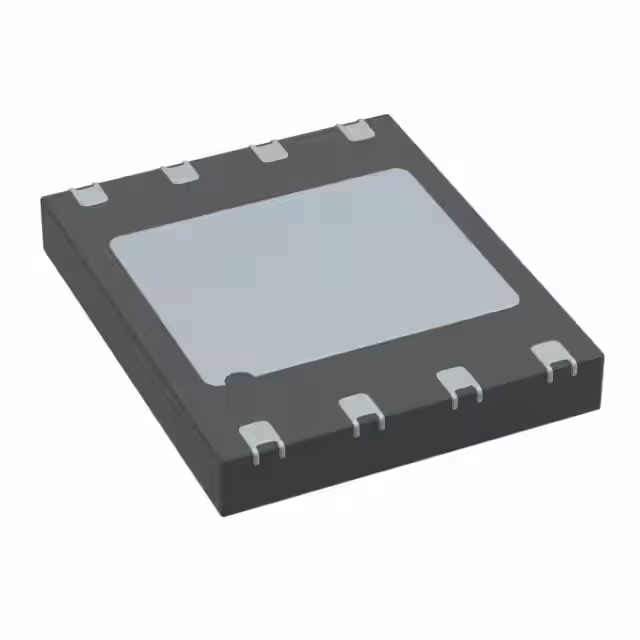
- Part No.:
- ST4SI2M0004TPIFW
- Manufacturer:
- STMicroelectronics
- Package:
- Datasheet:
-
 ST4SI2M0004TPIFW.pdf
- Description:
- ESIM SYSTEM ON CHIP FOR M2M INDU
- Quantity:
- Payment:

- Shipping:

Inventory:3,968
Please send an inquiry. Send us your inquiry, and we will respond immediately.
Product details
Overview
ST4SI2M0004TPIFW from STMicroelectronics is a GSMA SGP.02 v3.2–compliant embedded SIM (eUICC) with integrated secure element, built on the ST33G1M2M industrial-grade hardware platform featuring a 32-bit Arm® SecurCore® SC300™ RISC core, EAL5+ Common Criteria certification, and support for up to 7 remote operator profiles across LTE Cat-M1, NB-IoT, 2G/3G/4G, and CDMA networks.
For engineers reviewing the ST4SI2M0004TPIFW datasheet, ST4SI2M0004TPIFW pinout, ST4SI2M0004TPIFW application, or ST4SI2M0004TPIFW equivalent, this device delivers certified interoperability with GlobalPlatform® v2.2, Java Card v3.0.4 Classic, OTA management via HTTPS/TLS v1.2 and CAT-TP, and dual-interface operation (ISO/IEC 7816 + SPI) in VFDFPN8 wettable-flank packaging for industrial M2M deployments.
Technical Context
The ST4SI2M0004TPIFW implements a dual-domain architecture: one domain handles eSIM profile lifecycle management per GSMA SGP.02 v3.2, while the second domain provides Java Card–based secure element services compliant with GlobalPlatform Card Spec v2.2 and PKCS#15 access control. It supports concurrent ISO/IEC 7816-3 (T=0) and SPI interfaces - the latter exclusively enabled in WLCSP11 and VFDFPN8 packages.
Its cryptographic subsystem integrates hardware-accelerated symmetric (AES-256, 3DES, DES) and asymmetric (RSA-2048, ECC-521 with NIST P-256 and brainpool P256r1) engines, plus dedicated countermeasures against DPA/SPA attacks and a ratification counter limiting authentication attempts. Memory management uses dynamic defragmentation and GlobalPlatform Amendment C–based cumulative granted memory allocation.
Key Specifications
| Parameter | Value and Actual Design Meaning |
|---|---|
| Compliance | GSMA SGP.02 v3.2, GlobalPlatform v2.2 (Amendments A–E), Java Card v3.0.4 Classic, ETSI TS 102 671 MFF2 |
| Profiles | Up to 7 remotely provisionable cellular connectivity profiles (USIM/ISIM/CSIM), each isolated and independently managed |
| Crypto Engine | Hardware-accelerated AES-256, RSA-2048, ECC-521 (NIST P-256, brainpool P256r1), MILENAGE/TUAK/CAVE authentication |
| Interfaces | ISO/IEC 7816-3 T=0 (primary eSIM), SPI (eSE access), both active simultaneously in VFDFPN8 package |
| Operating Temp | –40°C to +105°C, qualified per JEDEC JESD47 for industrial reliability in harsh environments |
| Security Cert | Common Criteria EAL5+, GlobalPlatform "Muse eUICC-i2 v1" certified, ECOPACK-compliant wettable-flank packaging |
| Supply Voltage | Supports Class A (5 V), Class B (3 V), and Class C (1.8 V) I/O voltage levels per ISO/IEC 7816 |
Pinout & Package
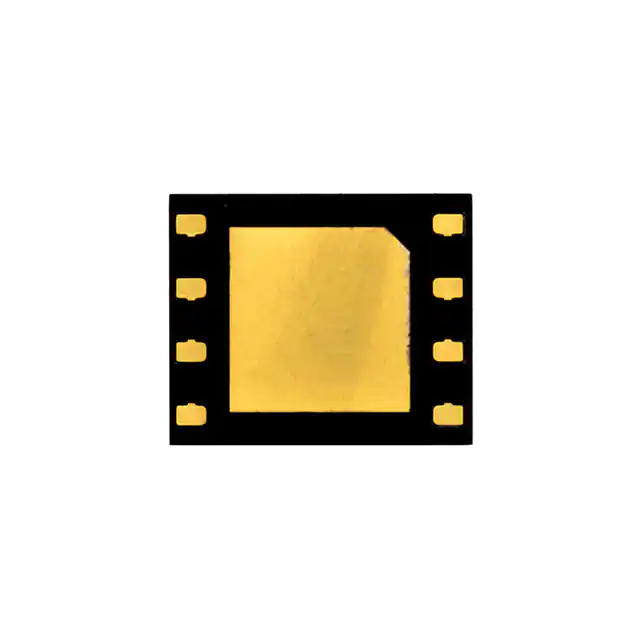
VFDFPN8 package: 5 × 6 mm, 1.27 mm pitch, wettable flanks (MFF2 compliant), 8-terminal no-lead construction optimized for automated optical inspection of solder joints.
| Pin/Terminal | Circuit Role | Design Meaning |
|---|---|---|
| VCC | Power supply input | Accepts 1.8 V / 3 V / 5 V per ISO/IEC 7816 Class C/B/A; requires 100 nF + 1 µF decoupling per datasheet Figure 6 |
| RESET | Active-low reset input | Pull-down by default; initiates cold/warm reset sequence per ISO/IEC 7816-3 timing requirements |
| CLK | Clock input | External clock source (1–5 MHz); pulled down internally; synchronizes ISO/IEC 7816 T=0 APDU exchange |
| GND | Ground reference | Dedicated ground terminal; must be connected to PCB ground plane with low-inductance path for noise immunity |
| SWIO | Single-wire I/O (not used) | Internally unused; left unconnected; no pull-up/down required |
| I/O | Serial data I/O | Half-duplex bidirectional line for T=0 protocol; pulled down at power-up, pulled up after activation; 20 kΩ external pull-up recommended |
| NC | No connect | Two pins (4 and 8) are not bonded; must remain unconnected on PCB layout |
Key Features
| Feature | Design Value |
|---|---|
| Dual-interface eSIM + eSE | Simultaneous ISO/IEC 7816 (eSIM) and SPI (eSE) access enables independent modem and MCU-side secure service execution |
| OTA over HTTPS/TLS | Full TLS v1.0/v1.1/v1.2 stack with DNS resolution allows secure remote profile download without requiring pre-provisioned IP addresses |
| Profile memory management | GlobalPlatform Amendment C–based cumulative granted memory enables dynamic allocation across up to 7 profiles without fixed partitioning |
| Industrial environmental rating | –40°C to +105°C operation with JEDEC JESD47 qualification ensures reliability in metering, tracking, and surveillance deployments |
| MFF2 wettable flank packaging | VFDFPN8's dimpled flank geometry enables AOI-verified solder joints-critical for high-volume industrial PCB assembly |
Applications
| Gas Metering | Asset Tracking |
|---|---|
|
Use Scenario: Fixed-installation smart gas meters deployed in unconditioned outdoor enclosures across wide temperature ranges. IC Role / Device Role / Timing Role: eUICC managing carrier-agnostic NB-IoT connectivity and securely storing utility-specific credentials and firmware signatures. Use Value: Eliminates physical SIM swaps during carrier migration; EAL5+ tamper resistance protects billing integrity and prevents credential extraction. |
Use Scenario: Battery-powered logistics trackers mounted on shipping containers operating across global cellular networks. IC Role / Device Role / Timing Role: Dual-profile eSIM enabling fallback between LTE-M and NB-IoT based on signal quality; eSE stores private keys for TLS mutual authentication. Use Value: Enables seamless cross-border roaming without manual reconfiguration; power-saving PSM/eDRX support extends battery life beyond 10 years. |
| Smart City Surveillance | Industrial Predictive Maintenance |
|
Use Scenario: Outdoor IP cameras installed on streetlights or traffic poles with intermittent 4G/LTE backhaul. IC Role / Device Role / Timing Role: GSMA-certified eSIM hosting multiple MNO profiles for automatic failover; secure element stores camera firmware update signatures. Use Value: Ensures continuous video upload during network outages; cryptographic co-processor validates OTA updates before execution. |
Use Scenario: Vibration sensors on factory floor motors transmitting telemetry via LTE-M to cloud analytics platforms. IC Role / Device Role / Timing Role: eSIM provides persistent identity across network handovers; eSE isolates sensor calibration keys and encryption keys from MCU firmware. Use Value: Prevents unauthorized sensor reprogramming; hardware-enforced key separation meets IEC 62443-3-3 SL2 requirements. |
Equivalent & Alternatives
The following parts are listed as comparable options for similar eUICC and secure element applications.
| Alternative Part | Technical Difference | Application Difference | Selection Advice |
|---|---|---|---|
| Infineon SLM97 series | Based on SLB9670 secure controller; supports only single-profile eSIM; no native SPI eSE interface | Limited to MNO-locked deployments; lacks multi-profile flexibility and dual-interface concurrency | Select when cost sensitivity outweighs remote provisioning needs and eSE integration is unnecessary |
| NXP JCOP40 series | Java Card–only SE; no integrated eSIM functionality; requires external eSIM controller | Demands discrete eSIM + SE co-design; increases BOM count and board area vs. ST4SI2M0004TPIFW's monolithic solution | Choose when legacy Java Card applet ecosystem compatibility is mandatory and eSIM provisioning is handled externally |
Compared with Infineon SLM97 and NXP JCOP40, ST4SI2M0004TPIFW uniquely integrates certified GSMA eSIM profile management and Java Card–enabled eSE in a single EAL5+ chip with MFF2-compliant VFDFPN8 packaging-reducing system complexity, footprint, and qualification effort for industrial IoT endpoints.
Availability
ST4SI2M0004TPIFW is available at Aetrix Electronics and suitable for gas metering, asset tracking, smart city surveillance, and industrial predictive maintenance requiring stable component supply under extended temperature and long-lifecycle conditions.
Supply support for ST4SI2M0004TPIFW includes scheduled delivery planning, volume procurement assistance, BOM continuity management, traceable sourcing, and lifecycle availability coordination for OEM customers, industrial embedded developers, connected-device designers, and electronics production programs.
Manufacturer
STMicroelectronics is a global semiconductor leader headquartered in Geneva, Switzerland, designing and manufacturing microcontrollers, secure elements, power ICs, and sensors for industrial, automotive, and IoT markets.
The ST4SIM-200M product line delivers GSMA-certified eUICC solutions targeting industrial M2M applications where remote carrier provisioning, long-term security certification, and extreme temperature resilience are mandatory design requirements.
FAQ
Does ST4SI2M0004TPIFW support simultaneous eSIM and eSE operations?
Yes. The device executes eSIM profile management over ISO/IEC 7816-3 (T=0) while concurrently providing secure element services via SPI-enabling independent modem and host MCU access without arbitration or time-slicing. This dual-interface capability is validated in VFDFPN8 and WLCSP11 packages per DB4082 Rev 5 Section 4.
What is the maximum number of operator profiles supported, and how is memory allocated?
ST4SI2M0004TPIFW supports up to 7 operator profiles, with memory dynamically allocated using GlobalPlatform Amendment C's cumulative granted memory mechanism. Each profile receives memory on-demand during installation, eliminating fixed partitions and maximizing usable space across all profiles-detailed in DB4082 Rev 5 Section 5.4.
Is TLS 1.3 supported for OTA profile downloads?
No. The device implements TLS v1.0, v1.1, and v1.2 only, as specified in DB4082 Rev 5 Section 5.3. TLS 1.3 is not supported due to cryptographic engine constraints and alignment with GSMA SGP.02 v3.2 compliance requirements at time of certification.
Can the ST4SI2M0004TPIFW operate at 1.8 V while maintaining full eSE functionality?
Yes. The device operates across ISO/IEC 7816 Class C (1.8 V), Class B (3 V), and Class A (5 V) supply ranges. All cryptographic functions-including ECC-521, RSA-2048, and AES-256-are fully functional at 1.8 V, verified per JEDEC JESD47 stress testing and electrical characterization in DB4082 Rev 5 Section 6.
ST4SI2M0004TPIFW Specifications
- Product attributes
- Attribute value
- Manufacturer:
- STMicroelectronics
- Series:
- -
- Packaging:
- Tape & Reel (TR)
- Product Status:
- Obsolete
- Format:
- ESIM (MFF2)
- Class:
- A (5V), B (3V), C (1.8V)
- Memory:
- -
- Core Processor:
- Arm® SecurCore® SC300™ RISC
- Carrier Network:
- -
- Network Technology:
- 2G, 3G, 4G LTE IOT
- Features:
- -
- Operating Temperature:
- -40°C ~ 105°C
- Size / Dimension:
- 5mm L x 6mm W x 1mm H
ST4SI2M0004TPIFW FAQ
1.How can I place an order for ST4SI2M0004TPIFW through Aetrix?
Please submit a Request for Quotation (RFQ) for ST4SI2M0004TPIFW on Aetrix. Our sales agent will provide a competitive quotation and guide you through the order confirmation once you accept the terms.
2.Are the price and stock information for ST4SI2M0004TPIFW reliable?
The price and inventory of ST4SI2M0004TPIFW are updated periodically and may fluctuate due to market conditions. Stock and pricing data are typically refreshed every 24 hours. Quotation validity for ST4SI2M0004TPIFW is usually 5 days.
3.What payment methods are accepted for ST4SI2M0004TPIFW?
We accept Wire Transfer, PayPal, Credit Card, Western Union, MoneyGram, and Escrow for ST4SI2M0004TPIFW transactions.
Note: Certain payment methods may incur a processing fee.
4.How is shipping managed for ST4SI2M0004TPIFW?
ST4SI2M0004TPIFW orders can be shipped via leading logistics carriers, including DHL, UPS, FedEx, TNT, or Registered Mail.
Once your ST4SI2M0004TPIFW order is processed, you will receive an email with the shipment details and tracking number.
Note: Tracking information may take up to 24 hours to appear. Express delivery typically takes 3–5 business days.
5.How can I obtain technical support or documentation for ST4SI2M0004TPIFW?
For technical support, including ST4SI2M0004TPIFW datasheets, pinout diagrams, or application guidance, please contact our engineering support team. They can provide detailed documentation and assistance for your ST4SI2M0004TPIFW requirements.
6.How does Aetrix verify that ST4SI2M0004TPIFW is sourced from the original manufacturer or authorized distributors?
All ST4SI2M0004TPIFW products on Aetrix are procured from qualified distributors and authorized channels. Our dedicated quality assurance team conducts strict verification, including traceability checks and, if necessary, third-party testing. This ensures that ST4SI2M0004TPIFW meets industry standards.
7.What is the process for return or replacement of ST4SI2M0004TPIFW?
All ST4SI2M0004TPIFW units undergo pre-shipment inspection (PSI). If there is an issue with ST4SI2M0004TPIFW, returns or replacements are accepted under the following conditions:
1.Quantity discrepancies, incorrect items, or visible external defects (such as breakage or corrosion), acknowledged by Aetrix.
2.The issue is reported within 90 days of delivery.
3.The ST4SI2M0004TPIFW part is unused and in its original packaging.
Return procedure for ST4SI2M0004TPIFW:
1.Submit a request within 90 days.
2.Obtain a Return Material Authorization (RMA) from Aetrix.
ST4SI2M0004TPIFW Tags
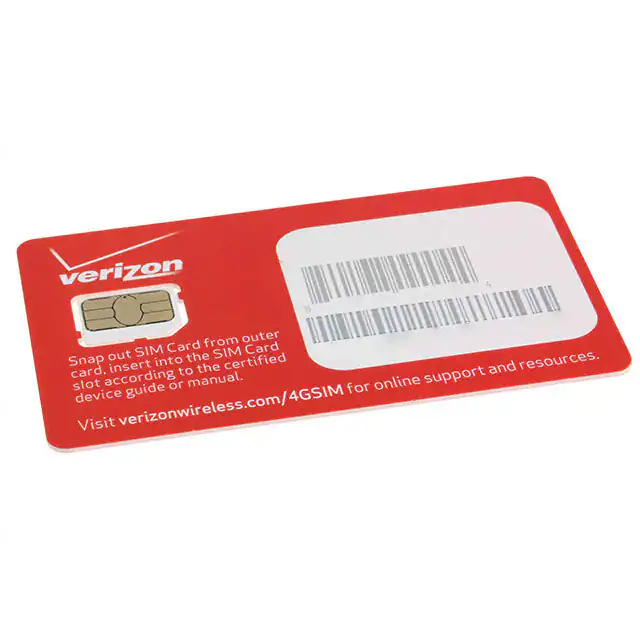
-
NL-SIM-COM
NimbeLink, LLC
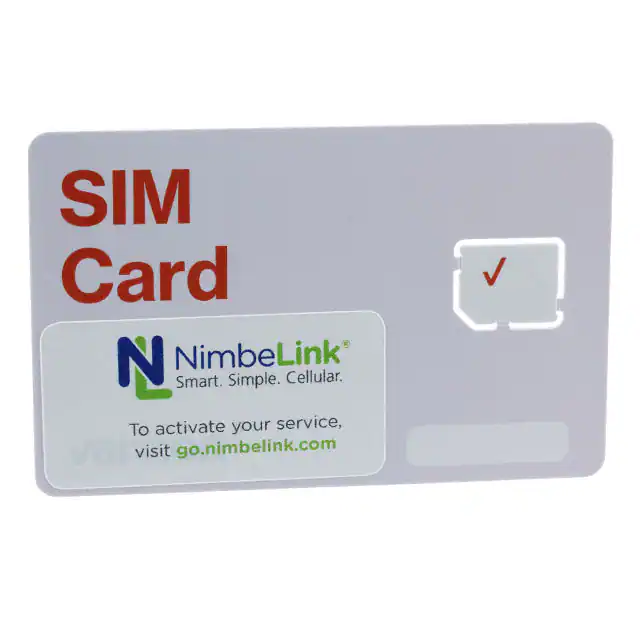
-
NL-SIM-IND
NimbeLink, LLC
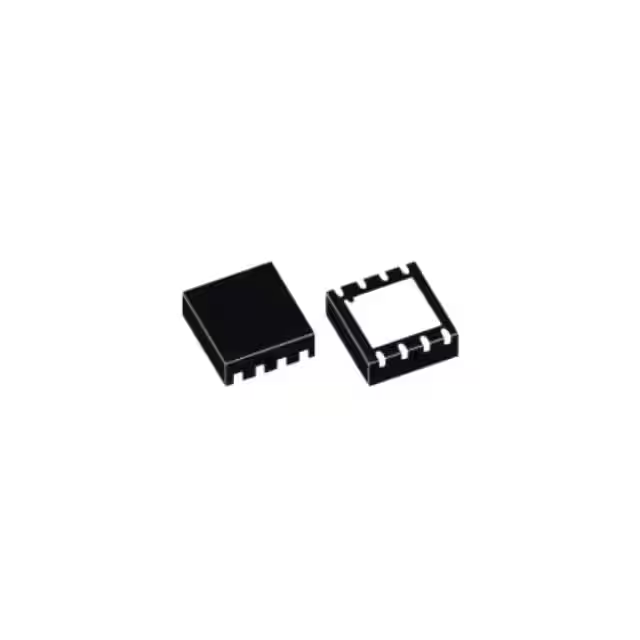
-
VIOT-1SIM-MFF2
Velocity IoT

-
SIM-S-IO3-TRI-2
1GLOBAL

-
SIM-S-IO3-TRI-2-LP
1GLOBAL
-
SIM-S-IO3-MFF2-2
1GLOBAL
-
SIM-S-IO3-MFF2-2-LP
1GLOBAL
-
400
RevX Systems Corp.
-
200
RevX Systems Corp.
-
NL-SIM-VER-M1
NimbeLink, LLC
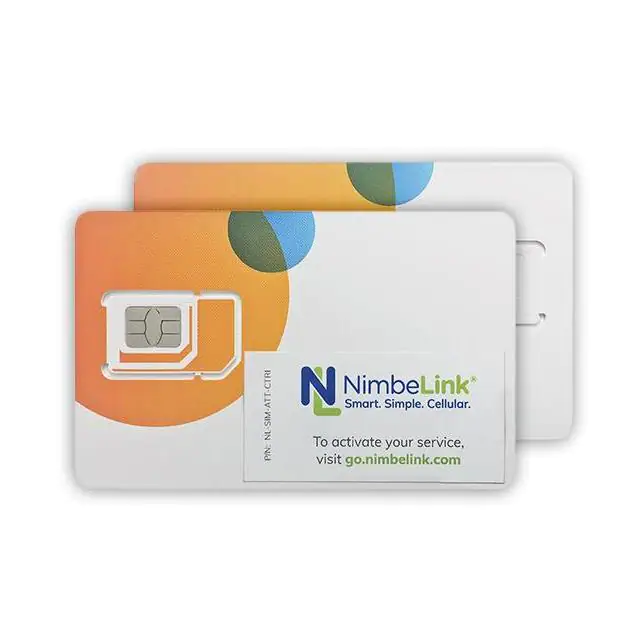
-
NL-SIM-ATT-CTRI
NimbeLink, LLC
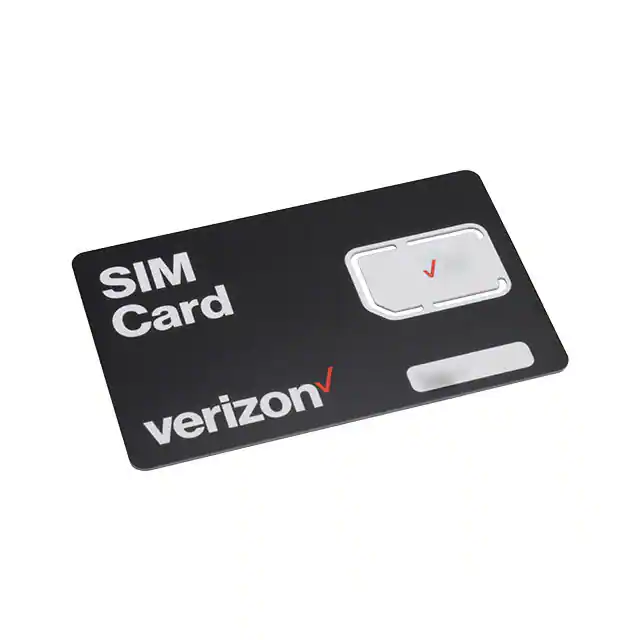
-
251
RevX Systems Corp.
Tech Hub

Operational amplifier guide covering op amp basics, feedback, ideal vs real op amps, common configurations, buffer circuits, offset, bias current, gain-bandwidth, slew rate, rail-to-rail limits and sel…

Jumper cables guide covering safe connection order, red and black clamp placement, final ground connection, cable gauge, length, clamp quality, copper vs CCA cables, jump starter comparison and battery…

LDO regulator guide covering low dropout voltage, power dissipation, thermal design, PSRR, output noise, capacitor stability, adjustable LDO circuits, LDO vs buck converter and datasheet selection chec…

Conditional Access Module guide covering CAM meaning, CI/CI+ interface, smart card authorization, DVB security workflow, TV and set-top box compatibility, internal electronics, ESD protection, connecto…

Guide to electronic component obsolescence covering EOL risk, PCN/PDN notices, last-time buy planning, replacement options, form-fit-function validation, counterfeit risk and BOM lifecycle management.

18650 battery guide covering lithium-ion cell basics, 3.6V/3.7V voltage, 4.2V charging, mAh and Wh capacity, protected cells, chargers, BMS, series-parallel packs, holders, welding and sourcing checks.…

Hall effect sensor guide covering working principle, linear and digital sensors, Arduino circuits, current sensing, speed detection, automotive applications, A3144 examples, signal filtering and datash…

Product Change Notification guide for electronic components, covering PCN meaning, PCN vs PDN/EOL, common change types, risk levels, form-fit-function review, engineering validation, BOM control, LTB/L…

A practical guide to blend door actuators, covering HVAC function, symptoms, location, AC and heater issues, reset and calibration, replacement cost, electrical diagnosis, compatibility checks, and rep…

Engineering guide to Raspberry Pi alternatives, covering chip-level differences, Orange Pi, ROCK, Jetson, Banana Pi, NanoPi, Compute Module, Pico, GPIO, camera, HAT compatibility, and replacement risks…


