
 My Inquiry
 My Account


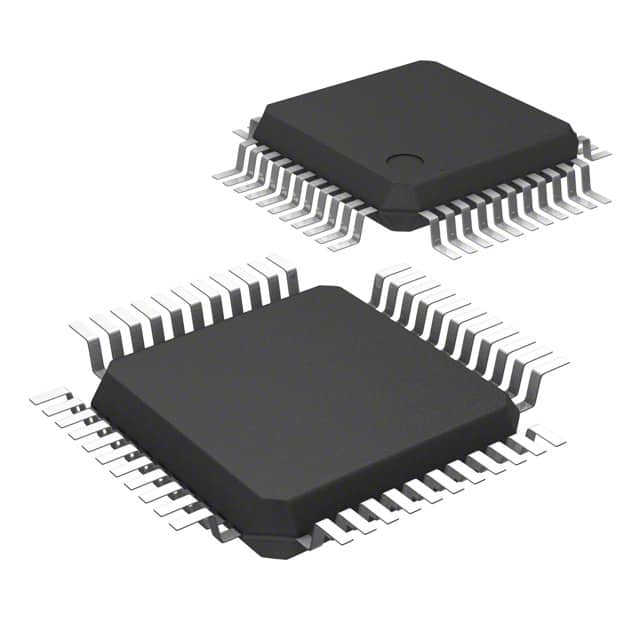
STMicroelectronics ST72F321BJ6T3
- Part No.:
- ST72F321BJ6T3
- Manufacturer:
- STMicroelectronics
- Category:
- Microcontrollers
- Package:
- 44-LQFP
- Datasheet:
-
 ST72F321BJ6T3.pdf
- Description:
- IC MCU 8BIT 32KB FLASH 44LQFP
- Quantity:
- Payment:

- Shipping:

Inventory:3,704
Please send an inquiry. Send us your inquiry, and we will respond immediately.
Product details
Overview
ST72F321BJ6T3 from STMicroelectronics is a 44-pin LQFP 8-bit microcontroller featuring 32KB Flash/ROM, 1KB RAM, 10-bit ADC with up to 16 inputs, five timers (including PWM auto-reload and dual 16-bit), and three serial interfaces (SPI, SCI, I²C). It operates from 3.8V to 5.5V across –40°C to +125°C and targets automotive body control modules, industrial sensor nodes, and appliance motor control.
For engineers reviewing the ST72F321BJ6T3 datasheet, ST72F321BJ6T3 pinout, ST72F321BJ6T3 application, or ST72F321BJ6T3 equivalent, this MCU delivers deterministic real-time control with nested interrupts, in-application programming, low-voltage supervision, and four power-saving modes - critical for battery-backed or thermally constrained embedded systems.
Technical Context
The ST72F321BJ6T3 implements the ST7 core with 63 basic instructions and 17 addressing modes, supporting 8×8 unsigned multiply. Its clock system integrates an internal RC oscillator, crystal/ceramic resonator support, external clock bypass, and a 2× PLL multiplier for flexible frequency scaling.
Interrupt handling uses a nested controller with 14 vectors plus TRAP and RESET, 9 external interrupt lines mapped across 4 vectors, and a Top Level Interrupt (TLI) pin on 64-pin variants - though absent on this 44-pin LQFP package. Peripheral timing relies on dedicated prescalers and independent clock gating per module.
Key Specifications
| Parameter | Value and Actual Design Meaning |
|---|---|
| Core Architecture | ST7 8-bit CISC CPU with 63 instructions and 17 addressing modes - enables compact firmware and predictable cycle timing for deterministic control loops. |
| Flash Memory | 32KB HDFlash with read-out protection and 100-cycle endurance - supports field firmware updates via IAP and secure IP retention. |
| RAM Size | 1024 bytes (1KB) with 256-byte stack - sufficient for real-time task stacks and small data buffers in resource-constrained applications. |
| ADC Resolution | 10-bit SAR ADC with up to 16 input channels - provides adequate dynamic range for analog sensor interfacing (e.g., temperature, pressure, potentiometer). |
| Timers | Five independent timers: main clock controller (RTC/beep/clock-out), configurable watchdog, two 16-bit timers (input capture/output compare/PWM), and 8-bit PWM auto-reload timer with 4 outputs - enables multi-channel motor control and precise event timing. |
| Communication Interfaces | SPI (master/slave), SCI (asynchronous UART), and I²C (multimaster) - allows concurrent connectivity to displays, sensors, EEPROMs, and host controllers without protocol translation. |
| Operating Voltage | 3.8V to 5.5V - compatible with standard 5V logic families and tolerant of automotive battery ripple and industrial supply variations. |
| Temperature Range | –40°C to +125°C - qualified for under-hood automotive, industrial PLC, and high-ambient appliance environments. |
Pinout & Package
LQFP44 (10 × 10 mm, 0.8 mm pitch) package with exposed pad for thermal dissipation. Pin count and signal mapping align with ST's 44-pin ST72F321B family layout, supporting full I/O multiplexing and peripheral remapping.
| Pin/Terminal | Circuit Role | Design Meaning |
|---|---|---|
| VDD, VSS | Power supply and ground | Dual power domains: VDD powers core/peripherals; VSS is common reference - requires local decoupling (100 nF ceramic) near each VDD pin. |
| OSCIN/OSCOUT | Crystal/resonator interface | Connects to 1–8 MHz quartz crystal or ceramic resonator; internal load capacitors eliminate need for external caps in most designs. |
| PA0–PA7, PB0–PB7, PC0–PC7, PD0–PD7 | General-purpose I/O ports | 48 total I/O lines (24 usable on 44-pin variant); each pin supports alternate functions (e.g., UART TX/RX, SPI SCK/MOSI/MISO, ADC IN0–IN15). |
| RESET | Active-low reset input | Asynchronous external reset with internal pull-up; triggers full hardware reset and clears all registers and peripherals. |
| TLI | Top Level Interrupt input | Not present on 44-pin package - reserved for 64-pin variants only; omitted here to avoid misrouting. |
Key Features
| Feature | Design Value |
|---|---|
| In-Application Programming (IAP) | Enables firmware updates over SCI or SPI without external programmer - critical for remote device maintenance and OTA-like field upgrades. |
| Enhanced Low Voltage Detector (LVD) | Monitors VDD with programmable threshold and generates interrupt before brownout - prevents erratic operation during supply sag in automotive or industrial settings. |
| Four Power-Saving Modes | Halt (CPU stopped, peripherals active), Active-Halt (peripherals clocked), Wait (all clocks gated except LSI), Slow (reduced system clock) - extends battery life in intermittent-sensing applications. |
| Nested Interrupt Controller | Supports priority-based preemption across 14 vectors - ensures timely response to time-critical events (e.g., PWM fault, ADC conversion complete) amid background tasks. |
| High Sink Outputs | 10 I/O pins rated for 20 mA sink current - directly drive LEDs, relays, or small solenoids without external drivers in cost-sensitive designs. |
Applications
| Automotive Body Control Unit | Industrial Sensor Node |
|---|---|
Use Scenario: Centralized control of door locks, window lifts, mirror adjustment, and interior lighting in 12V vehicle platforms. IC Role / Device Role / Timing Role: Primary MCU executing real-time CAN-linked command parsing, PWM motor drive, and ADC-based position feedback sampling at ≤1 ms intervals. Use Value: Integrated 10-bit ADC, 4 PWM outputs, and 125°C rating eliminate external signal conditioning and enable direct integration into junction boxes. |
Use Scenario: Wireless-capable environmental monitor measuring temperature, humidity, and vibration in factory machinery cabinets. IC Role / Device Role / Timing Role: Sensor hub aggregating analog and digital inputs, performing local threshold detection, and preparing packets for RF transmission via SCI or SPI. Use Value: Low-power Wait/Halt modes extend battery life to >2 years; I²C interface simplifies connection to digital sensors (e.g., HTU21D, LIS3DH). |
| Home Appliance Motor Control | Smart Meter Data Acquisition |
Use Scenario: Speed-regulated BLDC fan or washing machine drum motor using hall-effect feedback and phase commutation. IC Role / Device Role / Timing Role: Real-time commutation engine managing six-step sequencing, current sensing via ADC, and fault shutdown within <5 µs latency. Use Value: Dual 16-bit timers with input capture and complementary PWM outputs support precise dead-time insertion and rotor position tracking. |
Use Scenario: Sub-metering unit capturing voltage/current waveforms and computing RMS, harmonics, and energy consumption in residential smart meters. IC Role / Device Role / Timing Role: High-accuracy data acquisition controller synchronizing 10-bit ADC sampling to line cycle zero-crossings using timer-triggered conversions. Use Value: 16 robust ADC input channels allow simultaneous monitoring of multiple phases and auxiliary sensors without multiplexer overhead. |
Equivalent & Alternatives
The following parts are listed as comparable options for similar 8-bit microcontroller applications.
| Alternative Part | Technical Difference | Application Difference | Selection Advice |
|---|---|---|---|
| STM8S003F3P6 | STM8 core, 8KB Flash, 1KB RAM, no LQFP44 option (only TSSOP20/SO20), higher max clock (16 MHz vs 8 MHz) | Lacks ADC channel count (5 vs 16) and peripheral depth (no dual 16-bit timers, no I²C multimaster) | Prefer for cost-sensitive, low-peripheral-count designs where footprint and price outweigh feature parity. |
| MC9RS08KA2CP | Freescale RS08 core, 2KB Flash, 128B RAM, SOIC-8 package, 10-bit ADC with 4 inputs | Insufficient memory and I/O for ST72F321BJ6T3's target applications; lacks SPI/I²C and advanced timers | Only suitable for ultra-simple, single-function tasks (e.g., LED sequencer) - not a functional replacement. |
Compared with STM8S003F3P6 and MC9RS08KA2CP, the ST72F321BJ6T3 offers superior analog integration, deterministic real-time capability via nested interrupts, and automotive-grade thermal resilience - making it irreplaceable in applications requiring coordinated multi-peripheral control under harsh conditions.
Availability
ST72F321BJ6T3 is available at Aetrix Electronics and suitable for automotive body electronics, industrial sensor nodes, home appliance motor control, and smart meter data acquisition requiring stable component supply across extended product lifecycles.
Supply support for ST72F321BJ6T3 includes scheduled delivery planning, volume procurement assistance, BOM continuity management, traceable sourcing, and lifecycle availability coordination for OEM customers, industrial embedded developers, connected-device designers, and electronics production programs.
Manufacturer
STMicroelectronics is a global semiconductor leader headquartered in Geneva, Switzerland, designing and manufacturing microcontrollers, power ICs, sensors, and analog devices for automotive, industrial, and consumer markets.
The ST7 family was engineered for cost-effective, high-reliability 8-bit control in thermally demanding environments - emphasizing flash endurance, wide voltage tolerance, and integrated peripherals to reduce BOM count in automotive and industrial edge nodes.
FAQ
Does ST72F321BJ6T3 support in-circuit programming (ICP)?
Yes, the ST72F321BJ6T3 supports In-Circuit Programming via the single-wire SWIM interface using ST's ST-LINK/V2 or compatible debuggers. ICP allows full Flash/ROM erase, program, and verify operations without removing the device from the PCB, enabling production-line programming and field rework.
What is the maximum ADC sampling rate achievable?
The 10-bit ADC achieves up to 1 MSPS conversion rate when configured in fast mode with internal clock source and minimal acquisition time. Actual sustained throughput depends on channel count, trigger source (timer vs software), and result readout method - typical multi-channel scan rates range from 50–200 kSPS in production firmware.
Can the ST72F321BJ6T3 operate reliably at 125°C junction temperature?
Yes, the ST72F321BJ6T3 is fully specified and tested for continuous operation from –40°C to +125°C ambient temperature. Its silicon process and packaging meet AEC-Q100 stress requirements for automotive under-hood use, provided PCB thermal design maintains junction temperature within limits via copper pour and airflow.
Is there hardware support for CAN bus communication?
No, the ST72F321BJ6T3 does not include a CAN controller or physical layer transceiver. It supports UART (SCI), SPI, and I²C for serial communication. CAN functionality would require an external CAN controller (e.g., MCP2515) interfaced via SPI, adding latency and component count.
ST72F321BJ6T3 Specifications
- Product attributes
- Attribute value
- Manufacturer:
- STMicroelectronics
- Package/Case:
- 44-LQFP
- Series:
- ST7
- Packaging:
- Tray
- Product Status:
- Obsolete
- Programmable:
- Not Verified
- Core Processor:
- ST7
- Core Size:
- 8-Bit
- Speed:
- 8MHz
- Connectivity:
- I2C, SCI, SPI
- Peripherals:
- LVD, POR, PWM, WDT
- Number of I/O:
- 32
- Program Memory Size:
- 32KB (32K x 8)
- Program Memory Type:
- FLASH
- EEPROM Size:
- -
- RAM Size:
- 1K x 8
- Voltage - Supply (Vcc/Vdd):
- 3.8V ~ 5.5V
- Data Converters:
- A/D 16x10b
- Oscillator Type:
- Internal
- Operating Temperature:
- -40°C ~ 125°C (TA)
- Grade:
- -
- Qualification:
- -
- Mounting Type:
- Surface Mount
- Supplier Device Package:
ST72F321BJ6T3 FAQ
1.How can I place an order for ST72F321BJ6T3 through Aetrix?
Please submit a Request for Quotation (RFQ) for ST72F321BJ6T3 on Aetrix. Our sales agent will provide a competitive quotation and guide you through the order confirmation once you accept the terms.
2.Are the price and stock information for ST72F321BJ6T3 reliable?
The price and inventory of ST72F321BJ6T3 are updated periodically and may fluctuate due to market conditions. Stock and pricing data are typically refreshed every 24 hours. Quotation validity for ST72F321BJ6T3 is usually 5 days.
3.What payment methods are accepted for ST72F321BJ6T3?
We accept Wire Transfer, PayPal, Credit Card, Western Union, MoneyGram, and Escrow for ST72F321BJ6T3 transactions.
Note: Certain payment methods may incur a processing fee.
4.How is shipping managed for ST72F321BJ6T3?
ST72F321BJ6T3 orders can be shipped via leading logistics carriers, including DHL, UPS, FedEx, TNT, or Registered Mail.
Once your ST72F321BJ6T3 order is processed, you will receive an email with the shipment details and tracking number.
Note: Tracking information may take up to 24 hours to appear. Express delivery typically takes 3–5 business days.
5.How can I obtain technical support or documentation for ST72F321BJ6T3?
For technical support, including ST72F321BJ6T3 datasheets, pinout diagrams, or application guidance, please contact our engineering support team. They can provide detailed documentation and assistance for your ST72F321BJ6T3 requirements.
6.How does Aetrix verify that ST72F321BJ6T3 is sourced from the original manufacturer or authorized distributors?
All ST72F321BJ6T3 products on Aetrix are procured from qualified distributors and authorized channels. Our dedicated quality assurance team conducts strict verification, including traceability checks and, if necessary, third-party testing. This ensures that ST72F321BJ6T3 meets industry standards.
7.What is the process for return or replacement of ST72F321BJ6T3?
All ST72F321BJ6T3 units undergo pre-shipment inspection (PSI). If there is an issue with ST72F321BJ6T3, returns or replacements are accepted under the following conditions:
1.Quantity discrepancies, incorrect items, or visible external defects (such as breakage or corrosion), acknowledged by Aetrix.
2.The issue is reported within 90 days of delivery.
3.The ST72F321BJ6T3 part is unused and in its original packaging.
Return procedure for ST72F321BJ6T3:
1.Submit a request within 90 days.
2.Obtain a Return Material Authorization (RMA) from Aetrix.
ST72F321BJ6T3 Tags

-
ATTINY4-TSHR
Microchip Technology
-
ATTINY10-TSHR
Microchip Technology
-
ATTINY10-TS8R
Microchip Technology

-
ATTINY202-SSNR
Microchip Technology
-
ATTINY202-SSFR
Microchip Technology
-
ATTINY402-SSNR
Microchip Technology
-
PIC16F15213T-I/MF
Microchip Technology
-
PIC16F15213-E/MF
Microchip Technology

-
PIC10F200T-I/OT
Microchip Technology
-
ATTINY412-SSNR
Microchip Technology
-
PIC10F202T-I/OT
Microchip Technology
-
ATTINY404-SSNR
Microchip Technology
Tech Hub

A practical engineering guide to 3.3V and 5V logic compatibility, input thresholds, resistor dividers, translator ICs, MOSFET level shifting, I2C pull-ups, timing limits and power-sequencing risks.

The 74HC595 uses push-pull logic outputs, while the TPIC6B595 uses 50 V open-drain DMOS sinks for higher-power loads. This guide compares timing, current limits, 3.3 V interfacing, load wiring, thermal…

The 74HC595 converts serial data into eight stable parallel outputs. This guide covers pin functions, shift and storage timing, OE and MR behavior, drive-current limits, cascading, voltage compatibilit…

A technical comparison of level-sensitive latches and edge-triggered flip-flops, covering timing windows, setup and hold limits, master–slave operation, time borrowing, race-through, HDL inference and…

A D latch stores one bit while Enable controls when data can pass. This reference covers gate-level operation, truth tables, transparency, setup and hold timing, LE versus OE, common ICs and practical …

An SR latch stores one bit through cross-coupled feedback. This engineering reference covers NOR and NAND implementations, truth tables, forbidden-state recovery, gated operation, switch debouncing, fa…

Latch circuits retain one bit through feedback. This technical reference covers SR and D latches, truth tables, transparency, timing limits, latch-versus-flip-flop behavior, applications and common log…

An engineering guide to LED driver operation, constant-current and constant-voltage outputs, linear and switching topologies, dimming, IC selection, calculations, replacement compatibility, and fault c…

Operational amplifier guide covering op amp basics, feedback, ideal vs real op amps, common configurations, buffer circuits, offset, bias current, gain-bandwidth, slew rate, rail-to-rail limits and sel…

Jumper cables guide covering safe connection order, red and black clamp placement, final ground connection, cable gauge, length, clamp quality, copper vs CCA cables, jump starter comparison and battery…


