
 My Inquiry
 My Account


STMicroelectronics STA020DJTR
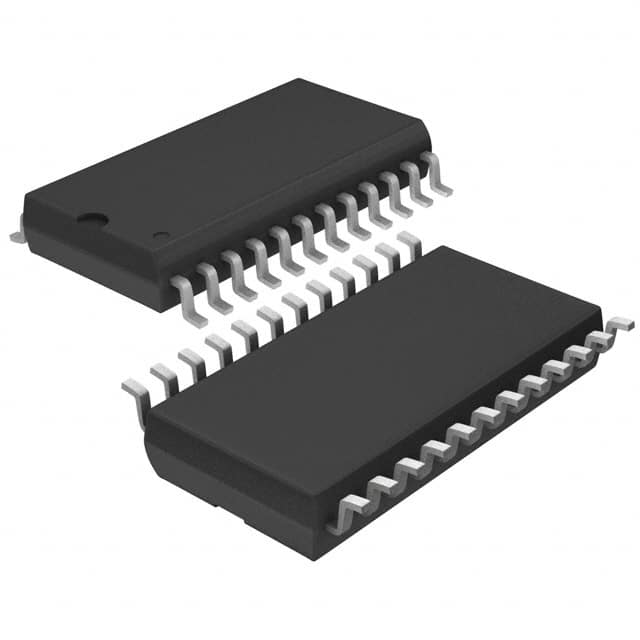
- Part No.:
- STA020DJTR
- Manufacturer:
- STMicroelectronics
- Category:
- Audio Special Purpose
- Package:
- 24-SOIC (0.295", 7.50mm Width)
- Datasheet:
-
 STA020DJTR.pdf
- Description:
- IC AUDIO TRANSMITTER 24SO
- Quantity:
- Payment:

- Shipping:

Inventory:2,940
Please send an inquiry. Send us your inquiry, and we will respond immediately.
Product details
Overview
STA020DJTR from STMicroelectronics is a monolithic 96 kHz digital audio interface transmitter IC implementing AES/EBU, IEC 958, S/PDIF, and EIAJ CP-340 standards. It features 3.3 V operation, differential RS422-compatible TXP/TXN line drivers, 128×Fs master clock input (256×Fs in transparent mode), and dedicated channel status bit pins for professional/consumer mode selection via PRO pin. It is used in studio-grade audio equipment to encode and transmit stereo PCM data with full channel status, user, and validity bits.
For engineers reviewing the STA020DJTR datasheet, STA020DJTR pinout, STA020DJTR application, or STA020DJTR equivalent, key selection considerations include sample rate support up to 96 kHz, dual-mode (PRO/CONSUMER) configuration, biphase-mark encoding compliance, and direct STA120 interoperability in transparent mode.
Technical Context
The STA020DJTR implements a fully integrated digital audio transmitter with hardware-based biphase-mark encoding, parity generation, and CRC calculation for channel status byte 23 in professional mode. Its serial audio port supports seven configurable formats (M0–M2 controlled), including I²S (Format 4), Motorola DSP (Format 2), and MSB-last (Format 7), with double-buffered SDATA and programmable SCK edge sampling.
It integrates low-skew, 110 Ω differential line drivers (TXP/TXN) compliant with RS422, internally synchronized to MCK, and disabled during RST assertion. The CBL pin provides precise channel status block timing-outputting high one bit before preamble Z of byte 0-and becomes an input in transparent mode to slave transmit timing to an STA120 receiver.
Key Specifications
| Parameter | Value and Actual Design Meaning |
|---|---|
| Sample Rate Support | Up to 96 kHz - enables high-resolution studio and broadcast audio transmission. |
| Supply Voltage | 3.3 V ±10% - requires stable low-noise 3.3 V rail; absolute max 4 V. |
| Master Clock (MCK) | 128×Fs (26 MHz max); 256×Fs in transparent mode - defines all internal timing and encoding cycles. |
| Line Driver Output | Differential RS422-compliant (TXP/TXN) - drives 110 Ω twisted-pair cable directly without external transformers. |
| Audio Word Length | 16–24 bits - configurable per format; Formats 5/6 enforce 16/18-bit fixed width. |
| Channel Status Encoding | Professional mode: CRC on byte 23; Consumer mode: FC0/FC1 encode C24/C25 for 32/44.1/48 kHz. |
| Operating Temperature | −20 °C to +85 °C - qualified for industrial and professional audio equipment environments. |
Pinout & Package
STA020DJTR is housed in a 24-pin SOIC (SO24) package with standard 1.27 mm pitch, ECOPACK®-compliant, 10.0–10.65 mm body width, and 0.60 g weight.
| Pin | Circuit Role | Design Meaning |
|---|---|---|
| 1–4, 9–15, 18–24 | Dedicated control & status I/O | Configure PRO, M0–M2, C/U/V, CBL, TRNPT, EM0/EM1, C1/C2/C6/C7/C8/C9/C15 - define interface mode, sample format, and channel status bit values. |
| 5 | MCK | Master clock input - 128×Fs reference for all internal timing; must be 256×Fs in transparent mode. |
| 6, 7, 8 | SCK / FSYNC / SDATA | Configurable audio serial port - supports 7 formats; double-buffered SDATA accepts 16–24-bit PCM data. |
| 16 | RST | Active-low master reset - disables line drivers (TXP/TXN pulled low) and resets internal counters. |
| 17, 20 | TXN / TXP | Differential RS422 output pair - transmits biphase-mark encoded AES/EBU or S/PDIF stream over balanced line. |
| 19 | VD+ | +3.3 V digital supply - powers all logic and line drivers; decoupling capacitor required at pin. |
| 18 | GND | Digital ground reference - must be low-impedance connection to minimize jitter and EMI. |
Key Features
| Feature | Design Value |
|---|---|
| Multi-standard compliance | Fully implements AES/EBU, IEC 958, S/PDIF, and EIAJ CP-340 physical and protocol layers - eliminates need for external level-shifting or re-encoding. |
| Pin-selectable operating mode | PRO pin selects professional (C.S. byte 23 CRC enabled) or consumer (FC0/FC1 frequency encoding) behavior - simplifies board-level configuration across product variants. |
| Transparent mode interoperability | TRNPT = high enables direct STA120-to-STA020 chaining with CBL-synchronized block timing - preserves frame alignment in multi-stage digital audio routing. |
| Dedicated channel status inputs | 10 dedicated pins (C1/C2/C6/C7/C8/C9/C15/EM0/EM1/PRO) allow hardware-defined C.S. bits without software register writes - reduces MCU overhead and improves real-time reliability. |
| Programmable serial port formats | M0–M2 select among 7 audio interface formats including I²S, Motorola DSP, and LSB-justified - enables seamless integration with diverse ADCs, DACs, and DSPs. |
Applications
| Professional Audio Console | Digital Mixing Desk |
|---|---|
|
Use Scenario: Transmiting multi-channel AES/EBU streams from analog-to-digital converters to digital signal processors in broadcast mixing consoles. IC Role / Device Role / Timing Role: Digital audio interface transmitter - performs biphase-mark encoding, parity generation, and RS422 line driving synchronized to 128×Fs MCK. Use Value: Ensures bit-accurate, jitter-controlled transmission of 24-bit/96 kHz audio with embedded channel status for metering and routing metadata. |
Use Scenario: Embedding channel status and user data into S/PDIF outputs of live sound digital mixers for stagebox interconnection. IC Role / Device Role / Timing Role: Consumer-mode S/PDIF transmitter - uses FC0/FC1 to encode sample rate and C2/C3 for copy protection/pre-emphasis. Use Value: Delivers standards-compliant consumer audio output with hardware-configured metadata, eliminating firmware dependency for basic feature sets. |
| Studio Digital Recorder | CD Mastering System |
|
Use Scenario: Encoding high-fidelity PCM tracks from FPGA-based recorders into AES/EBU format for archival storage and DAW synchronization. IC Role / Device Role / Timing Role: Professional-mode transmitter with CRC-enabled channel status - generates C.S. byte 23 for error detection and embeds sample rate, emphasis, and category code. Use Value: Guarantees integrity of critical metadata across long recording sessions and enables automatic DAW recognition of source characteristics. |
Use Scenario: Generating CD-format digital audio output with subcode frame clock and CD-specific channel status from mastering workstations. IC Role / Device Role / Timing Role: CD submode transmitter - activates CD subcode port when FC0=FC1=high; uses C/SBF as subcode frame clock and CBL as subcode bit clock. Use Value: Enables native CD subcode transport without external logic, supporting PQ editing and Red Book compliance verification. |
Equivalent & Alternatives
The following parts are listed as comparable options for similar digital audio transmitter applications.
| Alternative Part | Technical Difference | Application Difference | Selection Advice |
|---|---|---|---|
| AK4117VN | 3.3 V SPI-configurable transmitter; supports 192 kHz; no dedicated C.S. pins - relies on serial register writes. | Requires microcontroller firmware for channel status setup; lacks hardware PRO/CONSUMER mode pin. | Preferred when flexible, software-defined configuration is needed over pin-strapped simplicity. |
| CS8406-DZZ | 5 V tolerant; includes integrated PLL for MCK generation; supports S/PDIF only (no AES/EBU differential output). | Needs external level-shifter for AES/EBU; no RS422 drivers - requires external line driver for balanced transmission. | Selected when 5 V system integration or on-chip clock synthesis outweighs need for native differential output. |
Compared with AK4117VN and CS8406-DZZ, the STA020DJTR uniquely combines pin-strapped professional/consumer mode selection, hardware-mapped channel status bits, and integrated RS422 drivers - reducing BOM count and firmware complexity in fixed-function audio gear.
Availability
STA020DJTR is available at Aetrix Electronics and suitable for professional audio consoles, digital mixing desks, studio digital recorders, and CD mastering systems requiring stable component supply, long-lifecycle assurance, and RoHS-compliant sourcing.
Supply support for STA020DJTR includes scheduled delivery planning, volume procurement assistance, BOM continuity management, traceable sourcing, and lifecycle availability coordination for OEM customers, industrial embedded developers, connected-device designers, and electronics production programs.
Manufacturer
STMicroelectronics is a global semiconductor leader headquartered in Geneva, Switzerland, specializing in analog, power, microcontrollers, and automotive ICs with strong industrial and audio signal processing heritage.
The STA020 belongs to ST's professional audio interface product line, designed specifically for bit-accurate, low-jitter digital audio transmission in broadcast, studio, and high-end consumer equipment where standards compliance and hardware configurability are critical.
FAQ
What is the function of the TRNPT pin, and when should it be asserted high?
The TRNPT (pin 24) enables transparent mode when driven high. In this mode, the STA020DJTR bypasses internal channel status generation and passes C/U/V bits directly from the STA120 receiver, synchronizing transmit timing to the incoming CBL signal. It is used in multi-stage digital audio routing where frame alignment and minimal latency are essential - such as between AD/DA converter stages in modular studio systems.
How does the PRO pin affect channel status bit handling in professional versus consumer modes?
When PRO is low (professional mode), dedicated pins like C1, C6, C7, and C9 drive inverted versions of AES/EBU channel status bits 1, 6, 7, and 9, and CRC is generated for byte 23. When PRO is high (consumer mode), those same pins map to C2, C3, C8, C9, and C15, and FC0/FC1 encode sample rate bits 24–25. The PRO pin physically redefines pin functionality - no register programming is involved.
Can the STA020DJTR operate with a 48 kHz sample rate, and what MCK frequency is required?
Yes - the STA020DJTR supports 48 kHz operation. With MCK = 128 × Fs, the required master clock is 6.144 MHz. This value falls within the device's specified MCK range (up to 26 MHz) and meets the 40–60% duty cycle requirement. For transparent mode at 48 kHz, MCK must be 256 × Fs = 12.288 MHz.
What is the role of the CBL pin in normal versus transparent mode?
In normal mode, CBL is an output that goes high one bit period before the start of channel status byte 0's preamble (Z), aiding precise serial loading of C/U/V bits. In transparent mode, CBL becomes an input used to synchronize the STA020's transmit block structure to the STA120's receive block boundary - ensuring zero-frame-offset retransmission critical for broadcast chain integrity.
STA020DJTR Specifications
- Product attributes
- Attribute value
- Manufacturer:
- STMicroelectronics
- Series:
- -
- Package/Case:
- 24-SOIC (0.295", 7.50mm Width)
- Packaging:
- Tape & Reel (TR)
- Product Status:
- Active
- Function:
- Audio Transmitter
- Applications:
- Digital Audio Interfacing
- Number of Channels:
- 1
- Interface:
- Serial
- Voltage - Supply:
- 3V ~ 3.6V
- Operating Temperature:
- 0°C ~ 70°C (TA)
- Specifications:
- 96kHz
- Mounting Type:
- Surface Mount
- Grade:
- -
STA020DJTR FAQ
1.How can I place an order for STA020DJTR through Aetrix?
Please submit a Request for Quotation (RFQ) for STA020DJTR on Aetrix. Our sales agent will provide a competitive quotation and guide you through the order confirmation once you accept the terms.
2.Are the price and stock information for STA020DJTR reliable?
The price and inventory of STA020DJTR are updated periodically and may fluctuate due to market conditions. Stock and pricing data are typically refreshed every 24 hours. Quotation validity for STA020DJTR is usually 5 days.
3.What payment methods are accepted for STA020DJTR?
We accept Wire Transfer, PayPal, Credit Card, Western Union, MoneyGram, and Escrow for STA020DJTR transactions.
Note: Certain payment methods may incur a processing fee.
4.How is shipping managed for STA020DJTR?
STA020DJTR orders can be shipped via leading logistics carriers, including DHL, UPS, FedEx, TNT, or Registered Mail.
Once your STA020DJTR order is processed, you will receive an email with the shipment details and tracking number.
Note: Tracking information may take up to 24 hours to appear. Express delivery typically takes 3–5 business days.
5.How can I obtain technical support or documentation for STA020DJTR?
For technical support, including STA020DJTR datasheets, pinout diagrams, or application guidance, please contact our engineering support team. They can provide detailed documentation and assistance for your STA020DJTR requirements.
6.How does Aetrix verify that STA020DJTR is sourced from the original manufacturer or authorized distributors?
All STA020DJTR products on Aetrix are procured from qualified distributors and authorized channels. Our dedicated quality assurance team conducts strict verification, including traceability checks and, if necessary, third-party testing. This ensures that STA020DJTR meets industry standards.
7.What is the process for return or replacement of STA020DJTR?
All STA020DJTR units undergo pre-shipment inspection (PSI). If there is an issue with STA020DJTR, returns or replacements are accepted under the following conditions:
1.Quantity discrepancies, incorrect items, or visible external defects (such as breakage or corrosion), acknowledged by Aetrix.
2.The issue is reported within 90 days of delivery.
3.The STA020DJTR part is unused and in its original packaging.
Return procedure for STA020DJTR:
1.Submit a request within 90 days.
2.Obtain a Return Material Authorization (RMA) from Aetrix.
STA020DJTR Tags
-
SA571DR2G
onsemi
-
ADAU7002ACBZ-R7
Analog Devices Inc.

-
DRV135UA/2K5
Texas Instruments
-
DRV134UA/1K
Texas Instruments
-
DRV134PA
Texas Instruments
-
DRV134UA
Texas Instruments
-
DRV135UA
Texas Instruments
-
SA572DR2G
onsemi
-
PGA2311U/1K
Texas Instruments
-
SI8244BB-D-IS1R
Skyworks Solutions Inc.

-
CS8416K-CZZR
Cirrus Logic Inc.
-
SRC4392IPFBR
Texas Instruments
Tech Hub

A practical engineering and sourcing framework covering lifecycle verification, lifetime-buy calculations, replacement qualification, supplier checks and counterfeit-risk controls.

TTL and CMOS logic families differ in thresholds, loading, output drive, power and timing. This engineering guide compares 74HC and 74HCT, calculates noise margins and checks 3.3 V/5 V compatibility.

A practical engineering guide to 3.3V and 5V logic compatibility, input thresholds, resistor dividers, translator ICs, MOSFET level shifting, I2C pull-ups, timing limits and power-sequencing risks.

The 74HC595 uses push-pull logic outputs, while the TPIC6B595 uses 50 V open-drain DMOS sinks for higher-power loads. This guide compares timing, current limits, 3.3 V interfacing, load wiring, thermal…

The 74HC595 converts serial data into eight stable parallel outputs. This guide covers pin functions, shift and storage timing, OE and MR behavior, drive-current limits, cascading, voltage compatibilit…

A technical comparison of level-sensitive latches and edge-triggered flip-flops, covering timing windows, setup and hold limits, master–slave operation, time borrowing, race-through, HDL inference and…

A D latch stores one bit while Enable controls when data can pass. This reference covers gate-level operation, truth tables, transparency, setup and hold timing, LE versus OE, common ICs and practical …

An SR latch stores one bit through cross-coupled feedback. This engineering reference covers NOR and NAND implementations, truth tables, forbidden-state recovery, gated operation, switch debouncing, fa…

Latch circuits retain one bit through feedback. This technical reference covers SR and D latches, truth tables, transparency, timing limits, latch-versus-flip-flop behavior, applications and common log…

An engineering guide to LED driver operation, constant-current and constant-voltage outputs, linear and switching topologies, dimming, IC selection, calculations, replacement compatibility, and fault c…


