
 My Inquiry
 My Account


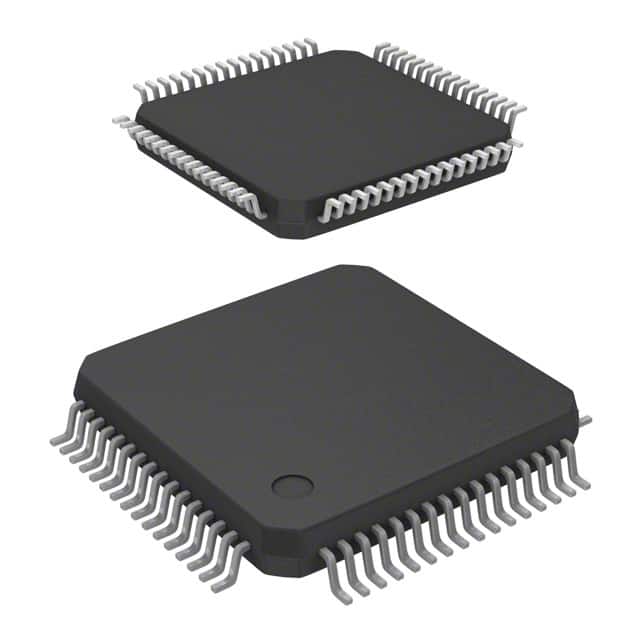
STMicroelectronics STA309A
- Part No.:
- STA309A
- Manufacturer:
- STMicroelectronics
- Category:
- Audio Special Purpose
- Package:
- 64-LQFP
- Datasheet:
-
 STA309A.pdf
- Description:
- IC FULLY INTEG PROCESSOR 64TQFP
- Quantity:
- Payment:

- Shipping:

Inventory:4,966
Please send an inquiry. Send us your inquiry, and we will respond immediately.
Product details
Overview
STA309A from STMicroelectronics is an 8-channel digital audio processor with integrated DDX® direct digital amplification control, supporting 32–192 kHz input sample rates, 6-channel DSD/SACD input, and 10 programmable 32-bit biquad filters per channel. It delivers >100 dB SNR, soft volume update, dual limiters, and Automode™ for automatic EQ, downmixing, and bass management - deployed in high-fidelity home theater AV receivers and multi-zone audio systems.
For engineers reviewing the STA309A datasheet, STA309A pinout, STA309A application, or STA309A equivalent, key selection considerations include its 8-channel DDX® PWM output mapping capability, per-channel 36-bit internal processing precision, I²C programmability, DSD input support, and TQFP64 package compatibility with thermal-constrained PCB layouts.
Technical Context
The STA309A implements a fully digital signal path with 192 kHz internal processing rate and 24- to 36-bit data precision, enabling high-resolution audio handling without analog conversion loss. Its DSP core supports pre- and post-EQ 8-channel mixing, independent channel trim (±10 dB), and dynamic range compression with two configurable limiters.
Automode™ integrates five-band graphic EQ, 32 preset curves, 5.1-to-2-channel downmix, bass management configurations, and anti-clipping modes - all managed via I²C register access. Output stage control includes selectable damped ternary or binary PWM, variable per-channel delay, and max power correction to reduce THD at full output.
Key Specifications
| Parameter | Value and Actual Design Meaning |
|---|---|
| Channels | 8-channel digital audio processing with independent gain, mute, bypass, and trim control per channel |
| Input Sample Rate | Selectable 32 kHz to 192 kHz; supports DVD-Audio and DSD/SACD formats via 6 dedicated channels |
| SNR / Dynamic Range | >100 dB - enables high-fidelity playback with minimal quantization noise in premium audio systems |
| DSP Precision | 24-bit input → 36-bit internal processing → 24-bit output; preserves resolution across complex EQ and mixing operations |
| EQ Capability | Up to 10 user-programmable 32-bit biquad filters per channel plus 5-band Automode™ graphic EQ |
| Output Format | Selectable DDX® damped ternary or binary PWM; supports I²S output channel mapping to external DDX® power stages |
| Control Interface | I²C-compatible serial interface (up to 400 kHz) for full register-level configuration of all DSP, limiter, and Automode™ functions |
Pinout & Package
TQFP64 (10 × 10 × 1.4 mm) thermally enhanced package with exposed pad; suitable for high-density audio PCBs requiring low thermal resistance and EMI-controlled routing.
| Pin/Terminal | Circuit Role | Design Meaning |
|---|---|---|
| VDDIO | Digital I/O supply | 3.3 V ±10% supply for I²C, I²S, and GPIO interfaces; decoupling critical for clock jitter reduction |
| VDDA | Analog supply | 3.3 V ±10% supply for internal reference and PLL circuits; separate from VDDIO to minimize digital noise coupling |
| VDDP | Core digital supply | 1.8 V ±10% supply for DSP core and memory; requires tight regulation to maintain 36-bit computation integrity |
| SCL / SDA | I²C interface | Standard bidirectional I²C bus for configuring registers, loading EQ coefficients, and monitoring status flags |
| LRCLK / BCLK / SDIN / SDOUT | I²S digital audio interface | Supports 8-channel TDM or multiple I²S streams; SDOUT maps to DDX® PWM outputs via programmable channel routing |
| RESETN | Active-low reset | Asynchronous hardware reset that clears all registers and reinitializes DSP core and Automode™ state machine |
| GPIO1–GPIO4 | General-purpose I/O | Configurable as interrupt outputs (e.g., zero-detect, invalid input detect) or system control inputs (e.g., mode select) |
Key Features
| Feature | Design Value |
|---|---|
| Automode™ intelligent audio management | Hardware-accelerated real-time processing for loudness compensation, 5.1/2.1 downmix, and 8 preset crossover filters - reduces firmware overhead in embedded host controllers |
| Per-channel DDX® PWM control | Independent selection of damped ternary or binary modulation per output channel, enabling THD optimization for different speaker loads |
| Advanced PopFree™ operation | Zero-crossing detection and controlled ramp-up/down sequencing eliminate audible transients during power-on, mute, and volume transitions |
| AM interference suppression | Dynamically switches PWM carrier frequency and applies noise-shaping filters to suppress AM radio band interference in automotive and compact enclosure applications |
| DC blocking high-pass filter | Programmable per-channel high-pass filter prevents DC offset accumulation in downstream DDX® power stages, avoiding speaker damage and amplifier saturation |
Applications
| Home Theater AV Receiver | Multi-Zone Audio Distribution System |
|---|---|
Use Scenario: 7.1-channel surround sound decoding and room correction in premium AV receivers with HDMI audio passthrough. IC Role / Device Role / Timing Role: Central digital audio processor managing input switching, DSD/DVD-Audio decoding, Automode™ bass management, and DDX® PWM generation for discrete amplifier modules. Use Value: Enables simultaneous 5.1- and 2-channel downmix outputs for main zone and headphone zone, with independent volume curves and anti-clipping modes per listening environment. |
Use Scenario: Single-board audio hub distributing synchronized stereo or mono streams to up to eight remote zones (e.g., commercial retail, hospitality). IC Role / Device Role / Timing Role: Multi-channel mixer and format converter, accepting SPDIF/TOSLINK and I²S inputs, applying zone-specific EQ and volume trim, then routing to zone-specific DDX® outputs. Use Value: Per-channel 32-bit biquad EQ and ±10 dB trim allow acoustic tuning for diverse room sizes and speaker types without external DSP resources. |
| High-Resolution Soundbar | Studio Monitor Controller |
Use Scenario: Compact 5.1 virtualized soundbar with built-in subwoofer and upward-firing drivers, requiring precise bass/treble tone control and dynamic range compression. IC Role / Device Role / Timing Role: Audio preprocessor generating time-aligned DDX® PWM signals for each driver group, applying Automode™ movie/nighttime modes and 5-band graphic EQ. Use Value: Variable max power correction reduces full-power THD by compensating for nonlinearity in small-form-factor DDX® power stages, preserving clarity at high SPL. |
Use Scenario: Reference-grade monitor controller with DSD input support, analog-to-digital conversion bypass, and ultra-low-jitter clock domain management. IC Role / Device Role / Timing Role: High-precision digital audio router and equalizer, accepting native DSD64/DSD128 via 6-channel I²S, performing sample-rate conversion only when required, and outputting bit-perfect I²S to DACs. Use Value: 192 kHz internal processing rate and 36-bit accumulator ensure no resolution loss during 10-biquad EQ cascades - critical for mastering-grade monitoring accuracy. |
Equivalent & Alternatives
The following parts are listed as comparable options for similar multi-channel digital audio processor applications.
| Alternative Part | Technical Difference | Application Difference | Selection Advice |
|---|---|---|---|
| STA339B | Successor IC with enhanced DDX® v3.0 support, higher 240 kHz internal rate, and expanded 12-biquad/channel capability; identical TQFP64 footprint | Targets next-gen AVRs requiring DSD256 support and lower-latency Automode™ response; not backward-pin-compatible due to revised I²S timing registers | Select when upgrading system performance and future-proofing against DSD256 adoption; requires firmware register map revision |
| AK4137EQ | Dedicated 8-channel audio receiver with S/PDIF/TOSLINK input, but no DDX® PWM output or Automode™; uses external I²S-to-PWM conversion | Suitable for systems using discrete Class-D controllers (e.g., TAS5805M); lacks integrated DDX® control, limiting THD optimization and AM suppression features | Choose for cost-sensitive designs where DDX®-specific features are unnecessary and external PWM generation is acceptable |
Compared with STA339B, the STA309A offers proven production stability and mature Automode™ implementation, while AK4137EQ provides simpler I²S interfacing at the expense of DDX®-optimized features like max power correction and AM interference switching.
Availability
STA309A is available at Aetrix Electronics and suitable for home theater AV receivers, multi-zone audio distribution systems, high-resolution soundbars, and studio monitor controllers requiring stable component supply and long-term industrial availability.
Supply support for STA309A includes scheduled delivery planning, volume procurement assistance, BOM continuity management, traceable sourcing, and lifecycle availability coordination for OEM customers, industrial embedded developers, connected-device designers, and electronics production programs.
Manufacturer
STMicroelectronics is a global semiconductor leader specializing in microcontrollers, power management, and analog/mixed-signal ICs, with strong heritage in audio and automotive electronics.
The STA309A belongs to ST's DDX® digital audio processor family, designed specifically for high-efficiency, high-fidelity all-digital amplification systems integrating DSP, PWM control, and intelligent audio management in a single chip.
FAQ
What audio formats does the STA309A natively support?
The STA309A natively accepts 6-channel DSD/SACD via I²S, plus PCM inputs at 32–192 kHz sample rates and 24-bit depth. It supports DVD-Audio (7.1-channel, 192 kHz/24-bit) and standard TDM/I²S configurations. DSD is processed without conversion to PCM, preserving native resolution through the Automode™ and EQ pipeline.
How does the STA309A implement Automode™ functionality?
Automode™ is a hardware-accelerated subsystem within the STA309A that executes predefined audio processing sequences - including 5-band graphic EQ, 32 preset curves, loudness compensation, 5.1-to-2-channel downmix, and anti-clipping modes - without host CPU intervention. Configuration is done via dedicated registers (0x1F–0x21), and operation is triggered by GPIO or I²C command.
Can the STA309A drive speakers directly?
No - the STA309A is a digital audio processor only and does not contain power output stages. It generates DDX®-formatted PWM signals intended for external DDX® power devices (e.g., STA516B, STA559B). Direct speaker connection would require an external Class-D or Class-AB amplifier stage driven by the STA309A's I²S or PWM outputs.
What thermal considerations apply to the TQFP64 package?
The STA309A TQFP64 package includes an exposed thermal pad requiring solder connection to a solid copper thermal plane on the PCB. ST recommends ≥4 thermal vias under the pad (0.3 mm diameter, spaced ≤1 mm apart) connected to inner-layer ground planes. Junction-to-board thermal resistance is 22°C/W; ambient temperature must remain ≤70°C for continuous operation at full processing load.
STA309A Specifications
- Product attributes
- Attribute value
- Manufacturer:
- STMicroelectronics
- Series:
- DDX™
- Package/Case:
- 64-LQFP
- Packaging:
- Tray
- Product Status:
- Obsolete
- Function:
- Fully Integrated Processor
- Applications:
- Pre-Amplifier
- Number of Channels:
- 8
- Interface:
- I2C, I2S
- Voltage - Supply:
- 3V ~ 3.6V
- Operating Temperature:
- -40°C ~ 125°C (TJ)
- Specifications:
- Direct Digital Amplification
- Mounting Type:
- Surface Mount
- Grade:
- -
STA309A FAQ
1.How can I place an order for STA309A through Aetrix?
Please submit a Request for Quotation (RFQ) for STA309A on Aetrix. Our sales agent will provide a competitive quotation and guide you through the order confirmation once you accept the terms.
2.Are the price and stock information for STA309A reliable?
The price and inventory of STA309A are updated periodically and may fluctuate due to market conditions. Stock and pricing data are typically refreshed every 24 hours. Quotation validity for STA309A is usually 5 days.
3.What payment methods are accepted for STA309A?
We accept Wire Transfer, PayPal, Credit Card, Western Union, MoneyGram, and Escrow for STA309A transactions.
Note: Certain payment methods may incur a processing fee.
4.How is shipping managed for STA309A?
STA309A orders can be shipped via leading logistics carriers, including DHL, UPS, FedEx, TNT, or Registered Mail.
Once your STA309A order is processed, you will receive an email with the shipment details and tracking number.
Note: Tracking information may take up to 24 hours to appear. Express delivery typically takes 3–5 business days.
5.How can I obtain technical support or documentation for STA309A?
For technical support, including STA309A datasheets, pinout diagrams, or application guidance, please contact our engineering support team. They can provide detailed documentation and assistance for your STA309A requirements.
6.How does Aetrix verify that STA309A is sourced from the original manufacturer or authorized distributors?
All STA309A products on Aetrix are procured from qualified distributors and authorized channels. Our dedicated quality assurance team conducts strict verification, including traceability checks and, if necessary, third-party testing. This ensures that STA309A meets industry standards.
7.What is the process for return or replacement of STA309A?
All STA309A units undergo pre-shipment inspection (PSI). If there is an issue with STA309A, returns or replacements are accepted under the following conditions:
1.Quantity discrepancies, incorrect items, or visible external defects (such as breakage or corrosion), acknowledged by Aetrix.
2.The issue is reported within 90 days of delivery.
3.The STA309A part is unused and in its original packaging.
Return procedure for STA309A:
1.Submit a request within 90 days.
2.Obtain a Return Material Authorization (RMA) from Aetrix.
STA309A Tags
-
SA571DR2G
onsemi
-
ADAU7002ACBZ-R7
Analog Devices Inc.

-
DRV135UA/2K5
Texas Instruments
-
DRV134UA/1K
Texas Instruments
-
DRV134PA
Texas Instruments
-
DRV134UA
Texas Instruments
-
DRV135UA
Texas Instruments
-
SA572DR2G
onsemi
-
PGA2311U/1K
Texas Instruments
-
SI8244BB-D-IS1R
Skyworks Solutions Inc.

-
CS8416K-CZZR
Cirrus Logic Inc.
-
SRC4392IPFBR
Texas Instruments
Tech Hub

A practical engineering and sourcing framework covering lifecycle verification, lifetime-buy calculations, replacement qualification, supplier checks and counterfeit-risk controls.

TTL and CMOS logic families differ in thresholds, loading, output drive, power and timing. This engineering guide compares 74HC and 74HCT, calculates noise margins and checks 3.3 V/5 V compatibility.

A practical engineering guide to 3.3V and 5V logic compatibility, input thresholds, resistor dividers, translator ICs, MOSFET level shifting, I2C pull-ups, timing limits and power-sequencing risks.

The 74HC595 uses push-pull logic outputs, while the TPIC6B595 uses 50 V open-drain DMOS sinks for higher-power loads. This guide compares timing, current limits, 3.3 V interfacing, load wiring, thermal…

The 74HC595 converts serial data into eight stable parallel outputs. This guide covers pin functions, shift and storage timing, OE and MR behavior, drive-current limits, cascading, voltage compatibilit…

A technical comparison of level-sensitive latches and edge-triggered flip-flops, covering timing windows, setup and hold limits, master–slave operation, time borrowing, race-through, HDL inference and…

A D latch stores one bit while Enable controls when data can pass. This reference covers gate-level operation, truth tables, transparency, setup and hold timing, LE versus OE, common ICs and practical …

An SR latch stores one bit through cross-coupled feedback. This engineering reference covers NOR and NAND implementations, truth tables, forbidden-state recovery, gated operation, switch debouncing, fa…

Latch circuits retain one bit through feedback. This technical reference covers SR and D latches, truth tables, transparency, timing limits, latch-versus-flip-flop behavior, applications and common log…

An engineering guide to LED driver operation, constant-current and constant-voltage outputs, linear and switching topologies, dimming, IC selection, calculations, replacement compatibility, and fault c…


