
 My Inquiry
 My Account


STMicroelectronics STA5620CTR
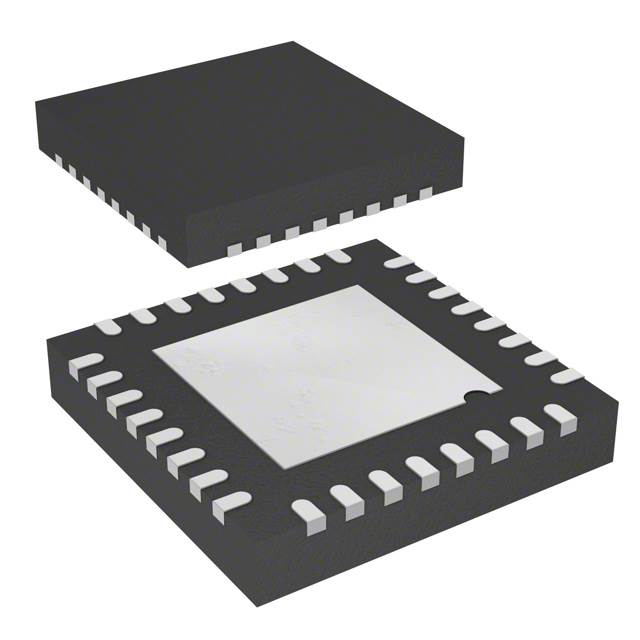
- Part No.:
- STA5620CTR
- Manufacturer:
- STMicroelectronics
- Category:
- RF Receivers
- Package:
- 32-VFQFN Exposed Pad
- Datasheet:
-
 STA5620CTR.pdf
- Description:
- IC RF FRONT END RECEIVER 32VFQFP
- Quantity:
- Payment:

- Shipping:

Inventory:3,537
Please send an inquiry. Send us your inquiry, and we will respond immediately.
Product details
Overview
STA5620CTR from STMicroelectronics is a fully integrated RF front-end receiver IC for GPS L1-band (1575.42 MHz) applications, implementing low-IF downconversion to 4.092 MHz with integrated 2-bit ADC, on-chip programmable PLL, and SPI interface. It delivers 105 dB typical conversion gain, 4.5 dB noise figure, and 55 dB VGA dynamic range in a QFN-32 package, enabling compact GNSS receivers in portable navigation devices.
For engineers reviewing the STA5620CTR datasheet, STA5620CTR pinout, STA5620CTR application, or STA5620CTR equivalent, this page provides verified technical context on its GPS signal chain role, IF architecture, AGC loop behavior, crystal oscillator support (10–40 MHz), and power control modes - all critical for baseband interface design and RF system integration.
Technical Context
The STA5620CTR uses a low-IF architecture (fIF = 4fO = 4.092 MHz) with image-reject mixer and polyphase VCO delivering quadrature LO signals. Its integrated IF filter provides 20 dB attenuation at 12.276 MHz and is auto-calibrated across process/temperature/voltage.
The device integrates a 2-bit ADC sampling at 16.368 MHz (16fO) generating SIGN and MAG bitstreams, with MAG duty cycle internally regulated to 33%. AGC is implemented via external capacitor on AGC_CTRL pin, enabling closed-loop VGA control achieving ~55 dB dynamic range.
Key Specifications
| Parameter | Value and Actual Design Meaning |
|---|---|
| RF Input Frequency | 1575.42 MHz - precisely matches GPS L1 carrier for direct reception without external up/downconversion. |
| IF Output Frequency | 4.092 MHz - fixed low-IF output enables simplified analog filtering and robust 2-bit digitization. |
| ADC Sampling Rate | 16.368 MHz - synchronous clock (GPS_CLK) provided to baseband; supports standard GPS correlation processing. |
| Noise Figure | 4.5 dB typ - ensures high sensitivity in weak-signal environments such as urban canyons or under foliage. |
| VGA Dynamic Range | 55 dB - accommodates >100 dB variation in received signal strength without manual gain staging. |
| Supply Voltage | 2.7 V typ - optimized for single-cell Li-ion or regulated 2.5–3.3 V portable power rails. |
| ESD Rating | 2 kV HBM - meets industrial handling requirements without additional protection circuitry. |
Pinout & Package
STA5620CTR is housed in a VFQFPN32 (5 × 5 × 1.0 mm) QFN package with exposed thermal pad, compatible with standard reflow profiles and offering low-inductance grounding via 7 GND pins.
| Pin/Terminal | Circuit Role | Design Meaning |
|---|---|---|
| RF_IN | RF input port | 50 Ω single-ended input for GPS L1 signal post-external SAW filter; requires DC blocking. |
| SIGN / MAG | Digital IF outputs | 2-bit ADC outputs: SIGN (LSB polarity), MAG (MSB magnitude); duty cycles fixed at 50% and 33% respectively. |
| GPS_CLK | Sampling clock output | 16.368 MHz CMOS clock sourced from VCO/XTAL divider; used by baseband for ADC timing and correlation. |
| XTAL_IN / XTAL_OUT | Crytal oscillator interface | Supports 10–40 MHz crystals or TCXO; internal CMOS inverter with programmable drive strength. |
| CHIP_EN / RF_EN | Power control inputs | Two-level enable: CHIP_EN = low → standby (1 µA); RF_EN = high → full RF/IF chain active. |
| SPI_CS/, SPI_CLK, SPI_DI, SPI_DO | Serial configuration interface | 4-wire SPI (mode 0, CPOL=0, CPHA=0) for register programming of PLL dividers, test modes, and power states. |
Key Features
| Feature | Design Value |
|---|---|
| On-chip programmable PLL | R-divider (1–63) and N-divider (56–4095) allow flexible reference clock selection and precise LO synthesis for GPS L1. |
| Integrated IF filter with calibration | Auto-compensated 6 MHz cutoff filter rejects out-of-band interferers and serves as anti-aliasing filter for 16.368 MHz ADC. |
| VGA gain regulation via AGC_CTRL | External capacitor on AGC_CTRL sets loop time constant; internal integrator maintains 33% MAG duty cycle for optimal ADC utilization. |
| Multiple power control modes | Standby (1 µA), crystal-only (1.5 mA), and full operation (15–19 mA) enable fine-grained power management in battery-powered GNSS modules. |
| Output slew-rate programmability | SPI-configurable rise/fall times (3 ns fast / 6 ns slow) on SIGN, MAG, GPS_CLK reduce EMI while maintaining timing integrity. |
Applications
| Portable Navigation Devices | Asset Tracking Units |
|---|---|
|
Use Scenario: Battery-powered handheld GPS units operating in variable signal environments including urban areas and dense foliage. IC Role / Device Role / Timing Role: RF front-end receiver converting GPS L1 RF to digital baseband (SIGN/MAG) with embedded clock (GPS_CLK) and AGC-controlled gain. Use Value: 4.5 dB noise figure and 55 dB VGA range maintain lock under weak-signal conditions; 19 mA active current extends runtime on coin-cell or Li-ion batteries. |
Use Scenario: Compact cellular/GNSS hybrid trackers mounted on shipping containers or fleet vehicles with intermittent power. IC Role / Device Role / Timing Role: Low-power GPS signal acquisition engine interfacing to host MCU via SPI; provides synchronized 16.368 MHz clock and 2-bit data streams. Use Value: Standby current of 1 µA enables multi-year battery life in sleep mode; QFN-32 footprint minimizes PCB area for space-constrained enclosures. |
| Wearable Fitness Trackers | Drones & UAVs |
|
Use Scenario: Ultra-low-power wrist-worn devices requiring continuous position logging with minimal impact on battery life. IC Role / Device Role / Timing Role: GPS RF receiver with programmable power modes (standby/crystal-only/full) controlled via CHIP_EN/RF_EN pins. Use Value: Crystal-only mode draws only 1.5 mA to maintain GPS_CLK for timekeeping during motionless periods, reducing average power by >90% vs. full operation. |
Use Scenario: High-dynamic GNSS receivers in UAV flight controllers needing immunity to RF blockers and vibration-induced oscillator drift. IC Role / Device Role / Timing Role: GPS L1 front-end with TCXO support (via XTAL_IN), calibrated IF filter, and image rejection >20 dB for robust signal acquisition during rapid maneuvers. Use Value: On-chip oscillator supports buffered XTAL_CLK output for external timing sync; 2 kV HBM ESD rating withstands airborne electrostatic discharge events. |
Equivalent & Alternatives
The following parts are listed as comparable options for similar GPS RF front-end applications.
| Alternative Part | Technical Difference | Application Difference | Selection Advice |
|---|---|---|---|
| MAX2769CTJ+ | Direct-conversion architecture (zero-IF); no integrated crystal oscillator; requires external LNA and filter. | Lacks on-chip PLL and crystal driver; demands more external components and board area. | Choose when ultra-low power (<10 mA) and zero-IF baseband compatibility are prioritized over integration. |
| GN3S v3 | USB-powered evaluation platform with discrete frontend; not a production-ready IC; includes FPGA-based correlator. | Designed for academic prototyping, not embedded OEM deployment; no tape-and-reel packaging or automotive qualification. | Use only for algorithm development or lab testing; not suitable for volume production or field-deployed hardware. |
Compared with MAX2769CTJ+, STA5620CTR reduces BOM count via integrated PLL, crystal oscillator, and IF filter; versus GN3S v3, it delivers a qualified, pin-defined IC ready for industrial GNSS module integration without FPGA dependencies.
Availability
STA5620CTR is available at Aetrix Electronics and suitable for portable navigation devices, asset tracking units, wearable fitness trackers, and drone positioning systems requiring stable component supply, long-lifecycle availability, and automotive-grade reliability.
Supply support for STA5620CTR includes scheduled delivery planning, volume procurement assistance, BOM continuity management, traceable sourcing, and lifecycle availability coordination for OEM customers, industrial embedded developers, connected-device designers, and electronics production programs.
Manufacturer
STMicroelectronics is a global semiconductor leader specializing in microcontrollers, analog ICs, and automotive-grade silicon, with broad expertise in RF, power management, and sensor technologies.
STA5620CTR belongs to ST's dedicated GNSS front-end product line, designed specifically for high-sensitivity, low-power GPS L1 reception in space- and energy-constrained embedded systems.
FAQ
What crystal frequency range does STA5620CTR support?
STA5620CTR supports external crystals from 10 MHz to 40 MHz, with internal CMOS oscillator circuitry capable of driving standard fundamental-mode crystals or TCXOs. The XTAL_IN/XTAL_OUT pins accept DC-blocked reference inputs, and the chip provides a buffered XTAL_CLK output for system timing distribution.
How is AGC implemented without an external controller?
AGC is implemented via an internal integrator that monitors the MAG output duty cycle and adjusts VGA gain to maintain 33% duty cycle. An external capacitor on the AGC_CTRL pin sets the loop time constant; no external DAC or processor intervention is required for automatic gain stabilization.
Can STA5620CTR operate with a TCXO instead of a crystal?
Yes - STA5620CTR accepts TCXO signals directly on the XTAL_IN pin (with XTAL_OUT left unconnected). The internal oscillator circuit bypasses the crystal driver and uses the applied reference clock for PLL and GPS_CLK generation, preserving timing accuracy and temperature stability.
What are the key differences between STA5620A and STA5620C variants?
STA5620A is automotive-grade (AEC-Q100 qualified, –40°C to +105°C ambient), while STA5620C is industrial-grade (–40°C to +85°C). Both share identical electrical specs, pinout, and functionality; only temperature range and qualification differ - STA5620CTR is the industrial tape-and-reel variant of STA5620C.
STA5620CTR Specifications
- Product attributes
- Attribute value
- Manufacturer:
- STMicroelectronics
- Series:
- -
- Package/Case:
- 32-VFQFN Exposed Pad
- Packaging:
- Tape & Reel (TR)
- Product Status:
- Active
- Frequency:
- -
- Sensitivity:
- -
- Data Rate (Max):
- -
- Modulation or Protocol:
- GPS
- Applications:
- -
- Current - Receiving:
- 19mA
- Data Interface:
- PCB, Surface Mount
- Memory Size:
- -
- Antenna Connector:
- PCB, Surface Mount
- Features:
- -
- Voltage - Supply:
- 2.5V ~ 3.3V
- Operating Temperature:
- -40°C ~ 85°C
- Grade:
- -
- Qualification:
- -
- Mounting Type:
- Surface Mount
- Supplier Device Package:
- 32-VFQFPN (5x5)
STA5620CTR FAQ
1.How can I place an order for STA5620CTR through Aetrix?
Please submit a Request for Quotation (RFQ) for STA5620CTR on Aetrix. Our sales agent will provide a competitive quotation and guide you through the order confirmation once you accept the terms.
2.Are the price and stock information for STA5620CTR reliable?
The price and inventory of STA5620CTR are updated periodically and may fluctuate due to market conditions. Stock and pricing data are typically refreshed every 24 hours. Quotation validity for STA5620CTR is usually 5 days.
3.What payment methods are accepted for STA5620CTR?
We accept Wire Transfer, PayPal, Credit Card, Western Union, MoneyGram, and Escrow for STA5620CTR transactions.
Note: Certain payment methods may incur a processing fee.
4.How is shipping managed for STA5620CTR?
STA5620CTR orders can be shipped via leading logistics carriers, including DHL, UPS, FedEx, TNT, or Registered Mail.
Once your STA5620CTR order is processed, you will receive an email with the shipment details and tracking number.
Note: Tracking information may take up to 24 hours to appear. Express delivery typically takes 3–5 business days.
5.How can I obtain technical support or documentation for STA5620CTR?
For technical support, including STA5620CTR datasheets, pinout diagrams, or application guidance, please contact our engineering support team. They can provide detailed documentation and assistance for your STA5620CTR requirements.
6.How does Aetrix verify that STA5620CTR is sourced from the original manufacturer or authorized distributors?
All STA5620CTR products on Aetrix are procured from qualified distributors and authorized channels. Our dedicated quality assurance team conducts strict verification, including traceability checks and, if necessary, third-party testing. This ensures that STA5620CTR meets industry standards.
7.What is the process for return or replacement of STA5620CTR?
All STA5620CTR units undergo pre-shipment inspection (PSI). If there is an issue with STA5620CTR, returns or replacements are accepted under the following conditions:
1.Quantity discrepancies, incorrect items, or visible external defects (such as breakage or corrosion), acknowledged by Aetrix.
2.The issue is reported within 90 days of delivery.
3.The STA5620CTR part is unused and in its original packaging.
Return procedure for STA5620CTR:
1.Submit a request within 90 days.
2.Obtain a Return Material Authorization (RMA) from Aetrix.
STA5620CTR Tags
-
MICRF220AYQS-TR
Microchip Technology
-
SX1239IMLTRT
Semtech Corporation
-
SI4356-B1A-FMR
Silicon Labs

-
SI4362-C2A-GMR
Silicon Labs

-
MAX1473EUI+T
Analog Devices Inc./Maxim Integrated

-
CMX992Q3
CML Micro

-
CMX994AQ4
CML Micro

-
MAX2112ETI+
Analog Devices Inc./Maxim Integrated
-
MAX2112ETI+T
Analog Devices Inc./Maxim Integrated
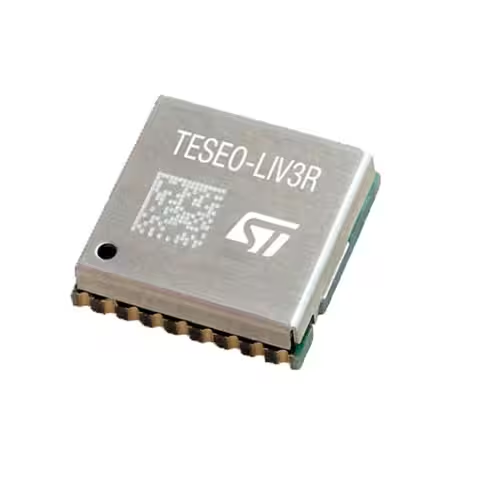
-
TESEO-LIV3R
STMicroelectronics
-
M20048-1
Antenova
-
CMX994EQ4
CML Micro
Tech Hub

Operational amplifier guide covering op amp basics, feedback, ideal vs real op amps, common configurations, buffer circuits, offset, bias current, gain-bandwidth, slew rate, rail-to-rail limits and sel…

Jumper cables guide covering safe connection order, red and black clamp placement, final ground connection, cable gauge, length, clamp quality, copper vs CCA cables, jump starter comparison and battery…

LDO regulator guide covering low dropout voltage, power dissipation, thermal design, PSRR, output noise, capacitor stability, adjustable LDO circuits, LDO vs buck converter and datasheet selection chec…

Conditional Access Module guide covering CAM meaning, CI/CI+ interface, smart card authorization, DVB security workflow, TV and set-top box compatibility, internal electronics, ESD protection, connecto…

Guide to electronic component obsolescence covering EOL risk, PCN/PDN notices, last-time buy planning, replacement options, form-fit-function validation, counterfeit risk and BOM lifecycle management.

18650 battery guide covering lithium-ion cell basics, 3.6V/3.7V voltage, 4.2V charging, mAh and Wh capacity, protected cells, chargers, BMS, series-parallel packs, holders, welding and sourcing checks.…

Hall effect sensor guide covering working principle, linear and digital sensors, Arduino circuits, current sensing, speed detection, automotive applications, A3144 examples, signal filtering and datash…

Product Change Notification guide for electronic components, covering PCN meaning, PCN vs PDN/EOL, common change types, risk levels, form-fit-function review, engineering validation, BOM control, LTB/L…

A practical guide to blend door actuators, covering HVAC function, symptoms, location, AC and heater issues, reset and calibration, replacement cost, electrical diagnosis, compatibility checks, and rep…

Engineering guide to Raspberry Pi alternatives, covering chip-level differences, Orange Pi, ROCK, Jetson, Banana Pi, NanoPi, Compute Module, Pico, GPIO, camera, HAT compatibility, and replacement risks…


