
 My Inquiry
 My Account


STMicroelectronics STA5630ATR
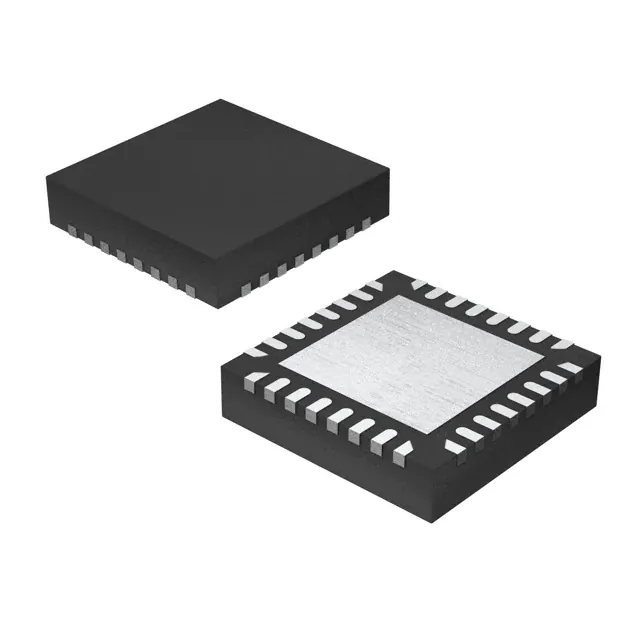
- Part No.:
- STA5630ATR
- Manufacturer:
- STMicroelectronics
- Category:
- RF Front End (LNA + PA)
- Package:
- 32-VFQFN Exposed Pad
- Datasheet:
-
 STA5630ATR.pdf
- Description:
- GPS/GALILEO RF FRONT-END
- Quantity:
- Payment:

- Shipping:

Inventory:2,833
Please send an inquiry. Send us your inquiry, and we will respond immediately.
Product details
Overview
STA5630ATR from STMicroelectronics is a GPS/Galileo RF front-end IC that down-converts 1575.42 MHz L1 signals to 4.092 MHz IF, integrates a high-performance LNA and 3-bit ADC (SIGN/MAG0/MAG1), operates at 1.8 V supply with <25 mW total power, and delivers 16.368 MHz GPS_CLK for baseband timing in battery-powered navigation systems.
For engineers reviewing the STA5630ATR datasheet, STA5630ATR pinout, STA5630ATR application, or STA5630ATR equivalent, key selection criteria include its integrated LNA gain control via SPI, dual reference clock support (10–52 MHz TCXO input), 1.2 V/1.8 V dual-rail supply architecture, and QFN-32 package compatibility with automotive-grade thermal range (−40 °C to +85 °C).
Technical Context
The STA5630ATR implements a direct-conversion RF front-end with image-rejection mixer, complex IF filter, and digital integrator for magnitude/sign bit generation. Its 3-bit ADC output feeds internal VGA gain control while supporting external SPI-based gain adjustment.
It accepts TCXO inputs from 10 MHz to 52 MHz and generates a buffered 16.368 MHz GPS_CLK output. Two default configuration modes (MODE pin-selectable: 16.368 MHz or 26 MHz reference) enable flexible system-level clocking without firmware initialization.
Key Specifications
| Parameter | Value and Actual Design Meaning |
|---|---|
| RF Input Frequency | 1575.42 MHz GPS L1 band - enables direct reception of standard GNSS signals without external upconversion. |
| IF Output Frequency | 4.092 MHz - matches common baseband sampling architectures for GPS signal processing. |
| ADC Resolution | 3-bit (SIGN + MAG0 + MAG1) - provides coarse but deterministic digitization for correlation-based acquisition. |
| Supply Voltage | 1.8 V (V18_IN/V18_IO) with multiple 1.2 V LDO outputs - simplifies power tree by eliminating external regulators for RF/IF/DIG sections. |
| Power Consumption | <25 mW - supports ultra-low-power portable and automotive telematics designs with strict thermal budgets. |
| Operating Temperature | −40 °C to +85 °C - certified for automotive-grade deployment without derating. |
| Reference Clock Range | 10–52 MHz TCXO input - accommodates common oscillator footprints and allows frequency-flexible system integration. |
Pinout & Package
STA5630ATR uses a VFQFPN32 (5 × 5 × 1.0 mm) package with exposed thermal pad (EP = GND). All supply pins are segregated by functional domain (RF/IF/DIG/LNA/VCO/ADC/MIXER) to minimize coupling and ensure stable low-noise operation.
| Pin/Terminal | Circuit Role | Design Meaning |
|---|---|---|
| CHIP_EN | Digital enable input | Active-high global power-down control; places device in standby with minimal leakage current. |
| MODE | Configuration mode selector | Hardwired pin defining default reference clock (16.368 MHz or 26 MHz) at power-up before SPI configuration. |
| LNA_IN / LNA_OUT | RF front-end differential path | DC-coupled LNA input/output interface; supports passive antenna with single SAW or active antenna configurations. |
| SIGN / MAG0 / MAG1 | Digital IF output bits | 3-bit signed-magnitude representation of filtered IF signal - directly usable by correlator engines in baseband processors. |
| GPS_CLK / TCXO_CLK / TCXO_IN | Clock I/O interface | Provides synchronized 16.368 MHz sampling clock to baseband and buffers external TCXO for system-wide timing distribution. |
| V12_RFA / V12_LNA / V12_IF / etc. | Domain-specific supply rails | 32-pin layout separates 1.2 V domains per analog block to suppress cross-talk and maintain SNR > 35 dB. |
Key Features
| Feature | Design Value |
|---|---|
| Integrated LNA with gain control | Reduces external component count to one RF SAW filter in basic configuration, lowering BOM cost and PCB area. |
| On-chip LDOs for all analog domains | Eliminates need for six discrete 1.2 V regulators, simplifying power design and improving supply rejection ratio (PSRR). |
| Configurable reference clock modes | Enables hardware-default operation at 16.368 MHz or 26 MHz without SPI programming - accelerates cold-start time. |
| Test points TP_IF_P / TP_IF_N | Facilitates production-level RF alignment and IF chain verification without invasive probing of sensitive analog nodes. |
| Automotive-grade qualification | STA5630ATR variant meets AEC-Q100 stress test requirements for temperature cycling and HTOL, enabling use in infotainment and ADAS modules. |
Applications
| Automotive Telematics | Portable Navigation Devices |
|---|---|
Use Scenario: Integrated GPS module in vehicle infotainment system with remote active antenna. IC Role / Device Role / Timing Role: RF front-end providing digitized IF output and synchronized 16.368 MHz clock to baseband processor. Use Value: Enables precise position lock under dynamic multipath conditions using LNA+RFA dual-gain staging and TCXO-buffered timing. | Use Scenario: Battery-powered handheld navigator with passive patch antenna and single-SAW front-end. IC Role / Device Role / Timing Role: Low-power GPS signal conditioner delivering 3-bit IF samples and GPS_CLK to application SoC. Use Value: Achieves 22-hour runtime on single-cell Li-ion via sub-25 mW consumption and 1.8 V core supply. |
| Asset Tracking Units | Wearable Location Tags |
Use Scenario: Compact cellular-GPS tracker mounted on shipping container with intermittent power. IC Role / Device Role / Timing Role: Standby-ready RF receiver with CHIP_EN-controlled wake-up and fast TCXO lock (<10 ms). Use Value: Delivers reliable cold-start TTFF <35 s using MODE-selected 16.368 MHz reference and internal LDO retention. | Use Scenario: Bluetooth LE wearable with embedded GPS for activity mapping. IC Role / Device Role / Timing Role: Ultra-low-power GNSS front-end interfacing to dual-core MCU via SPI and GPIO. Use Value: Maintains −160 dBm sensitivity with 3-bit ADC quantization optimized for correlation-based acquisition algorithms. |
Equivalent & Alternatives
The following parts are listed as comparable options for similar GPS RF front-end applications.
| Alternative Part | Technical Difference | Application Difference | Selection Advice |
|---|---|---|---|
| MAX2769CTJ+ | Single-supply 3.3 V operation; 4-bit ADC; no integrated LDOs; requires external regulators. | Higher power (45 mW); broader 1.5–2.5 GHz tuning range; suited for multi-band GNSS + GLONASS. | Select when multi-constellation support and higher dynamic range outweigh power and BOM simplicity. |
| GN101A | 2.8 V supply; integrated TCXO driver; 2-bit ADC; no MODE pin; fixed 16.368 MHz reference only. | Lower integration (no LDOs for RF/IF domains); narrower −30 °C to +75 °C temp range; non-automotive grade. | Select for cost-sensitive consumer wearables where automotive qualification and wide temp range are not required. |
Compared with MAX2769CTJ+ and GN101A, STA5630ATR uniquely balances automotive-grade reliability, ultra-low power, and full clock flexibility - making it optimal for space-constrained, battery-aware navigation systems requiring guaranteed −40 °C startup and seamless TCXO interoperability.
Availability
STA5630ATR is available at Aetrix Electronics and suitable for automotive telematics, portable navigation devices, asset tracking units, and wearable location tags requiring stable component supply across extended temperature ranges and long production lifecycles.
Supply support for STA5630ATR includes scheduled delivery planning, volume procurement assistance, BOM continuity management, traceable sourcing, and lifecycle availability coordination for OEM customers, industrial embedded developers, connected-device designers, and electronics production programs.
Manufacturer
STMicroelectronics is a global semiconductor leader headquartered in Geneva, designing and manufacturing microcontrollers, sensors, power management ICs, and analog/mixed-signal chips for industrial, automotive, and consumer markets.
The STA5630 belongs to ST's GNSS Front-End product line, engineered specifically for low-power, high-sensitivity GPS/Galileo signal acquisition in resource-constrained mobile and automotive platforms.
FAQ
What reference clock frequencies does STA5630ATR support?
STA5630ATR accepts TCXO inputs from 10 MHz to 52 MHz and generates a precise 16.368 MHz GPS_CLK output. Its MODE pin selects between 16.368 MHz or 26 MHz default reference at power-up; other frequencies are configured via SPI. This flexibility supports diverse oscillator footprints and system clocking strategies without redesigning the timing network.
How does the 3-bit ADC output interface with baseband processors?
The SIGN, MAG0, and MAG1 outputs deliver a signed-magnitude representation of the 4.092 MHz IF signal. These CMOS-level digital signals connect directly to correlator inputs in GNSS baseband ICs or FPGAs. No external level-shifting or serialization is needed, and the timing aligns with GPS_CLK edges for deterministic sampling capture.
Is STA5630ATR qualified for automotive applications?
Yes - the "A" suffix in STA5630ATR denotes automotive qualification per AEC-Q100 Grade 3 (−40 °C to +85 °C). It includes enhanced ESD protection, extended temperature validation, and lot-level traceability. The device is deployed in production infotainment and telematics modules where reliability under thermal cycling and vibration is critical.
Can STA5630ATR operate with an active antenna?
Yes - the RF chain supports both passive and active antenna topologies. With an active antenna, the signal may be routed to either LNA_IN (for maximum sensitivity) or RFA_IN (for improved linearity under strong interferers), selected via external biasing and matching networks. The datasheet provides two distinct application schematics for each configuration.
STA5630ATR Specifications
- Product attributes
- Attribute value
- Manufacturer:
- STMicroelectronics
- Series:
- -
- Packaging:
- Tape & Reel (TR)
- Product Status:
- Active
- RF Type:
- GPS
- Frequency:
- 1.575GHz ~ 4.092GHz
- Features:
- 1.8V Supply Voltage
- Grade:
- -
- Qualification:
- -
- Supplier Device Package:
- 32-QFN (5x5)
STA5630ATR FAQ
1.How can I place an order for STA5630ATR through Aetrix?
Please submit a Request for Quotation (RFQ) for STA5630ATR on Aetrix. Our sales agent will provide a competitive quotation and guide you through the order confirmation once you accept the terms.
2.Are the price and stock information for STA5630ATR reliable?
The price and inventory of STA5630ATR are updated periodically and may fluctuate due to market conditions. Stock and pricing data are typically refreshed every 24 hours. Quotation validity for STA5630ATR is usually 5 days.
3.What payment methods are accepted for STA5630ATR?
We accept Wire Transfer, PayPal, Credit Card, Western Union, MoneyGram, and Escrow for STA5630ATR transactions.
Note: Certain payment methods may incur a processing fee.
4.How is shipping managed for STA5630ATR?
STA5630ATR orders can be shipped via leading logistics carriers, including DHL, UPS, FedEx, TNT, or Registered Mail.
Once your STA5630ATR order is processed, you will receive an email with the shipment details and tracking number.
Note: Tracking information may take up to 24 hours to appear. Express delivery typically takes 3–5 business days.
5.How can I obtain technical support or documentation for STA5630ATR?
For technical support, including STA5630ATR datasheets, pinout diagrams, or application guidance, please contact our engineering support team. They can provide detailed documentation and assistance for your STA5630ATR requirements.
6.How does Aetrix verify that STA5630ATR is sourced from the original manufacturer or authorized distributors?
All STA5630ATR products on Aetrix are procured from qualified distributors and authorized channels. Our dedicated quality assurance team conducts strict verification, including traceability checks and, if necessary, third-party testing. This ensures that STA5630ATR meets industry standards.
7.What is the process for return or replacement of STA5630ATR?
All STA5630ATR units undergo pre-shipment inspection (PSI). If there is an issue with STA5630ATR, returns or replacements are accepted under the following conditions:
1.Quantity discrepancies, incorrect items, or visible external defects (such as breakage or corrosion), acknowledged by Aetrix.
2.The issue is reported within 90 days of delivery.
3.The STA5630ATR part is unused and in its original packaging.
Return procedure for STA5630ATR:
1.Submit a request within 90 days.
2.Obtain a Return Material Authorization (RMA) from Aetrix.
STA5630ATR Tags
-
RFX2401C
Skyworks Solutions Inc.
.jpg)
-
NRF21540-QDAA-R
Nordic Semiconductor ASA
-
NRF21540-QDAA-R7
Nordic Semiconductor ASA
-
RFX2411N
Skyworks Solutions Inc.
-
SE2438T-R
Skyworks Solutions Inc.
-
SKY66118-11
Skyworks Solutions Inc.
-
SKY85712-21
Skyworks Solutions Inc.

-
SKY85329-11
Skyworks Solutions Inc.
-
SKY66422-11
Skyworks Solutions Inc.

-
SKY66119-11
Skyworks Solutions Inc.
-
NJG1156PCD-TE1
Nisshinbo Micro Devices Inc.
-
SE2435L-R
Skyworks Solutions Inc.
Tech Hub

A practical engineering guide to 3.3V and 5V logic compatibility, input thresholds, resistor dividers, translator ICs, MOSFET level shifting, I2C pull-ups, timing limits and power-sequencing risks.

The 74HC595 uses push-pull logic outputs, while the TPIC6B595 uses 50 V open-drain DMOS sinks for higher-power loads. This guide compares timing, current limits, 3.3 V interfacing, load wiring, thermal…

The 74HC595 converts serial data into eight stable parallel outputs. This guide covers pin functions, shift and storage timing, OE and MR behavior, drive-current limits, cascading, voltage compatibilit…

A technical comparison of level-sensitive latches and edge-triggered flip-flops, covering timing windows, setup and hold limits, master–slave operation, time borrowing, race-through, HDL inference and…

A D latch stores one bit while Enable controls when data can pass. This reference covers gate-level operation, truth tables, transparency, setup and hold timing, LE versus OE, common ICs and practical …

An SR latch stores one bit through cross-coupled feedback. This engineering reference covers NOR and NAND implementations, truth tables, forbidden-state recovery, gated operation, switch debouncing, fa…

Latch circuits retain one bit through feedback. This technical reference covers SR and D latches, truth tables, transparency, timing limits, latch-versus-flip-flop behavior, applications and common log…

An engineering guide to LED driver operation, constant-current and constant-voltage outputs, linear and switching topologies, dimming, IC selection, calculations, replacement compatibility, and fault c…

Operational amplifier guide covering op amp basics, feedback, ideal vs real op amps, common configurations, buffer circuits, offset, bias current, gain-bandwidth, slew rate, rail-to-rail limits and sel…

Jumper cables guide covering safe connection order, red and black clamp placement, final ground connection, cable gauge, length, clamp quality, copper vs CCA cables, jump starter comparison and battery…


