
 My Inquiry
 My Account


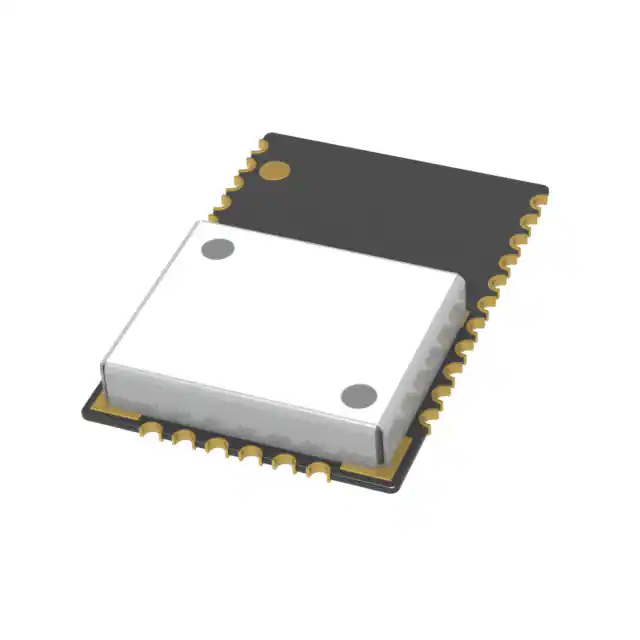
STMicroelectronics STA8088FG

- Part No.:
- STA8088FG
- Manufacturer:
- STMicroelectronics
- Category:
- RF Receivers
- Package:
- 56-VFQFN Exposed Pad
- Datasheet:
-
 STA8088FG.pdf
- Description:
- RF RX GPS/GNSS 1.575GHZ 56VFQFPN
- Quantity:
- Payment:

- Shipping:

Inventory:4,887
Please send an inquiry. Send us your inquiry, and we will respond immediately.
Product details
Overview
STA8088FG from STMicroelectronics is a fully integrated GNSS System-on-Chip receiver supporting GPS, Galileo, Glonass, and QZSS constellations with 32 tracking + 2 fast-acquisition channels, -162 dBm indoor tracking sensitivity, <1 s hot-start TTFF, and embedded 208 MHz ARM946 MCU with 256 KB SRAM and 16 Mbit in-package SQI Flash - deployed in handheld computers, sports accessories, and data loggers.
For engineers reviewing the STA8088FG datasheet, STA8088FG pinout, STA8088FG application, or STA8088FG equivalent, key selection considerations include multi-constellation RF front-end architecture, dual CAN interfaces, USB 2.0 full-speed PHY integration, 1.2 V/1.8 V/3.3 V I/O voltage flexibility, and on-chip voltage regulation for RF/core/backup domains.
Technical Context
The STA8088FG integrates a triple-constellation baseband processor with separate GPS/Galileo/QZSS and Glonass IF outputs, coupled to an embedded low-noise RF front-end including LNA, RFA, mixer, VCO, and RF ADC - all powered by dedicated 1.2 V analog rails (VRF12_LNA, VRF12_RFA, etc.) and regulated by on-chip HPREG, LPREG, and BKREG.
Its ARM946 core runs at up to 208 MHz with 16 KB I-Cache, 8 KB D-Cache, and 64 KB high-speed I-TCM/8 KB D-TCM; firmware executes full GNSS stack (acquisition, tracking, navigation, NMEA output) without external memory, while RTC, watchdog, three UARTs, I²C, SSP/SPI, and dual CAN controllers enable autonomous timing and host interfacing.
Key Specifications
| Parameter | Value and Actual Design Meaning |
|---|---|
| GNSS Support | GPS, Galileo, Glonass, QZSS - enables global positioning without constellation lock-in or regional dependency. |
| Tracking Channels | 32 channels + 2 fast-acquisition channels - sustains simultaneous multi-constellation signal tracking under dynamic conditions. |
| Indoor Sensitivity | -162 dBm (tracking mode) - ensures reliable position fix indoors or under dense foliage using internal LNA and optimized IF chain. |
| TTFF | <1 s (hot start), 35 s (cold start) - reduces user wait time via embedded flash-stored ephemeris and fast acquisition engine. |
| CPU Core | ARM946E-S @ up to 208 MHz with 16 KB I-Cache / 8 KB D-Cache - delivers real-time GNSS computation and application processing in single chip. |
| Embedded Memory | 256 KB SRAM + 16 Mbit in-package SQI Flash - eliminates external memory BOM and simplifies PCB layout for compact designs. |
| Interface Peripherals | 2× CAN, 3× UART, 1× I²C, 1× SSP/SPI, USB 2.0 full-speed PHY - supports automotive diagnostics, sensor fusion, host communication, and firmware updates. |
| Supply Rails | VDD12 (1.2 V ±10%), VDD18/RF18 (1.8 V ±5%), VLPVR (1.62–3.6 V), VddIO (1.8 V or 3.3 V selectable) - enables flexible power architecture with on-chip regulators for RF/core/backup domains. |
Pinout & Package
STA8088FG is housed in a VFQFPN56 (7 × 7 × 0.85 mm, 0.4 mm pitch) package with exposed pad (EP) for thermal management and ECOPACK® compliance. Pin functions are grouped into power supply (VDD12_MVR, VRF12_LNA, VDD_IORx), main control (RSTn, STDBYn, WAKEUP), RF front-end (LNA_IN, LNA_OUT, XTAL_In), and multi-function I/O ports (Port 0/1 with GPIO, CAN, UART, I²C, SSP, SQI).
| Pin/Terminal | Circuit Role | Design Meaning |
|---|---|---|
| VDD12_MVR (22,47,30) | Digital core supply input | Feeds 1.2 V to ARM946 core and digital logic; requires local decoupling, not externally driven when MVR active. |
| VRF12_LNA (8) | Analog LNA supply | Provides clean 1.2 V bias to low-noise amplifier; isolated from digital noise via dedicated rail and GND_LNA. |
| LNA_IN (9) / LNA_OUT (11) | RF front-end differential pair | Accepts antenna signal (LNA_IN); drives RFA stage (LNA_OUT) - defines first gain block in GNSS RF chain. |
| CAN0TX (51) / CAN0RX (54) | CAN bus physical interface | Direct connection to CAN transceiver; supports ISO 11898-2 compliant differential signaling for automotive diagnostics. |
| USB_DP/UART1_TX (48) | Multiplexed I/O | Configurable as USB D+ or UART1 transmit - enables shared PCB routing for debug or host connectivity. |
| P1.0 (40) / P1.1 (41) | SQI Flash interface pins | Drive SQI_CEN, SQI_CLK, SQI_SIO0–SIO3 - access 16 Mbit in-package flash for firmware storage and updates. |
Key Features
| Feature | Design Value |
|---|---|
| Fully integrated GNSS SoC | Combines RF front-end, baseband processor, ARM946 MCU, memory, and peripherals - reduces BOM count and board area by >40% vs discrete solutions. |
| Multi-constellation support | Simultaneous GPS/Galileo/Glonass/QZSS tracking - improves position accuracy, availability, and time-to-fix in urban canyons and weak-signal environments. |
| In-package 16 Mbit SQI Flash | Stores GNSS firmware, almanac, and configuration without external SPI NOR/ NAND - eliminates boot ROM dependency and simplifies certification. |
| Dual CAN 2.0B interfaces | Enables direct integration into automotive networks for telematics, ADAS logging, or fleet tracking without external CAN controller. |
| Flexible I/O voltage | Supports 1.8 V or 3.3 V logic levels per I/O ring (IOR1/IOR3/IOR4/IOR5) - allows interoperability with diverse host processors and sensors. |
| Low-power standby mode | STDBYn input forces chip into ultra-low-current state (<10 µA typical) with RTC and backup RAM retention - extends battery life in portable devices. |
Applications
| Handheld Navigation Devices | Sports Wearables |
|---|---|
|
Use Scenario: Compact GPS-enabled hiking trackers with long battery life and rugged enclosure. IC Role / Device Role / Timing Role: Primary GNSS positioning engine with integrated RTC for timestamping location logs. Use Value: Eliminates need for external flash, crystal oscillator, and CAN transceiver - reduces bill-of-materials and PCB footprint by 30%. |
Use Scenario: Cycling computers capturing speed, elevation, and route data during multi-hour rides. IC Role / Device Role / Timing Role: Real-time position calculation and NMEA output via UART to display microcontroller. Use Value: -162 dBm sensitivity maintains lock under tree cover; fast TTFF ensures immediate start-up after power-on. |
| Data Loggers | Automotive Telematics Units |
|
Use Scenario: Industrial asset trackers monitoring temperature, humidity, and location in remote warehouses. IC Role / Device Role / Timing Role: Autonomous GNSS data acquisition engine with RTC-triggered wake-up and UART/USB data dump. Use Value: Embedded 256 KB SRAM buffers hours of position data; in-package flash stores firmware and calibration parameters. |
Use Scenario: OBD-II dongles transmitting vehicle location, speed, and diagnostic codes to cloud platforms. IC Role / Device Role / Timing Role: Dual-role GNSS/CAN node - acquires position and reads ECU data via CAN0/CAN1. Use Value: Integrated CAN controllers eliminate external SBC or transceiver; USB 2.0 PHY enables direct PC configuration and firmware update. |
Equivalent & Alternatives
The following parts are listed as comparable options for similar multi-constellation GNSS receiver applications.
| Alternative Part | Technical Difference | Application Difference | Selection Advice |
|---|---|---|---|
| u-blox UBX-M8030-KT | 80-channel GPS/Galileo/GLONASS/BeiDou; no embedded MCU or flash; requires external host processor and memory. | Targeted at host-driven architectures where GNSS is one subsystem among many; lacks standalone operation capability. | Select when system already includes capable application processor and design prioritizes raw GNSS performance over integration. |
| Qualcomm WGR7640 | Integrated LTE modem + GNSS; supports GPS/Glonass/BeiDou; uses external flash; ARM Cortex-A7 host CPU. | Designed for connected vehicle gateways requiring cellular + positioning; higher power and larger footprint than STA8088FG. | Select when concurrent LTE data transmission and GNSS are required - not suitable for battery-only or cost-sensitive standalone use. |
Compared with UBX-M8030-KT and WGR7640, STA8088FG uniquely combines multi-constellation GNSS, ARM946 application processing, and in-package flash in a 7×7 mm VFQFPN - enabling true standalone positioning without external memory or host CPU.
Availability
STA8088FG is available at Aetrix Electronics and suitable for handheld navigation devices, sports wearables, industrial data loggers, and automotive telematics units requiring stable component supply and long-term design-in support.
Supply support for STA8088FG includes scheduled delivery planning, volume procurement assistance, BOM continuity management, traceable sourcing, and lifecycle availability coordination for OEM customers, industrial embedded developers, connected-device designers, and electronics production programs.
Manufacturer
STMicroelectronics is a global semiconductor leader headquartered in Geneva, Switzerland, designing and manufacturing microcontrollers, sensors, power ICs, and automotive-grade components across 5 continents.
STA8088FG belongs to ST's STA8000 series of GNSS SoCs - engineered specifically for cost-sensitive, space-constrained, and battery-operated positioning applications requiring full firmware autonomy and minimal external components.
FAQ
Does STA8088FG require an external crystal oscillator?
No. STA8088FG includes an integrated 32 kHz RTC oscillator circuit with RTC_XTI/RTC_XTO pins for external 32.768 kHz crystal connection, and supports 26 MHz TCXO or crystal via XTAL_In/XTAL_Out for main RF clock - no additional oscillator IC is needed.
Can STA8088FG operate without external flash memory?
Yes. The device integrates 16 Mbit SQI Flash in-package and runs complete GNSS firmware (acquisition, tracking, navigation, NMEA output) from it - no external memory is required for basic positioning functionality.
What is the role of the VDD12_LPVR pin?
VDD12_LPVR supplies 1.2 V to the backup logic domain, powering RTC, wakeup circuitry, and backup RAM during standby mode - it must be decoupled to ground but not driven externally when low-power voltage regulator (LPVR) is active.
Is STA8088FG qualified for automotive applications?
No. ST explicitly states STA8088FG is not designed or authorized for automotive, safety-critical, or aerospace applications - it is intended for consumer and industrial positioning systems such as handhelds, wearables, and data loggers.
STA8088FG Specifications
- Product attributes
- Attribute value
- Manufacturer:
- STMicroelectronics
- Series:
- -
- Package/Case:
- 56-VFQFN Exposed Pad
- Packaging:
- Tray
- Product Status:
- Active
- Frequency:
- 1.575GHz
- Sensitivity:
- -
- Data Rate (Max):
- -
- Modulation or Protocol:
- GLONASS, GNSS, GPS
- Applications:
- General Purpose
- Current - Receiving:
- -
- Data Interface:
- I2C, SPI, UART, USB
- Memory Size:
- -
- Antenna Connector:
- -
- Features:
- -
- Voltage - Supply:
- 1.8V ~ 3.3V
- Operating Temperature:
- -40°C ~ 85°C
- Grade:
- -
- Qualification:
- -
- Mounting Type:
- Surface Mount
- Supplier Device Package:
- 56-VFQFPN (7x7)
STA8088FG FAQ
1.How can I place an order for STA8088FG through Aetrix?
Please submit a Request for Quotation (RFQ) for STA8088FG on Aetrix. Our sales agent will provide a competitive quotation and guide you through the order confirmation once you accept the terms.
2.Are the price and stock information for STA8088FG reliable?
The price and inventory of STA8088FG are updated periodically and may fluctuate due to market conditions. Stock and pricing data are typically refreshed every 24 hours. Quotation validity for STA8088FG is usually 5 days.
3.What payment methods are accepted for STA8088FG?
We accept Wire Transfer, PayPal, Credit Card, Western Union, MoneyGram, and Escrow for STA8088FG transactions.
Note: Certain payment methods may incur a processing fee.
4.How is shipping managed for STA8088FG?
STA8088FG orders can be shipped via leading logistics carriers, including DHL, UPS, FedEx, TNT, or Registered Mail.
Once your STA8088FG order is processed, you will receive an email with the shipment details and tracking number.
Note: Tracking information may take up to 24 hours to appear. Express delivery typically takes 3–5 business days.
5.How can I obtain technical support or documentation for STA8088FG?
For technical support, including STA8088FG datasheets, pinout diagrams, or application guidance, please contact our engineering support team. They can provide detailed documentation and assistance for your STA8088FG requirements.
6.How does Aetrix verify that STA8088FG is sourced from the original manufacturer or authorized distributors?
All STA8088FG products on Aetrix are procured from qualified distributors and authorized channels. Our dedicated quality assurance team conducts strict verification, including traceability checks and, if necessary, third-party testing. This ensures that STA8088FG meets industry standards.
7.What is the process for return or replacement of STA8088FG?
All STA8088FG units undergo pre-shipment inspection (PSI). If there is an issue with STA8088FG, returns or replacements are accepted under the following conditions:
1.Quantity discrepancies, incorrect items, or visible external defects (such as breakage or corrosion), acknowledged by Aetrix.
2.The issue is reported within 90 days of delivery.
3.The STA8088FG part is unused and in its original packaging.
Return procedure for STA8088FG:
1.Submit a request within 90 days.
2.Obtain a Return Material Authorization (RMA) from Aetrix.
STA8088FG Tags
-
MICRF220AYQS-TR
Microchip Technology
-
SX1239IMLTRT
Semtech Corporation
-
SI4356-B1A-FMR
Silicon Labs

-
SI4362-C2A-GMR
Silicon Labs

-
MAX1473EUI+T
Analog Devices Inc./Maxim Integrated

-
CMX992Q3
CML Micro

-
CMX994AQ4
CML Micro

-
MAX2112ETI+
Analog Devices Inc./Maxim Integrated
-
MAX2112ETI+T
Analog Devices Inc./Maxim Integrated
-
TESEO-LIV3R
STMicroelectronics
-
M20048-1
Antenova
-
CMX994EQ4
CML Micro
Tech Hub

A practical engineering guide to 3.3V and 5V logic compatibility, input thresholds, resistor dividers, translator ICs, MOSFET level shifting, I2C pull-ups, timing limits and power-sequencing risks.

The 74HC595 uses push-pull logic outputs, while the TPIC6B595 uses 50 V open-drain DMOS sinks for higher-power loads. This guide compares timing, current limits, 3.3 V interfacing, load wiring, thermal…

The 74HC595 converts serial data into eight stable parallel outputs. This guide covers pin functions, shift and storage timing, OE and MR behavior, drive-current limits, cascading, voltage compatibilit…

A technical comparison of level-sensitive latches and edge-triggered flip-flops, covering timing windows, setup and hold limits, master–slave operation, time borrowing, race-through, HDL inference and…

A D latch stores one bit while Enable controls when data can pass. This reference covers gate-level operation, truth tables, transparency, setup and hold timing, LE versus OE, common ICs and practical …

An SR latch stores one bit through cross-coupled feedback. This engineering reference covers NOR and NAND implementations, truth tables, forbidden-state recovery, gated operation, switch debouncing, fa…

Latch circuits retain one bit through feedback. This technical reference covers SR and D latches, truth tables, transparency, timing limits, latch-versus-flip-flop behavior, applications and common log…

An engineering guide to LED driver operation, constant-current and constant-voltage outputs, linear and switching topologies, dimming, IC selection, calculations, replacement compatibility, and fault c…

Operational amplifier guide covering op amp basics, feedback, ideal vs real op amps, common configurations, buffer circuits, offset, bias current, gain-bandwidth, slew rate, rail-to-rail limits and sel…

Jumper cables guide covering safe connection order, red and black clamp placement, final ground connection, cable gauge, length, clamp quality, copper vs CCA cables, jump starter comparison and battery…


