
 My Inquiry
 My Account


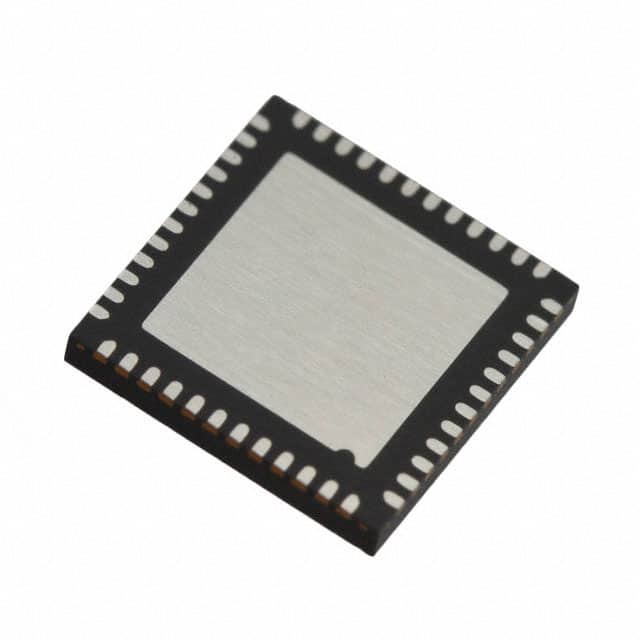
STMicroelectronics STHDLS101TQTR
- Part No.:
- STHDLS101TQTR
- Manufacturer:
- STMicroelectronics
- Category:
- Video Processing
- Package:
- 48-QFN
- Datasheet:
-
 STHDLS101TQTR.pdf
- Description:
- IC VIDEO LEVEL SHIFTER 48QFN
- Quantity:
- Payment:

- Shipping:

Inventory:1,527
Please send an inquiry. Send us your inquiry, and we will respond immediately.
Product details
Overview
STHDLS101TQTR from STMicroelectronics is an AC-coupled HDMI 1.3 level shifter IC that converts low-swing differential TMDS inputs (e.g., from GMCH PCIe outputs) to 3.3 V DC-coupled HDMI-compliant outputs, supporting up to 2.7 Gbps per lane, integrated 50 Ω input termination, and configurable HPD output. It enables HDMI video routing on PC/notebook motherboards where AC-coupled 1.2 V TMDS signals must be shifted to 3.3 V for HDMI connectors.
For engineers reviewing the STHDLS101TQTR datasheet, STHDLS101TQTR pinout, STHDLS101TQTR application, or STHDLS101TQTR equivalent, key selection considerations include TMDS lane bandwidth (2.7 Gbps), intra-pair skew (<10 ps), ESD rating (±6 kV HBM), DDC pass-gate level shifting (3.3 V ↔ 5 V), and OE_N-controlled power-down mode with high-Z outputs.
Technical Context
The device implements a passive, re-timing-free level translation architecture: four independent current-steering TMDS lanes accept AC-coupled differential inputs (0.175–1.2 Vp-p, 50 Ω terminated), drive open-drain outputs compliant with HDMI 1.3 DC-coupled specifications (400–600 mV swing, <125 ps rise/fall), and maintain inter-pair skew <250 ps and intra-pair skew <10 ps.
It integrates three functional subsystems: (1) TMDS level shifting with slew-rate control and fail-safe outputs; (2) bidirectional DDC level shifting via NMOS pass-gates with 27–40 Ω RON and <15 ns propagation delay; and (3) configurable HPD interface with 160 kΩ internal pull-down on HPD_SINK and FUNCTION3-selectable open-drain/buffered HPD_SOURCE output.
Key Specifications
| Parameter | Value and Actual Design Meaning |
|---|---|
| Max Data Rate | 2.7 Gbps per TMDS lane - supports HDMI 1.3 1080p60 with 12-bit color depth |
| Supply Voltage | 3.3 V ±10% - single-rail operation eliminates need for dual supplies |
| Input Termination | 50 Ω ±10% integrated resistors - eliminates external termination components on AC-coupled GMCH inputs |
| Intra-pair Skew | <10 ps - ensures pixel-level timing integrity across D+/D− pairs |
| Inter-pair Skew | <250 ps - maintains lane-to-lane alignment for multi-channel HDMI video |
| ESD Protection | ±6 kV HBM on all I/O pins - meets system-level robustness requirements for consumer electronics interfaces |
| DDC Pass-gate RON | 27–40 Ω - enables low-loss, bidirectional 3.3 V/5 V DDC signal translation without external logic |
Pinout & Package
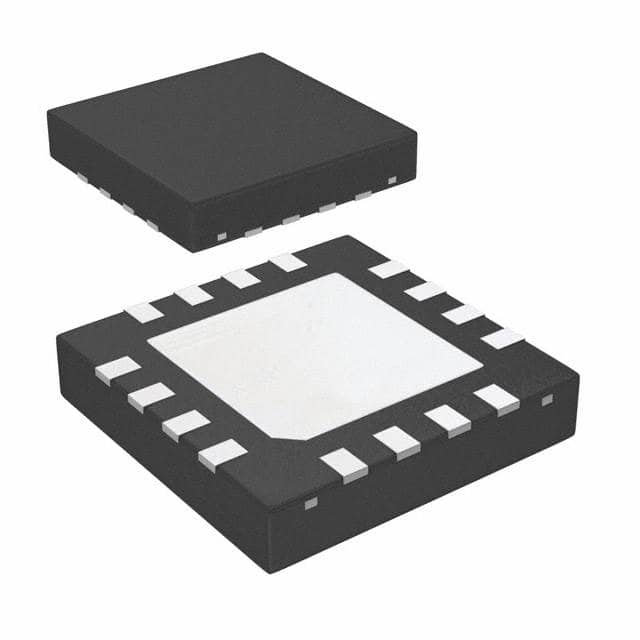
STHDLS101TQTR is housed in a 48-pin QFN package (7 mm × 7 mm, 0.5 mm pitch) with exposed thermal pad. Pin layout supports compact HDMI interface routing on dense motherboard layouts.
| Pin/Terminal | Circuit Role | Design Meaning |
|---|---|---|
| GND (Pins 1, 5, 12, 18, 24, 27, 31, 36, 37, 43) | Power ground reference | 10 dedicated ground pins minimize ground bounce and ensure stable common-mode reference for all TMDS and DDC paths |
| VCC33 (Pins 2, 11, 15, 21, 26, 33, 40, 46) | 3.3 V supply input | 8 power pins distributed across package edges support low-impedance decoupling and reduce IR drop under full TMDS load |
| IN_Dx+/IN_Dx− (Pins 38–48, 39–45, 41–42, 39–45) | AC-coupled differential TMDS inputs | Four matched differential pairs accept low-swing GMCH PCIe TMDS signals (0.175–1.2 Vp-p) with integrated 50 Ω termination |
| OUT_Dx+/OUT_Dx− (Pins 13–14, 16–17, 19–20, 22–23) | HDMI-compliant TMDS outputs | Current-steering open-drain outputs deliver 400–600 mV swing into 50 Ω loads, meeting HDMI 1.3 DC-coupled spec |
| HPD_SINK (Pin 30) | HDMI connector hot-plug detect input | 5 V-tolerant input with integrated 160 kΩ pull-down - directly connects to HDMI port HPD line without external resistor |
| HPD_SOURCE (Pin 7) | Configurable HPD output | FUNCTION3-selectable: open-drain (pull-up required) or buffered 0–3.3 V output - adapts to source-side HPD signaling requirements |
| OE_N (Pin 25) | Output enable / power-down control | Active-low signal disables TMDS path (high-Z outputs, disabled inputs) and cuts bias current - enables dynamic power gating |
| SCL_SOURCE/SDA_SOURCE (Pins 8–9) | 3.3 V DDC interface to GMCH | Connect to graphics controller's 3.3 V DDC bus; integrated NMOS pass-gates shift voltage to 5 V sink side |
| SCL_SINK/SDA_SINK (Pins 28–29) | 5 V DDC interface to HDMI connector | Terminate to 5 V externally; pass-gate RON ≤40 Ω ensures minimal signal degradation at 100 kHz DDC clock rate |
Key Features
| Feature | Design Value |
|---|---|
| No re-timing or configuration required | Stateless analog level shifting - eliminates firmware dependencies, clock domain crossing, and initialization sequences |
| Fail-safe TMDS outputs | Outputs remain high-Z or clamped during power-up/power-down - prevents backdrive damage to connected HDMI sinks |
| Output slew rate control | Controlled edge rates reduce broadband EMI emissions - simplifies EMC compliance for notebook and dongle designs |
| Integrated DDC pass-gates | Eliminates discrete level-shifting transistors and pull-up resistors - reduces BOM count and PCB area by ≥6 components |
| Configurable HPD output | FUNCTION3 pin selects between open-drain (for legacy 5 V pull-up) and buffered (for modern 3.3 V sink) HPD signaling |
Applications
| PC Motherboard HDMI Interface | Notebook Display Output |
|---|---|
|
Use Scenario: Routing HDMI video from GMCH PCIe lanes to rear-panel HDMI connector on desktop motherboard. IC Role / Device Role / Timing Role: AC-to-DC TMDS level shifter converting 1.2 V AC-coupled GMCH outputs to 3.3 V DC-coupled HDMI 1.3 signals, with DDC/HPD bridging. Use Value: Enables reuse of existing PCIe physical layer for HDMI without redesigning chipset I/O or adding active retimers. |
Use Scenario: Adding HDMI output capability to space-constrained notebook mainboard using shared GMCH resources. IC Role / Device Role / Timing Role: High-speed level translator with ultra-low intra-pair skew (<10 ps) preserving pixel timing integrity for 1080p60 video. Use Value: Eliminates need for separate HDMI PHY, reducing layer count and enabling 7 × 7 mm footprint integration near GPU die. |
| HDMI/DVI Dongle Adapter | Graphics Card HDMI Bridge |
|
Use Scenario: Small-form-factor HDMI-to-DVI or DP-to-HDMI cable adapter requiring passive signal translation. IC Role / Device Role / Timing Role: Single-chip solution providing TMDS level shifting, DDC protocol translation, and HPD handshaking in one QFN package. Use Value: Supports plug-and-play interoperability with legacy DVI monitors while maintaining HDMI EDID communication over 5 V DDC bus. |
Use Scenario: Integrating HDMI output onto discrete GPU PCB where GMCH is absent and TMDS must be generated and level-shifted. IC Role / Device Role / Timing Role: Final-stage level shifter accepting AC-coupled TMDS from GPU serializer and driving HDMI connector with fail-safe outputs. Use Value: Prevents sink-side backdrive during GPU reset cycles and ensures HDMI compliance without external termination networks. |
Equivalent & Alternatives
The following parts are listed as comparable options for similar HDMI level shifting applications.
| Alternative Part | Technical Difference | Application Difference | Selection Advice |
|---|---|---|---|
| TI TPD12S016 | Single-supply 3.3 V HDMI level shifter with integrated ESD protection but no DDC pass-gates - requires external DDC translators | Limited to TMDS-only applications; cannot replace STHDLS101T in designs requiring full DDC/HPD integration | Select when only TMDS translation is needed and DDC is handled separately; lower channel count (3 lanes vs. 4) |
| Pericom PI3HDX1204A | 4-lane HDMI repeater with re-timing and equalization - active device requiring configuration and clocking | Supports longer trace lengths and jitter cleanup but adds latency, power, and firmware complexity | Choose for signal integrity extension beyond 15 cm traces; not suitable for zero-latency, stateless level shifting |
Compared with TPD12S016 and PI3HDX1204A, STHDLS101TQTR uniquely combines 4-lane TMDS level shifting, integrated DDC pass-gates, and configurable HPD in a single 3.3 V, re-timing-free package - making it optimal for cost-sensitive, latency-critical motherboard and dongle designs where full HDMI subsystem integration is required.
Availability
STHDLS101TQTR is available at Aetrix Electronics and suitable for PC motherboards, notebook display interfaces, and HDMI dongle adapters requiring stable component supply, long-term lifecycle support, and RoHS-compliant packaging.
Supply support for STHDLS101TQTR includes scheduled delivery planning, volume procurement assistance, BOM continuity management, traceable sourcing, and lifecycle availability coordination for OEM customers, industrial embedded developers, connected-device designers, and electronics production programs.
Manufacturer
STMicroelectronics is a global semiconductor leader headquartered in Geneva, Switzerland, specializing in automotive, industrial, and consumer interface solutions with broad IP in high-speed analog and mixed-signal ICs.
The STHDLS101T belongs to ST's HDMI interface product line, designed specifically to simplify HDMI integration in resource-constrained platforms by consolidating level shifting, DDC translation, and HPD management into a single chip.
FAQ
Does STHDLS101TQTR require external configuration or firmware?
No. The STHDLS101TQTR is a fully analog, stateless level shifter with no internal registers, clocks, or configuration interfaces. It operates immediately upon power-up with no initialization sequence. FUNCTION pins (1, 2, 4, 35) are vendor-specific and default to GND for standard operation; only FUNCTION3 affects HPD_SOURCE behavior and is set statically at board design time.
Can STHDLS101TQTR support HDMI 2.0 or higher data rates?
No. The device is specified for HDMI 1.3 compliance with a maximum data rate of 2.7 Gbps per lane, sufficient for 1080p60 (2.25 Gbps) and WUXGA (2.7 Gbps), but not for HDMI 2.0's 6 Gbps minimum requirement. Its analog architecture lacks equalization or re-timing needed for higher-speed channels.
How does OE_N affect DDC and HPD functionality?
OE_N controls only the TMDS path: asserting OE_N (low) enables IN_D/OUT_D buffers and terminations; de-asserting (high) places TMDS outputs in high-Z and disables inputs. HPD_SINK, HPD_SOURCE, SCL_SINK, SDA_SINK, SCL_SOURCE, and SDA_SOURCE remain fully operational regardless of OE_N state - ensuring hot-plug detection and EDID communication persist during TMDS power-down.
What is the role of the REXT pin (Pin 6)?
REXT connects to an external resistor that sets internal bias currents for optimal performance across process/voltage/temperature corners. STMicroelectronics specifies its value in the datasheet; typical use is a 10 kΩ resistor to GND. Direct connection to VCC33 or GND is allowed only via 0 Ω resistors for layout compatibility - never hard-wired.
STHDLS101TQTR Specifications
- Product attributes
- Attribute value
- Manufacturer:
- STMicroelectronics
- Series:
- -
- Package/Case:
- 48-QFN
- Packaging:
- Tape & Reel (TR)
- Product Status:
- Obsolete
- Function:
- Level Shifter
- Applications:
- Consumer Video
- Standards:
- HDMI 1.3
- Control Interface:
- Serial
- Voltage - Supply:
- 3.3V
- Mounting Type:
- Surface Mount
- Grade:
- -
- Qualification:
- -
- Supplier Device Package:
- 48-QFN-EP (7x7)
STHDLS101TQTR FAQ
1.How can I place an order for STHDLS101TQTR through Aetrix?
Please submit a Request for Quotation (RFQ) for STHDLS101TQTR on Aetrix. Our sales agent will provide a competitive quotation and guide you through the order confirmation once you accept the terms.
2.Are the price and stock information for STHDLS101TQTR reliable?
The price and inventory of STHDLS101TQTR are updated periodically and may fluctuate due to market conditions. Stock and pricing data are typically refreshed every 24 hours. Quotation validity for STHDLS101TQTR is usually 5 days.
3.What payment methods are accepted for STHDLS101TQTR?
We accept Wire Transfer, PayPal, Credit Card, Western Union, MoneyGram, and Escrow for STHDLS101TQTR transactions.
Note: Certain payment methods may incur a processing fee.
4.How is shipping managed for STHDLS101TQTR?
STHDLS101TQTR orders can be shipped via leading logistics carriers, including DHL, UPS, FedEx, TNT, or Registered Mail.
Once your STHDLS101TQTR order is processed, you will receive an email with the shipment details and tracking number.
Note: Tracking information may take up to 24 hours to appear. Express delivery typically takes 3–5 business days.
5.How can I obtain technical support or documentation for STHDLS101TQTR?
For technical support, including STHDLS101TQTR datasheets, pinout diagrams, or application guidance, please contact our engineering support team. They can provide detailed documentation and assistance for your STHDLS101TQTR requirements.
6.How does Aetrix verify that STHDLS101TQTR is sourced from the original manufacturer or authorized distributors?
All STHDLS101TQTR products on Aetrix are procured from qualified distributors and authorized channels. Our dedicated quality assurance team conducts strict verification, including traceability checks and, if necessary, third-party testing. This ensures that STHDLS101TQTR meets industry standards.
7.What is the process for return or replacement of STHDLS101TQTR?
All STHDLS101TQTR units undergo pre-shipment inspection (PSI). If there is an issue with STHDLS101TQTR, returns or replacements are accepted under the following conditions:
1.Quantity discrepancies, incorrect items, or visible external defects (such as breakage or corrosion), acknowledged by Aetrix.
2.The issue is reported within 90 days of delivery.
3.The STHDLS101TQTR part is unused and in its original packaging.
Return procedure for STHDLS101TQTR:
1.Submit a request within 90 days.
2.Obtain a Return Material Authorization (RMA) from Aetrix.
STHDLS101TQTR Tags
-
HDMI2C1-6C1
STMicroelectronics
-
ADA4430-1YKSZ-R7
Analog Devices Inc.

-
LM1881MX/NOPB
Texas Instruments
-
SN75DP130SSRGZR
Texas Instruments
-
EQCO30T5.2
Microchip Technology
-
LMH1980MM/NOPB
Texas Instruments
-
EQCO30R5.D
Microchip Technology

-
SII9022ACNU
Lattice Semiconductor Corporation
-
SN65DP159RGZR
Texas Instruments
-
SN65DP159RSBR
Texas Instruments
-
SN65DP141RLJR
Texas Instruments
-
LMH0303SQ/NOPB
Texas Instruments
Tech Hub

A practical engineering guide to 3.3V and 5V logic compatibility, input thresholds, resistor dividers, translator ICs, MOSFET level shifting, I2C pull-ups, timing limits and power-sequencing risks.

The 74HC595 uses push-pull logic outputs, while the TPIC6B595 uses 50 V open-drain DMOS sinks for higher-power loads. This guide compares timing, current limits, 3.3 V interfacing, load wiring, thermal…

The 74HC595 converts serial data into eight stable parallel outputs. This guide covers pin functions, shift and storage timing, OE and MR behavior, drive-current limits, cascading, voltage compatibilit…

A technical comparison of level-sensitive latches and edge-triggered flip-flops, covering timing windows, setup and hold limits, master–slave operation, time borrowing, race-through, HDL inference and…

A D latch stores one bit while Enable controls when data can pass. This reference covers gate-level operation, truth tables, transparency, setup and hold timing, LE versus OE, common ICs and practical …

An SR latch stores one bit through cross-coupled feedback. This engineering reference covers NOR and NAND implementations, truth tables, forbidden-state recovery, gated operation, switch debouncing, fa…

Latch circuits retain one bit through feedback. This technical reference covers SR and D latches, truth tables, transparency, timing limits, latch-versus-flip-flop behavior, applications and common log…

An engineering guide to LED driver operation, constant-current and constant-voltage outputs, linear and switching topologies, dimming, IC selection, calculations, replacement compatibility, and fault c…

Operational amplifier guide covering op amp basics, feedback, ideal vs real op amps, common configurations, buffer circuits, offset, bias current, gain-bandwidth, slew rate, rail-to-rail limits and sel…

Jumper cables guide covering safe connection order, red and black clamp placement, final ground connection, cable gauge, length, clamp quality, copper vs CCA cables, jump starter comparison and battery…


