
 My Inquiry
 My Account


STMicroelectronics STHV800L
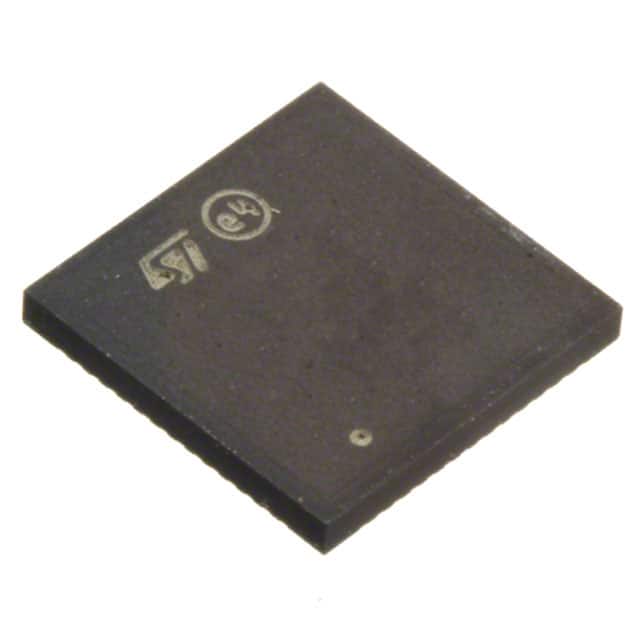
- Part No.:
- STHV800L
- Manufacturer:
- STMicroelectronics
- Category:
- Specialized ICs
- Package:
- 56-VFLGA
- Datasheet:
-
 STHV800L.pdf
- Description:
- IC ULTRASOUND PULSER 56TFLGA
- Quantity:
- Payment:

- Shipping:

Inventory:4,577
Please send an inquiry. Send us your inquiry, and we will respond immediately.
Product details
Overview
STHV800L from STMicroelectronics is an octal ±90 V, ±2 A high-speed ultrasound pulser IC with real-time clamping-to-ground (RTZ), 3-level output architecture, and integrated TR switch. It integrates eight independent half-bridge channels, each supporting both pulsed-wave (PW) and continuous-wave (CW) modes, and is designed for medical ultrasound transducer driving with <20 ps jitter on CW path and <20 ps on PW path. Used in portable point-of-care imaging systems requiring precise timing and low RX-phase power.
For engineers reviewing the STHV800L datasheet, STHV800L pinout, STHV800L application, or STHV800L equivalent, key selection criteria include its dual-supply HV_CW/HV architecture, 8 Ω TR-switch ON resistance, ±2 A clamp current capability, self-biasing RX-phase power down to 200 µW, and TFLGA-56LD package compatibility with high-density ultrasound probe layouts.
Technical Context
The STHV800L implements a fully monolithic SOI-based architecture with eight independent channels, each containing two separately powered half-bridges: one for high-current pulsed operation (±2 A, 0–±90 V) and a dedicated low-jitter CW bridge (±0.3 A, <10 ps jitter). Its RTZ clamping uses synchronous 8 Ω active circuitry directly at the output node, enabling zero-volt settling without external components.
Each channel integrates a thermally protected TR switch (8 Ω RON, 300 MHz BW), noise-blocking diodes, anti-leakage logic, and self-biasing circuitry that reduces RX-phase global power to 200 µW. Input interface supports 1.8 V–3.6 V CMOS logic, and optional external clock synchronization (CK pin) enables deterministic multi-channel timing alignment up to 20 MHz.
Key Specifications
| Parameter | Value and Actual Design Meaning |
|---|---|
| Output voltage range | ±90 V - Enables direct drive of high-voltage piezoelectric transducers without external level-shifting stages. |
| Peak output current | ±2 A per channel - Supports high-SPL acoustic pulses for deep-tissue medical imaging. |
| CW bridge jitter | <10 ps - Ensures phase coherence in Doppler and harmonic imaging modes. |
| TR switch RON | 8 Ω - Provides strong TX/RX isolation while maintaining wideband receiver signal integrity up to 300 MHz. |
| Clamp current | ±2 A - Actively pulls XDCR node to ground during transition, minimizing charge injection into receive chain. |
| RX-phase power | 200 µW total - Reduces thermal load and enables battery-powered handheld ultrasound devices. |
| Logic supply range | 1.8 V–3.6 V - Compatible with modern low-voltage FPGA and ASIC control interfaces without level translators. |
Pinout & Package
TFLGA-56LD (8 mm × 8 mm × 0.9 mm, 0.5 mm pitch) land-grid array package with exposed thermal pad; RoHS-compliant, moisture-sensitive level 3.
| Pin/Terminal | Circuit Role | Design Meaning |
|---|---|---|
| VDDA, VDDP, VSSD | Digital supply & ground | 1.8 V–3.6 V logic interface domain; decoupled via local 100 nF capacitors. |
| HVP, HVM, HVP_CW, HVM_CW | High-voltage supplies | Independent ±90 V rails for PW and CW bridges; HV_CW may be shorted to HV for simplified supply design. |
| INx_0, INx_1, CWx | Digital control inputs | Per-channel 2-bit PW mode or 1-bit CW mode; asynchronous or CK-synchronized operation. |
| XDCRx | High-voltage output | Direct connection to piezoelectric transducer; integrates clamp, TR switch, and anti-leakage protection. |
| THSD | Thermal shutdown input | Open-drain fault indicator; pulled up externally (10 kΩ) to enable shared thermal monitoring across multiple devices. |
Key Features
| Feature | Design Value |
|---|---|
| Dual-path HV output architecture | Separate ±2 A PW and ±0.3 A CW bridges per channel reduce thermal dissipation and enable simultaneous transmit/receive optimization. |
| Integrated RTZ clamping | 8 Ω synchronous active clamp delivers ±2 A sink/source directly at XDCR pin, eliminating external clamp FETs and reducing transition artifacts. |
| Self-biasing RX-mode | Automatically disables bias networks during receive phase, achieving 200 µW total device power without software intervention. |
| On-die TR switching | 8 Ω RON, 300 MHz bandwidth switch enables time-multiplexed RX chains without external analog switches or relays. |
| HV SOI process | Latch-up immune operation under ±90 V stress; eliminates need for external isolation or guard rings in PCB layout. |
Applications
| Medical Ultrasound Imaging | Pulse Waveform Generator |
|---|---|
Use Scenario: Portable linear-array probes for abdominal and cardiac scanning with real-time B-mode and Doppler processing. IC Role / Device Role / Timing Role: High-voltage pulser generating precisely timed 3-level excitation bursts (PW + CW) per channel with sub-10 ps jitter synchronization. Use Value: Enables >15 cm penetration depth and <1 mm axial resolution using 5–12 MHz transducers without external HV amplification stages. | Use Scenario: Benchtop ultrasonic NDT equipment for weld inspection and material thickness gauging. IC Role / Device Role / Timing Role: Programmable pulse generator delivering adjustable amplitude (0–±90 V), polarity, and burst timing to piezoceramic transducers. Use Value: Eliminates need for discrete HV MOSFET drivers and gate transformers, reducing board area by >40% and improving pulse edge fidelity. |
| Point-of-Care Ultrasound | Piezoelectric Transducer Driver |
Use Scenario: Handheld ultrasound devices used in emergency triage and remote telemedicine with battery life >2 hours per charge. IC Role / Device Role / Timing Role: Low-power octal transmitter managing both transmit burst and receive multiplexing functions in single-chip solution. Use Value: Achieves 200 µW RX-phase power and integrated thermal shutdown, enabling fanless, compact enclosure designs compliant with IEC 60601-1. | Use Scenario: Precision motion control systems using piezoelectric actuators for nanopositioning in semiconductor metrology tools. IC Role / Device Role / Timing Role: Fast-switching high-voltage driver delivering programmable 3-level waveforms (RTZ) with <20 ps edge jitter. Use Value: Supports closed-loop positioning accuracy to ±0.5 nm by minimizing voltage transient-induced mechanical ringing in actuator response. |
Equivalent & Alternatives
The following parts are listed as comparable options for similar high-voltage ultrasound pulser applications.
| Alternative Part | Technical Difference | Application Difference | Selection Advice |
|---|---|---|---|
| Texas Instruments TX7332 | Octal ±100 V, ±1.5 A; no integrated CW bridge or RTZ clamp; requires external clamping FETs and level shifters. | Lacks self-biasing RX mode and integrated TR switch; higher BOM count and layout complexity for full duplex operation. | Preferred when absolute max voltage margin (>±90 V) is required and system-level jitter tolerance exceeds 50 ps. |
| Analog Devices AD9401 | Quad ±80 V, ±2.5 A; includes integrated DAC and digital pattern generator; no CW path or TR switch; 64-pin LFCSP. | Targets programmable arbitrary waveform generation rather than fixed PW/CW ultrasound timing; no built-in receive multiplexing. | Chosen when flexible digital waveform synthesis (not just pulser control) is needed alongside HV output. |
Compared with TX7332 and AD9401, the STHV800L uniquely combines octal RTZ clamping, dual-path HV bridges, and integrated TR switching in a single 56-pin package-reducing component count by ≥12 parts per channel and enabling true single-chip duplex ultrasound front-ends.
Availability
STHV800L is available at Aetrix Electronics and suitable for medical ultrasound imaging, portable point-of-care diagnostics, and industrial NDT systems requiring stable component supply, long-term lifecycle support, and traceable HV analog sourcing.
Supply support for STHV800L includes scheduled delivery planning, volume procurement assistance, BOM continuity management, traceable sourcing, and lifecycle availability coordination for OEM customers, industrial embedded developers, connected-device designers, and electronics production programs.
Manufacturer
STMicroelectronics is a global semiconductor leader headquartered in Geneva, Switzerland, specializing in automotive, industrial, and power-efficient analog/mixed-signal solutions.
The STHV800L belongs to ST's high-voltage ultrasound pulser product line, engineered specifically for miniaturized, low-power, high-fidelity medical and industrial transducer driving with integrated protection and timing precision.
FAQ
What is the maximum operating frequency of the STHV800L?
The STHV800L supports up to 20 MHz input signal frequency for synchronized operation, with internal timing paths optimized for sub-20 ps jitter. Its 3-level RTZ output architecture maintains clean transitions even at 15 MHz burst rates typical in high-frame-rate ultrasound imaging, and the CW bridge operates with <10 ps jitter independent of PW timing.
Does the STHV800L require external high-voltage decoupling capacitors?
Yes - each HV supply rail (HVP, HVM, HVP_CW, HVM_CW) requires local ceramic decoupling: minimum 100 nF X7R 0805 in parallel with 10 µF tantalum or polymer capacitor placed within 2 mm of the respective pins. ST recommends 2×100 nF + 1×10 µF per rail to suppress switching noise and maintain <100 mV ripple under ±2 A peak load.
Can the CW and main HV supplies be tied together?
Yes - HVP_CW and HVM_CW may be shorted to HVP and HVM respectively using 0 Ω resistors or direct PCB traces. This simplifies power design but sacrifices independent CW voltage scaling and increases thermal coupling between PW and CW paths. ST's reference design permits shorting only if CW amplitude requirements match PW levels and thermal derating is verified.
How does the THSD pin function in thermal protection?
The THSD pin is an open-drain output that asserts low when internal die temperature exceeds 155 °C. It must be pulled up externally (typically 10 kΩ to 3.3 V); multiple STHV800L devices can share one pull-up resistor. When asserted, all output drivers disable and digital logic enters safe state - recovery occurs automatically after die cools below 140 °C hysteresis.
STHV800L Specifications
- Product attributes
- Attribute value
- Manufacturer:
- STMicroelectronics
- Series:
- -
- Package/Case:
- 56-VFLGA
- Packaging:
- Tray
- Product Status:
- Discontinued at Digi-Key
- Programmable:
- Not Verified
- Type:
- Ultrasound Pulser
- Applications:
- Ultrasound Imaging
- Mounting Type:
- Surface Mount
- Supplier Device Package:
- 56-TFLGA (8x8)
- Grade:
- -
- Qualification:
- -
STHV800L FAQ
1.How can I place an order for STHV800L through Aetrix?
Please submit a Request for Quotation (RFQ) for STHV800L on Aetrix. Our sales agent will provide a competitive quotation and guide you through the order confirmation once you accept the terms.
2.Are the price and stock information for STHV800L reliable?
The price and inventory of STHV800L are updated periodically and may fluctuate due to market conditions. Stock and pricing data are typically refreshed every 24 hours. Quotation validity for STHV800L is usually 5 days.
3.What payment methods are accepted for STHV800L?
We accept Wire Transfer, PayPal, Credit Card, Western Union, MoneyGram, and Escrow for STHV800L transactions.
Note: Certain payment methods may incur a processing fee.
4.How is shipping managed for STHV800L?
STHV800L orders can be shipped via leading logistics carriers, including DHL, UPS, FedEx, TNT, or Registered Mail.
Once your STHV800L order is processed, you will receive an email with the shipment details and tracking number.
Note: Tracking information may take up to 24 hours to appear. Express delivery typically takes 3–5 business days.
5.How can I obtain technical support or documentation for STHV800L?
For technical support, including STHV800L datasheets, pinout diagrams, or application guidance, please contact our engineering support team. They can provide detailed documentation and assistance for your STHV800L requirements.
6.How does Aetrix verify that STHV800L is sourced from the original manufacturer or authorized distributors?
All STHV800L products on Aetrix are procured from qualified distributors and authorized channels. Our dedicated quality assurance team conducts strict verification, including traceability checks and, if necessary, third-party testing. This ensures that STHV800L meets industry standards.
7.What is the process for return or replacement of STHV800L?
All STHV800L units undergo pre-shipment inspection (PSI). If there is an issue with STHV800L, returns or replacements are accepted under the following conditions:
1.Quantity discrepancies, incorrect items, or visible external defects (such as breakage or corrosion), acknowledged by Aetrix.
2.The issue is reported within 90 days of delivery.
3.The STHV800L part is unused and in its original packaging.
Return procedure for STHV800L:
1.Submit a request within 90 days.
2.Obtain a Return Material Authorization (RMA) from Aetrix.
STHV800L Tags
-
CAP200DG-TL
Power Integrations
-
ATSHA204A-MAHDA-T
Microchip Technology

-
ATSHA204A-SSHDA-T
Microchip Technology
-
ATSHA204A-STUCZ-T
Microchip Technology
-
ATECC608B-MAHDA-T
Microchip Technology
-
ATECC608B-MAHCZ-S
Microchip Technology

-
ATECC608B-SSHDA-T
Microchip Technology
-
ATECC608B-MAHDA-S
Microchip Technology
-
ATECC608A-MAHDA-S
Microchip Technology
-
ATECC608B-MAVDA-T
Microchip Technology

-
ATECC608A-SSHDA-T
Microchip Technology
-
ATECC508A-MAHDA-T
Microchip Technology
Tech Hub

Operational amplifier guide covering op amp basics, feedback, ideal vs real op amps, common configurations, buffer circuits, offset, bias current, gain-bandwidth, slew rate, rail-to-rail limits and sel…

Jumper cables guide covering safe connection order, red and black clamp placement, final ground connection, cable gauge, length, clamp quality, copper vs CCA cables, jump starter comparison and battery…

LDO regulator guide covering low dropout voltage, power dissipation, thermal design, PSRR, output noise, capacitor stability, adjustable LDO circuits, LDO vs buck converter and datasheet selection chec…

Conditional Access Module guide covering CAM meaning, CI/CI+ interface, smart card authorization, DVB security workflow, TV and set-top box compatibility, internal electronics, ESD protection, connecto…

Guide to electronic component obsolescence covering EOL risk, PCN/PDN notices, last-time buy planning, replacement options, form-fit-function validation, counterfeit risk and BOM lifecycle management.

18650 battery guide covering lithium-ion cell basics, 3.6V/3.7V voltage, 4.2V charging, mAh and Wh capacity, protected cells, chargers, BMS, series-parallel packs, holders, welding and sourcing checks.…

Hall effect sensor guide covering working principle, linear and digital sensors, Arduino circuits, current sensing, speed detection, automotive applications, A3144 examples, signal filtering and datash…

Product Change Notification guide for electronic components, covering PCN meaning, PCN vs PDN/EOL, common change types, risk levels, form-fit-function review, engineering validation, BOM control, LTB/L…

A practical guide to blend door actuators, covering HVAC function, symptoms, location, AC and heater issues, reset and calibration, replacement cost, electrical diagnosis, compatibility checks, and rep…

Engineering guide to Raspberry Pi alternatives, covering chip-level differences, Orange Pi, ROCK, Jetson, Banana Pi, NanoPi, Compute Module, Pico, GPIO, camera, HAT compatibility, and replacement risks…


