
 My Inquiry
 My Account


STMicroelectronics STM32F030F4P6
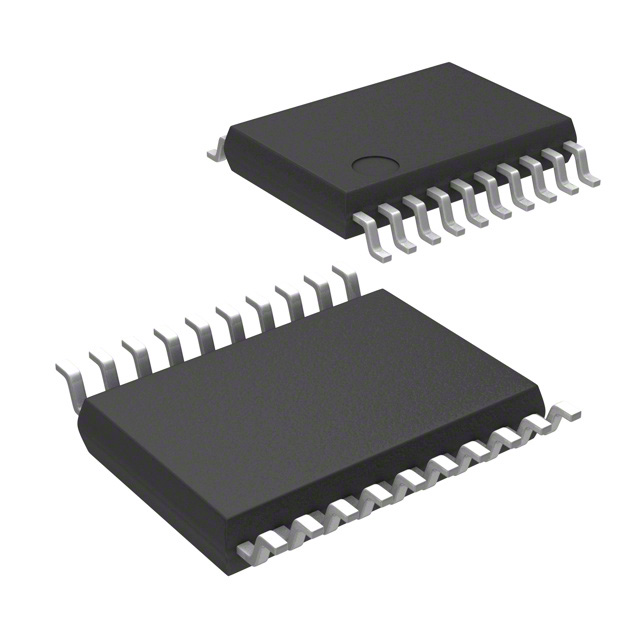
- Part No.:
- STM32F030F4P6
- Manufacturer:
- STMicroelectronics
- Category:
- Microcontrollers
- Package:
- 20-TSSOP (0.173", 4.40mm Width)
- Datasheet:
-
 STM32F030F4P6.pdf
- Description:
- IC MCU 32BIT 16KB FLASH 20TSSOP
- Quantity:
- Payment:

- Shipping:

Inventory:13,321
Please send an inquiry. Send us your inquiry, and we will respond immediately.
Product details
Overview
STM32F030F4P6 from STMicroelectronics is a value-line Arm® Cortex®-M0 32-bit microcontroller in TSSOP20 package, operating at up to 48 MHz with 16 KB Flash and 4 KB SRAM. It integrates a 12-bit ADC (1.0 µs conversion), six USARTs (one with auto baud rate detection), two I²C interfaces (one supporting Fast Mode Plus), and five-channel DMA - deployed in industrial sensor nodes requiring low-cost, compact MCU solutions with analog sensing and serial communication.
For engineers reviewing the STM32F030F4P6 datasheet, STM32F030F4P6 pinout, STM32F030F4P6 application, or STM32F030F4P6 equivalent, key selection criteria include its TSSOP20 footprint, 5V-tolerant I/Os (up to 19 pins), 2.4–3.6 V supply range, RTC with alarm, and SWD debug interface - all critical for space-constrained embedded control designs.
Technical Context
The STM32F030F4P6 implements a single-cycle Cortex-M0 core with Harvard bus architecture, tightly coupled NVIC and SysTick timer, and supports boot from system memory, main Flash, or SRAM. Its clock tree includes internal 8 MHz RC (with x6 PLL), 40 kHz LSI, and external 4–32 MHz HSE or 32.768 kHz LSE options - enabling precise timing for real-time control loops and RTC calendar functions.
Power management features POR/PDR, programmable voltage detector (PVD), and three low-power modes (Sleep, Stop, Standby) with sub-µA standby current. The 12-bit ADC operates across 0–3.6 V input range with separate VDDA supply and supports up to 16 channels via multiplexing - essential for multi-sensor signal acquisition in battery-powered devices.
Key Specifications
| Parameter | Value and Actual Design Meaning |
|---|---|
| CPU Core | Arm Cortex-M0, 48 MHz max - enables deterministic real-time execution of control algorithms with <100 ns interrupt latency. |
| Flash Memory | 16 KB - sufficient for firmware with USB HID stack, sensor fusion, and communication protocol stacks in compact applications. |
| SRAM | 4 KB with hardware parity - ensures data integrity for critical variables and stack operations in safety-aware firmware. |
| ADC | 12-bit, 1.0 µs conversion time, 16-channel mux - supports simultaneous sampling of temperature, voltage, and current sensors at ≥1 MSPS effective throughput. |
| I/O Pins | 19 GPIOs, 5V tolerant - allows direct interfacing with legacy 5V logic, industrial sensors, and discrete actuators without level shifters. |
| Communication | 2× I²C (1× Fast Mode Plus), 6× USART (1× auto-baud), 2× SPI - enables concurrent Modbus RTU, I²C sensor hub, and UART debug logging. |
| Debug Interface | Serial Wire Debug (SWD) - provides non-intrusive real-time debugging and flash programming using standard ST-LINK v2/v3 probes. |
Pinout & Package
TSSOP20 (6.4 × 4.4 mm, 0.65 mm pitch) - RoHS-compliant, ECOPACK®2-qualified package optimized for automated SMT assembly and high-density PCB layouts.
| Pin/Terminal | Circuit Role | Design Meaning |
|---|---|---|
| VDD | Digital power supply | 2.4–3.6 V input; powers core, GPIOs, and digital peripherals - requires local 100 nF decoupling. |
| VDDA | Analog power supply | 2.4–3.6 V dedicated rail for ADC and reset circuitry - must be filtered separately from VDD. |
| VSS | Digital ground | Reference for digital I/O and core logic - connect to PCB ground plane with low-inductance path. |
| VSSA | Analog ground | Reference for ADC and analog comparators - isolate from digital ground at single-point star connection. |
| PA0–PA9 | General-purpose I/O | 10 pins with alternate functions (USART, I²C, SPI, TIM); all 5V tolerant except PA9 (USART1_TX) in open-drain mode. |
| NRST | Active-low reset input | Externally driven reset with internal pull-up; accepts 1.65–5.5 V logic - compatible with pushbutton or supervisor ICs. |
| SWDIO / SWCLK | Debug interface signals | Two-pin SWD port for programming and debugging - no external pull-ups required per ST reference design. |
Key Features
| Feature | Design Value |
|---|---|
| 5V-tolerant I/Os | 19 pins withstand 5.5 V inputs - eliminates level translators when interfacing with 5V sensors, displays, or legacy controllers. |
| RTC with alarm & wakeup | Calendar function with alarm interrupt and periodic wake-from-Stop - enables ultra-low-power sensor polling every 1–60 seconds. |
| Independent watchdog (IWDG) | LSI-driven 12-bit counter with windowed mode - prevents firmware lockup in unattended industrial nodes without external supervision. |
| Hardware CRC unit | Dedicated 32-bit polynomial engine (CRC-32, CRC-16) - accelerates firmware OTA validation and EEPROM data integrity checks. |
| Fast-mode Plus I²C | 1 Mbit/s operation with 20 mA sink capability - supports robust communication with multiple slave sensors on noisy factory-floor buses. |
Applications
| Smart Thermostat Node | Industrial Motor Starter |
|---|---|
Use Scenario: Compact wall-mounted HVAC controller monitoring ambient temperature, humidity, and user input via tactile buttons. IC Role / Device Role / Timing Role: Main system controller executing PID loop, managing display backlight PWM, and communicating with cloud gateway via UART-to-WiFi bridge. Use Value: TSSOP20 footprint enables PCB area < 1.5 cm²; 5V-tolerant GPIOs directly drive LED indicators and read 5V thermistor bias networks. | Use Scenario: DIN-rail mounted starter module controlling 3-phase AC motor via relay/SSR, with status feedback and fault reporting. IC Role / Device Role / Timing Role: Real-time sequencer coordinating pre-charge, contactor closure, and thermal shutdown - synchronized by 48 MHz core clock and RTC alarm. Use Value: Six USARTs allow simultaneous Modbus RTU (to PLC), UART debug log, and TTL-level RS-485 transceiver control - no external UART expanders needed. |
| Portable Gas Detector | LED Lighting Controller |
Use Scenario: Battery-powered handheld device detecting CO/H₂S with electrochemical sensors and buzzer alarm. IC Role / Device Role / Timing Role: Signal conditioner digitizing analog sensor outputs, calculating gas concentration, and managing low-power sleep/wake cycles. Use Value: 12-bit ADC with internal VREFINT enables ratiometric measurements without external reference; Stop mode draws < 1 µA for 30-second sensor sampling intervals. | Use Scenario: DALI-compliant LED driver board regulating brightness and color temperature across multiple luminaires. IC Role / Device Role / Timing Role: DALI slave controller interpreting addressable commands and generating PWM dimming signals with precise duty cycle resolution. Use Value: Advanced-control timer (TIM1) delivers six independent 16-bit PWM outputs - drives RGBW LEDs with < 0.1% duty cycle error and synchronized phase alignment. |
Equivalent & Alternatives
The following parts are listed as comparable options for similar microcontroller applications.
| Alternative Part | Technical Difference | Application Difference | Selection Advice |
|---|---|---|---|
| STM32F030C6T6 | LQFP48 package, 32 KB Flash, 6 KB SRAM, 39 GPIOs - larger footprint and higher memory capacity. | Suitable for designs requiring more peripherals (e.g., dual SPI + I²C + USB), but incompatible pinout and layout. | Select when expanding functionality beyond TSSOP20 pin count limits; requires full PCB redesign. |
| EFM32HG309F64 | Silicon Labs ARM Cortex-M0+, 64 KB Flash, 8 KB RAM, integrated DC-DC converter - lower active current (110 µA/MHz). | Better suited for battery life-critical applications; lacks Fast Mode Plus I²C and 5V-tolerant I/Os. | Choose for ultra-low-power portable devices where 5V interface compatibility is not required. |
Compared with STM32F030C6T6, the F4P6 trades memory and I/O count for minimal size and cost; versus EFM32HG309F64, it prioritizes industrial I/O robustness and ecosystem maturity over sub-mA sleep current - making it optimal for cost-sensitive, space-constrained control nodes needing 5V interoperability.
Availability
STM32F030F4P6 is available at Aetrix Electronics and suitable for industrial sensor nodes, smart lighting controllers, portable instrumentation, and motor starter modules requiring stable component supply and long-term manufacturability.
Supply support for STM32F030F4P6 includes scheduled delivery planning, volume procurement assistance, BOM continuity management, traceable sourcing, and lifecycle availability coordination for OEM customers, industrial embedded developers, connected-device designers, and electronics production programs.
Manufacturer
STMicroelectronics is a global semiconductor leader headquartered in Geneva, Switzerland, designing and manufacturing microcontrollers, power ICs, MEMS, and automotive semiconductors since 1987.
The STM32F0 series targets cost-sensitive, resource-constrained embedded applications - delivering Cortex-M0 performance with industrial-grade reliability, broad toolchain support, and seamless migration paths within the STM32 portfolio.
FAQ
Does STM32F030F4P6 support USB connectivity?
No, the STM32F030F4P6 does not integrate a USB peripheral. It belongs to the value-line F0 series, which omits USB PHY and related registers to reduce cost and die size. For USB-enabled variants, consider STM32F042x6 or STM32F070x6, which include USB 2.0 FS device controllers and required internal transceivers.
What is the maximum operating temperature range for STM32F030F4P6?
The STM32F030F4P6 is rated for industrial temperature range: –40 °C to +85 °C. This is confirmed in Section 6.3.1 of DS9773 Rev 5, specifying ambient operating conditions under VDD = 2.4–3.6 V. No extended (–40 °C to +105 °C) or automotive grade variant exists for this specific part number.
Can the internal 8 MHz RC oscillator be used as system clock without calibration?
Yes, the internal 8 MHz RC oscillator can serve as system clock without calibration, but its accuracy is ±1% over temperature and voltage - insufficient for UART communication above 9600 baud without oversampling. For reliable serial communication, ST recommends calibrating the HSI using an external clock source or using the PLL with HSE/LSE for tighter timing control.
Is SWD debug supported on all TSSOP20 pins of STM32F030F4P6?
SWD debug is supported exclusively on pins PA13 (SWDIO) and PA14 (SWCLK) - both located on the TSSOP20 package (pins 17 and 18 respectively). These pins are dedicated to SWD and cannot be reassigned to other functions during debug session. No other TSSOP20 pins provide debug capability; NRST is optional for reset control but not required for basic SWD operation.
STM32F030F4P6 Specifications
- Product attributes
- Attribute value
- Manufacturer:
- STMicroelectronics
- Package/Case:
- 20-TSSOP (0.173", 4.40mm Width)
- Series:
- STM32F0
- Packaging:
- Tube
- Product Status:
- Active
- Programmable:
- Not Verified
- Core Processor:
- ARM® Cortex®-M0
- Core Size:
- 32-Bit Single-Core
- Speed:
- 48MHz
- Connectivity:
- I2C, SPI, UART/USART
- Peripherals:
- DMA, POR, PWM, WDT
- Number of I/O:
- 15
- Program Memory Size:
- 16KB (16K x 8)
- Program Memory Type:
- FLASH
- EEPROM Size:
- -
- RAM Size:
- 4K x 8
- Voltage - Supply (Vcc/Vdd):
- 2.4V ~ 3.6V
- Data Converters:
- A/D 11x12b
- Oscillator Type:
- Internal
- Operating Temperature:
- -40°C ~ 85°C (TA)
- Grade:
- -
- Qualification:
- -
- Mounting Type:
- Surface Mount
- Supplier Device Package:
STM32F030F4P6 FAQ
1.How can I place an order for STM32F030F4P6 through Aetrix?
Please submit a Request for Quotation (RFQ) for STM32F030F4P6 on Aetrix. Our sales agent will provide a competitive quotation and guide you through the order confirmation once you accept the terms.
2.Are the price and stock information for STM32F030F4P6 reliable?
The price and inventory of STM32F030F4P6 are updated periodically and may fluctuate due to market conditions. Stock and pricing data are typically refreshed every 24 hours. Quotation validity for STM32F030F4P6 is usually 5 days.
3.What payment methods are accepted for STM32F030F4P6?
We accept Wire Transfer, PayPal, Credit Card, Western Union, MoneyGram, and Escrow for STM32F030F4P6 transactions.
Note: Certain payment methods may incur a processing fee.
4.How is shipping managed for STM32F030F4P6?
STM32F030F4P6 orders can be shipped via leading logistics carriers, including DHL, UPS, FedEx, TNT, or Registered Mail.
Once your STM32F030F4P6 order is processed, you will receive an email with the shipment details and tracking number.
Note: Tracking information may take up to 24 hours to appear. Express delivery typically takes 3–5 business days.
5.How can I obtain technical support or documentation for STM32F030F4P6?
For technical support, including STM32F030F4P6 datasheets, pinout diagrams, or application guidance, please contact our engineering support team. They can provide detailed documentation and assistance for your STM32F030F4P6 requirements.
6.How does Aetrix verify that STM32F030F4P6 is sourced from the original manufacturer or authorized distributors?
All STM32F030F4P6 products on Aetrix are procured from qualified distributors and authorized channels. Our dedicated quality assurance team conducts strict verification, including traceability checks and, if necessary, third-party testing. This ensures that STM32F030F4P6 meets industry standards.
7.What is the process for return or replacement of STM32F030F4P6?
All STM32F030F4P6 units undergo pre-shipment inspection (PSI). If there is an issue with STM32F030F4P6, returns or replacements are accepted under the following conditions:
1.Quantity discrepancies, incorrect items, or visible external defects (such as breakage or corrosion), acknowledged by Aetrix.
2.The issue is reported within 90 days of delivery.
3.The STM32F030F4P6 part is unused and in its original packaging.
Return procedure for STM32F030F4P6:
1.Submit a request within 90 days.
2.Obtain a Return Material Authorization (RMA) from Aetrix.
STM32F030F4P6 Tags

-
ATTINY4-TSHR
Microchip Technology
-
ATTINY10-TSHR
Microchip Technology
-
ATTINY10-TS8R
Microchip Technology

-
ATTINY202-SSNR
Microchip Technology
-
ATTINY202-SSFR
Microchip Technology
-
ATTINY402-SSNR
Microchip Technology

-
PIC16F15213T-I/MF
Microchip Technology
-
PIC16F15213-E/MF
Microchip Technology

-
PIC10F200T-I/OT
Microchip Technology
-
ATTINY412-SSNR
Microchip Technology
-
PIC10F202T-I/OT
Microchip Technology

-
ATTINY404-SSNR
Microchip Technology
Tech Hub

Operational amplifier guide covering op amp basics, feedback, ideal vs real op amps, common configurations, buffer circuits, offset, bias current, gain-bandwidth, slew rate, rail-to-rail limits and sel…

Jumper cables guide covering safe connection order, red and black clamp placement, final ground connection, cable gauge, length, clamp quality, copper vs CCA cables, jump starter comparison and battery…

LDO regulator guide covering low dropout voltage, power dissipation, thermal design, PSRR, output noise, capacitor stability, adjustable LDO circuits, LDO vs buck converter and datasheet selection chec…

Conditional Access Module guide covering CAM meaning, CI/CI+ interface, smart card authorization, DVB security workflow, TV and set-top box compatibility, internal electronics, ESD protection, connecto…

Guide to electronic component obsolescence covering EOL risk, PCN/PDN notices, last-time buy planning, replacement options, form-fit-function validation, counterfeit risk and BOM lifecycle management.

18650 battery guide covering lithium-ion cell basics, 3.6V/3.7V voltage, 4.2V charging, mAh and Wh capacity, protected cells, chargers, BMS, series-parallel packs, holders, welding and sourcing checks.…

Hall effect sensor guide covering working principle, linear and digital sensors, Arduino circuits, current sensing, speed detection, automotive applications, A3144 examples, signal filtering and datash…

Product Change Notification guide for electronic components, covering PCN meaning, PCN vs PDN/EOL, common change types, risk levels, form-fit-function review, engineering validation, BOM control, LTB/L…

A practical guide to blend door actuators, covering HVAC function, symptoms, location, AC and heater issues, reset and calibration, replacement cost, electrical diagnosis, compatibility checks, and rep…

Engineering guide to Raspberry Pi alternatives, covering chip-level differences, Orange Pi, ROCK, Jetson, Banana Pi, NanoPi, Compute Module, Pico, GPIO, camera, HAT compatibility, and replacement risks…


