
 My Inquiry
 My Account


STMicroelectronics STM32F030K6T6TR
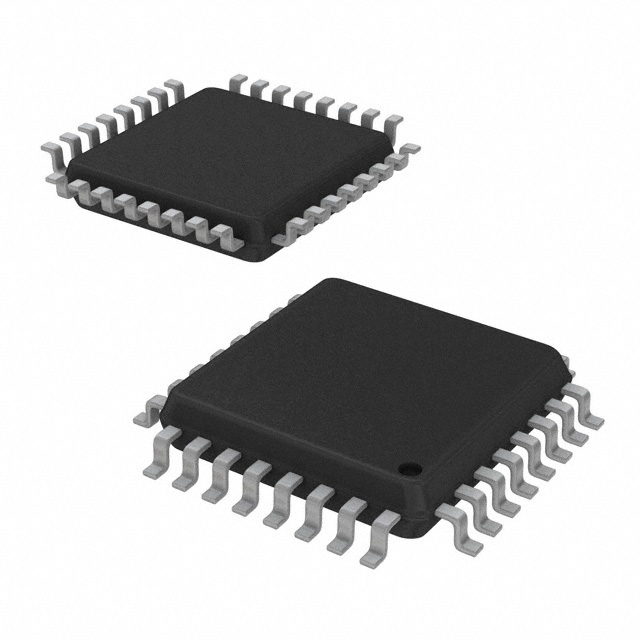
- Part No.:
- STM32F030K6T6TR
- Manufacturer:
- STMicroelectronics
- Category:
- Microcontrollers
- Package:
- 32-LQFP
- Datasheet:
-
 STM32F030K6T6TR.pdf
- Description:
- IC MCU 32BIT 32KB FLASH 32LQFP
- Quantity:
- Payment:

- Shipping:

Inventory:18,032
Please send an inquiry. Send us your inquiry, and we will respond immediately.
Product details
Overview
STM32F030K6T6TR from STMicroelectronics is a value-line Arm® Cortex®-M0 32-bit microcontroller in TSSOP20 package, delivering up to 48 MHz operation, 32 KB Flash, 4 KB SRAM with hardware parity, and integrated 12-bit ADC (1.0 µs conversion), six USARTs, two SPIs (18 Mbit/s), and two I²C interfaces with Fast Mode Plus (1 Mbit/s). It targets cost-sensitive industrial control and smart sensor nodes requiring low-voltage operation (2.4–3.6 V) and robust 5V-tolerant I/Os.
For engineers reviewing the STM32F030K6T6TR datasheet, STM32F030K6T6TR pinout, STM32F030K6T6TR application, or STM32F030K6T6TR equivalent, key selection criteria include its TSSOP20 footprint for space-constrained PCBs, 55 fast I/Os with 5V tolerance, RTC with alarm and wakeup from Stop/Standby, SWD debug interface, and support for auto baud rate detection on one USART - all critical for embedded firmware development and BOM optimization.
Technical Context
The STM32F030K6T6TR implements an Arm Cortex-M0 core with Harvard architecture, supporting Thumb-2 instruction set and nested vectored interrupt controller (NVIC) for deterministic real-time response. Its clock system integrates dual oscillators: a 4–32 MHz external crystal and internal 8 MHz RC with x6 PLL for precise 48 MHz system clock generation.
Power management includes POR/PDR, three low-power modes (Sleep, Stop, Standby), and separate analog supply (VDDA = VDD to 3.6 V) enabling independent ADC and RTC operation. The 12-bit ADC supports up to 16 channels with dedicated VREFINT and temperature sensor, calibrated at factory for ±2°C accuracy over –40 to +85°C.
Key Specifications
| Parameter | Value and Actual Design Meaning |
|---|---|
| CPU Core | Arm Cortex-M0, 32-bit, up to 48 MHz - enables deterministic real-time control with <100 ns interrupt latency. |
| Flash Memory | 32 KB - sufficient for bootloader + application firmware with OTA update partitioning. |
| SRAM | 4 KB with hardware parity - ensures data integrity for safety-critical variables and stack protection. |
| ADC | 12-bit, 1.0 µs conversion time, 16-channel multiplexed - supports simultaneous sampling of multiple analog sensors. |
| I/O Voltage Tolerance | 5V tolerant on all pins - eliminates level-shifting components when interfacing with legacy 5V peripherals. |
| Communication Interfaces | 2× I²C (1 × Fast Mode Plus), 6× USART (1 × auto baud), 2× SPI (18 Mbit/s) - enables mixed-protocol connectivity in multi-sensor gateways. |
| Debug Interface | Serial Wire Debug (SWD) - provides non-intrusive real-time debugging with minimal pin count (2 pins). |
Pinout & Package
STM32F030K6T6TR uses a 20-pin TSSOP package (6.4 × 4.4 mm, 0.65 mm pitch), optimized for compact industrial and consumer PCB layouts. Pin functions are validated per STMicroelectronics datasheet DS9773 Rev 5, Figure 9 (TSSOP20 top view).
| Pin/Terminal | Circuit Role | Design Meaning |
|---|---|---|
| VDD | Digital power supply | 2.4–3.6 V main supply; decoupling capacitor required near pin for noise immunity. |
| VSS | Digital ground | Reference return path for digital logic and I/O drivers; must be low-impedance. |
| VDDA | Analog power supply | Separate 2.4–3.6 V rail for ADC/RTC; improves analog measurement SNR by isolating digital noise. |
| PA0–PA15 | General-purpose I/O | Configurable as GPIO, alternate function (USART/SPI/I²C), or analog input; all 5V tolerant. |
| NRST | Active-low reset input | External reset trigger; internal pull-up; accepts 1.65–5.5 V logic levels. |
| SYSCLK | System clock output | Optional 48 MHz clock output for synchronizing external peripherals or test equipment. |
Key Features
| Feature | Design Value |
|---|---|
| Low-power RTC with alarm | Enables periodic wake-up from Stop/Standby mode using 32.768 kHz LSE oscillator - reduces average current to <1 µA in battery-backed applications. |
| Hardware CRC calculation unit | Accelerates firmware image validation and communication packet checksums without CPU overhead - critical for secure boot and field firmware updates. |
| 5-channel DMA controller | Offloads data movement between peripherals (e.g., ADC → memory, USART → buffer) - frees CPU for control tasks and lowers active power consumption. |
| Independent watchdog (IWDG) | 12-bit downcounter driven by 40 kHz LSI oscillator - ensures fail-safe recovery even if main clock fails, meeting IEC 61508 SIL-2 requirements. |
| Temperature sensor & VREFINT | Factory-calibrated internal sensor (±2°C) and reference voltage (1.22 V ±3%) - enables self-diagnostic and ambient-compensated ADC measurements without external components. |
Applications
| Industrial Motor Control | Smart Home Sensor Hub |
|---|---|
Use Scenario: Compact BLDC fan controller with speed feedback, thermal monitoring, and UART-based configuration. IC Role / Device Role / Timing Role: Main MCU executing FOC algorithm, reading hall-effect sensors via GPIO, sampling thermistor via ADC, and communicating via USART. Use Value: 48 MHz CPU delivers >10 kHz PWM update rate; 5V-tolerant I/Os interface directly with 5V Hall sensors; RTC alarm schedules periodic self-test. | Use Scenario: Battery-powered multi-sensor node aggregating temperature, humidity, and motion data for BLE gateway forwarding. IC Role / Device Role / Timing Role: System-on-chip managing sensor polling, data fusion, low-power scheduling, and UART-to-BLE bridge protocol. Use Value: Stop-mode current <1.5 µA extends 2xAA battery life to >2 years; integrated VREFINT enables accurate ADC calibration across temperature; SWD allows in-field firmware patching. |
| POS Terminal Peripheral | LED Lighting Controller |
Use Scenario: Add-on module for receipt printer or barcode scanner with RS-232/USB-CDC emulation. IC Role / Device Role / Timing Role: Protocol translator and command parser handling host commands, driving stepper motor, and managing status LEDs. Use Value: Six USARTs support simultaneous host interface, printer control, and diagnostic port; auto baud rate detection simplifies integration with legacy POS systems. | Use Scenario: DALI-compliant LED driver with dimming curve interpolation and thermal foldback protection. IC Role / Device Role / Timing Role: DALI slave controller executing EN 62386-102 commands, modulating PWM outputs, and monitoring heatsink temperature. Use Value: Advanced-control timer (TIM1) generates synchronized 6-channel PWM for RGBW mixing; 12-bit ADC reads NTC with <0.5°C resolution for precise thermal derating. |
Equivalent & Alternatives
The following parts are listed as comparable options for similar microcontroller applications.
| Alternative Part | Technical Difference | Application Difference | Selection Advice |
|---|---|---|---|
| STM32F030F4P6 | 16 KB Flash, 4 KB SRAM, same TSSOP20 package, identical peripheral set except no RTC calendar function. | Lacks calendar RTC and alarm - unsuitable for time-stamped logging or scheduled wake-up. | Select when RTC functionality is unnecessary and cost reduction is primary; verify bootloader compatibility due to smaller Flash. |
| STM32F042F4P6 | Same Flash/SRAM, adds USB 2.0 FS device interface and enhanced CRC; requires additional 3.3 V LDO for USB PHY. | Enables direct USB HID/DFU connectivity but increases BOM cost and layout complexity. | Choose only if native USB device capability is mandatory; otherwise, STM32F030K6T6TR offers better cost/performance balance for UART/SPI/I²C-only designs. |
Compared with STM32F030F4P6, the STM32F030K6T6TR adds calendar RTC and alarm - essential for time-aware edge devices - while maintaining identical pinout and power profile. Against STM32F042F4P6, it avoids USB-related design overhead and component cost, making it optimal for non-USB industrial control where reliability and footprint efficiency are prioritized.
Availability
STM32F030K6T6TR is available at Aetrix Electronics and suitable for industrial motor control, smart home sensor hubs, POS terminal peripherals, and LED lighting controllers requiring stable component supply, long-term lifecycle assurance, and RoHS-compliant sourcing.
Supply support for STM32F030K6T6TR includes scheduled delivery planning, volume procurement assistance, BOM continuity management, traceable sourcing, and lifecycle availability coordination for OEM customers, industrial embedded developers, connected-device designers, and electronics production programs.
Manufacturer
STMicroelectronics is a global semiconductor leader headquartered in Geneva, Switzerland, designing and manufacturing microcontrollers, power ICs, sensors, and automotive-grade components since 1987.
The STM32F0 series targets cost-sensitive, resource-constrained embedded applications with Cortex-M0 cores, emphasizing low power, small footprint, and high integration - ideal for appliance controls, industrial I/O modules, and entry-level IoT endpoints.
FAQ
What is the maximum operating frequency and how is it achieved?
The STM32F030K6T6TR achieves a maximum system clock of 48 MHz using its internal 8 MHz RC oscillator multiplied by a programmable x6 PLL. This configuration avoids external crystal cost while maintaining timing precision within ±1% over temperature and voltage ranges. External 4–32 MHz crystals may also be used for higher accuracy applications.
Does this MCU support hardware parity checking on SRAM?
Yes, the STM32F030K6T6TR implements hardware parity checking on its entire 4 KB SRAM block. Parity errors trigger a HardFault exception, allowing firmware to detect and handle memory corruption events - a key requirement for functional safety compliance in industrial control applications.
Can the ADC measure signals beyond the VDDA supply range?
No. The ADC input voltage range is strictly 0 to VDDA (2.4–3.6 V). Input signals exceeding VDDA risk damage or erroneous conversions. For 5V sensor interfacing, external resistive dividers or rail-to-rail op-amp conditioning circuits are required to scale inputs into the valid ADC range.
Is the TSSOP20 package suitable for reflow soldering and automated assembly?
Yes, the STM32F030K6T6TR in TSSOP20 package is qualified for standard lead-free reflow profiles (JEDEC J-STD-020), including peak temperatures up to 260°C. Its 0.65 mm pitch and gull-wing leads ensure reliable placement and solder joint formation in high-volume SMT lines.
STM32F030K6T6TR Specifications
- Product attributes
- Attribute value
- Manufacturer:
- STMicroelectronics
- Package/Case:
- 32-LQFP
- Series:
- STM32F0
- Packaging:
- Tape & Reel (TR)
- Product Status:
- Active
- Programmable:
- Not Verified
- Core Processor:
- ARM® Cortex®-M0
- Core Size:
- 32-Bit Single-Core
- Speed:
- 48MHz
- Connectivity:
- I2C, SPI, UART/USART
- Peripherals:
- DMA, POR, PWM, WDT
- Number of I/O:
- 26
- Program Memory Size:
- 32KB (32K x 8)
- Program Memory Type:
- FLASH
- EEPROM Size:
- -
- RAM Size:
- 4K x 8
- Voltage - Supply (Vcc/Vdd):
- 2.4V ~ 3.6V
- Data Converters:
- A/D 12x12b
- Oscillator Type:
- Internal
- Operating Temperature:
- -40°C ~ 85°C (TA)
- Grade:
- -
- Qualification:
- -
- Mounting Type:
- Surface Mount
- Supplier Device Package:
STM32F030K6T6TR FAQ
1.How can I place an order for STM32F030K6T6TR through Aetrix?
Please submit a Request for Quotation (RFQ) for STM32F030K6T6TR on Aetrix. Our sales agent will provide a competitive quotation and guide you through the order confirmation once you accept the terms.
2.Are the price and stock information for STM32F030K6T6TR reliable?
The price and inventory of STM32F030K6T6TR are updated periodically and may fluctuate due to market conditions. Stock and pricing data are typically refreshed every 24 hours. Quotation validity for STM32F030K6T6TR is usually 5 days.
3.What payment methods are accepted for STM32F030K6T6TR?
We accept Wire Transfer, PayPal, Credit Card, Western Union, MoneyGram, and Escrow for STM32F030K6T6TR transactions.
Note: Certain payment methods may incur a processing fee.
4.How is shipping managed for STM32F030K6T6TR?
STM32F030K6T6TR orders can be shipped via leading logistics carriers, including DHL, UPS, FedEx, TNT, or Registered Mail.
Once your STM32F030K6T6TR order is processed, you will receive an email with the shipment details and tracking number.
Note: Tracking information may take up to 24 hours to appear. Express delivery typically takes 3–5 business days.
5.How can I obtain technical support or documentation for STM32F030K6T6TR?
For technical support, including STM32F030K6T6TR datasheets, pinout diagrams, or application guidance, please contact our engineering support team. They can provide detailed documentation and assistance for your STM32F030K6T6TR requirements.
6.How does Aetrix verify that STM32F030K6T6TR is sourced from the original manufacturer or authorized distributors?
All STM32F030K6T6TR products on Aetrix are procured from qualified distributors and authorized channels. Our dedicated quality assurance team conducts strict verification, including traceability checks and, if necessary, third-party testing. This ensures that STM32F030K6T6TR meets industry standards.
7.What is the process for return or replacement of STM32F030K6T6TR?
All STM32F030K6T6TR units undergo pre-shipment inspection (PSI). If there is an issue with STM32F030K6T6TR, returns or replacements are accepted under the following conditions:
1.Quantity discrepancies, incorrect items, or visible external defects (such as breakage or corrosion), acknowledged by Aetrix.
2.The issue is reported within 90 days of delivery.
3.The STM32F030K6T6TR part is unused and in its original packaging.
Return procedure for STM32F030K6T6TR:
1.Submit a request within 90 days.
2.Obtain a Return Material Authorization (RMA) from Aetrix.
STM32F030K6T6TR Tags

-
ATTINY4-TSHR
Microchip Technology
-
ATTINY10-TSHR
Microchip Technology
-
ATTINY10-TS8R
Microchip Technology

-
ATTINY202-SSNR
Microchip Technology
-
ATTINY202-SSFR
Microchip Technology
-
ATTINY402-SSNR
Microchip Technology

-
PIC16F15213T-I/MF
Microchip Technology
-
PIC16F15213-E/MF
Microchip Technology

-
PIC10F200T-I/OT
Microchip Technology
-
ATTINY412-SSNR
Microchip Technology
-
PIC10F202T-I/OT
Microchip Technology

-
ATTINY404-SSNR
Microchip Technology
Tech Hub

An engineering guide to LED driver operation, constant-current and constant-voltage outputs, linear and switching topologies, dimming, IC selection, calculations, replacement compatibility, and fault c…

Operational amplifier guide covering op amp basics, feedback, ideal vs real op amps, common configurations, buffer circuits, offset, bias current, gain-bandwidth, slew rate, rail-to-rail limits and sel…

Jumper cables guide covering safe connection order, red and black clamp placement, final ground connection, cable gauge, length, clamp quality, copper vs CCA cables, jump starter comparison and battery…

LDO regulator guide covering low dropout voltage, power dissipation, thermal design, PSRR, output noise, capacitor stability, adjustable LDO circuits, LDO vs buck converter and datasheet selection chec…

Conditional Access Module guide covering CAM meaning, CI/CI+ interface, smart card authorization, DVB security workflow, TV and set-top box compatibility, internal electronics, ESD protection, connecto…

Guide to electronic component obsolescence covering EOL risk, PCN/PDN notices, last-time buy planning, replacement options, form-fit-function validation, counterfeit risk and BOM lifecycle management.

18650 battery guide covering lithium-ion cell basics, 3.6V/3.7V voltage, 4.2V charging, mAh and Wh capacity, protected cells, chargers, BMS, series-parallel packs, holders, welding and sourcing checks.…

Hall effect sensor guide covering working principle, linear and digital sensors, Arduino circuits, current sensing, speed detection, automotive applications, A3144 examples, signal filtering and datash…

Product Change Notification guide for electronic components, covering PCN meaning, PCN vs PDN/EOL, common change types, risk levels, form-fit-function review, engineering validation, BOM control, LTB/L…

A practical guide to blend door actuators, covering HVAC function, symptoms, location, AC and heater issues, reset and calibration, replacement cost, electrical diagnosis, compatibility checks, and rep…


