
 My Inquiry
 My Account


STMicroelectronics STM32F072CBU6TR
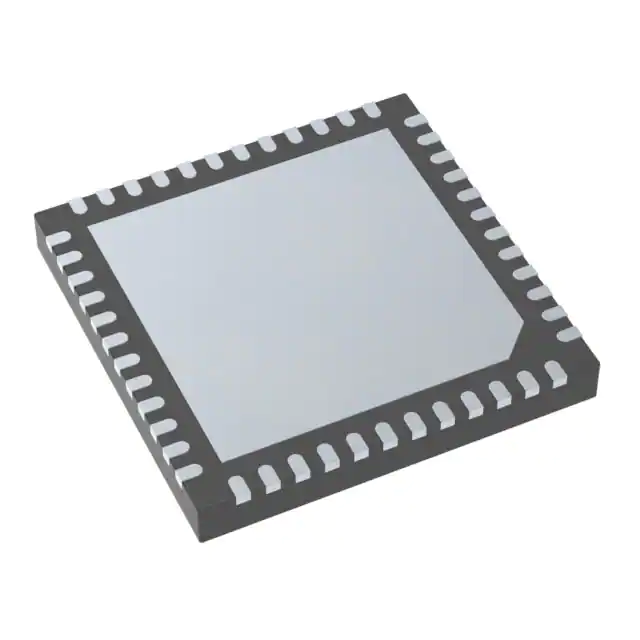
- Part No.:
- STM32F072CBU6TR
- Manufacturer:
- STMicroelectronics
- Category:
- Microcontrollers
- Package:
- 48-UFQFN Exposed Pad
- Datasheet:
-
 STM32F072CBU6TR.pdf
- Description:
- IC MCU 32BIT 128KB FLSH 48UFQFPN
- Quantity:
- Payment:

- Shipping:

Inventory:4,446
Please send an inquiry. Send us your inquiry, and we will respond immediately.
Product details
Overview
STM32F072CBU6TR from STMicroelectronics is a mainstream STM32F0 series 32-bit microcontroller based on the Arm Cortex-M0 core. The device operates at up to 48 MHz and integrates 128 Kbytes of Flash memory, 16 Kbytes of SRAM, USB full-speed device support, CAN, HDMI CEC, USART, I2C, SPI / I2S, ADC, DAC, comparators, timers, touch-sensing channels, and low-power operating modes.
For engineers reviewing the STM32F072CBU6TR datasheet, STM32F072CBU6TR pinout, STM32F072CBU6TR application, or STM32F072CBU6TR equivalent, this MCU is most relevant for USB-connected embedded controllers, CAN communication nodes, industrial control boards, PC peripherals, consumer interfaces, touch-key panels, motor-control support circuits, and compact mixed-signal designs requiring a 48-pin UFQFPN package, 2.0 V to 3.6 V operation, -40°C to +85°C temperature range, and tape-and-reel assembly.
Technical Context
STM32F072CBU6TR combines a 48 MHz Cortex-M0 CPU with a broad peripheral set for cost-sensitive embedded control. The STM32F072xB memory option provides 128 Kbytes of embedded Flash and 16 Kbytes of SRAM, while the 7-channel DMA controller supports memory-to-memory, peripheral-to-memory, and memory-to-peripheral transfers for peripherals such as SPI, I2S, I2C, USART, timers, DAC, and ADC.
The device is positioned as a USB-line STM32F0 MCU, with crystal-less USB full-speed device support using the 48 MHz internal oscillator and clock recovery system. It also includes one CAN controller, one HDMI CEC interface, four USARTs, two I2C interfaces, two SPI / I2S interfaces, one 12-bit ADC, one two-channel 12-bit DAC, two analog comparators, capacitive touch sensing, multiple timers, RTC backup domain support, and Serial Wire Debug access.
Key Specifications
| Parameter | Value and Actual Design Meaning |
|---|---|
| Device Type | STM32F0 mainstream 32-bit microcontroller for embedded control, USB communication, CAN nodes, and mixed-signal interface designs. |
| CPU Core | Arm Cortex-M0 32-bit RISC core operating up to 48 MHz, providing compact-code embedded control performance. |
| Flash Memory | 128 Kbytes embedded Flash memory for application program storage and nonvolatile code execution. |
| SRAM | 16 Kbytes embedded SRAM accessed at CPU clock speed, supporting runtime variables, communication buffers, and control firmware data. |
| Operating Voltage | 2.0 V to 3.6 V VDD operating range, suitable for 3.3 V systems and low-voltage embedded designs. |
| Temperature Range | Suffix 6 version rated for -40°C to +85°C ambient operating temperature range. |
| GPIO Resources | 37 GPIOs in the STM32F072Cx 48/49-pin device class, with many pins shared with analog, timer, communication, and touch-sensing functions. |
| Communication Interfaces | Two I2C, two SPI / I2S, four USART, one USB full-speed device, one CAN, and one HDMI CEC interface for multi-protocol embedded connectivity. |
| Analog Resources | One 12-bit ADC, one 12-bit DAC with two channels, and two analog comparators for mixed-signal control and measurement tasks. |
| Timer Resources | One advanced-control 16-bit timer, five general-purpose 16-bit timers, one 32-bit timer, and two basic 16-bit timers. |
| DMA | 7-channel DMA controller supporting peripheral and memory transfers without continuous CPU intervention. |
| Clock System | Includes HSI 8 MHz, HSI14 for ADC, HSI48 for USB / system clock use, LSI 40 kHz, PLL, 4 MHz to 32 MHz HSE input, and 32.768 kHz LSE support. |
| USB Function | USB full-speed device with D- and D+ on PA11 and PA12, supported by HSI48 and clock recovery system for crystal-less USB designs. |
| Debug Interface | Serial Wire Debug through SWDIO and SWCLK functions on PA13 and PA14. |
| Package | UFQFPN48 package, 7 mm × 7 mm × 0.55 mm class, with 0.50 mm pitch and exposed-pad thermal behavior. |
| Thermal Resistance | UFQFPN48 junction-to-ambient thermal resistance is listed at 32°C/W, supporting compact boards with appropriate PCB heat spreading. |
| Packing and Compliance | TR suffix indicates tape-and-reel packing; ST product listing identifies STM32F072CBU6TR as Ecopack2 and industrial grade. |
Pinout & Package
STM32F072CBU6TR is supplied in a 48-pin UFQFPN package with a 7 mm × 7 mm body, 0.50 mm lead pitch, low 0.55 mm class height, and exposed pad. This package gives the 128 Kbyte STM32F072CB device a compact footprint for space-limited embedded boards while keeping USB, CAN, SWD, oscillator, analog supply, backup supply, VDDIO2, GPIO, timer, and serial-interface pins accessible around the device perimeter.
| Pin / Terminal | Circuit Role | Design Meaning |
|---|---|---|
| VBAT | Backup power supply input. | Supplies the backup domain, RTC-related logic, and backup registers when the main VDD rail is unavailable. |
| VDD, VSS | Main digital power and ground pins. | Provide the primary 2.0 V to 3.6 V digital supply and ground return for the core, memories, and digital peripherals. |
| VDDA, VSSA | Analog power and analog ground pins. | Supply the ADC, DAC, comparators, PLL-related analog blocks, and internal analog reference functions; local analog filtering improves measurement accuracy. |
| VDDIO2, VSS | Second digital I/O supply domain and ground. | Supplies the VDDIO2 pin group, including high-numbered communication and debug-related pins such as PA8 to PA15 and selected PB / PC pins. |
| NRST | Active-low reset input / internal reset output. | Provides system reset control and board-level reset supervision for programming, debugging, and reliable startup behavior. |
| BOOT0 | Boot memory selection input. | Selects the startup boot path together with boot option settings, allowing boot from user Flash, system memory, or SRAM. |
| PF0-OSC_IN, PF1-OSC_OUT | High-speed external oscillator pins. | Connect a 4 MHz to 32 MHz external crystal / resonator or provide external clock input when the system requires an external HSE clock source. |
| PC14-OSC32_IN, PC15-OSC32_OUT | Low-speed external oscillator pins. | Connect a 32.768 kHz crystal for RTC and low-power timekeeping functions. |
| PA11, PA12 | USB and CAN-capable I/O pins. | Provide USB_DM and USB_DP functions for USB full-speed device operation, and can also support CAN_RX / CAN_TX alternate functions depending on firmware pin assignment. |
| PA13, PA14 | Serial Wire Debug pins. | Provide SWDIO and SWCLK access for programming, debugging, firmware bring-up, and production test. |
| PA0 to PA7 | Analog-capable GPIO pins with timer and serial alternate functions. | Support ADC inputs, DAC outputs on PA4 / PA5, comparator connections, timer channels, SPI1, USART2, touch sensing, wake inputs, and general control signals. |
| PA8 to PA10 | Timer and USART-capable GPIO pins. | Support TIM1 and USART1 functions, with PA8 also providing MCO and clock recovery synchronization-related alternate functions. |
| PB0 to PB2 | Analog-capable and touch-sensing GPIO pins. | Provide ADC inputs on PB0 and PB1, timer functions, USART3-related alternate functions, and touch-sensing group functions. |
| PB3 to PB7 | Communication, timer, and touch-sensing GPIO pins. | Support SPI1 / I2S1, I2C1, USART1, timer functions, touch-sensing channels, wake behavior on PB5, and general embedded I/O routing. |
| PB8, PB9 | I2C1 / CAN-capable GPIO pins. | Support I2C1 SCL / SDA, CAN_RX / CAN_TX, CEC-related function on PB8, timer functions, and additional general-purpose I/O use. |
| PB10, PB11 | I2C2 / USART3-capable GPIO pins. | Support I2C2 SCL / SDA, USART3 TX / RX, CEC function on PB10, timer functions, and touch-sensing synchronization or group use. |
| PB12 to PB15 | SPI2 / I2S2 and timer-capable GPIO pins. | Provide SPI2 / I2S2 signals, TIM1 / TIM15 complementary outputs, wake / RTC reference functions on PB15, and general digital I/O options. |
| PC13, PC14, PC15 | Backup-domain GPIO and oscillator-related pins. | Support RTC / tamper / wake and low-speed oscillator functions; PC13 to PC15 have limited output-current use and should not be used as high-current GPIO drivers. |
| Exposed pad | Thermal and mechanical package pad. | Improves mechanical stability and board-level thermal performance in the UFQFPN48 package when soldered according to the recommended footprint. |
Key Features
- Arm Cortex-M0 32-bit core operating up to 48 MHz for mainstream embedded control.
- 128 Kbytes Flash memory and 16 Kbytes SRAM in the STM32F072xB memory configuration.
- USB full-speed device support with crystal-less operation enabled by HSI48 and clock recovery system.
- CAN, HDMI CEC, four USARTs, two I2C interfaces, and two SPI / I2S interfaces for multi-protocol communication.
- One 12-bit ADC, one two-channel 12-bit DAC, and two comparators for mixed-signal applications.
- Advanced-control, general-purpose, 32-bit, and basic timers for PWM, timing, capture, and control-loop support.
- 7-channel DMA controller, RTC backup domain, watchdogs, CRC, touch-sensing controller, and Serial Wire Debug interface.
- UFQFPN48 7 mm × 7 mm package with TR tape-and-reel packing for compact SMT production.
Applications
| USB Embedded Controllers | CAN Communication Nodes |
|---|---|
|
Use Scenario: USB-connected sensors, human-interface peripherals, PC accessories, service tools, and embedded USB device products. IC Role: Cortex-M0 MCU with USB full-speed device interface, HSI48 oscillator, clock recovery system, Flash memory, and GPIO resources. Use Value: STM32F072CBU6TR allows compact USB device designs without a separate high-speed external crystal in many crystal-less USB configurations. |
Use Scenario: Industrial control nodes, equipment interfaces, small automation boards, and embedded communication modules using CAN networking. IC Role: MCU with integrated CAN controller and firmware-controlled communication peripherals. Use Value: CAN, USART, I2C, SPI, timers, and DMA allow one MCU to manage network traffic, local control, and peripheral data movement. |
| Mixed-Signal Control Boards | Touch and User-Interface Panels |
|
Use Scenario: Compact control boards measuring analog signals while generating control outputs or reference voltages. IC Role: MCU with ADC, two-channel DAC, analog comparators, timers, GPIO, and DMA. Use Value: Integrated analog and timing resources reduce external component count in sensor acquisition, power-control support, and signal-conditioning applications. |
Use Scenario: Consumer controls, industrial front panels, appliances, alarm systems, HVAC interfaces, and touch-key products. IC Role: Embedded controller with capacitive touch-sensing channels, GPIO, timers, and serial communication interfaces. Use Value: The STM32F072Cx 48/49-pin class provides 17 capacitive sensing channels and 37 GPIOs, allowing compact user-interface layouts with communication back to a host system. |
Equivalent & Alternatives
When evaluating STM32F072CBU6TR equivalent devices, engineers should compare Flash memory size, package footprint, temperature suffix, tape-and-reel requirement, USB / CAN / CEC peripheral availability, VDDIO2 pin behavior, GPIO count, analog resources, boot and debug pin mapping, and whether firmware must remain compatible with the STM32F072xB register and peripheral set.
| Alternative Part | Technical Difference | Application Difference | Selection Advice |
|---|---|---|---|
| STM32F072CBU6 | Same STM32F072CB 128 Kbyte Flash MCU, same UFQFPN48 package, and same -40°C to +85°C suffix 6 temperature range, but supplied in tray packing instead of tape-and-reel. | Suitable when the same PCB and firmware are retained but the manufacturing flow uses tray-based handling or engineering build quantities. | Select STM32F072CBU6TR for reel-fed SMT production; select STM32F072CBU6 when tray packing is preferred. |
| STM32F072CBU7TR | Same STM32F072CB 128 Kbyte Flash MCU and UFQFPN48 tape-and-reel package, but suffix 7 extends the ambient temperature range to -40°C to +105°C. | Useful for higher-temperature embedded environments where the suffix 6 temperature range does not provide enough margin. | Select STM32F072CBU6TR for -40°C to +85°C applications; select STM32F072CBU7TR when the same footprint requires the -40°C to +105°C temperature grade. |
| STM32F072CBT6TR | Same STM32F072CB 128 Kbyte Flash family and suffix 6 temperature range, but supplied in a 48-pin LQFP package rather than the UFQFPN48 package. | Better suited for designs that prefer exposed leads, easier optical inspection, or LQFP assembly instead of a compact no-lead package. | Use STM32F072CBU6TR for compact UFQFPN48 layouts; use STM32F072CBT6TR only when the PCB is designed for LQFP48. |
| STM32F072C8U6TR | Same STM32F072Cx UFQFPN48 family concept, but with 64 Kbytes Flash memory instead of the 128 Kbytes used by STM32F072CBU6TR. | Appropriate only when the firmware image, bootloader, protocol stack, and future update margin fit within the smaller Flash size. | Select STM32F072CBU6TR when 128 Kbytes Flash is required; consider STM32F072C8U6TR only after confirming code size, data logging, USB stack, and firmware update needs. |
Compared with STM32F072CBU6, STM32F072CBU6TR keeps the same MCU, package, pinout, temperature range, and electrical function, with the key difference being tape-and-reel logistics. STM32F072CBU6TR vs STM32F072CBU7TR selection depends on temperature requirement, while comparison with STM32F072CBT6TR or STM32F072C8U6TR depends on PCB package and Flash-memory margin.
Quality
STM32F072CBU6TR should be sourced as original STMicroelectronics components through traceable and controlled supply channels. Quality verification procedures may include UFQFPN48 package inspection, top-mark validation, tape-and-reel label review, solderability testing, exposed-pad and leadless-terminal inspection, Ecopack2 compliance review, SWD programming test, Flash read / write verification, clock startup inspection, USB or CAN functional testing, and incoming inspection according to embedded controller production requirements.
Availability
STM32F072CBU6TR is available at Aetrix Electronics and suitable for USB embedded controllers, CAN communication nodes, industrial control boards, PC peripherals, touch-interface panels, mixed-signal control modules, and compact STM32F0-based products requiring stable component supply and repeatable production support.
Supply support may include scheduled delivery planning, volume procurement support, BOM continuity assistance, traceable sourcing management, and long-term availability support for embedded product manufacturers, industrial control developers, consumer electronics builders, repair groups, contract manufacturers, and legacy STM32F0 product owners.
For production deployment, confirming the UFQFPN48 footprint, tape-and-reel format, 128 Kbyte Flash requirement, suffix 6 temperature range, USB / CAN / CEC peripheral assignment, VDDIO2 supply plan, boot and SWD pin access, oscillator strategy, environmental requirements, and sourcing continuity helps reduce procurement risk and improve manufacturing stability.
Manufacturer
STMicroelectronics supplies microcontrollers, sensors, power-management ICs, protection products, RF components, analog ICs, development tools, and discrete semiconductors for industrial, automotive, consumer, communication, and embedded applications. STM32F072CBU6TR belongs to ST's STM32F0 mainstream MCU family for Arm Cortex-M0 embedded control with USB, CAN, CEC, analog, timer, and serial-interface integration.
FAQ
What is STM32F072CBU6TR used for?
STM32F072CBU6TR is used as a 32-bit embedded controller in USB-connected products, CAN communication nodes, industrial control boards, PC peripherals, user-interface panels, touch-key systems, and mixed-signal embedded devices. It combines a 48 MHz Cortex-M0 core, 128 Kbytes Flash, USB, CAN, CEC, serial interfaces, analog peripherals, and timers in one MCU.
How much memory does STM32F072CBU6TR provide?
STM32F072CBU6TR provides 128 Kbytes of embedded Flash memory and 16 Kbytes of SRAM. The 128 Kbyte Flash size is useful for firmware that includes USB device code, communication protocol handling, bootloader logic, calibration data, and application control code while keeping the compact STM32F072CB package option.
Does STM32F072CBU6TR support USB without an external crystal?
STM32F072CBU6TR includes USB full-speed device support and an internal 48 MHz oscillator with clock recovery system support. This allows many USB device designs to operate in a crystal-less USB configuration when the firmware, clock setup, USB connection, and board design are implemented correctly.
What package is used by STM32F072CBU6TR?
STM32F072CBU6TR uses a 48-pin UFQFPN package with a 7 mm × 7 mm body, 0.50 mm pitch, and low 0.55 mm class height. The U in the order code identifies UFQFPN, the 6 identifies the -40°C to +85°C temperature range, and TR identifies tape-and-reel packing.
Which communication interfaces are available on STM32F072CBU6TR?
STM32F072CBU6TR includes two I2C interfaces, two SPI / I2S interfaces, four USARTs, one USB full-speed device interface, one CAN controller, and one HDMI CEC interface. This interface mix makes the MCU practical for products that need USB service access, CAN networking, serial expansion, and local peripheral communication.
What analog functions does STM32F072CBU6TR include?
STM32F072CBU6TR includes one 12-bit ADC, one 12-bit DAC with two output channels, and two analog comparators. In the UFQFPN48 pinout, analog-capable pins such as PA0 to PA7, PB0, PB1, and selected package pins can be used for sensor inputs, DAC outputs, comparator signals, and mixed-signal control functions.
What is the difference between STM32F072CBU6TR and STM32F072CBU6?
STM32F072CBU6TR and STM32F072CBU6 use the same STM32F072CB MCU, 128 Kbyte Flash memory, UFQFPN48 package, and -40°C to +85°C temperature range. The difference is packing: STM32F072CBU6TR is supplied in tape-and-reel format, while STM32F072CBU6 is supplied without the TR tape-and-reel suffix.
What are common STM32F072CBU6TR alternatives?
Common comparison options include STM32F072CBU6 for the same MCU in non-TR packing, STM32F072CBU7TR for the same UFQFPN48 package with the -40°C to +105°C temperature range, STM32F072CBT6TR for an LQFP48 package, and STM32F072C8U6TR when 64 Kbytes Flash is enough for the firmware design.
STM32F072CBU6TR Specifications
- Product attributes
- Attribute value
- Manufacturer:
- STMicroelectronics
- Package/Case:
- 48-UFQFN Exposed Pad
- Series:
- STM32F0
- Packaging:
- Tape & Reel (TR)
- Product Status:
- Active
- Programmable:
- Not Verified
- Core Processor:
- ARM® Cortex®-M0
- Core Size:
- 32-Bit Single-Core
- Speed:
- 48MHz
- Connectivity:
- CANbus, HDMI-CEC, I2C, IrDA, LINbus, SPI, UART/USART, USB
- Peripherals:
- DMA, I2S, POR, PWM, WDT
- Number of I/O:
- 37
- Program Memory Size:
- 128KB (128K x 8)
- Program Memory Type:
- FLASH
- EEPROM Size:
- -
- RAM Size:
- 16K x 8
- Voltage - Supply (Vcc/Vdd):
- 1.65V ~ 3.6V
- Data Converters:
- A/D 10x12b; D/A 2x12b
- Oscillator Type:
- Internal
- Operating Temperature:
- -40°C ~ 85°C (TA)
- Grade:
- -
- Qualification:
- -
- Mounting Type:
- Surface Mount
- Supplier Device Package:
STM32F072CBU6TR FAQ
1.How can I place an order for STM32F072CBU6TR through Aetrix?
Please submit a Request for Quotation (RFQ) for STM32F072CBU6TR on Aetrix. Our sales agent will provide a competitive quotation and guide you through the order confirmation once you accept the terms.
2.Are the price and stock information for STM32F072CBU6TR reliable?
The price and inventory of STM32F072CBU6TR are updated periodically and may fluctuate due to market conditions. Stock and pricing data are typically refreshed every 24 hours. Quotation validity for STM32F072CBU6TR is usually 5 days.
3.What payment methods are accepted for STM32F072CBU6TR?
We accept Wire Transfer, PayPal, Credit Card, Western Union, MoneyGram, and Escrow for STM32F072CBU6TR transactions.
Note: Certain payment methods may incur a processing fee.
4.How is shipping managed for STM32F072CBU6TR?
STM32F072CBU6TR orders can be shipped via leading logistics carriers, including DHL, UPS, FedEx, TNT, or Registered Mail.
Once your STM32F072CBU6TR order is processed, you will receive an email with the shipment details and tracking number.
Note: Tracking information may take up to 24 hours to appear. Express delivery typically takes 3–5 business days.
5.How can I obtain technical support or documentation for STM32F072CBU6TR?
For technical support, including STM32F072CBU6TR datasheets, pinout diagrams, or application guidance, please contact our engineering support team. They can provide detailed documentation and assistance for your STM32F072CBU6TR requirements.
6.How does Aetrix verify that STM32F072CBU6TR is sourced from the original manufacturer or authorized distributors?
All STM32F072CBU6TR products on Aetrix are procured from qualified distributors and authorized channels. Our dedicated quality assurance team conducts strict verification, including traceability checks and, if necessary, third-party testing. This ensures that STM32F072CBU6TR meets industry standards.
7.What is the process for return or replacement of STM32F072CBU6TR?
All STM32F072CBU6TR units undergo pre-shipment inspection (PSI). If there is an issue with STM32F072CBU6TR, returns or replacements are accepted under the following conditions:
1.Quantity discrepancies, incorrect items, or visible external defects (such as breakage or corrosion), acknowledged by Aetrix.
2.The issue is reported within 90 days of delivery.
3.The STM32F072CBU6TR part is unused and in its original packaging.
Return procedure for STM32F072CBU6TR:
1.Submit a request within 90 days.
2.Obtain a Return Material Authorization (RMA) from Aetrix.
STM32F072CBU6TR Tags

-
ATTINY4-TSHR
Microchip Technology
-
ATTINY10-TSHR
Microchip Technology
-
ATTINY10-TS8R
Microchip Technology

-
ATTINY202-SSNR
Microchip Technology
-
ATTINY202-SSFR
Microchip Technology
-
ATTINY402-SSNR
Microchip Technology

-
PIC16F15213T-I/MF
Microchip Technology
-
PIC16F15213-E/MF
Microchip Technology

-
PIC10F200T-I/OT
Microchip Technology
-
ATTINY412-SSNR
Microchip Technology
-
PIC10F202T-I/OT
Microchip Technology

-
ATTINY404-SSNR
Microchip Technology
Tech Hub

A practical engineering guide to 3.3V and 5V logic compatibility, input thresholds, resistor dividers, translator ICs, MOSFET level shifting, I2C pull-ups, timing limits and power-sequencing risks.

The 74HC595 uses push-pull logic outputs, while the TPIC6B595 uses 50 V open-drain DMOS sinks for higher-power loads. This guide compares timing, current limits, 3.3 V interfacing, load wiring, thermal…

The 74HC595 converts serial data into eight stable parallel outputs. This guide covers pin functions, shift and storage timing, OE and MR behavior, drive-current limits, cascading, voltage compatibilit…

A technical comparison of level-sensitive latches and edge-triggered flip-flops, covering timing windows, setup and hold limits, master–slave operation, time borrowing, race-through, HDL inference and…

A D latch stores one bit while Enable controls when data can pass. This reference covers gate-level operation, truth tables, transparency, setup and hold timing, LE versus OE, common ICs and practical …

An SR latch stores one bit through cross-coupled feedback. This engineering reference covers NOR and NAND implementations, truth tables, forbidden-state recovery, gated operation, switch debouncing, fa…

Latch circuits retain one bit through feedback. This technical reference covers SR and D latches, truth tables, transparency, timing limits, latch-versus-flip-flop behavior, applications and common log…

An engineering guide to LED driver operation, constant-current and constant-voltage outputs, linear and switching topologies, dimming, IC selection, calculations, replacement compatibility, and fault c…

Operational amplifier guide covering op amp basics, feedback, ideal vs real op amps, common configurations, buffer circuits, offset, bias current, gain-bandwidth, slew rate, rail-to-rail limits and sel…

Jumper cables guide covering safe connection order, red and black clamp placement, final ground connection, cable gauge, length, clamp quality, copper vs CCA cables, jump starter comparison and battery…


