
 My Inquiry
 My Account


STMicroelectronics STM32G070CBT6
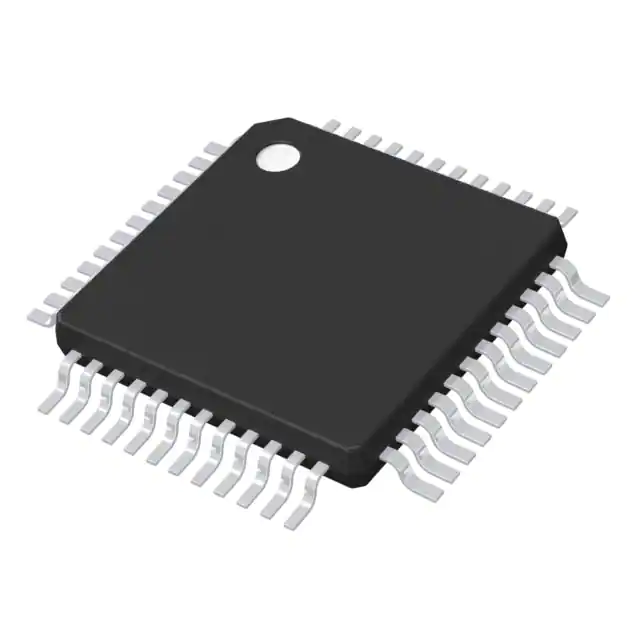
- Part No.:
- STM32G070CBT6
- Manufacturer:
- STMicroelectronics
- Category:
- Microcontrollers
- Package:
- 48-LQFP
- Datasheet:
-
 STM32G070CBT6.pdf
- Description:
- IC MCU 32BIT 128KB FLASH 48LQFP
- Quantity:
- Payment:

- Shipping:

Inventory:31,440
Please send an inquiry. Send us your inquiry, and we will respond immediately.
Product details
Overview
STM32G070CBT6 from STMicroelectronics is an Arm® Cortex®-M0+ 32-bit microcontroller with 128 KB Flash, 36 KB SRAM, operating at up to 64 MHz, supporting 4 USARTs, 12-bit ADC (0.4 µs conversion), and RTC with wakeup from Stop/Standby - deployed in industrial sensor nodes requiring low-power connectivity and real-time control.
For engineers reviewing the STM32G070CBT6 datasheet, STM32G070CBT6 pinout, STM32G070CBT6 application, or STM32G070CBT6 equivalent, key selection criteria include its 64-pin LQFP package, 59 fast I/Os (including 5 V-tolerant), dual I²C with Fast-mode Plus, four USARTs with LIN/IrDA support, and hardware CRC unit for firmware integrity verification.
Technical Context
The STM32G070CBT6 integrates an Arm Cortex-M0+ core with MPU, internal 16 MHz RC oscillator + PLL for clock scaling, and a dedicated CRC calculation unit for secure firmware updates. Its memory subsystem includes 128 KB flash with readout protection and 36 KB SRAM (32 KB with hardware parity).
Power architecture supports three low-power modes (Sleep, Stop, Standby) with VBAT backup for RTC and registers; clock system includes 4–48 MHz HSE, 32 kHz LSE with calibration, and ±5% internal 32 kHz RC - enabling precise timekeeping and rapid wake-up (<5 µs from Sleep).
Key Specifications
| Parameter | Value and Actual Design Meaning |
|---|---|
| CPU Core | Arm Cortex-M0+, 64 MHz max - enables deterministic real-time execution with low gate count and power efficiency. |
| Flash / RAM | 128 KB flash (with protection), 36 KB SRAM (32 KB with HW parity) - sufficient for secure bootloader + application firmware in space-constrained edge devices. |
| ADC | 12-bit, 0.4 µs conversion, up to 16 external channels - supports high-speed analog sensing (e.g., motor current, temperature) without CPU overhead. |
| Timers | 11 timers: 1 advanced (TIM1), 5 general-purpose, 2 basic, 2 watchdogs, SysTick - enables motor control, PWM generation, and system supervision in one chip. |
| Communication | 2x I²C (Fast-mode Plus, 1 Mbit/s), 4x USART (LIN/IrDA/ISO7816), 2x SPI (32 Mbit/s) - meets industrial serial protocol requirements without external transceivers. |
| Operating Voltage | 2.0–3.6 V - compatible with single-cell Li-ion, 3.3 V logic rails, and battery-backed operation via VBAT pin. |
| Temperature Range | −40°C to +85°C - qualified for industrial ambient environments including factory automation and smart metering. |
Pinout & Package
LQFP64 (10 × 10 mm, ECOPACK2-compliant) with 64 pins; 59 are user-configurable I/Os, including multiple 5 V-tolerant inputs and dedicated SWD debug interface (SWCLK/SWDIO/NRST).
| Pin/Terminal | Circuit Role | Design Meaning |
|---|---|---|
| VDD/VSS | Power supply / Ground | Dual VDD/VSS pairs ensure stable core and I/O rail decoupling; supports 2.0–3.6 V operation. |
| PA0–PA15, PB0–PB15, PC0–PC15, PD0–PD12, PF0–PF1 | General-purpose I/O | 59 total mappable GPIOs; all support external interrupts and alternate functions (USART, SPI, I²C, timers). |
| NRST | Active-low reset input | Asynchronous reset with internal pull-up; accepts 1.65–5.5 V logic - simplifies external reset circuitry. |
| SWCLK/SWDIO | Serial Wire Debug interface | 2-pin SWD enables full debug, programming, and trace without JTAG overhead - reduces PCB footprint. |
| VREF+ / VREF− / VBAT | Analog reference / Backup supply | VREF+ sets ADC reference; VBAT powers RTC and backup registers during main power loss - enables always-on timekeeping. |
Key Features
| Feature | Design Value |
|---|---|
| Hardware CRC unit | Accelerates firmware image validation and data integrity checks - critical for OTA updates in field-deployed devices. |
| 5 V-tolerant I/Os | Enables direct interfacing with legacy 5 V peripherals (e.g., sensors, displays) without level shifters - reduces BOM cost and board area. |
| RTC with calendar & alarm | Full binary-coded decimal (BCD) calendar, periodic wakeup from Stop/Standby - supports scheduled sensor sampling and low-power scheduling. |
| Low-power Stop mode | Typical 0.34 µA (Stop 0) with RTC running - extends battery life in wireless sensor nodes beyond 10 years on coin cell. |
| USART with LIN support | Hardware LIN break detection and sync field generation - eliminates software timing constraints for automotive body electronics integration. |
Applications
| Industrial Sensor Node | Smart Meter Interface |
|---|---|
Use Scenario: Battery-powered environmental monitoring node collecting temperature, humidity, and CO₂ via I²C sensors and transmitting over UART-to-LoRaWAN gateway. IC Role / Device Role / Timing Role: Central MCU managing sensor polling, ADC acquisition, data preprocessing, and serial communication - coordinated by RTC-triggered wakeup and SysTick-based task scheduling. Use Value: 0.34 µA Stop mode + VBAT-backed RTC enables multi-year operation on CR2032; 5 V-tolerant I/Os simplify connection to legacy analog sensors. | Use Scenario: Sub-metering module in residential electricity meter, reading pulse outputs from mechanical counters and communicating via RS-485 (via USART + external transceiver). IC Role / Device Role / Timing Role: Protocol bridge and pulse counter - uses TIM1 input capture for accurate kWh pulse counting and USART1 in RS-485 half-duplex mode with automatic direction control. Use Value: Hardware LIN-capable USART supports ISO/IEC 14543-3-10 physical layer emulation; CRC unit validates firmware updates during remote meter reconfiguration. |
| Motor Control Actuator | Home Appliance UI Controller |
Use Scenario: Brushless DC motor driver in HVAC blower, using hall-effect feedback and driving 3-phase inverter via PWM outputs. IC Role / Device Role / Timing Role: Real-time motor controller - TIM1 generates complementary PWM with dead-time insertion; ADC samples phase currents synchronously with PWM triggers. Use Value: Advanced timer with fault protection input (BKIN) disables PWM on overcurrent; 12-bit ADC oversampling achieves 14-bit effective resolution for precise current sensing. | Use Scenario: Touch-button and LED status controller in washing machine control panel, responding to capacitive touch and driving RGB LEDs via PWM. IC Role / Device Role / Timing Role: Dedicated UI processor - GPIOs scan matrix keypad, TIM14/TIM15 drive RGB LED brightness, and I²C interfaces with display driver IC. Use Value: 59 fast I/Os allow simultaneous button scan, LED PWM, and display comms; 32 KB SRAM with parity ensures reliable UI state retention during power dips. |
Equivalent & Alternatives
The following parts are listed as comparable options for similar microcontroller applications.
| Alternative Part | Technical Difference | Application Difference | Selection Advice |
|---|---|---|---|
| STM32G030F6P6 | 20-pin TSSOP, 16 KB Flash, 8 KB RAM, no VBAT, no RTC calendar, 2x USART | Limited I/O count and peripheral set - suitable only for ultra-low-cost, minimal-feature control tasks (e.g., simple LED sequencer) | Select when BOM cost is primary constraint and RTC/calendar, ADC channels, or I/O count are non-critical. |
| STM32G0B1RET6 | LQFP64, 512 KB Flash, 144 KB RAM, USB 2.0 FS, 2x ADC, 2x DAC, higher temp grade (−40°C to +125°C) | Supports USB device/host, analog output, and extended temperature - targets more complex human-machine interfaces and automotive under-hood modules | Select when USB connectivity, dual DACs, or extended temperature operation are required - not drop-in compatible due to pinout and peripheral register differences. |
Compared with STM32G030F6P6, the STM32G070CBT6 provides 8× more Flash, integrated RTC with calendar, and 59 I/Os versus 16 - making it viable for feature-rich sensor hubs. Versus STM32G0B1RET6, it trades USB/DAC for lower cost and identical package footprint - ideal for cost-sensitive industrial control where USB is unnecessary.
Availability
STM32G070CBT6 is available at Aetrix Electronics and suitable for industrial sensor nodes, smart meter interfaces, motor control actuators, and home appliance UI controllers requiring stable component supply across multi-year production cycles.
Supply support for STM32G070CBT6 includes scheduled delivery planning, volume procurement assistance, BOM continuity management, traceable sourcing, and lifecycle availability coordination for OEM customers, industrial embedded developers, connected-device designers, and electronics production programs.
Manufacturer
STMicroelectronics is a global semiconductor leader headquartered in Geneva, Switzerland, designing and manufacturing microcontrollers, power management ICs, MEMS, and analog products for industrial, automotive, and consumer markets.
The STM32G0 series targets cost-sensitive, low-power embedded applications - delivering Cortex-M0+ performance with enhanced security features, robust analog peripherals, and streamlined development tools for rapid time-to-market.
FAQ
What is the maximum operating frequency of the STM32G070CBT6?
The STM32G070CBT6 operates at up to 64 MHz using its internal 16 MHz RC oscillator with PLL multiplication or an external crystal up to 48 MHz. This frequency is fully supported across the −40°C to +85°C range with 2.0–3.6 V supply, and all peripherals (timers, ADC, communication interfaces) are rated for full-speed operation at this clock rate.
Does the STM32G070CBT6 support hardware encryption or secure boot?
No - the STM32G070CBT6 does not include hardware cryptographic accelerators (AES, SHA, PKA) or secure boot ROM. It supports readout protection (RDP) Level 1 and write protection for Flash/SRAM, but secure firmware validation must be implemented in software using its hardware CRC unit and external trusted elements if required.
Can the STM32G070CBT6 drive 5 V logic directly?
Yes - up to 52 of its 59 GPIOs are 5 V-tolerant on input (including all alternate function pins), allowing direct connection to 5 V peripherals without external level shifters. However, its I/Os output only up to VDD (max 3.6 V), so external drivers or translators are needed for 5 V output signaling.
What debug interface does the STM32G070CBT6 use, and is JTAG supported?
The STM32G070CBT6 uses Serial Wire Debug (SWD) with two dedicated pins: SWCLK and SWDIO. JTAG is not supported - the debug port is SWD-only, which reduces pin count and PCB routing complexity while maintaining full programming, breakpoint, and real-time trace capability via ST-LINK-compatible debuggers.
STM32G070CBT6 Specifications
- Product attributes
- Attribute value
- Manufacturer:
- STMicroelectronics
- Package/Case:
- 48-LQFP
- Series:
- STM32G0
- Packaging:
- Tray
- Product Status:
- Active
- Programmable:
- Not Verified
- Core Processor:
- ARM® Cortex®-M0+
- Core Size:
- 32-Bit Single-Core
- Speed:
- 64MHz
- Connectivity:
- I2C, IrDA, LINbus, SPI, SmartCard, UART/USART
- Peripherals:
- DMA, I2S, POR, PWM, WDT
- Number of I/O:
- 43
- Program Memory Size:
- 128KB (128K x 8)
- Program Memory Type:
- FLASH
- EEPROM Size:
- -
- RAM Size:
- 36K x 8
- Voltage - Supply (Vcc/Vdd):
- 2V ~ 3.6V
- Data Converters:
- A/D 17x12b
- Oscillator Type:
- External, Internal
- Operating Temperature:
- -40°C ~ 85°C (TA)
- Grade:
- -
- Qualification:
- -
- Mounting Type:
- Surface Mount
- Supplier Device Package:
STM32G070CBT6 FAQ
1.How can I place an order for STM32G070CBT6 through Aetrix?
Please submit a Request for Quotation (RFQ) for STM32G070CBT6 on Aetrix. Our sales agent will provide a competitive quotation and guide you through the order confirmation once you accept the terms.
2.Are the price and stock information for STM32G070CBT6 reliable?
The price and inventory of STM32G070CBT6 are updated periodically and may fluctuate due to market conditions. Stock and pricing data are typically refreshed every 24 hours. Quotation validity for STM32G070CBT6 is usually 5 days.
3.What payment methods are accepted for STM32G070CBT6?
We accept Wire Transfer, PayPal, Credit Card, Western Union, MoneyGram, and Escrow for STM32G070CBT6 transactions.
Note: Certain payment methods may incur a processing fee.
4.How is shipping managed for STM32G070CBT6?
STM32G070CBT6 orders can be shipped via leading logistics carriers, including DHL, UPS, FedEx, TNT, or Registered Mail.
Once your STM32G070CBT6 order is processed, you will receive an email with the shipment details and tracking number.
Note: Tracking information may take up to 24 hours to appear. Express delivery typically takes 3–5 business days.
5.How can I obtain technical support or documentation for STM32G070CBT6?
For technical support, including STM32G070CBT6 datasheets, pinout diagrams, or application guidance, please contact our engineering support team. They can provide detailed documentation and assistance for your STM32G070CBT6 requirements.
6.How does Aetrix verify that STM32G070CBT6 is sourced from the original manufacturer or authorized distributors?
All STM32G070CBT6 products on Aetrix are procured from qualified distributors and authorized channels. Our dedicated quality assurance team conducts strict verification, including traceability checks and, if necessary, third-party testing. This ensures that STM32G070CBT6 meets industry standards.
7.What is the process for return or replacement of STM32G070CBT6?
All STM32G070CBT6 units undergo pre-shipment inspection (PSI). If there is an issue with STM32G070CBT6, returns or replacements are accepted under the following conditions:
1.Quantity discrepancies, incorrect items, or visible external defects (such as breakage or corrosion), acknowledged by Aetrix.
2.The issue is reported within 90 days of delivery.
3.The STM32G070CBT6 part is unused and in its original packaging.
Return procedure for STM32G070CBT6:
1.Submit a request within 90 days.
2.Obtain a Return Material Authorization (RMA) from Aetrix.
STM32G070CBT6 Tags

-
ATTINY4-TSHR
Microchip Technology
-
ATTINY10-TSHR
Microchip Technology
-
ATTINY10-TS8R
Microchip Technology

-
ATTINY202-SSNR
Microchip Technology
-
ATTINY202-SSFR
Microchip Technology
-
ATTINY402-SSNR
Microchip Technology

-
PIC16F15213T-I/MF
Microchip Technology
-
PIC16F15213-E/MF
Microchip Technology

-
PIC10F200T-I/OT
Microchip Technology
-
ATTINY412-SSNR
Microchip Technology
-
PIC10F202T-I/OT
Microchip Technology

-
ATTINY404-SSNR
Microchip Technology
Tech Hub

An engineering guide to LED driver operation, constant-current and constant-voltage outputs, linear and switching topologies, dimming, IC selection, calculations, replacement compatibility, and fault c…

Operational amplifier guide covering op amp basics, feedback, ideal vs real op amps, common configurations, buffer circuits, offset, bias current, gain-bandwidth, slew rate, rail-to-rail limits and sel…

Jumper cables guide covering safe connection order, red and black clamp placement, final ground connection, cable gauge, length, clamp quality, copper vs CCA cables, jump starter comparison and battery…

LDO regulator guide covering low dropout voltage, power dissipation, thermal design, PSRR, output noise, capacitor stability, adjustable LDO circuits, LDO vs buck converter and datasheet selection chec…

Conditional Access Module guide covering CAM meaning, CI/CI+ interface, smart card authorization, DVB security workflow, TV and set-top box compatibility, internal electronics, ESD protection, connecto…

Guide to electronic component obsolescence covering EOL risk, PCN/PDN notices, last-time buy planning, replacement options, form-fit-function validation, counterfeit risk and BOM lifecycle management.

18650 battery guide covering lithium-ion cell basics, 3.6V/3.7V voltage, 4.2V charging, mAh and Wh capacity, protected cells, chargers, BMS, series-parallel packs, holders, welding and sourcing checks.…

Hall effect sensor guide covering working principle, linear and digital sensors, Arduino circuits, current sensing, speed detection, automotive applications, A3144 examples, signal filtering and datash…

Product Change Notification guide for electronic components, covering PCN meaning, PCN vs PDN/EOL, common change types, risk levels, form-fit-function review, engineering validation, BOM control, LTB/L…

A practical guide to blend door actuators, covering HVAC function, symptoms, location, AC and heater issues, reset and calibration, replacement cost, electrical diagnosis, compatibility checks, and rep…


