
 My Inquiry
 My Account


STMicroelectronics STM32G473VEH6TR
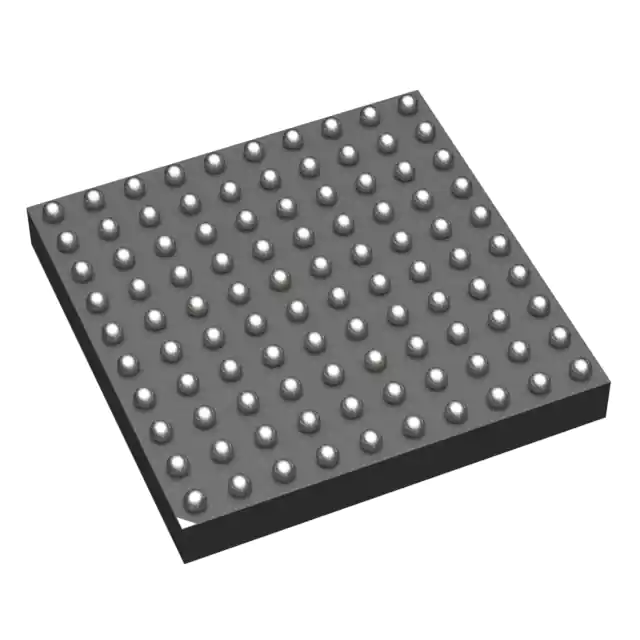
- Part No.:
- STM32G473VEH6TR
- Manufacturer:
- STMicroelectronics
- Category:
- Microcontrollers
- Package:
- 100-TFBGA
- Datasheet:
-
 STM32G473VEH6TR.pdf
- Description:
- IC MCU 32BIT 512KB FLSH 100TFBGA
- Quantity:
- Payment:

- Shipping:

Inventory:3,351
Please send an inquiry. Send us your inquiry, and we will respond immediately.
Product details
Overview
STM32G473VEH6TR from STMicroelectronics is a 32-bit Arm® Cortex®-M4 microcontroller with FPU and ART Accelerator, delivering 170 MHz/213 DMIPS performance, 512 KB Flash with ECC, 128 KB SRAM (96 KB + 32 KB CCM), and integrated analog peripherals including 5×12-bit ADCs (0.25 µs), 7×DAC channels, 6×OPAMPs, and CORDIC/FMAC math accelerators - deployed in motor control, digital power conversion, and industrial sensing systems.
For engineers reviewing the STM32G473VEH6TR datasheet, STM32G473VEH6TR pinout, STM32G473VEH6TR application, or STM32G473VEH6TR equivalent, key selection criteria include its dual-bank Flash with PCROP, 32-bit advanced timers with dead-time control, FDCAN support for automotive-grade communication, and VREFBUF with selectable 2.048 V / 2.5 V / 2.9 V outputs for precision analog subsystems.
Technical Context
The STM32G473VEH6TR implements an Arm Cortex-M4 core with hardware FPU and Adaptive Real-Time (ART) Accelerator enabling zero-wait-state execution from Flash at 170 MHz. Its memory architecture includes two independent Flash banks supporting read-while-write and secure code protection (PCROP), plus 96 KB SRAM with parity on first 32 KB and 32 KB CCM-SRAM with parity on instruction/data bus.
Analog integration centers on five 12-bit ADCs (up to 42 channels, 0.25 µs conversion), seven 12-bit DACs (3 buffered external @ 1 MSPS, 4 unbuffered internal @ 15 MSPS), six rail-to-rail OPAMPs configurable as PGAs, and dedicated hardware accelerators: CORDIC for trigonometric computation and FMAC for FIR/IIR filtering - all synchronized via a multi-AHB interconnect matrix.
Key Specifications
| Parameter | Value and Actual Design Meaning |
|---|---|
| CPU Core | Arm Cortex-M4 with FPU and MPU, 170 MHz max frequency, 213 DMIPS performance |
| Flash Memory | 512 KB with ECC, dual-bank architecture enabling read-while-write and PCROP security |
| SRAM | 96 KB general-purpose SRAM (32 KB with hardware parity), plus 32 KB CCM-SRAM with parity |
| Analog Peripherals | 5×12-bit ADCs (42 ch, 0.25 µs), 7×12-bit DACs (3 ext buffered @ 1 MSPS), 6×OPAMPs, 7×comparators |
| Timers | 14 timers including 3×16-bit advanced motor control timers (8 PWM channels, dead time, emergency stop) |
| Communication | 3×FDCAN (flexible data rate), 5×USART/UART, 4×I²C (Fast Mode Plus), 4×SPI, USB FS, UCPD, SAI |
| Math Acceleration | CORDIC engine for sin/cos/tan/log/exp; FMAC for real-time filter coefficient computation |
Pinout & Package
STM32G473VEH6TR is housed in a 100-pin LQFP package (14 × 14 mm, 0.5 mm pitch), designated by package code '1L' per STMicroelectronics documentation. This RoHS-compliant, surface-mount package supports industrial temperature range (–40 °C to +85 °C) and features exposed thermal pad for enhanced thermal dissipation in high-duty-cycle applications.
| Pin/Terminal | Circuit Role | Design Meaning |
|---|---|---|
| VDD, VDDA | Core & analog supply | 1.71–3.6 V operation; separate analog domain enables noise-isolated precision measurements |
| VSS, VSSA | Digital & analog ground | Independent grounding paths reduce coupling between digital switching noise and analog signal chains |
| NRST | Active-low reset input | Asynchronous reset with internal pull-up; accepts external push-button or supervisor IC assertion |
| BOOT0 | Boot mode selection | High at power-on selects system memory bootloader; low selects user Flash memory execution |
| PA0–PA15, PB0–PB15, etc. | General-purpose I/O | Up to 107 fast I/Os; most support 5 V tolerance, external interrupts, and multiple alternate functions |
| PA1, PA2, PA3, etc. | ADC/DAC/OPAMP channels | Direct routing to analog peripherals enables low-latency sensor acquisition and closed-loop actuation |
| PH0, PH1 | HSE crystal oscillator inputs | Supports 4–48 MHz external crystal for precise clock generation and USB/FDCAN timing compliance |
| PA9, PA10 | USB D+/D− | Full-speed USB 2.0 interface with LPM and BCD support; no external PHY required |
Key Features
| Feature | Design Value |
|---|---|
| CORDIC accelerator | Hardware trigonometric/logarithmic computation reduces CPU load in motor vector control and sensor fusion |
| FMAC unit | Dedicated filter math engine enables real-time FIR/IIR filtering without interrupt latency or CPU overhead |
| Advanced motor timers (TIM1/TIM8/TIM20) | 8-channel PWM with programmable dead time, complementary outputs, and emergency stop input for BLDC/PMSM drives |
| VREFBUF | On-chip voltage reference buffer with factory-trimmed 2.048 V / 2.5 V / 2.9 V outputs for ADC/DAC calibration and sensor excitation |
| FDCAN controllers | Three flexible CAN FD interfaces supporting up to 5 Mbit/s data phase, ideal for automotive diagnostics and industrial networking |
| UCPD controller | Integrated USB Type-C™ and Power Delivery protocol engine eliminates need for external PD controller IC in USB-C designs |
Applications
| Industrial Motor Control | Digital Power Supply |
|---|---|
Use Scenario: Closed-loop field-oriented control (FOC) of 3-phase BLDC motors in HVAC compressors and industrial pumps. IC Role / Device Role / Timing Role: Main system controller executing FOC algorithm, generating 6-channel PWM with synchronized ADC sampling and dead-time management. Use Value: CORDIC and FMAC offload compute-intensive trigonometric and filtering operations, enabling 20 kHz PWM carrier frequency with deterministic timing. |
Use Scenario: Digital AC-DC and DC-DC power supplies with adaptive voltage regulation and fault protection. IC Role / Device Role / Timing Role: Primary digital controller managing PFC and LLC stages, performing real-time voltage/current loop control and thermal monitoring. Use Value: Dual-bank Flash allows seamless firmware updates during operation; 12-bit ADCs with hardware oversampling achieve <1% output regulation accuracy. |
| Programmable Logic Controller (PLC) | Smart Sensor Hub |
Use Scenario: Compact modular PLC I/O modules requiring deterministic I/O scanning, motion profiling, and fieldbus connectivity. IC Role / Device Role / Timing Role: Central processing unit handling ladder logic execution, high-speed counter inputs, and FDCAN-based distributed I/O synchronization. Use Value: 107 GPIOs with 5 V tolerance simplify interfacing to legacy 24 V industrial sensors; RTC with alarm enables scheduled maintenance triggers. |
Use Scenario: Multi-sensor environmental monitoring node integrating temperature, humidity, pressure, and gas sensing with edge analytics. IC Role / Device Role / Timing Role: Sensor fusion hub aggregating data from analog/digital sensors, running lightweight ML inference, and transmitting via LPUART/USB. Use Value: Integrated OPAMPs condition weak sensor signals; VREFBUF provides stable excitation for resistive bridges; low-power modes extend battery life >1 year. |
Equivalent & Alternatives
The following parts are listed as comparable options for similar microcontroller applications.
| Alternative Part | Technical Difference | Application Difference | Selection Advice |
|---|---|---|---|
| STM32G474RET6 | Same core/peripherals but 512 KB Flash, 256 KB SRAM (128 KB + 128 KB CCM); no VREFBUF; different pinout | Better suited for memory-intensive firmware with large buffers or OTA update partitions | Select when CCM-SRAM >32 KB is required and VREFBUF is not needed for analog subsystems |
| STM32F303VET6 | Cortex-M4F @ 72 MHz, 512 KB Flash, 80 KB SRAM; no CORDIC/FMAC; only 3×ADC, 2×DAC, 4×OPAMP | Limited math acceleration and analog density; lacks FDCAN and UCPD | Choose for cost-sensitive, lower-performance motor control where USB-C or CAN FD are unnecessary |
Compared with STM32G473VEH6TR, the STM32G474RET6 trades VREFBUF and pin compatibility for doubled CCM-SRAM - beneficial for complex control algorithms - while the STM32F303VET6 offers legacy toolchain continuity at reduced analog/math capability and no USB-C/Power Delivery support.
Availability
STM32G473VEH6TR is available at Aetrix Electronics and suitable for industrial motor control, digital power conversion, and smart sensor hub applications requiring stable component supply, long-term lifecycle assurance, and full traceability across production batches.
Supply support for STM32G473VEH6TR includes scheduled delivery planning, volume procurement assistance, BOM continuity management, traceable sourcing, and lifecycle availability coordination for OEM customers, industrial embedded developers, connected-device designers, and electronics production programs.
Manufacturer
STMicroelectronics is a global semiconductor leader headquartered in Geneva, Switzerland, designing and manufacturing microcontrollers, power devices, sensors, and analog ICs for industrial, automotive, and consumer markets.
The STM32G4 series targets high-efficiency digital power, motor control, and analog-intensive embedded systems - combining Cortex-M4 performance with hardware math acceleration, rich analog integration, and robust industrial qualification.
FAQ
What is the operating temperature range for STM32G473VEH6TR?
The STM32G473VEH6TR is rated for industrial temperature operation from –40 °C to +85 °C ambient, validated per STMicroelectronics' qualified process and documented in Section 5.3.1 of DS12712 Rev 5. Thermal derating begins above 85 °C ambient, and junction temperature must remain ≤125 °C under all operating conditions.
Does STM32G473VEH6TR support USB Type-C™ Power Delivery negotiation?
Yes - it integrates a dedicated USB Type-C™ and Power Delivery (UCPD) controller compliant with USB PD 3.0 specification. The UCPD peripheral handles BMC physical layer signaling, policy engine execution, and VCONN switching without external components, enabling source/sink/host role implementation in compact USB-C designs.
How many ADC channels can be simultaneously sampled with hardware synchronization?
The STM32G473VEH6TR supports simultaneous sampling across up to 5 independent 12-bit ADCs using hardware trigger synchronization via TIMx TRGO or external event. Each ADC supports up to 42 channels (with multiplexing), and combined throughput reaches 5 MSps when oversampling is disabled - confirmed in Section 3.18 of DS12712.
Is the Flash memory protected against unauthorized readout?
Yes - the device implements Proprietary Code Readout Protection (PCROP) allowing selective write-protection and read-protection of Flash sectors, plus standard RDP (Readout Protection) levels. PCROP enables secure firmware IP protection while permitting field updates to unprotected regions, as detailed in Section 3.4 and RM0440 reference manual.
STM32G473VEH6TR Specifications
- Product attributes
- Attribute value
- Manufacturer:
- STMicroelectronics
- Package/Case:
- 100-TFBGA
- Series:
- STM32G4
- Packaging:
- Tape & Reel (TR)
- Product Status:
- Active
- Programmable:
- Not Verified
- Core Processor:
- ARM® Cortex®-M4
- Core Size:
- 32-Bit Single-Core
- Speed:
- 170MHz
- Connectivity:
- CANbus, I2C, IrDA, LINbus, QSPI, SAI, SPI, UART/USART, USB
- Peripherals:
- Brown-out Detect/Reset, DMA, I2S, POR, PWM, WDT
- Number of I/O:
- 86
- Program Memory Size:
- 512KB (512K x 8)
- Program Memory Type:
- FLASH
- EEPROM Size:
- -
- RAM Size:
- 128K x 8
- Voltage - Supply (Vcc/Vdd):
- 1.71V ~ 3.6V
- Data Converters:
- A/D 42x12b; D/A 7x12b
- Oscillator Type:
- Internal
- Operating Temperature:
- -40°C ~ 85°C (TA)
- Grade:
- -
- Qualification:
- -
- Mounting Type:
- Surface Mount
- Supplier Device Package:
STM32G473VEH6TR FAQ
1.How can I place an order for STM32G473VEH6TR through Aetrix?
Please submit a Request for Quotation (RFQ) for STM32G473VEH6TR on Aetrix. Our sales agent will provide a competitive quotation and guide you through the order confirmation once you accept the terms.
2.Are the price and stock information for STM32G473VEH6TR reliable?
The price and inventory of STM32G473VEH6TR are updated periodically and may fluctuate due to market conditions. Stock and pricing data are typically refreshed every 24 hours. Quotation validity for STM32G473VEH6TR is usually 5 days.
3.What payment methods are accepted for STM32G473VEH6TR?
We accept Wire Transfer, PayPal, Credit Card, Western Union, MoneyGram, and Escrow for STM32G473VEH6TR transactions.
Note: Certain payment methods may incur a processing fee.
4.How is shipping managed for STM32G473VEH6TR?
STM32G473VEH6TR orders can be shipped via leading logistics carriers, including DHL, UPS, FedEx, TNT, or Registered Mail.
Once your STM32G473VEH6TR order is processed, you will receive an email with the shipment details and tracking number.
Note: Tracking information may take up to 24 hours to appear. Express delivery typically takes 3–5 business days.
5.How can I obtain technical support or documentation for STM32G473VEH6TR?
For technical support, including STM32G473VEH6TR datasheets, pinout diagrams, or application guidance, please contact our engineering support team. They can provide detailed documentation and assistance for your STM32G473VEH6TR requirements.
6.How does Aetrix verify that STM32G473VEH6TR is sourced from the original manufacturer or authorized distributors?
All STM32G473VEH6TR products on Aetrix are procured from qualified distributors and authorized channels. Our dedicated quality assurance team conducts strict verification, including traceability checks and, if necessary, third-party testing. This ensures that STM32G473VEH6TR meets industry standards.
7.What is the process for return or replacement of STM32G473VEH6TR?
All STM32G473VEH6TR units undergo pre-shipment inspection (PSI). If there is an issue with STM32G473VEH6TR, returns or replacements are accepted under the following conditions:
1.Quantity discrepancies, incorrect items, or visible external defects (such as breakage or corrosion), acknowledged by Aetrix.
2.The issue is reported within 90 days of delivery.
3.The STM32G473VEH6TR part is unused and in its original packaging.
Return procedure for STM32G473VEH6TR:
1.Submit a request within 90 days.
2.Obtain a Return Material Authorization (RMA) from Aetrix.
STM32G473VEH6TR Tags

-
ATTINY4-TSHR
Microchip Technology
-
ATTINY10-TSHR
Microchip Technology
-
ATTINY10-TS8R
Microchip Technology

-
ATTINY202-SSNR
Microchip Technology
-
ATTINY202-SSFR
Microchip Technology
-
ATTINY402-SSNR
Microchip Technology
-
PIC16F15213T-I/MF
Microchip Technology
-
PIC16F15213-E/MF
Microchip Technology

-
PIC10F200T-I/OT
Microchip Technology
-
ATTINY412-SSNR
Microchip Technology
-
PIC10F202T-I/OT
Microchip Technology
-
ATTINY404-SSNR
Microchip Technology
Tech Hub

A practical engineering guide to 3.3V and 5V logic compatibility, input thresholds, resistor dividers, translator ICs, MOSFET level shifting, I2C pull-ups, timing limits and power-sequencing risks.

The 74HC595 uses push-pull logic outputs, while the TPIC6B595 uses 50 V open-drain DMOS sinks for higher-power loads. This guide compares timing, current limits, 3.3 V interfacing, load wiring, thermal…

The 74HC595 converts serial data into eight stable parallel outputs. This guide covers pin functions, shift and storage timing, OE and MR behavior, drive-current limits, cascading, voltage compatibilit…

A technical comparison of level-sensitive latches and edge-triggered flip-flops, covering timing windows, setup and hold limits, master–slave operation, time borrowing, race-through, HDL inference and…

A D latch stores one bit while Enable controls when data can pass. This reference covers gate-level operation, truth tables, transparency, setup and hold timing, LE versus OE, common ICs and practical …

An SR latch stores one bit through cross-coupled feedback. This engineering reference covers NOR and NAND implementations, truth tables, forbidden-state recovery, gated operation, switch debouncing, fa…

Latch circuits retain one bit through feedback. This technical reference covers SR and D latches, truth tables, transparency, timing limits, latch-versus-flip-flop behavior, applications and common log…

An engineering guide to LED driver operation, constant-current and constant-voltage outputs, linear and switching topologies, dimming, IC selection, calculations, replacement compatibility, and fault c…

Operational amplifier guide covering op amp basics, feedback, ideal vs real op amps, common configurations, buffer circuits, offset, bias current, gain-bandwidth, slew rate, rail-to-rail limits and sel…

Jumper cables guide covering safe connection order, red and black clamp placement, final ground connection, cable gauge, length, clamp quality, copper vs CCA cables, jump starter comparison and battery…


