
 My Inquiry
 My Account


STMicroelectronics STM32H747BIT6
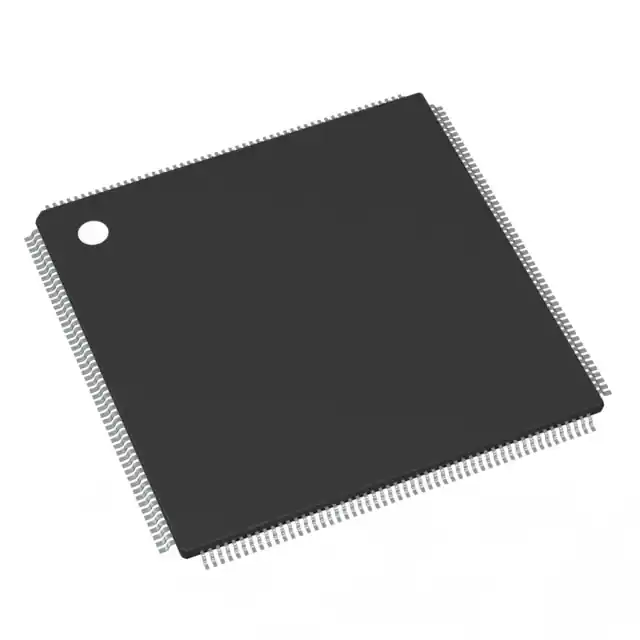
- Part No.:
- STM32H747BIT6
- Manufacturer:
- STMicroelectronics
- Category:
- Microcontrollers
- Package:
- 208-LQFP
- Datasheet:
-
 STM32H747BIT6.pdf
- Description:
- IC MCU 32BIT 2MB FLASH 208LQFP
- Quantity:
- Payment:

- Shipping:

Inventory:517
Please send an inquiry. Send us your inquiry, and we will respond immediately.
Product details
Overview
STM32H747BIT6 from STMicroelectronics is a dual-core 32-bit Arm® Cortex®-M7 (480 MHz) and Cortex®-M4 (240 MHz) microcontroller with 2 MB flash, 1 MB RAM (including 192 KB TCM), and integrated SMPS regulator. It supports DSI display interface, hardware JPEG codec, and dual CAN FD controllers. Used in high-performance industrial HMI and real-time motor control systems requiring deterministic M7/M4 task partitioning.
For engineers reviewing the STM32H747BIT6 datasheet, STM32H747BIT6 pinout, STM32H747BIT6 application, or STM32H747BIT6 equivalent, key selection criteria include dual-core clock domain isolation, TCM RAM allocation for time-critical routines, SMPS vs LDO supply configuration, and DSI host timing compliance for embedded display subsystems.
Technical Context
The device implements three independent power domains (D1/D2/D3) enabling selective clock gating and voltage scaling across CPU cores, peripherals, and system control logic. Its interconnect matrix comprises one AXI and two AHB bus matrices with five AHB2-APB bridges, supporting concurrent high-bandwidth data paths for DMA2D, MDMA, and Ethernet MAC.
Dual-core operation uses asymmetric architecture: Cortex-M7 executes high-throughput tasks (e.g., JPEG decode, FFT) with double-precision FPU and 32 KB L1 cache, while Cortex-M4 handles real-time I/O control (CAN FD, SDMMC, ADC acquisition) with ART Accelerator for zero-wait-state flash execution.
Key Specifications
| Parameter | Value and Actual Design Meaning |
|---|---|
| CPU Cores | Dual: Arm Cortex-M7 @ 480 MHz (1027 DMIPS) + Cortex-M4 @ 240 MHz (300 DMIPS) |
| Memory | 2 MB flash (read-while-write), 1 MB RAM (192 KB TCM + 864 KB SRAM + 4 KB backup) |
| Power Management | Integrated SMPS step-down converter (VCORE supply), LDO, and 6-level voltage scaling in Run/Stop modes |
| Graphics Interface | MIPI DSI host with integrated D-PHY, LCD-TFT controller up to XGA, Chrom-ART DMA2D accelerator |
| Analog Peripherals | 3× 16-bit ADCs (3.6 MSPS), 2× 12-bit DACs (1 MHz), 2× op-amps (7.3 MHz GBW), DFSDM sigma-delta filter |
| Communication | 2× CAN FD, 2× USB OTG (HS/FS + FS), Ethernet MAC, 4× I2C, 4× USART/UART, SPDIFRX, SWPMI, MDIO |
| Package | LQFP176 (24 × 24 mm), ECOPACK2-compliant, 176-pin quad flat pack with exposed thermal pad |
Pinout & Package
LQFP176 package with 0.5 mm pitch, 24 × 24 mm body size, and exposed thermal pad (EP) for enhanced thermal dissipation in high-clock applications. Pin count includes 168 GPIOs with interrupt capability, multiple power/ground pairs for noise suppression, and dedicated VCAP pins for SMPS stability.
| Pin/Terminal | Circuit Role | Design Meaning |
|---|---|---|
| VDD, VSS | Core power/ground | 1.62–3.6 V supply for digital circuitry; requires local decoupling per power domain |
| VCAP1, VCAP2 | SMPS stabilization | External 2.2 µF ceramic capacitors essential for SMPS loop stability and VCORE ripple control |
| PH0, PH1 | DSI clock/data lanes | Dedicated MIPI D-PHY differential pairs for display interface; require controlled impedance routing |
| PA0–PA15 | General-purpose I/O | Support multiple alternate functions including TIM2, USART2, SPI1, and ADC1_IN0–IN15 |
| NRST | Reset input | Active-low reset with internal pull-up; compatible with external push-button or supervisor IC assertion |
Key Features
| Feature | Design Value |
|---|---|
| Dual-core asymmetric processing | Enables hard real-time M4 control loop execution while M7 runs complex algorithms without jitter |
| Adaptive real-time (ART) accelerator | Eliminates flash wait states for Cortex-M4, enabling deterministic 240 MHz code execution from internal memory |
| Hardware JPEG codec | Offloads CPU from image decompression; supports YUV422/RGB565 output at up to 30 fps for UI rendering |
| Chrom-ART DMA2D accelerator | Performs 2D graphics operations (copy, blend, line draw) without CPU intervention, reducing frame buffer load |
| SMPS + LDO dual-regulator system | Reduces system power by >30% vs LDO-only supply; enables dynamic voltage scaling during low-load periods |
Applications
| Industrial HMI Display System | Real-Time Motor Drive Controller |
|---|---|
Use Scenario: Embedded panel PC with 7-inch MIPI DSI TFT display running Linux-based UI with touch feedback. IC Role / Device Role / Timing Role: STM32H747BIT6 acts as display subsystem controller: M7 renders JPEG assets via hardware codec, M4 manages touch controller SPI and PWM backlight dimming. Use Value: DSI host + DMA2D eliminates external GPU; TCM RAM isolates touch response latency (<100 µs) from UI rendering load. | Use Scenario: 3-phase PMSM servo drive with field-oriented control (FOC), current sensing, and CAN FD diagnostics. IC Role / Device Role / Timing Role: M4 executes 20 kHz FOC loop using ADC-triggered PWM; M7 runs EtherCAT stack and web server for remote configuration. Use Value: Dual-core isolation prevents network stack jitter from disrupting motor control timing; SMPS reduces heatsink size by 40%. |
| Medical Imaging Edge Node | Automotive ADAS Camera Preprocessor |
Use Scenario: Portable ultrasound device capturing RF echo data and performing beamforming on-chip before transmission. IC Role / Device Role / Timing Role: M7 processes raw ADC samples using DSP instructions and FFT; M4 manages SDIO storage and USB 2.0 host for data export. Use Value: 16-bit ADCs with 3.6 MSPS sample rate capture full bandwidth; DFSDM filters sigma-delta sensor outputs without CPU overhead. | Use Scenario: Front-facing camera module preprocessing raw Bayer data before feeding to SoC vision processor. IC Role / Device Role / Timing Role: DCMI interface captures 1280×720@60 fps; M7 applies demosaic and HDR fusion; M4 handles CAN FD vehicle bus communication. Use Value: Hardware JPEG compression reduces bandwidth to host SoC by 8×; DSI output enables direct connection to rear-seat display. |
Equivalent & Alternatives
The following parts are listed as comparable options for similar dual-core Arm Cortex-M microcontroller applications.
| Alternative Part | Technical Difference | Application Difference | Selection Advice |
|---|---|---|---|
| STM32H757IIK6 | Same dual-core architecture but in BGA240+25 package; adds cryptographic accelerators (AES, PKA, HASH) | Required for secure boot, OTA firmware updates, or TLS offload in connected devices | Select when hardware security features outweigh LQFP176's ease of prototyping and rework |
| STM32H743VIT6 | Single-core Cortex-M7 @ 480 MHz; identical peripheral set except no Cortex-M4, no DSI, no JPEG codec | Suitable for applications needing maximum M7 compute without display or dual-core coordination complexity | Choose when display interface and asymmetric core partitioning are unnecessary |
Compared with STM32H757IIK6, STM32H747BIT6 trades cryptographic acceleration for DSI/JPEG graphics capability and LQFP176 accessibility; versus STM32H743VIT6, it adds deterministic real-time control via dedicated M4 core but increases software complexity for inter-core messaging.
Availability
STM32H747BIT6 is available at Aetrix Electronics and suitable for industrial HMI, motor control, medical imaging, and automotive camera preprocessing requiring stable component supply across multi-year production cycles.
Supply support for STM32H747BIT6 includes scheduled delivery planning, volume procurement assistance, BOM continuity management, traceable sourcing, and lifecycle availability coordination for OEM customers, industrial embedded developers, connected-device designers, and electronics production programs.
Manufacturer
STMicroelectronics is a global semiconductor leader headquartered in Geneva, Switzerland, specializing in microcontrollers, power management, sensors, and automotive ICs.
The STM32H7 series targets high-end embedded applications demanding real-time determinism, rich graphics, and energy efficiency-designed specifically for industrial automation, medical devices, and advanced human-machine interfaces.
FAQ
What power supply configurations does STM32H747BIT6 support?
The STM32H747BIT6 supports three primary supply configurations: SMPS-only (for highest efficiency), LDO-only (for lowest noise), or hybrid (SMPS for VCORE + LDO for analog). External VCAP capacitors (2.2 µF each) are mandatory for SMPS stability, and voltage scaling ranges must be selected per operating frequency to meet current limits.
How is dual-core communication implemented between Cortex-M7 and Cortex-M4?
Dual-core communication uses shared memory (SRAM D2/D3) with hardware semaphores and mailbox interrupts. The M7 and M4 each have dedicated AXI/AHB bus access to memory regions, and inter-processor interrupts (IPI) trigger event-driven synchronization without polling. ST's CMSIS-RTOS2 abstraction layer provides standardized APIs for message queues and mutexes.
Does STM32H747BIT6 support external SDRAM, and what are the timing constraints?
Yes, the Flexible Memory Controller (FMC) supports SDRAM/LPSDR up to 125 MHz clock rate with configurable burst length, CAS latency, and refresh intervals. Required setup includes precise PCB trace matching for address/control lines, termination resistors on DQ lines, and adherence to tRCD/tRP/tRC timing parameters per JEDEC specification-verified in DS12930 Section 6.3.20.
What debug interfaces are available, and can both cores be debugged simultaneously?
The device supports SWD and JTAG interfaces with 4 KB embedded trace buffer. Both Cortex-M7 and Cortex-M4 cores can be debugged simultaneously using ST-LINK/V2-1 or compatible probes, with separate debug sessions managed via ST's STM32CubeIDE. Core-specific breakpoints, register views, and trace data are accessible without cross-core interference.
STM32H747BIT6 Specifications
- Product attributes
- Attribute value
- Manufacturer:
- STMicroelectronics
- Package/Case:
- 208-LQFP
- Series:
- STM32H7
- Packaging:
- Tray
- Product Status:
- Active
- Programmable:
- Not Verified
- Core Processor:
- ARM® Cortex®-M4/M7
- Core Size:
- 32-Bit Dual-Core
- Speed:
- 240MHz, 480MHz
- Connectivity:
- CANbus, EBI/EMI, Ethernet, I2C, IrDA, LINbus, MDIO, MMC/SD/SDIO, QSPI, SAI, SPDIF, SPI, SWPMI, UART/USART, USB OTG
- Peripherals:
- Brown-out Detect/Reset, DMA, I2S, LCD, POR, PWM, WDT
- Number of I/O:
- 168
- Program Memory Size:
- 2MB (2M x 8)
- Program Memory Type:
- FLASH
- EEPROM Size:
- -
- RAM Size:
- 1M x 8
- Voltage - Supply (Vcc/Vdd):
- 1.62V ~ 3.6V
- Data Converters:
- A/D 32x16b; D/A 2x12b
- Oscillator Type:
- Internal
- Operating Temperature:
- -40°C ~ 85°C (TA)
- Grade:
- -
- Qualification:
- -
- Mounting Type:
- Surface Mount
- Supplier Device Package:
STM32H747BIT6 FAQ
1.How can I place an order for STM32H747BIT6 through Aetrix?
Please submit a Request for Quotation (RFQ) for STM32H747BIT6 on Aetrix. Our sales agent will provide a competitive quotation and guide you through the order confirmation once you accept the terms.
2.Are the price and stock information for STM32H747BIT6 reliable?
The price and inventory of STM32H747BIT6 are updated periodically and may fluctuate due to market conditions. Stock and pricing data are typically refreshed every 24 hours. Quotation validity for STM32H747BIT6 is usually 5 days.
3.What payment methods are accepted for STM32H747BIT6?
We accept Wire Transfer, PayPal, Credit Card, Western Union, MoneyGram, and Escrow for STM32H747BIT6 transactions.
Note: Certain payment methods may incur a processing fee.
4.How is shipping managed for STM32H747BIT6?
STM32H747BIT6 orders can be shipped via leading logistics carriers, including DHL, UPS, FedEx, TNT, or Registered Mail.
Once your STM32H747BIT6 order is processed, you will receive an email with the shipment details and tracking number.
Note: Tracking information may take up to 24 hours to appear. Express delivery typically takes 3–5 business days.
5.How can I obtain technical support or documentation for STM32H747BIT6?
For technical support, including STM32H747BIT6 datasheets, pinout diagrams, or application guidance, please contact our engineering support team. They can provide detailed documentation and assistance for your STM32H747BIT6 requirements.
6.How does Aetrix verify that STM32H747BIT6 is sourced from the original manufacturer or authorized distributors?
All STM32H747BIT6 products on Aetrix are procured from qualified distributors and authorized channels. Our dedicated quality assurance team conducts strict verification, including traceability checks and, if necessary, third-party testing. This ensures that STM32H747BIT6 meets industry standards.
7.What is the process for return or replacement of STM32H747BIT6?
All STM32H747BIT6 units undergo pre-shipment inspection (PSI). If there is an issue with STM32H747BIT6, returns or replacements are accepted under the following conditions:
1.Quantity discrepancies, incorrect items, or visible external defects (such as breakage or corrosion), acknowledged by Aetrix.
2.The issue is reported within 90 days of delivery.
3.The STM32H747BIT6 part is unused and in its original packaging.
Return procedure for STM32H747BIT6:
1.Submit a request within 90 days.
2.Obtain a Return Material Authorization (RMA) from Aetrix.
STM32H747BIT6 Tags

-
ATTINY4-TSHR
Microchip Technology
-
ATTINY10-TSHR
Microchip Technology
-
ATTINY10-TS8R
Microchip Technology

-
ATTINY202-SSNR
Microchip Technology
-
ATTINY202-SSFR
Microchip Technology
-
ATTINY402-SSNR
Microchip Technology
-
PIC16F15213T-I/MF
Microchip Technology
-
PIC16F15213-E/MF
Microchip Technology

-
PIC10F200T-I/OT
Microchip Technology
-
ATTINY412-SSNR
Microchip Technology
-
PIC10F202T-I/OT
Microchip Technology
-
ATTINY404-SSNR
Microchip Technology
Tech Hub

A practical engineering guide to 3.3V and 5V logic compatibility, input thresholds, resistor dividers, translator ICs, MOSFET level shifting, I2C pull-ups, timing limits and power-sequencing risks.

The 74HC595 uses push-pull logic outputs, while the TPIC6B595 uses 50 V open-drain DMOS sinks for higher-power loads. This guide compares timing, current limits, 3.3 V interfacing, load wiring, thermal…

The 74HC595 converts serial data into eight stable parallel outputs. This guide covers pin functions, shift and storage timing, OE and MR behavior, drive-current limits, cascading, voltage compatibilit…

A technical comparison of level-sensitive latches and edge-triggered flip-flops, covering timing windows, setup and hold limits, master–slave operation, time borrowing, race-through, HDL inference and…

A D latch stores one bit while Enable controls when data can pass. This reference covers gate-level operation, truth tables, transparency, setup and hold timing, LE versus OE, common ICs and practical …

An SR latch stores one bit through cross-coupled feedback. This engineering reference covers NOR and NAND implementations, truth tables, forbidden-state recovery, gated operation, switch debouncing, fa…

Latch circuits retain one bit through feedback. This technical reference covers SR and D latches, truth tables, transparency, timing limits, latch-versus-flip-flop behavior, applications and common log…

An engineering guide to LED driver operation, constant-current and constant-voltage outputs, linear and switching topologies, dimming, IC selection, calculations, replacement compatibility, and fault c…

Operational amplifier guide covering op amp basics, feedback, ideal vs real op amps, common configurations, buffer circuits, offset, bias current, gain-bandwidth, slew rate, rail-to-rail limits and sel…

Jumper cables guide covering safe connection order, red and black clamp placement, final ground connection, cable gauge, length, clamp quality, copper vs CCA cables, jump starter comparison and battery…


