
 My Inquiry
 My Account


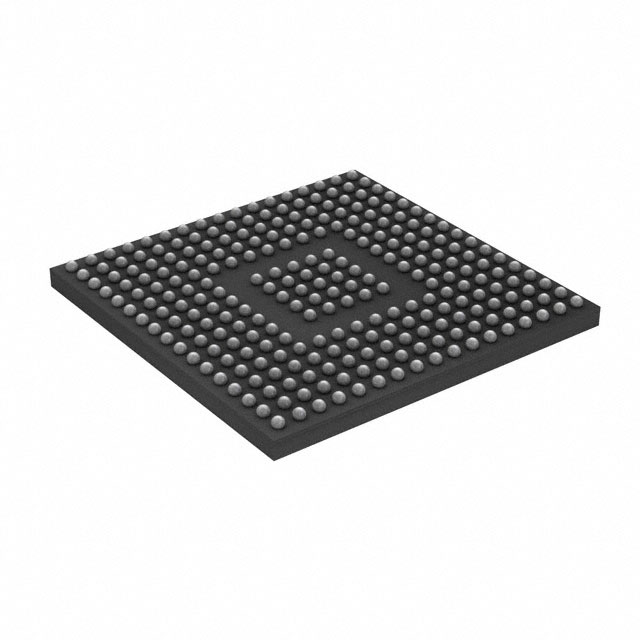
STMicroelectronics STM32H747XIH6U
- Part No.:
- STM32H747XIH6U
- Manufacturer:
- STMicroelectronics
- Category:
- Microcontrollers
- Package:
- 265-TFBGA
- Datasheet:
-
 STM32H747XIH6U.pdf
- Description:
- IC MCU 32BIT 2MB FLASH TFBGA
- Quantity:
- Payment:

- Shipping:

Inventory:1,984
Please send an inquiry. Send us your inquiry, and we will respond immediately.
Product details
Overview
STM32H747XIH6U from STMicroelectronics is a dual-core 32-bit Arm® Cortex®-M7 (480 MHz) and Cortex®-M4 (240 MHz) microcontroller with 2 MB flash, 1 MB RAM (including 192 KB TCM), integrated SMPS regulator, DSI host interface, and 168 GPIOs. It targets high-performance embedded applications requiring real-time processing, graphics acceleration, and low-power operation - such as industrial HMIs, medical imaging front-ends, and automotive infotainment gateways.
For engineers reviewing the STM32H747XIH6U datasheet, STM32H747XIH6U pinout, STM32H747XIH6U application, or STM32H747XIH6U equivalent, key selection considerations include dual-core asymmetric execution capability, on-chip voltage scaling across six ranges, hardware JPEG codec, MIPI D-PHY integration, and support for up to 125 MHz SDRAM interfaces.
Technical Context
The device implements three independent power domains (D1/D2/D3) enabling selective clock gating and domain shutdown. Its interconnect matrix comprises one AXI and two AHB bus matrices with five AHB2-APB and two AXI2-AHB bridges, supporting concurrent high-bandwidth data flows between CPU cores, DMA controllers, and peripherals.
Dual-core operation is coordinated via shared memory, semaphores, and interrupt forwarding through the NVIC. The M7 core features double-precision FPU, 16 KB I-cache/16 KB D-cache, and MPU; the M4 core includes single-precision FPU, ART Accelerator for flash execution, and MPU - both support TrustZone security extensions.
Key Specifications
| Parameter | Value and Actual Design Meaning |
|---|---|
| CPU Cores | Dual-core: Arm Cortex-M7 @ 480 MHz (1027 DMIPS) + Cortex-M4 @ 240 MHz (300 DMIPS) |
| Memory | 2 MB flash (read-while-write), 1 MB RAM (192 KB TCM + 864 KB SRAM + 4 KB backup SRAM) |
| Power Management | Integrated SMPS step-down converter, LDO, 6-range voltage scaling, 2.95 µA Standby current (RTC/LSE ON) |
| Graphics & Display | MIPI DSI host with embedded D-PHY, LCD-TFT controller (XGA), Chrom-ART DMA2D accelerator, hardware JPEG codec |
| Analog Peripherals | 3× 16-bit ADCs (3.6 MSPS), 2× 12-bit DACs (1 MHz), 2× op-amps (7.3 MHz GBW), 2× ultra-low-power comparators |
| Communication | 2× CAN FD, 4× USART/UART, 4× I²C FM+, 6× SPI, SPDIFRX, SDMMC, Ethernet MAC, USB OTG HS/FS, HDMI-CEC |
| Package | UFBGA169 (7 × 7 mm, 0.5 mm pitch), RoHS-compliant ECOPACK2 |
Pinout & Package
UFBGA169 package with 0.5 mm ball pitch, 7 × 7 mm body size, and standard BGA thermal and mechanical characteristics per STMicroelectronics specification A0YV. Ball grid layout supports high-speed signal integrity for DDR, DSI, and Ethernet interfaces.
| Pin/Terminal | Circuit Role | Design Meaning |
|---|---|---|
| VDD, VDDA, VDDIO2 | Core/analog/I/O supply rails | Independent 1.62–3.6 V domains enable mixed-voltage I/O and analog precision; VDDA must be ≥ VDD for ADC/DAC stability |
| VCAP_1, VCAP_2 | Core voltage decoupling | External 2.2 µF ceramic capacitors required for SMPS-regulated VCORE stability; placement within 2 mm of balls critical |
| OSC_IN/OSC_OUT | HSE crystal interface | Supports 4–48 MHz external crystal; internal 64 MHz HSI and 48 MHz HSI48 available for clock source redundancy |
| PA0–PA15, PB0–PB15, etc. | General-purpose I/O | 168 total GPIOs with interrupt capability, configurable pull-up/down, and multiple alternate functions per pin (e.g., FMC, DSI, SDMMC) |
| DSI_D0P/DSI_D1P/DSI_CLKP | MIPI D-PHY differential lanes | High-speed DSI host interface supporting up to 500 Mbps/lane; requires controlled impedance routing (100 Ω differential) |
| PF0–PF15 | FMC address/data bus | 32-bit flexible memory controller supporting SDRAM, NOR/NAND, PSRAM at up to 125 MHz synchronous clock |
Key Features
| Feature | Design Value |
|---|---|
| Dual-core asymmetric processing | Enables real-time M4 control loop execution while M7 handles graphics, protocol stacks, and application logic without resource contention |
| Hardware JPEG codec | Offloads CPU from image compression/decompression tasks; supports YUV422/RGB565 input, up to 1080p@30fps encoding |
| Chrom-ART Accelerator (DMA2D) | Performs 2D graphics operations (copy, blend, line drawing) in parallel with CPU; reduces frame buffer update latency by >70% |
| SMPS + LDO dual regulation | SMPS supplies VCORE directly (efficiency >85% at 200 mA), LDO powers analog/peripherals; enables dynamic voltage scaling during runtime |
| DFSDM with 8 channels | Supports sigma-delta sensor interfacing (e.g., MEMS microphones, current sensors) with digital filtering and decimation up to 256× |
Applications
| Industrial HMI | Medical Imaging Front-End |
|---|---|
Use Scenario: Touch-enabled operator interface for PLC-controlled machinery with real-time alarm visualization and trend logging. IC Role / Device Role / Timing Role: Dual-core orchestrates GUI rendering (M7 + DMA2D + DSI) and deterministic I/O scanning (M4 + timers + GPIO interrupts) with sub-millisecond jitter. Use Value: Eliminates external graphics processor; 16-bit ADCs acquire analog sensor inputs at 3.6 MSPS for vibration analysis alongside display output. | Use Scenario: Portable ultrasound probe front-end acquiring RF echo data and performing beamforming preprocessing before transmission to host. IC Role / Device Role / Timing Role: M4 core executes time-critical FIR filters on DFSDM-acquired sigma-delta data; M7 runs JPEG compression on B-mode frames and manages USB OTG HS streaming. Use Value: Single-chip solution replaces FPGA + ARM SoC architecture; hardware JPEG reduces host-side processing load by 40%. |
| Automotive Infotainment Gateway | Smart Building Video Analytics Edge Node |
Use Scenario: In-vehicle gateway aggregating CAN FD, Ethernet AVB, and USB signals while rendering navigation UI and audio processing. IC Role / Device Role / Timing Role: M7 handles Android Automotive HAL, DSI-driven display, and Ethernet MAC; M4 manages CAN FD protocol stack and ASRC for multi-rate audio resampling. Use Value: Integrated SMPS meets automotive cold-crank voltage drop requirements (down to 1.62 V); dual CAN FD controllers support redundant safety-critical buses. | Use Scenario: Wall-mounted video analytics node capturing 1080p video via DCMI, running lightweight neural network inference, and transmitting metadata over Ethernet. IC Role / Device Role / Timing Role: M7 executes TensorFlow Lite Micro model on cached SRAM; DCMI captures at 80 MHz; hardware JPEG compresses snapshots for bandwidth-constrained upload. Use Value: On-chip JPEG and DMA2D eliminate need for external encoder; 1 MB RAM accommodates model weights and frame buffers without external SDRAM. |
Equivalent & Alternatives
The following parts are listed as comparable options for similar dual-core Arm Cortex-M microcontroller applications.
| Alternative Part | Technical Difference | Application Difference | Selection Advice |
|---|---|---|---|
| STM32H757IIK6 | Same dual-core architecture, identical UFBGA169 package, but includes cryptographic accelerators (AES-256, PKA) and no DSI interface | Better suited for secure boot and encrypted communication; lacks display subsystem for HMI use cases | Select when security co-processor features outweigh display interface needs |
| NXP i.MX RT1176DVMAA | Arm Cortex-M7 @ 1 GHz + M4 @ 400 MHz, 2 MB SRAM (no flash), separate display controller, no integrated SMPS | Higher M7 clock enables faster ML inference; requires external PMIC and display bridge IC | Select for maximum compute throughput where board space allows external power and display ICs |
Compared with STM32H747XIH6U, STM32H757IIK6 trades DSI for crypto acceleration - ideal for secure gateways - while i.MX RT1176DVMAA delivers higher CPU clocks but increases BOM cost and design complexity due to external power and display components.
Availability
STM32H747XIH6U is available at Aetrix Electronics and suitable for industrial HMIs, medical imaging front-ends, and automotive infotainment gateways requiring stable component supply across extended product lifecycles.
Supply support for STM32H747XIH6U includes scheduled delivery planning, volume procurement assistance, BOM continuity management, traceable sourcing, and lifecycle availability coordination for OEM customers, industrial embedded developers, connected-device designers, and electronics production programs.
Manufacturer
STMicroelectronics is a global semiconductor leader headquartered in Geneva, Switzerland, specializing in microcontrollers, power management, sensors, and automotive ICs.
The STM32H7 series targets high-end embedded applications demanding real-time performance, advanced graphics, and energy efficiency - particularly in industrial automation, medical devices, and automotive systems.
FAQ
What is the maximum operating frequency of each core in the STM32H747XIH6U?
The Arm Cortex-M7 core operates at up to 480 MHz (1027 DMIPS), while the Cortex-M4 core runs at up to 240 MHz (300 DMIPS). Both frequencies are achievable simultaneously under full voltage scaling (Range 0) with SMPS supplying VCORE at 1.3 V. Frequency scaling is dynamically adjustable via the RCC register interface.
Does the STM32H747XIH6U support external SDRAM, and what is the maximum clock rate?
Yes, it supports external SDRAM via the Flexible Memory Controller (FMC) with up to 32-bit data bus width. The maximum synchronous clock rate is 125 MHz, enabling theoretical bandwidth of 4 Gbps with x16 SDRAM. Layout requires matched trace lengths and termination per JEDEC JESD79-4B specifications.
How does the integrated SMPS regulator impact PCB design compared to traditional LDO-based solutions?
The SMPS requires two external components: a 2.2 µF VCAP capacitor placed within 2 mm of VCAP pins, and an external 1 µH inductor with ≤ 100 mΩ DCR. Unlike LDOs, it demands careful EMI filtering (ferrite bead + 10 nF capacitor) on the SW output and strict separation from sensitive analog traces to avoid switching noise coupling into ADC/DAC paths.
Can the STM32H747XIH6U's DSI interface drive standard MIPI DSI displays without additional level-shifting circuitry?
Yes - the integrated D-PHY complies with MIPI D-PHY v1.2 spec and provides native 1.2 V differential signaling. It drives standard MIPI DSI displays directly using 100 Ω differential routing; no level shifters are needed. However, the host must implement DSI protocol stack (e.g., via STM32CubeMX middleware) and configure lane count, burst mode, and video timing parameters per display vendor's timing sheet.
STM32H747XIH6U Specifications
- Product attributes
- Attribute value
- Manufacturer:
- STMicroelectronics
- Package/Case:
- 265-TFBGA
- Series:
- STM32H7
- Packaging:
- Tray
- Product Status:
- Active
- Programmable:
- Not Verified
- Core Processor:
- ARM® Cortex®-M4/M7
- Core Size:
- 32-Bit Dual-Core
- Speed:
- 240MHz, 480MHz
- Connectivity:
- CANbus, EBI/EMI, Ethernet, I2C, IrDA, LINbus, MDIO, MMC/SD/SDIO, QSPI, SAI, SPDIF, SPI, SWPMI, UART/USART, USB OTG
- Peripherals:
- Brown-out Detect/Reset, DMA, I2S, LCD, POR, PWM, WDT
- Number of I/O:
- 168
- Program Memory Size:
- 2MB (2M x 8)
- Program Memory Type:
- FLASH
- EEPROM Size:
- -
- RAM Size:
- 1M x 8
- Voltage - Supply (Vcc/Vdd):
- 1.62V ~ 3.6V
- Data Converters:
- A/D 36x16b; D/A 2x12b
- Oscillator Type:
- Internal
- Operating Temperature:
- -40°C ~ 85°C (TA)
- Grade:
- -
- Qualification:
- -
- Mounting Type:
- Surface Mount
- Supplier Device Package:
STM32H747XIH6U FAQ
1.How can I place an order for STM32H747XIH6U through Aetrix?
Please submit a Request for Quotation (RFQ) for STM32H747XIH6U on Aetrix. Our sales agent will provide a competitive quotation and guide you through the order confirmation once you accept the terms.
2.Are the price and stock information for STM32H747XIH6U reliable?
The price and inventory of STM32H747XIH6U are updated periodically and may fluctuate due to market conditions. Stock and pricing data are typically refreshed every 24 hours. Quotation validity for STM32H747XIH6U is usually 5 days.
3.What payment methods are accepted for STM32H747XIH6U?
We accept Wire Transfer, PayPal, Credit Card, Western Union, MoneyGram, and Escrow for STM32H747XIH6U transactions.
Note: Certain payment methods may incur a processing fee.
4.How is shipping managed for STM32H747XIH6U?
STM32H747XIH6U orders can be shipped via leading logistics carriers, including DHL, UPS, FedEx, TNT, or Registered Mail.
Once your STM32H747XIH6U order is processed, you will receive an email with the shipment details and tracking number.
Note: Tracking information may take up to 24 hours to appear. Express delivery typically takes 3–5 business days.
5.How can I obtain technical support or documentation for STM32H747XIH6U?
For technical support, including STM32H747XIH6U datasheets, pinout diagrams, or application guidance, please contact our engineering support team. They can provide detailed documentation and assistance for your STM32H747XIH6U requirements.
6.How does Aetrix verify that STM32H747XIH6U is sourced from the original manufacturer or authorized distributors?
All STM32H747XIH6U products on Aetrix are procured from qualified distributors and authorized channels. Our dedicated quality assurance team conducts strict verification, including traceability checks and, if necessary, third-party testing. This ensures that STM32H747XIH6U meets industry standards.
7.What is the process for return or replacement of STM32H747XIH6U?
All STM32H747XIH6U units undergo pre-shipment inspection (PSI). If there is an issue with STM32H747XIH6U, returns or replacements are accepted under the following conditions:
1.Quantity discrepancies, incorrect items, or visible external defects (such as breakage or corrosion), acknowledged by Aetrix.
2.The issue is reported within 90 days of delivery.
3.The STM32H747XIH6U part is unused and in its original packaging.
Return procedure for STM32H747XIH6U:
1.Submit a request within 90 days.
2.Obtain a Return Material Authorization (RMA) from Aetrix.
STM32H747XIH6U Tags

-
ATTINY4-TSHR
Microchip Technology
-
ATTINY10-TSHR
Microchip Technology
-
ATTINY10-TS8R
Microchip Technology

-
ATTINY202-SSNR
Microchip Technology
-
ATTINY202-SSFR
Microchip Technology
-
ATTINY402-SSNR
Microchip Technology
-
PIC16F15213T-I/MF
Microchip Technology
-
PIC16F15213-E/MF
Microchip Technology

-
PIC10F200T-I/OT
Microchip Technology
-
ATTINY412-SSNR
Microchip Technology
-
PIC10F202T-I/OT
Microchip Technology
-
ATTINY404-SSNR
Microchip Technology
Tech Hub

A practical engineering and sourcing framework covering lifecycle verification, lifetime-buy calculations, replacement qualification, supplier checks and counterfeit-risk controls.

TTL and CMOS logic families differ in thresholds, loading, output drive, power and timing. This engineering guide compares 74HC and 74HCT, calculates noise margins and checks 3.3 V/5 V compatibility.

A practical engineering guide to 3.3V and 5V logic compatibility, input thresholds, resistor dividers, translator ICs, MOSFET level shifting, I2C pull-ups, timing limits and power-sequencing risks.

The 74HC595 uses push-pull logic outputs, while the TPIC6B595 uses 50 V open-drain DMOS sinks for higher-power loads. This guide compares timing, current limits, 3.3 V interfacing, load wiring, thermal…

The 74HC595 converts serial data into eight stable parallel outputs. This guide covers pin functions, shift and storage timing, OE and MR behavior, drive-current limits, cascading, voltage compatibilit…

A technical comparison of level-sensitive latches and edge-triggered flip-flops, covering timing windows, setup and hold limits, master–slave operation, time borrowing, race-through, HDL inference and…

A D latch stores one bit while Enable controls when data can pass. This reference covers gate-level operation, truth tables, transparency, setup and hold timing, LE versus OE, common ICs and practical …

An SR latch stores one bit through cross-coupled feedback. This engineering reference covers NOR and NAND implementations, truth tables, forbidden-state recovery, gated operation, switch debouncing, fa…

Latch circuits retain one bit through feedback. This technical reference covers SR and D latches, truth tables, transparency, timing limits, latch-versus-flip-flop behavior, applications and common log…

An engineering guide to LED driver operation, constant-current and constant-voltage outputs, linear and switching topologies, dimming, IC selection, calculations, replacement compatibility, and fault c…


