
 My Inquiry
 My Account


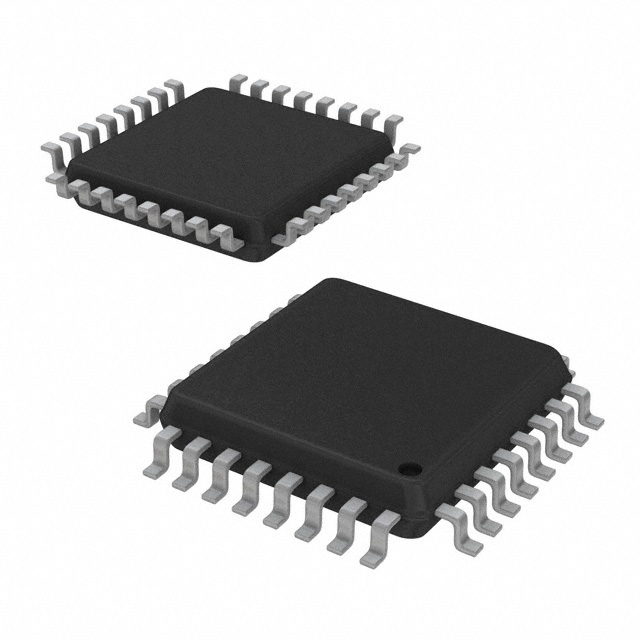
STMicroelectronics STM32L051K8T6
- Part No.:
- STM32L051K8T6
- Manufacturer:
- STMicroelectronics
- Category:
- Microcontrollers
- Package:
- 32-LQFP
- Datasheet:
-
 STM32L051K8T6.pdf
- Description:
- IC MCU 32BIT 64KB FLASH 32LQFP
- Quantity:
- Payment:

- Shipping:

Inventory:6,044
Please send an inquiry. Send us your inquiry, and we will respond immediately.
Product details
Overview
STM32L051K8T6 from STMicroelectronics is an ultra-low-power 32-bit Arm® Cortex®-M0+ microcontroller in LQFP32 package, featuring 64 KB Flash with ECC, 8 KB SRAM, 2 KB EEPROM, 12-bit ADC (1.14 Msps), and dual ultra-low-power comparators. It operates from 1.65–3.6 V across –40 to +125 °C and delivers 0.4 µA Stop mode current with 16 wakeup lines-ideal for battery-powered IoT sensor nodes requiring long-term autonomous operation.
For engineers reviewing the STM32L051K8T6 datasheet, STM32L051K8T6 pinout, STM32L051K8T6 application, or STM32L051K8T6 equivalent, key selection criteria include verified low-power mode timing (3.5 µs wakeup from RAM), 45 I/Os with 5V tolerance, integrated RTC + backup registers, and pre-programmed USART/SPI bootloader support for field firmware updates.
Technical Context
The STM32L051K8T6 implements a single-core Arm Cortex-M0+ with Memory Protection Unit (MPU), running at up to 32 MHz using multiple clock sources: HSI16 (±1%), LSE (32 kHz RTC), MSI (65 kHz–4.2 MHz), and PLL. Its interconnect matrix routes peripherals-including two USARTs, one LPUART, four SPIs, two I²Cs, and seven timers-to the CPU without bus contention.
Power architecture integrates ultra-low-power BOR with five threshold levels, programmable voltage detector (PVD), and dynamic voltage scaling enabling three operating ranges (1.65–3.6 V). Low-power modes are hardware-orchestrated: Standby (0.27 µA), Stop (0.4 µA), and Stop+RTC+RAM retention (0.8 µA), all supporting configurable wakeup sources including GPIOs, comparators, and RTC alarms.
Key Specifications
| Parameter | Value and Actual Design Meaning |
|---|---|
| Core | Arm Cortex-M0+, 32-bit, up to 32 MHz - enables deterministic real-time control with <1-cycle branch penalty and MPU for memory isolation. |
| Memory | 64 KB Flash (ECC-protected), 8 KB SRAM, 2 KB EEPROM (ECC) - supports robust firmware storage, data logging, and parameter retention across power cycles. |
| ADC | 12-bit, 1.14 Msps, 16-channel - provides high-resolution analog sensing down to 1.65 V supply, suitable for precision battery monitoring and environmental sensing. |
| Low-power modes | 0.27 µA Standby, 0.4 µA Stop, 0.8 µA Stop+RTC+8 KB RAM - enables multi-year operation on coin-cell batteries in wireless sensor endpoints. |
| I/O capability | 45 GPIOs, 45 5V-tolerant - allows direct interfacing with legacy 5V logic and industrial sensors without level-shifting circuitry. |
| Timers | 9 timers including 1x ultra-low-power LPTIM, 1x RTC, 2x watchdogs - supports precise timekeeping, periodic wakeups, and system safety monitoring in energy-constrained environments. |
| Communication | 2x USART (ISO 7816/IrDA), 1x LPUART, 4x SPI, 2x I²C (SMBus/PMBus) - enables secure smart-card interfaces, low-power BLE coexistence, and multi-sensor I²C buses. |
Pinout & Package
LQFP32 (7 × 7 mm, 0.8 mm pitch) package with 32-pin quad flat leaded outline, RoHS-compliant and ECOPACK2 certified.
| Pin/Terminal | Circuit Role | Design Meaning |
|---|---|---|
| VDD | Core & I/O power supply | Primary 1.65–3.6 V input; decoupling required per datasheet layout guidelines to maintain low-noise operation in ultra-low-power modes. |
| VSS | Ground reference | Dedicated analog/digital ground return; separate VSSA recommended for ADC accuracy below 1.65 V supply. |
| NRST | Active-low reset input | Asynchronous reset with internal pull-up; supports external push-button or supervisor IC assertion with 100 ns minimum pulse width. |
| PA0–PA15 | General-purpose I/Os | Up to 15 pins on Port A support alternate functions including ADC_IN0–IN15, USART_TX/RX, SPI_MOSI/MISO, and comparator inputs. |
| PB0–PB11 | General-purpose I/Os | 12 pins on Port B provide additional GPIOs, timer channels (TIM2/21/22), I²C_SCL/SDA, and LPUART_TX/RX - enabling full peripheral mapping in compact LQFP32 footprint. |
| BOOT0 | Boot mode selection | High at reset forces system memory boot (USART/SPI bootloader); tied low for normal Flash execution - critical for production programming and recovery. |
Key Features
| Feature | Design Value |
|---|---|
| Ultra-low-power BOR | 5 selectable thresholds (1.65–2.9 V) enable precise brownout detection aligned with battery discharge curves in coin-cell applications. |
| Pre-programmed bootloader | Factory-loaded USART/SPI interface allows firmware updates over serial link without JTAG - reduces BOM cost and simplifies field maintenance. |
| 2 KB EEPROM with ECC | Endurance of 100 k write/erase cycles and 40-year data retention at 85 °C - eliminates need for external nonvolatile memory in metering and calibration-critical devices. |
| Serial wire debug (SW-DP) | Single-pin debug interface with full SWD protocol support - enables real-time trace, breakpoints, and memory inspection using standard ST-LINK tools. |
| Temperature sensor | Calibrated ±1.5 °C accuracy from –40 to +125 °C - supports thermal management in sealed enclosures without external sensor components. |
Applications
| Smart Utility Metering | Wireless Sensor Node |
|---|---|
Use Scenario: Battery-powered water/gas meter with hourly pulse counting, temperature compensation, and RF transmission. IC Role / Device Role / Timing Role: Main controller executing metrology algorithms, managing RTC-based scheduling, and driving sub-GHz transceiver via SPI. Use Value: 0.4 µA Stop mode extends 10-year battery life; 2 KB EEPROM stores calibration coefficients and tamper logs with ECC integrity. |
Use Scenario: Indoor air quality monitor with CO₂, humidity, and VOC sensors transmitting via BLE or LoRaWAN. IC Role / Device Role / Timing Role: Central data aggregator sampling analog sensors via 12-bit ADC, processing readings, and entering deep sleep between transmissions. Use Value: 3.5 µs wakeup from RAM ensures rapid response to sensor interrupts; 45 5V-tolerant I/Os simplify connection to diverse analog front-ends. |
| Industrial Predictive Maintenance | Medical Wearable Patch |
Use Scenario: Vibration-sensing node on rotating machinery with onboard FFT analysis and alert-triggered transmission. IC Role / Device Role / Timing Role: Real-time signal processor using DMA-accelerated ADC sampling and Cortex-M0+ for lightweight spectral analysis. Use Value: 88 µA/MHz active efficiency balances compute throughput and battery drain; dual comparators detect amplitude thresholds for immediate wake-on-event. |
Use Scenario: Disposable ECG patch recording heart rate and rhythm over 7-day wear period using coin-cell battery. IC Role / Device Role / Timing Role: Ultra-low-power acquisition engine managing electrode biasing, analog front-end control, and encrypted Bluetooth LE packetization. Use Value: 0.8 µA Stop+RTC+8 KB RAM retention preserves session state during sleep; 125 °C rating validates reliability under skin-contact thermal stress. |
Equivalent & Alternatives
The following parts are listed as comparable options for similar ultra-low-power MCU applications.
| Alternative Part | Technical Difference | Application Difference | Selection Advice |
|---|---|---|---|
| STM32L071K8T6 | 128 KB Flash, 20 KB SRAM, same peripherals and low-power specs - adds USB 2.0 FS device support. | Required when host-side USB connectivity or larger firmware image size (>64 KB) is needed. | Select if future firmware expansion or USB-CDC virtual COM port functionality is planned; otherwise, STM32L051K8T6 offers optimal cost/power balance. |
| EFM32HG322F64G | ARM Cortex-M0+, 64 KB Flash, 8 KB RAM, but higher Stop mode current (1.1 µA) and no integrated EEPROM. | Suitable for simpler sensor nodes where external EEPROM or flash can be added, and USB is not required. | Choose only if leveraging Silicon Labs' Simplicity Studio ecosystem; STM32L051K8T6 provides superior EEPROM integration and broader toolchain support. |
Compared with STM32L071K8T6, the STM32L051K8T6 trades USB and memory headroom for lower BOM cost and identical ultra-low-power performance; versus EFM32HG322F64G, it delivers proven EEPROM reliability and tighter low-power mode specifications critical for decade-long deployments.
Availability
STM32L051K8T6 is available at Aetrix Electronics and suitable for smart utility metering, wireless sensor nodes, industrial predictive maintenance systems, and medical wearable patches requiring stable component supply across extended product lifecycles.
Supply support for STM32L051K8T6 includes scheduled delivery planning, volume procurement assistance, BOM continuity management, traceable sourcing, and lifecycle availability coordination for OEM customers, industrial embedded developers, connected-device designers, and electronics production programs.
Manufacturer
STMicroelectronics is a global semiconductor leader headquartered in Geneva, Switzerland, designing and manufacturing microcontrollers, power management ICs, MEMS, and automotive semiconductors since 1987.
The STM32L0 series targets ultra-low-power embedded applications demanding multi-year battery life, robust security features, and seamless integration with ST's ecosystem of development tools and middleware stacks.
FAQ
What is the maximum operating frequency and core type of the STM32L051K8T6?
The STM32L051K8T6 uses an Arm Cortex-M0+ core with a maximum CPU frequency of 32 MHz. This is achieved using the internal 16 MHz HSI oscillator with PLL multiplication or external crystal sources up to 25 MHz. The core includes a Memory Protection Unit (MPU) and delivers 0.95 DMIPS/MHz, validated across the full –40 to +125 °C temperature range and 1.65–3.6 V supply.
Does the STM32L051K8T6 support hardware encryption or secure boot?
No, the STM32L051K8T6 does not integrate hardware cryptographic accelerators (AES, SHA, PKA) or secure boot ROM. It relies on software-based encryption libraries and external secure elements for advanced security. However, it supports readout protection (RDP) Level 1 and 2, option byte write protection, and unique 96-bit ID for device authentication in basic security implementations.
Can the STM32L051K8T6 operate from a 1.8 V supply while maintaining full peripheral functionality?
Yes, at 1.8 V supply the STM32L051K8T6 maintains full functionality of its core, memories, ADC (down to 1.65 V), comparators, timers, and communication interfaces (USART, SPI, I²C), as confirmed in Section 6.3.1 of DS10184 Rev 10. All 45 I/Os remain 5V-tolerant, and low-power modes retain specified current values (e.g., 0.4 µA Stop mode).
What debug interface does the STM32L051K8T6 support, and what pins are required?
The STM32L051K8T6 supports Serial Wire Debug (SW-DP) using two dedicated pins: SWCLK (PA14) and SWDIO (PA13). No reset pin is required for basic debug operations. This single-wire interface enables full JTAG-equivalent debugging - including breakpoints, memory access, and real-time variable inspection - using ST-LINK/V2 or compatible probes.
STM32L051K8T6 Specifications
- Product attributes
- Attribute value
- Manufacturer:
- STMicroelectronics
- Package/Case:
- 32-LQFP
- Series:
- STM32L0
- Packaging:
- Tray
- Product Status:
- Active
- Programmable:
- Not Verified
- Core Processor:
- ARM® Cortex®-M0+
- Core Size:
- 32-Bit Single-Core
- Speed:
- 32MHz
- Connectivity:
- I2C, IrDA, SPI, UART/USART
- Peripherals:
- Brown-out Detect/Reset, DMA, POR, PWM, WDT
- Number of I/O:
- 27
- Program Memory Size:
- 64KB (64K x 8)
- Program Memory Type:
- FLASH
- EEPROM Size:
- 2K x 8
- RAM Size:
- 8K x 8
- Voltage - Supply (Vcc/Vdd):
- 1.65V ~ 3.6V
- Data Converters:
- A/D 10x12b
- Oscillator Type:
- Internal
- Operating Temperature:
- -40°C ~ 85°C (TA)
- Grade:
- -
- Qualification:
- -
- Mounting Type:
- Surface Mount
- Supplier Device Package:
STM32L051K8T6 FAQ
1.How can I place an order for STM32L051K8T6 through Aetrix?
Please submit a Request for Quotation (RFQ) for STM32L051K8T6 on Aetrix. Our sales agent will provide a competitive quotation and guide you through the order confirmation once you accept the terms.
2.Are the price and stock information for STM32L051K8T6 reliable?
The price and inventory of STM32L051K8T6 are updated periodically and may fluctuate due to market conditions. Stock and pricing data are typically refreshed every 24 hours. Quotation validity for STM32L051K8T6 is usually 5 days.
3.What payment methods are accepted for STM32L051K8T6?
We accept Wire Transfer, PayPal, Credit Card, Western Union, MoneyGram, and Escrow for STM32L051K8T6 transactions.
Note: Certain payment methods may incur a processing fee.
4.How is shipping managed for STM32L051K8T6?
STM32L051K8T6 orders can be shipped via leading logistics carriers, including DHL, UPS, FedEx, TNT, or Registered Mail.
Once your STM32L051K8T6 order is processed, you will receive an email with the shipment details and tracking number.
Note: Tracking information may take up to 24 hours to appear. Express delivery typically takes 3–5 business days.
5.How can I obtain technical support or documentation for STM32L051K8T6?
For technical support, including STM32L051K8T6 datasheets, pinout diagrams, or application guidance, please contact our engineering support team. They can provide detailed documentation and assistance for your STM32L051K8T6 requirements.
6.How does Aetrix verify that STM32L051K8T6 is sourced from the original manufacturer or authorized distributors?
All STM32L051K8T6 products on Aetrix are procured from qualified distributors and authorized channels. Our dedicated quality assurance team conducts strict verification, including traceability checks and, if necessary, third-party testing. This ensures that STM32L051K8T6 meets industry standards.
7.What is the process for return or replacement of STM32L051K8T6?
All STM32L051K8T6 units undergo pre-shipment inspection (PSI). If there is an issue with STM32L051K8T6, returns or replacements are accepted under the following conditions:
1.Quantity discrepancies, incorrect items, or visible external defects (such as breakage or corrosion), acknowledged by Aetrix.
2.The issue is reported within 90 days of delivery.
3.The STM32L051K8T6 part is unused and in its original packaging.
Return procedure for STM32L051K8T6:
1.Submit a request within 90 days.
2.Obtain a Return Material Authorization (RMA) from Aetrix.
STM32L051K8T6 Tags

-
ATTINY4-TSHR
Microchip Technology
-
ATTINY10-TSHR
Microchip Technology
-
ATTINY10-TS8R
Microchip Technology

-
ATTINY202-SSNR
Microchip Technology
-
ATTINY202-SSFR
Microchip Technology
-
ATTINY402-SSNR
Microchip Technology
-
PIC16F15213T-I/MF
Microchip Technology
-
PIC16F15213-E/MF
Microchip Technology

-
PIC10F200T-I/OT
Microchip Technology
-
ATTINY412-SSNR
Microchip Technology
-
PIC10F202T-I/OT
Microchip Technology
-
ATTINY404-SSNR
Microchip Technology
Tech Hub

An engineering guide to LED driver operation, constant-current and constant-voltage outputs, linear and switching topologies, dimming, IC selection, calculations, replacement compatibility, and fault c…

Operational amplifier guide covering op amp basics, feedback, ideal vs real op amps, common configurations, buffer circuits, offset, bias current, gain-bandwidth, slew rate, rail-to-rail limits and sel…

Jumper cables guide covering safe connection order, red and black clamp placement, final ground connection, cable gauge, length, clamp quality, copper vs CCA cables, jump starter comparison and battery…

LDO regulator guide covering low dropout voltage, power dissipation, thermal design, PSRR, output noise, capacitor stability, adjustable LDO circuits, LDO vs buck converter and datasheet selection chec…

Conditional Access Module guide covering CAM meaning, CI/CI+ interface, smart card authorization, DVB security workflow, TV and set-top box compatibility, internal electronics, ESD protection, connecto…

Guide to electronic component obsolescence covering EOL risk, PCN/PDN notices, last-time buy planning, replacement options, form-fit-function validation, counterfeit risk and BOM lifecycle management.

18650 battery guide covering lithium-ion cell basics, 3.6V/3.7V voltage, 4.2V charging, mAh and Wh capacity, protected cells, chargers, BMS, series-parallel packs, holders, welding and sourcing checks.…

Hall effect sensor guide covering working principle, linear and digital sensors, Arduino circuits, current sensing, speed detection, automotive applications, A3144 examples, signal filtering and datash…

Product Change Notification guide for electronic components, covering PCN meaning, PCN vs PDN/EOL, common change types, risk levels, form-fit-function review, engineering validation, BOM control, LTB/L…

A practical guide to blend door actuators, covering HVAC function, symptoms, location, AC and heater issues, reset and calibration, replacement cost, electrical diagnosis, compatibility checks, and rep…


