
 My Inquiry
 My Account


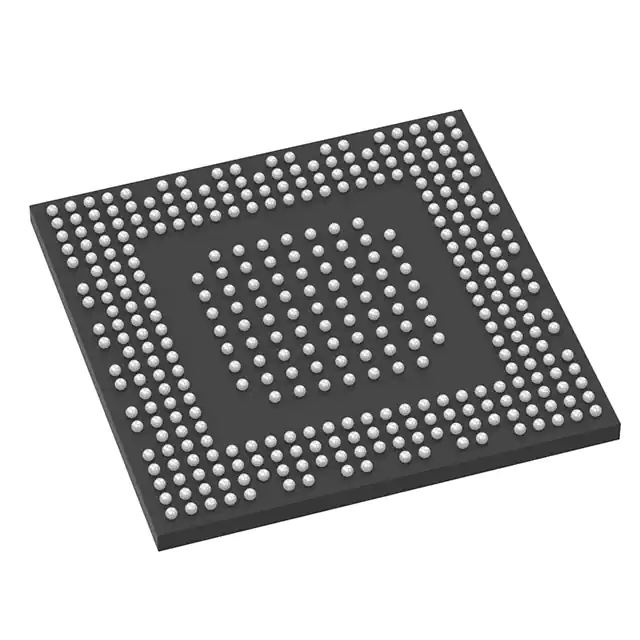
STMicroelectronics STM32MP157AAC3
- Part No.:
- STM32MP157AAC3
- Manufacturer:
- STMicroelectronics
- Category:
- Microprocessors
- Package:
- 361-TFBGA
- Datasheet:
-
 STM32MP157AAC3.pdf
- Description:
- IC MPU STM32MP1 650MHZ 361TFBGA
- Quantity:
- Payment:

- Shipping:

Inventory:3,852
Please send an inquiry. Send us your inquiry, and we will respond immediately.
Product details
Overview
STM32MP157AAC3 from STMicroelectronics is a dual-core Arm® Cortex®-A7 (800 MHz) + Cortex®-M4 microprocessor unit with 3D GPU, TFT/DSI display support, 37 communication interfaces including dual CAN FD and Gigabit Ethernet, and 708 KB on-chip SRAM. It targets Linux-capable industrial HMI, edge gateway, and multimedia-rich embedded systems requiring secure boot, TrustZone isolation, and real-time co-processing.
For engineers reviewing the STM32MP157AAC3 datasheet, STM32MP157AAC3 pinout, STM32MP157AAC3 application, or STM32MP157AAC3 equivalent, key selection criteria include dual-core Linux+RTOS partitioning, DDR3/LPDDR3 memory controller timing, 361-ball TFBGA package layout constraints, and hardware-accelerated crypto (SHA256/HMAC) for secure firmware updates.
Technical Context
The device implements a heterogeneous dual-core architecture: two Cortex-A7 cores share a 256 KB unified L2 cache and run Linux under TrustZone-secured EL2/EL3, while the Cortex-M4 (209 MHz) handles real-time tasks in secure or non-secure mode via IPCC inter-processor messaging. Memory subsystem includes AXI/AHB bus matrices enabling concurrent high-bandwidth access to DDR, SRAM, and peripherals.
Clock management uses six fractional PLLs supporting precise frequency synthesis for display (DSI pixel clock up to 90 MHz), audio (SAI I2S with internal audio PLL), and Ethernet (IEEE 1588v2 timestamping). Security relies on BSEC OTP fuses, ETZPC peripheral protection, and active tamper detection with dedicated I/Os.
Key Specifications
| Parameter | Value and Actual Design Meaning |
|---|---|
| Cores | Dual Arm Cortex-A7 @ 800 MHz + single Cortex-M4 @ 209 MHz - enables Linux OS + deterministic real-time control on one die |
| Memory | 708 KB on-chip SRAM (256 KB AXI SYSRAM + 384 KB AHB SRAM + 64/4 KB backup domains) - eliminates external RAM for M4 firmware and critical context retention |
| Graphics | Vivante 3D GPU (OpenGL ES 2.0, 26 Mtriangle/s) + LTDC controller - drives WXGA@60 fps or Full HD@30 fps displays without external graphics IC |
| Connectivity | 2× CAN FD (1× TTCAN), 1× Gigabit Ethernet GMAC (RGMII/MII), 6× I2C, 8× UART/USART - supports industrial fieldbus, time-sensitive networking, and multi-sensor aggregation |
| Security | Arm TrustZone, BSEC OTP fuses (3072-bit), HASH/HMAC accelerators, 2× TRNG - meets IEC 62443-3-3 SL2 requirements for secure boot and runtime attestation |
| Package | TFBGA361 (12 × 12 mm, 0.5 mm pitch) - balances I/O count (176 GPIOs) with PCB routing density for compact industrial modules |
| Power | 1.71–3.6 V I/O supply (5 V-tolerant), 2 µA Standby current - enables battery-backed operation with DDR retention for fast wake-up in edge nodes |
Pinout & Package
TFBGA361 package (12 × 12 mm, 0.5 mm ball pitch) with 361 I/O balls. Pinout defined per DS12504 Rev 9 Section 4, supporting 176 GPIOs (including 8 secure, 6 wakeup, 3 tamper), dual DDR3/LPDDR3 interface (32-bit data bus), and dedicated DSI/SDMMC/USB/ETH signal groups.
| Pin/Terminal | Circuit Role | Design Meaning |
|---|---|---|
| VDDCORE | Core power supply | 1.1 V nominal input for Cortex-A7/M4 logic; requires low-noise regulation due to dynamic current spikes during cache misses |
| VDD_DDR | DDR I/O supply | 1.2 V or 1.35 V supply for DDR3/LPDDR3 interface; must meet tight voltage tolerance (±3%) for reliable 1066 MT/s operation |
| NRST_CORE | Core reset input | Asynchronous active-low reset for Cortex-A7 subsystem only; independent of M4 reset domain for staged initialization |
| BOOT0 | Boot mode selection | Strapped high/low to select boot source (FSMC, QSPI, SDMMC, USB) - determines primary firmware load path at power-on |
| PA0–PA15 | General-purpose I/O bank A | Supports alternate functions including FMC, SPI, USART - used for parallel NOR/NAND flash interfacing in boot-critical designs |
Key Features
| Feature | Design Value |
|---|---|
| Dual-core asymmetric processing | Enables Linux-based application layer (A7) and hard real-time control (M4) on same SoC, reducing BOM cost vs. MPU+MCU dual-chip solutions |
| Hardware crypto acceleration | HASH (SHA256), HMAC, and 2× TRNG enable <10 ms firmware signature verification - critical for OTA update integrity in connected devices |
| Display subsystem integration | LTDC + DSI + 3D GPU eliminates need for external display bridge or graphics controller, cutting PCB area by ~35% in HMI designs |
| Flexible memory interface | FMC supports SLC NAND with 8-bit ECC and Quad-SPI for XIP code execution - simplifies secure boot ROM replacement and field firmware recovery |
| Industrial-grade connectivity | Dual CAN FD with TTCAN support enables deterministic message scheduling for motion control networks; GMAC with IEEE 1588v2 allows sub-microsecond time synchronization |
Applications
| Industrial HMI | Edge Gateway |
|---|---|
Use Scenario: Touch-enabled operator panel in PLC-controlled manufacturing cell with local data logging and remote diagnostics. IC Role / Device Role / Timing Role: Main application processor running Qt-based GUI on Linux (A7), while M4 manages CANopen motion profiles and real-time I/O scanning. Use Value: Single-chip solution reduces latency between display refresh (LTDC @ 60 fps) and motor command response (<100 µs jitter via M4 timers), eliminating inter-chip synchronization overhead. | Use Scenario: Field-deployed protocol translator aggregating Modbus RTU, CAN FD, and BLE sensor data into MQTT packets for cloud upload. IC Role / Device Role / Timing Role: A7 core hosts EdgeX Foundry framework and TLS stack; M4 offloads packet parsing and CRC validation before encryption. Use Value: Hardware-accelerated SHA256 cuts TLS handshake time by 65% vs. software-only, enabling sub-second connection establishment on intermittent cellular links. |
| Smart Building Controller | Medical Imaging Terminal |
Use Scenario: HVAC and lighting controller with BACnet/IP, KNX, and Zigbee coordination via external transceivers. IC Role / Device Role / Timing Role: A7 runs BACnet stack and web server; M4 handles time-triggered CAN FD scheduling for damper actuator commands. Use Value: TTCAN support ensures ±1 µs timestamp accuracy across 100+ nodes, meeting ASHRAE 135-2020 deterministic control requirements. | Use Scenario: Portable ultrasound console requiring real-time beamforming, DICOM export, and touchscreen UI with DICOM viewer. IC Role / Device Role / Timing Role: GPU renders DICOM images at 30 fps; DCMI captures 140 MB/s raw sensor data; M4 manages ADC oversampling and noise filtering. Use Value: Integrated 16-bit ADC (4.5 Msps) and DFSDM sigma-delta filter eliminate external analog front-end IC, reducing EMI risk in Class II medical devices. |
Equivalent & Alternatives
The following parts are listed as comparable options for similar dual-core MPU applications.
| Alternative Part | Technical Difference | Application Difference | Selection Advice |
|---|---|---|---|
| i.MX 8M Mini (NXP) | Quad Cortex-A53 + Cortex-M4, no integrated 3D GPU, lower DDR bandwidth (LPDDR4 only), lacks TTCAN | Better multimedia codec support (VPU), weaker real-time determinism for motion control | Prefer when video encoding/decoding dominates over graphics rendering and deterministic fieldbus timing |
| RZ/G2L (Renesas) | Dual Cortex-A55 + Cortex-M33, no TrustZone for A55, smaller SRAM (4 MB DDR required), no hardware SHA256 | Stronger functional safety certification (ISO 26262 ASIL-B ready), limited industrial interface count | Prefer for automotive infotainment where ASIL-B compliance outweighs industrial protocol depth |
Compared with i.MX 8M Mini and RZ/G2L, STM32MP157AAC3 uniquely combines TrustZone-secured dual-core Linux/RTOS partitioning, TTCAN, and integrated 3D GPU - making it optimal for cost-sensitive industrial HMIs requiring both rich UI and deterministic fieldbus control without external graphics or security ICs.
Availability
STM32MP157AAC3 is available at Aetrix Electronics and suitable for industrial HMI, edge gateway, smart building controller, and medical imaging terminal applications requiring stable component supply across extended product lifecycles.
Supply support for STM32MP157AAC3 includes scheduled delivery planning, volume procurement assistance, BOM continuity management, traceable sourcing, and lifecycle availability coordination for OEM customers, industrial embedded developers, connected-device designers, and electronics production programs.
Manufacturer
STMicroelectronics is a global semiconductor leader headquartered in Geneva, Switzerland, specializing in microcontrollers, power management, sensors, and automotive ICs with vertical manufacturing capability.
The STM32MP series targets Linux-capable embedded applications needing real-time responsiveness, security, and rich multimedia - bridging the gap between traditional MCUs and application processors for industrial and IoT edge devices.
FAQ
What boot sources does STM32MP157AAC3 support?
STM32MP157AAC3 supports four primary boot sources selected via BOOT pins: Quad-SPI flash (XIP mode), eMMC/SD card, parallel NOR/NAND flash via FMC, and USB device mode. BootROM validates first-stage bootloader (FSBL) signature using embedded public key before loading second-stage (SSBL) from storage, enforcing secure chain-of-trust.
How is TrustZone implemented across the dual-core architecture?
TrustZone is implemented at both hardware and firmware levels: the Cortex-A7 cores use Secure Monitor Call (SMC) to switch between secure/non-secure worlds, while the Cortex-M4 operates in a physically isolated secure domain. Peripherals like RNG, HASH, and BSEC are accessible only in secure state, and ETZPC enforces memory-mapped peripheral access rights based on AXI ID.
What thermal limitations apply to the TFBGA361 package in continuous operation?
The TFBGA361 package has a maximum junction temperature of 105°C and thermal resistance θJA of 27.5°C/W (JEDEC standard board). At full load (A7+M4 active, GPU rendering, DDR3L-1066), sustained power dissipation exceeds 2.5 W - requiring ≥2 oz copper planes and thermal vias under the package to maintain junction temp below limit in 70°C ambient.
Can the STM32MP157AAC3 directly drive a MIPI DSI display without external level-shifting?
Yes - the integrated DSI PHY supports 1 Gbps per lane (2-lane configuration) with programmable output swing and termination, compliant with MIPI D-PHY v1.2. It drives standard 4-layer flex cables directly; no external level shifter is needed. However, proper impedance control (100 Ω differential) and ESD protection diodes (e.g., STUSB4710) are required on the board for robustness.
STM32MP157AAC3 Specifications
- Product attributes
- Attribute value
- Manufacturer:
- STMicroelectronics
- Package/Case:
- 361-TFBGA
- Series:
- STM32MP1
- Packaging:
- Tray
- Product Status:
- Active
- Core Processor:
- ARM® Cortex®-A7
- Number of Cores/Bus Width:
- 2 Core, 32-Bit
- Speed:
- 209MHz, 650MHz
- Co-Processors/DSP:
- ARM® Cortex®-M4
- RAM Controllers:
- DDR3, DDR3L, LPDDR2, LPDDR3
- Graphics Acceleration:
- Yes
- Display & Interface Controllers:
- HDMI-CEC, LCD
- Ethernet:
- 10/100Mbps, GbE
- SATA:
- -
- USB:
- USB 2.0 (2), USB 2.0 OTG+ PHY (3)
- Voltage - I/O:
- 2.5V, 3.3V
- Operating Temperature:
- -40°C ~ 125°C (TJ)
- Grade:
- -
- Qualification:
- -
- Security Features:
- ARM TZ
- Mounting Type:
- Surface Mount
- Supplier Device Package:
- 361-TFBGA (12x12)
- Additional Interfaces:
- CAN, Ethernet, I2C, MMC/SD/SDIO, SPDIF, SPI, UART, USB
STM32MP157AAC3 FAQ
1.How can I place an order for STM32MP157AAC3 through Aetrix?
Please submit a Request for Quotation (RFQ) for STM32MP157AAC3 on Aetrix. Our sales agent will provide a competitive quotation and guide you through the order confirmation once you accept the terms.
2.Are the price and stock information for STM32MP157AAC3 reliable?
The price and inventory of STM32MP157AAC3 are updated periodically and may fluctuate due to market conditions. Stock and pricing data are typically refreshed every 24 hours. Quotation validity for STM32MP157AAC3 is usually 5 days.
3.What payment methods are accepted for STM32MP157AAC3?
We accept Wire Transfer, PayPal, Credit Card, Western Union, MoneyGram, and Escrow for STM32MP157AAC3 transactions.
Note: Certain payment methods may incur a processing fee.
4.How is shipping managed for STM32MP157AAC3?
STM32MP157AAC3 orders can be shipped via leading logistics carriers, including DHL, UPS, FedEx, TNT, or Registered Mail.
Once your STM32MP157AAC3 order is processed, you will receive an email with the shipment details and tracking number.
Note: Tracking information may take up to 24 hours to appear. Express delivery typically takes 3–5 business days.
5.How can I obtain technical support or documentation for STM32MP157AAC3?
For technical support, including STM32MP157AAC3 datasheets, pinout diagrams, or application guidance, please contact our engineering support team. They can provide detailed documentation and assistance for your STM32MP157AAC3 requirements.
6.How does Aetrix verify that STM32MP157AAC3 is sourced from the original manufacturer or authorized distributors?
All STM32MP157AAC3 products on Aetrix are procured from qualified distributors and authorized channels. Our dedicated quality assurance team conducts strict verification, including traceability checks and, if necessary, third-party testing. This ensures that STM32MP157AAC3 meets industry standards.
7.What is the process for return or replacement of STM32MP157AAC3?
All STM32MP157AAC3 units undergo pre-shipment inspection (PSI). If there is an issue with STM32MP157AAC3, returns or replacements are accepted under the following conditions:
1.Quantity discrepancies, incorrect items, or visible external defects (such as breakage or corrosion), acknowledged by Aetrix.
2.The issue is reported within 90 days of delivery.
3.The STM32MP157AAC3 part is unused and in its original packaging.
Return procedure for STM32MP157AAC3:
1.Submit a request within 90 days.
2.Obtain a Return Material Authorization (RMA) from Aetrix.
STM32MP157AAC3 Tags
-
AT91SAM9260B-CU-999
Microchip Technology
-
AT91SAM9G25-CU
Microchip Technology
-
ATSAMA5D27C-CU
Microchip Technology
-
AT91SAM9X35-CU
Microchip Technology
-
AT91SAM9X25-CU
Microchip Technology
-
MCIMX6Y2CVM08AB
NXP Semiconductors
.JPG)
-
AM3352BZCZ100
Texas Instruments
-
AT91SAM9260B-CU
Microchip Technology
-
AT91SAM9260B-QU
Microchip Technology
-
ATSAMA5D31A-CU
Microchip Technology
-
AT91SAM9G20B-CU-999
Microchip Technology
-
MCIMX6Y2CVM05AB
NXP Semiconductors
Tech Hub

A practical engineering guide to 3.3V and 5V logic compatibility, input thresholds, resistor dividers, translator ICs, MOSFET level shifting, I2C pull-ups, timing limits and power-sequencing risks.

The 74HC595 uses push-pull logic outputs, while the TPIC6B595 uses 50 V open-drain DMOS sinks for higher-power loads. This guide compares timing, current limits, 3.3 V interfacing, load wiring, thermal…

The 74HC595 converts serial data into eight stable parallel outputs. This guide covers pin functions, shift and storage timing, OE and MR behavior, drive-current limits, cascading, voltage compatibilit…

A technical comparison of level-sensitive latches and edge-triggered flip-flops, covering timing windows, setup and hold limits, master–slave operation, time borrowing, race-through, HDL inference and…

A D latch stores one bit while Enable controls when data can pass. This reference covers gate-level operation, truth tables, transparency, setup and hold timing, LE versus OE, common ICs and practical …

An SR latch stores one bit through cross-coupled feedback. This engineering reference covers NOR and NAND implementations, truth tables, forbidden-state recovery, gated operation, switch debouncing, fa…

Latch circuits retain one bit through feedback. This technical reference covers SR and D latches, truth tables, transparency, timing limits, latch-versus-flip-flop behavior, applications and common log…

An engineering guide to LED driver operation, constant-current and constant-voltage outputs, linear and switching topologies, dimming, IC selection, calculations, replacement compatibility, and fault c…

Operational amplifier guide covering op amp basics, feedback, ideal vs real op amps, common configurations, buffer circuits, offset, bias current, gain-bandwidth, slew rate, rail-to-rail limits and sel…

Jumper cables guide covering safe connection order, red and black clamp placement, final ground connection, cable gauge, length, clamp quality, copper vs CCA cables, jump starter comparison and battery…


