
 My Inquiry
 My Account


STMicroelectronics STM32W108CCU73TR
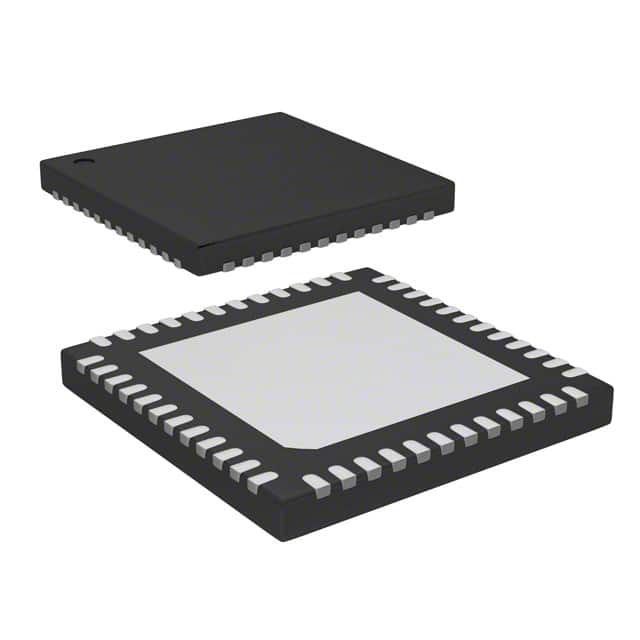
- Part No.:
- STM32W108CCU73TR
- Manufacturer:
- STMicroelectronics
- Category:
- RF Transceiver ICs
- Package:
- 48-UFQFN Exposed Pad
- Datasheet:
-
 STM32W108CCU73TR.pdf
- Description:
- IC RF TXRX+MCU BLE 48UFQFPN
- Quantity:
- Payment:

- Shipping:

Inventory:2,227
Please send an inquiry. Send us your inquiry, and we will respond immediately.
Product details
Overview
STM32W108CCU73TR from STMicroelectronics is a high-performance IEEE 802.15.4 wireless system-on-chip integrating an ARM® Cortex®-M3 core, 2.4 GHz transceiver, 256 KB Flash, 16 KB RAM, and AES128 encryption accelerator. It operates at 2.1–3.6 V, delivers +3 dBm RF output, and achieves -99 dBm RX sensitivity for ZigBee® Pro and RF4CE remote control applications.
For engineers reviewing the STM32W108CCU73TR datasheet, STM32W108CCU73TR pinout, STM32W108CCU73TR application, or STM32W108CCU73TR equivalent, key selection criteria include IEEE 802.15.4 MAC+PHY integration, sub-1 µA deep-sleep current with RAM retention, 24 configurable GPIOs, hardware AES acceleration, and VFQFPN48 (7×7 mm) package compatibility with existing STM32W108 layout footprints.
Technical Context
This SoC embeds a full IEEE 802.15.4 compliant radio stack with integrated lower MAC, supporting ZigBee® Pro and RF4CE protocols without external baseband processing. The ARM Cortex-M3 core runs at up to 24 MHz with Thumb-2 instruction set and nested vectored interrupt controller (NVIC) for real-time packet handling.
RF performance is defined by configurable link budget up to 107 dB, programmable TX power from +3 dBm to +8 dBm, and RSSI/CCA support for robust coexistence with Wi-Fi and Bluetooth. Power management includes dual internal regulators (1.8 V and 1.25 V), low-frequency RC oscillator for sleep timing, and 100 µs wake-up from deep sleep.
Key Specifications
| Parameter | Value and Actual Design Meaning |
|---|---|
| CPU Core | ARM Cortex-M3, 24 MHz max operation - enables deterministic real-time execution of ZigBee network layer and application logic. |
| Wireless Standard | IEEE 802.15.4-2006, 2.4 GHz band - provides native PHY/MAC compliance for interoperable mesh and star topology sensor networks. |
| Flash / RAM | 256 KB Flash / 16 KB RAM - supports full ZigBee Pro stack plus custom application firmware with retained context across sleep cycles. |
| RF Sensitivity | -99 dBm @ 1% PER (20-byte packet) - ensures reliable reception in noisy industrial environments with >100 m line-of-sight range. |
| TX Output Power | +3 dBm nominal, configurable to +8 dBm - allows link budget optimization for varying antenna efficiency and regulatory constraints (e.g., FCC/ETSI). |
| Deep Sleep Current | 400 nA with RAM retention - enables battery-powered devices (e.g., remote controls) to operate >5 years on CR2032 coin cell. |
| GPIO Count | 24 highly configurable pins with Schmitt-trigger inputs - supports direct interface to sensors, buttons, LEDs, and external PA without level-shifting. |
| Security Accelerator | Dedicated AES128 engine - offloads encryption/decryption from CPU, reducing latency and power during secure frame transmission. |
Pinout & Package
STM32W108CCU73TR uses a 48-pin Very Thin Quad Flat No-lead (VFQFPN) package measuring 7 mm × 7 mm with 0.5 mm pitch. The package supports reflow soldering and provides thermal pad for enhanced RF stability.
| Pin/Terminal | Circuit Role | Design Meaning |
|---|---|---|
| VDD | Core & I/O supply | 2.1–3.6 V input powering internal 1.8 V and 1.25 V regulators - single-rail simplifies PCB design and eliminates external LDOs. |
| VBAT | Backup supply | Supports RTC and backup registers when main VDD is absent - enables timekeeping during battery swap in security sensors. |
| OSC_IN / OSC_OUT | 24 MHz crystal interface | Drives high-frequency oscillator for precise RF carrier generation and system clock - low external component count with single crystal. |
| LSE_IN / LSE_OUT | 32.768 kHz crystal interface | Optional external crystal for accurate sleep timer and RTC - improves timing accuracy vs. internal LSI (10 kHz) for periodic wake-up events. |
| nBOOTMODE | Boot mode select | Pulled low at reset to enter system memory bootloader - enables field firmware updates via UART without JTAG debugger. |
| SWDIO / SWCLK | Serial Wire Debug | 2-pin ARM-standard debug interface - supports non-intrusive flash programming, breakpoints, and real-time variable monitoring. |
| RX / TX | UART serial interface | Asynchronous communication at up to 1 Mbps - used for host MCU bridging, AT command control, or diagnostic logging. |
| PA0–PA23 | General-purpose I/O | 24 pins with configurable pull-up/down, alternate functions (SPI/I²C/UART), and Schmitt-trigger inputs - directly interfaces to digital sensors and switches. |
Key Features
| Feature | Design Value |
|---|---|
| Integrated IEEE 802.15.4 MAC+PHY | Eliminates need for external RF transceiver and MAC controller - reduces BOM cost and board area by >30% vs. discrete solutions. |
| Hardware AES128 accelerator | Processes encrypted frames in <10 µs per 16-byte block - maintains sub-10 ms end-to-end latency for ZigBee security layers. |
| Non-intrusive packet trace (PTI) | Captures RF packet metadata (RSSI, timestamp, CRC status) without halting CPU - enables real-time protocol debugging in live mesh networks. |
| Configurable RF output power | Software-selectable +3 to +8 dBm - allows dynamic TX power scaling to meet EIRP limits while maximizing range in specific deployments. |
| Low-power deep sleep mode | 400 nA current with full RAM retention and GPIO wake capability - supports ultra-low-duty-cycle sensing in battery-operated building automation nodes. |
| Flexible clock sources | Internal HSI (24 MHz), LSI (10 kHz), and optional external 24 MHz/32.768 kHz crystals - enables rapid startup and precise timing without external oscillators. |
Applications
| Smart Energy Meters | Home Automation Sensors |
|---|---|
Use Scenario: Wireless meter reading in residential AMI deployments with mesh relay capability. IC Role / Device Role / Timing Role: IEEE 802.15.4 SoC acting as end-node coordinator, managing time-synchronized data collection and forwarding via ZigBee Pro routing. Use Value: 256 KB Flash stores full ZigBee SE profile and OTA update handler; -99 dBm sensitivity ensures reliable reception in metal-enclosed meter cabinets. |
Use Scenario: Battery-powered temperature/humidity sensors in HVAC control systems. IC Role / Device Role / Timing Role: Autonomous sensor node performing periodic ADC sampling, local threshold detection, and low-latency RF reporting. Use Value: 400 nA deep sleep extends CR2032 life beyond 5 years; 24 GPIOs enable direct connection to analog sensors and digital occupancy detectors. |
| RF4CE Remote Controls | Industrial Security Sensors |
Use Scenario: Two-way remote control for smart TVs and set-top boxes with voice feedback and button press confirmation. IC Role / Device Role / Timing Role: RF4CE-compliant endpoint handling encrypted command transmission, ACK/NACK response, and low-jitter audio trigger signaling. Use Value: Hardware AES128 enables sub-millisecond encryption; +8 dBm TX boost ensures reliable link through furniture and walls in living room environments. |
Use Scenario: Tamper-detection and door/window contact sensors in commercial access control systems. IC Role / Device Role / Timing Role: Always-on perimeter monitor using GPIO edge detection and fast wake-from-sleep RF alert transmission. Use Value: 100 µs wake-up time guarantees sub-20 ms alarm propagation; robust Wi-Fi/Bluetooth coexistence prevents false triggers in dense RF environments. |
Equivalent & Alternatives
The following parts are listed as comparable options for similar IEEE 802.15.4 wireless SoC applications.
| Alternative Part | Technical Difference | Application Difference | Selection Advice |
|---|---|---|---|
| TI CC2530F256 | 8051 core, 256 KB Flash, -97 dBm RX sensitivity, no hardware AES - requires software AES implementation. | Limited to ZigBee HA profiles; lacks RF4CE certification and robust coexistence features. | Choose for legacy ZigBee HA designs where toolchain familiarity outweighs RF performance and security requirements. |
| Silicon Labs EFR32MG12P332F1024GL125 | ARM Cortex-M4, 1024 KB Flash, -102.7 dBm RX, +19 dBm TX, integrated DC-DC - higher power, larger footprint (9×9 mm QFN64). | Targets long-range, high-throughput IoT gateways; over-spec'd for simple remote controls or battery sensors. | Choose when extending range beyond 300 m or requiring concurrent multi-protocol (ZigBee + Thread + BLE) operation. |
Compared with CC2530F256, STM32W108CCU73TR offers superior RF coexistence and hardware AES for secure RF4CE remotes; versus EFR32MG12, it delivers identical protocol support in half the footprint and one-third the active current - ideal for space- and battery-constrained endpoints.
Availability
STM32W108CCU73TR is available at Aetrix Electronics and suitable for smart energy metering, home automation sensor nodes, and RF4CE remote controls requiring stable component supply and long-term industrial availability.
Supply support for STM32W108CCU73TR includes scheduled delivery planning, volume procurement assistance, BOM continuity management, traceable sourcing, and lifecycle availability coordination for OEM customers, industrial embedded developers, connected-device designers, and electronics production programs.
Manufacturer
STMicroelectronics is a global semiconductor leader headquartered in Geneva, Switzerland, designing and manufacturing microcontrollers, analog ICs, MEMS, and power management solutions for industrial, automotive, and consumer markets.
The STM32W108 series was developed specifically for ultra-low-power, standards-compliant wireless sensor networking - targeting ZigBee Pro, RF4CE, and proprietary 2.4 GHz mesh applications with integrated RF and secure processing in compact packages.
FAQ
Is STM32W108CCU73TR still in production despite being "not recommended for new designs"?
Yes. STMicroelectronics continues manufacturing STM32W108CCU73TR under its Product Longevity Program, guaranteeing minimum 10-year availability for existing designs. The "not recommended for new designs" status reflects ST's strategic shift toward newer STM32WB series, not obsolescence or quality concerns.
Does STM32W108CCU73TR support over-the-air (OTA) firmware updates?
Yes. The device supports secure OTA updates via its integrated bootloader and hardware AES engine. Firmware images can be delivered over ZigBee Pro or RF4CE networks, decrypted in hardware, and validated before flashing - enabling field upgrades without physical access.
What development tools are officially supported for STM32W108CCU73TR?
ST provides the STM32W108-DK development kit, STM32W108-EVAL evaluation board, and STM32W-SDK software package. Toolchain support includes IAR Embedded Workbench, Keil MDK-ARM, and GCC-based builds with ST's HAL and ZigBee Pro stack libraries.
Can STM32W108CCU73TR operate without an external 24 MHz crystal?
No. The 24 MHz crystal is mandatory for RF carrier generation and system clock accuracy. While the internal HSI can run the CPU at reduced performance, IEEE 802.15.4 compliance requires ±40 ppm frequency stability - only achievable with the external crystal as specified in Section 6.3.2 of the datasheet.
STM32W108CCU73TR Specifications
- Product attributes
- Attribute value
- Manufacturer:
- STMicroelectronics
- Series:
- STM32
- Package/Case:
- 48-UFQFN Exposed Pad
- Packaging:
- Tape & Reel (TR)
- Product Status:
- Obsolete
- Programmable:
- Not Verified
- Type:
- TxRx + MCU
- RF Family/Standard:
- Bluetooth, WiFi
- Protocol:
- 802.15.4, Zigbee®
- Modulation:
- -
- Frequency:
- 2.4GHz
- Data Rate (Max):
- -
- Power - Output:
- 3dBm
- Sensitivity:
- -99dBm
- Memory Size:
- 256kB Flash
- Serial Interfaces:
- ADC, GPIO, I2C, SPI, UART
- GPIO:
- 24
- Voltage - Supply:
- 2.1V ~ 3.6V
- Current - Receiving:
- 27mA
- Current - Transmitting:
- 31mA
- Operating Temperature:
- -40°C ~ 105°C
- Grade:
- -
- Qualification:
- -
- Supplier Device Package:
- -
STM32W108CCU73TR FAQ
1.How can I place an order for STM32W108CCU73TR through Aetrix?
Please submit a Request for Quotation (RFQ) for STM32W108CCU73TR on Aetrix. Our sales agent will provide a competitive quotation and guide you through the order confirmation once you accept the terms.
2.Are the price and stock information for STM32W108CCU73TR reliable?
The price and inventory of STM32W108CCU73TR are updated periodically and may fluctuate due to market conditions. Stock and pricing data are typically refreshed every 24 hours. Quotation validity for STM32W108CCU73TR is usually 5 days.
3.What payment methods are accepted for STM32W108CCU73TR?
We accept Wire Transfer, PayPal, Credit Card, Western Union, MoneyGram, and Escrow for STM32W108CCU73TR transactions.
Note: Certain payment methods may incur a processing fee.
4.How is shipping managed for STM32W108CCU73TR?
STM32W108CCU73TR orders can be shipped via leading logistics carriers, including DHL, UPS, FedEx, TNT, or Registered Mail.
Once your STM32W108CCU73TR order is processed, you will receive an email with the shipment details and tracking number.
Note: Tracking information may take up to 24 hours to appear. Express delivery typically takes 3–5 business days.
5.How can I obtain technical support or documentation for STM32W108CCU73TR?
For technical support, including STM32W108CCU73TR datasheets, pinout diagrams, or application guidance, please contact our engineering support team. They can provide detailed documentation and assistance for your STM32W108CCU73TR requirements.
6.How does Aetrix verify that STM32W108CCU73TR is sourced from the original manufacturer or authorized distributors?
All STM32W108CCU73TR products on Aetrix are procured from qualified distributors and authorized channels. Our dedicated quality assurance team conducts strict verification, including traceability checks and, if necessary, third-party testing. This ensures that STM32W108CCU73TR meets industry standards.
7.What is the process for return or replacement of STM32W108CCU73TR?
All STM32W108CCU73TR units undergo pre-shipment inspection (PSI). If there is an issue with STM32W108CCU73TR, returns or replacements are accepted under the following conditions:
1.Quantity discrepancies, incorrect items, or visible external defects (such as breakage or corrosion), acknowledged by Aetrix.
2.The issue is reported within 90 days of delivery.
3.The STM32W108CCU73TR part is unused and in its original packaging.
Return procedure for STM32W108CCU73TR:
1.Submit a request within 90 days.
2.Obtain a Return Material Authorization (RMA) from Aetrix.
STM32W108CCU73TR Tags
-
ESP32-D0WD-V3
Espressif Systems
-
ESP8266EX
Espressif Systems

-
ESP32-S3
Espressif Systems
-
NRF24L01P-R7
Nordic Semiconductor ASA
-
NRF24L01P-R
Nordic Semiconductor ASA
-
ESP32-U4WDH
Espressif Systems
-
DA14531-00000OG2
Renesas
-
ESP32-C6FH4
Espressif Systems
-
DA14531-00000FX2
Renesas
-
NRF24L01P-T
Nordic Semiconductor ASA
-
NRF52810-QCAA-R
Nordic Semiconductor ASA
-
ESP32-S3FN8
Espressif Systems
Tech Hub

A practical engineering guide to 3.3V and 5V logic compatibility, input thresholds, resistor dividers, translator ICs, MOSFET level shifting, I2C pull-ups, timing limits and power-sequencing risks.

The 74HC595 uses push-pull logic outputs, while the TPIC6B595 uses 50 V open-drain DMOS sinks for higher-power loads. This guide compares timing, current limits, 3.3 V interfacing, load wiring, thermal…

The 74HC595 converts serial data into eight stable parallel outputs. This guide covers pin functions, shift and storage timing, OE and MR behavior, drive-current limits, cascading, voltage compatibilit…

A technical comparison of level-sensitive latches and edge-triggered flip-flops, covering timing windows, setup and hold limits, master–slave operation, time borrowing, race-through, HDL inference and…

A D latch stores one bit while Enable controls when data can pass. This reference covers gate-level operation, truth tables, transparency, setup and hold timing, LE versus OE, common ICs and practical …

An SR latch stores one bit through cross-coupled feedback. This engineering reference covers NOR and NAND implementations, truth tables, forbidden-state recovery, gated operation, switch debouncing, fa…

Latch circuits retain one bit through feedback. This technical reference covers SR and D latches, truth tables, transparency, timing limits, latch-versus-flip-flop behavior, applications and common log…

An engineering guide to LED driver operation, constant-current and constant-voltage outputs, linear and switching topologies, dimming, IC selection, calculations, replacement compatibility, and fault c…

Operational amplifier guide covering op amp basics, feedback, ideal vs real op amps, common configurations, buffer circuits, offset, bias current, gain-bandwidth, slew rate, rail-to-rail limits and sel…

Jumper cables guide covering safe connection order, red and black clamp placement, final ground connection, cable gauge, length, clamp quality, copper vs CCA cables, jump starter comparison and battery…


