
 My Inquiry
 My Account


STMicroelectronics STM32WB05KZV6TR
- Part No.:
- STM32WB05KZV6TR
- Manufacturer:
- STMicroelectronics
- Category:
- RF Transceiver ICs
- Package:
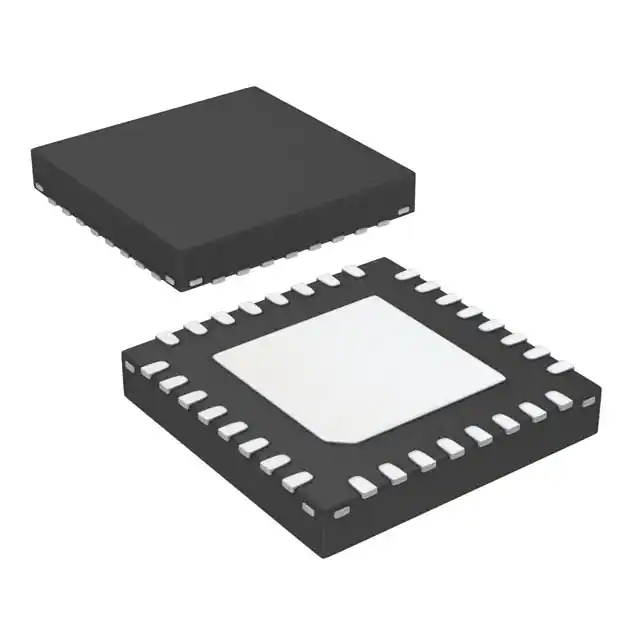
- 32-VFQFN Exposed Pad
- Datasheet:
-
 STM32WB05KZV6TR.pdf
- Description:
- ULTRA-LOW-POWER, ARM CORTEX-M0+
- Quantity:
- Payment:

- Shipping:

Inventory:2,875
Please send an inquiry. Send us your inquiry, and we will respond immediately.
Product details
Overview
STM32WB05KZV6TR from STMicroelectronics is an ultra-low-power dual-core wireless SoC integrating an Arm® Cortex®-M0+ MCU (64 MHz, 192 KB Flash, 24 KB RAM) and a BlueNRG co-processor for Bluetooth® Low Energy 5.4 operations. It delivers -104 dBm RX sensitivity at 125 kbps (Long Range), +8 dBm programmable TX output, and supports BLE mesh, direction finding (AoA/AoD), and isochronous streams (BIS/CIS) in industrial asset tracking and smart lighting systems.
For engineers reviewing the STM32WB05KZV6TR datasheet, STM32WB05KZV6TR pinout, STM32WB05KZV6TR application, or STM32WB05KZV6TR equivalent, key selection criteria include BLE 5.4 feature support (e.g., periodic advertising sync transfer, EATT, connection subrating), ultra-low-power Deepstop mode (0.8 µA with LSE), integrated SMPS regulator, hardware security accelerators (PKA, AES-128, RNG), and WLCSP36 package compatibility with IPD matching.
Technical Context
The device implements a partitioned BLE stack: time-critical PHY/MAC layers handled by the dedicated BlueNRG DMA-based coprocessor, while host stack and application logic run on the Cortex-M0+. Its RF subsystem uses a low-IF RX architecture with internal balun and supports simultaneous multi-role operation (e.g., central + peripheral).
Power management integrates three domains (VDD33, VDD12O, VDD12I), an SMPS step-down converter (programmable 1.2–1.9 V output), and LPREG enabling 0.8 µA Deepstop with LSE and BLE wakeup sources. Security includes hardware-accelerated ECC (521-bit), RSA, and ECDSA via PKA, plus flash read/write protection and SWD disable capability.
Key Specifications
| Parameter | Value and Actual Design Meaning |
|---|---|
| BLE Version | Bluetooth 5.4 - enables BIS/CIS, LE power control, channel classification, and encrypted advertising for secure, scalable mesh networks. |
| RX Sensitivity | -104 dBm @ 125 kbps (Coded PHY) - extends range >1 km in open field for asset tracking without external LNA. |
| TX Output Power | +8 dBm (programmable) - drives antenna directly with minimal external components; supports regulatory compliance up to FCC/ETSI limits. |
| CPU Core | Arm Cortex-M0+ @ 64 MHz - executes real-time BLE host stack and application code with 14 µA/MHz dynamic efficiency. |
| Memory | 192 KB Flash / 24 KB SRAM + 4 KB PKA RAM - accommodates full BLE stack, application firmware, and cryptographic key storage with OTP backup. |
| Security Hardware | PKA (3136-bit modular exp), AES-128, RNG, 64-bit UID - enables FIPS-compliant key generation, TLS handshake acceleration, and anti-cloning protection. |
| Operating Temp | -40 °C to +105 °C - qualified for industrial automation and automotive cabin peripherals without derating. |
| Supply Voltage | 1.7–3.6 V - compatible with single-cell Li-ion (3.0–3.7 V), coin cell (2.0–3.0 V), and energy-harvesting sources. |
Pinout & Package
STM32WB05KZV6TR is housed in a WLCSP36 (2.652 mm × 2.592 mm, 0.40 mm pitch) package with 20 GPIOs - all 5 V tolerant, retaining state in Deepstop, and supporting wakeup. The package integrates VSSRF ground connections requiring direct PCB ground plane bonding per ST layout guidelines.
| Pin/Terminal | Circuit Role | Design Meaning |
|---|---|---|
| VDDIO / VSS | Digital I/O supply / Ground | 1.7–3.6 V domain powering 20 GPIOs; VSS must connect to solid ground plane for noise immunity. |
| VDD12O / VDD12I | Always-on / Interruptible digital core supplies | Separate 1.2 V domains enable selective power gating: VDD12I shuts down in Deepstop to cut leakage. |
| VRF / VSSRF | RF analog supply / RF ground | 1.2 V dedicated LDO (RFLDO) powers RF block; VSSRF pins require low-inductance ground plane tie for EMI control. |
| ANT / RFIO | Antenna interface / RF transceiver I/O | Differential RF port with integrated balun; supports direct 50 Ω single-ended antenna connection or external PA/LNA via matching network. |
| OSC32_IN / OSC32_OUT | 32 kHz crystal oscillator terminals | Drives low-power RTC and BLE sleep clock; internal trimming capacitors eliminate external load caps. |
| BOOT0 | Boot mode selection | Pulled low for main flash boot; high for system memory bootloader - enables field firmware recovery without debugger. |
Key Features
| Feature | Design Value |
|---|---|
| BLE 5.4 Direction Finding (AoA/AoD) | Hardware-accelerated IQ sampling and angle calculation enable <±5° indoor positioning accuracy using antenna arrays. |
| Integrated SMPS Regulator | 4–8 MHz switching frequency with programmable 1.2–1.9 V output reduces active current by 30% vs. LDO-only designs at 3.3 V input. |
| Hardware PKA Accelerator | Supports 521-bit ECDSA signature/verification in <10 ms - cuts BLE pairing latency by 70% vs. software-only crypto. |
| Deepstop Mode (LSE + BLE Wakeup) | 0.8 µA total system current - extends CR2032 battery life to >10 years in beacon applications with periodic advertising. |
| 20x 5 V-Tolerant GPIOs | All pins retain state and support wakeup in Deepstop - eliminates level shifters in mixed-voltage sensor interfaces. |
| IPD-Compatible RF Matching | Validated with MLPF-NRG-01D3 IPD - reduces matching network to 2 passive components, accelerating RF design and improving yield. |
Applications
| Industrial Asset Tracking | Smart Lighting Control |
|---|---|
Use Scenario: Battery-powered BLE tags attached to factory tools or pallets report location and temperature every 5 minutes. IC Role / Device Role / Timing Role: Dual-core SoC runs BLE advertiser + sensor fusion firmware; BlueNRG coprocessor handles timing-critical radio scheduling while Cortex-M0+ manages ADC sampling and data encryption. Use Value: -104 dBm sensitivity ensures reliable 200 m indoor range; 0.8 µA Deepstop enables 7-year CR2032 life without maintenance. | Use Scenario: LED luminaires in commercial buildings use mesh networking to synchronize dimming and color tuning across zones. IC Role / Device Role / Timing Role: Acts as BLE Mesh node with concurrent advertiser/scanner/central roles; hardware EATT enables efficient attribute exchange across 128-node networks. Use Value: Integrated BIS/CIS supports synchronized audio-visual lighting effects with <100 µs jitter; PKA accelerates secure provisioning of 100+ fixtures. |
| Fitness Wearable Sensor Hub | Medical Remote Monitor |
Use Scenario: Wrist-worn activity tracker collects heart rate, motion, and skin temperature, streaming encrypted data to smartphone. IC Role / Device Role / Timing Role: Cortex-M0+ executes sensor fusion algorithm and BLE GATT server; BlueNRG handles LE ping procedure and path loss monitoring for adaptive connection intervals. Use Value: AES-128 + RNG ensures HIPAA-compliant data encryption; 12-bit ADC with battery monitoring enables accurate SoC estimation over 2-year battery life. | Use Scenario: Portable blood glucose meter transmits readings to clinic cloud via BLE gateway, requiring tamper-proof firmware updates. IC Role / Device Role / Timing Role: Secure bootloader validates signed firmware images; PKA verifies ECDSA signatures before flash programming; RNG seeds session keys for TLS handshake. Use Value: OTP memory stores device-specific BLE keys; flash write protection prevents unauthorized firmware modification - meets IEC 62304 Class B requirements. |
Equivalent & Alternatives
The following parts are listed as comparable options for similar Bluetooth Low Energy wireless SoC applications.
| Alternative Part | Technical Difference | Application Difference | Selection Advice |
|---|---|---|---|
| Nordic nRF52840 DK | ARM Cortex-M4F core, 1 MB Flash, no integrated SMPS; BLE 5.0 (not 5.4); lacks AoA/AoD and BIS/CIS hardware acceleration. | Requires external DC/DC for ultra-low-power operation; limited to BLE point-to-point, not large-scale mesh with isochronous streams. | Select when M4F DSP performance is needed for audio processing, but BLE 5.4 features and lowest power are secondary. |
| Texas Instruments CC2642R1 | ARM Cortex-M4F + proprietary RF core; BLE 5.0; 352 KB Flash; integrated DC/DC; no PKA or hardware EATT support. | Strong RF robustness in noisy industrial environments; weaker security acceleration and no direction finding capability. | Select for legacy TI ecosystem integration or where RF coexistence in 2.4 GHz ISM band is critical over BLE 5.4 feature set. |
Compared with nRF52840 and CC2642R1, STM32WB05KZV6TR uniquely combines BLE 5.4 feature completeness (AoA, BIS, EATT), ultra-low-power Deepstop (0.8 µA), and hardware PKA for fast ECC - making it optimal for secure, long-life, mesh-capable IoT endpoints where firmware size and RF flexibility are constrained.
Availability
STM32WB05KZV6TR is available at Aetrix Electronics and suitable for industrial asset tracking, smart lighting control, fitness wearables, and medical remote monitors requiring stable component supply, long-term lifecycle assurance, and validated RF performance.
Supply support for STM32WB05KZV6TR includes scheduled delivery planning, volume procurement assistance, BOM continuity management, traceable sourcing, and lifecycle availability coordination for OEM customers, industrial embedded developers, connected-device designers, and electronics production programs.
Manufacturer
STMicroelectronics is a global semiconductor leader headquartered in Geneva, Switzerland, designing and manufacturing microcontrollers, power management ICs, sensors, and wireless solutions for industrial, automotive, and consumer markets.
The STM32WB series targets ultra-low-power wireless edge nodes, integrating BLE 5.4 and 2.4 GHz proprietary radio with Arm Cortex-M0+ to enable secure, battery-operated IoT devices with multi-year lifetimes and mesh scalability.
FAQ
What is the maximum BLE advertising packet size supported by STM32WB05KZV6TR?
The device supports Bluetooth 5.4 Advertising Extensions, enabling up to 1650 bytes of advertising data per event using periodic advertising with response and extended payload capabilities - sufficient for firmware version broadcasting, sensor metadata, and secure provisioning tokens without connection establishment.
Does STM32WB05KZV6TR require an external crystal for BLE operation?
No - it integrates trimming capacitors for the 32 MHz HSE and 32 kHz LSE oscillators, eliminating external load capacitors. The 32 kHz crystal is required for BLE sleep clock accuracy (<±50 ppm), while the 32 MHz crystal enables USB-free programming and high-speed flash access.
How is the +8 dBm RF output achieved without external PA?
The +8 dBm output is delivered directly from the integrated RF power amplifier stage, calibrated and controlled via internal LDO voltage adjustment. No external PA is needed for most PCB trace antennas; ST provides reference layouts and MLPF-NRG-01D3 IPD for optimized 50 Ω matching and harmonic filtering.
Can STM32WB05KZV6TR operate as both BLE central and peripheral simultaneously?
Yes - it supports up to 128 physical connections and concurrent multi-role operation (e.g., acting as BLE peripheral for sensor data collection while scanning as central for nearby beacons), enabled by hardware-accelerated BlueNRG coprocessor offloading timing-critical radio tasks from the Cortex-M0+.
STM32WB05KZV6TR Specifications
- Product attributes
- Attribute value
- Manufacturer:
- STMicroelectronics
- Series:
- STM32WB
- Package/Case:
- 32-VFQFN Exposed Pad
- Packaging:
- Tape & Reel (TR)
- Product Status:
- Active
- Programmable:
- -
- Type:
- TxRx + MCU
- RF Family/Standard:
- Bluetooth
- Protocol:
- Bluetooth v5.4
- Modulation:
- GFSK
- Frequency:
- -
- Data Rate (Max):
- 2Mbps
- Power - Output:
- 8dBm
- Sensitivity:
- -104dBm
- Memory Size:
- 192kB Flash, 24kB SRAM
- Serial Interfaces:
- ADC, GPIO, I2C, I2S, IrDA, JTAG, PWM, SPI, UART, USART
- GPIO:
- 20
- Voltage - Supply:
- 1.7V ~ 3.6V
- Current - Receiving:
- 3.4mA
- Current - Transmitting:
- 4.3mA
- Operating Temperature:
- -40°C ~ 105°C (TA)
- Grade:
- -
- Qualification:
- -
- Supplier Device Package:
- 32-VFQFPN (5x5)
STM32WB05KZV6TR FAQ
1.How can I place an order for STM32WB05KZV6TR through Aetrix?
Please submit a Request for Quotation (RFQ) for STM32WB05KZV6TR on Aetrix. Our sales agent will provide a competitive quotation and guide you through the order confirmation once you accept the terms.
2.Are the price and stock information for STM32WB05KZV6TR reliable?
The price and inventory of STM32WB05KZV6TR are updated periodically and may fluctuate due to market conditions. Stock and pricing data are typically refreshed every 24 hours. Quotation validity for STM32WB05KZV6TR is usually 5 days.
3.What payment methods are accepted for STM32WB05KZV6TR?
We accept Wire Transfer, PayPal, Credit Card, Western Union, MoneyGram, and Escrow for STM32WB05KZV6TR transactions.
Note: Certain payment methods may incur a processing fee.
4.How is shipping managed for STM32WB05KZV6TR?
STM32WB05KZV6TR orders can be shipped via leading logistics carriers, including DHL, UPS, FedEx, TNT, or Registered Mail.
Once your STM32WB05KZV6TR order is processed, you will receive an email with the shipment details and tracking number.
Note: Tracking information may take up to 24 hours to appear. Express delivery typically takes 3–5 business days.
5.How can I obtain technical support or documentation for STM32WB05KZV6TR?
For technical support, including STM32WB05KZV6TR datasheets, pinout diagrams, or application guidance, please contact our engineering support team. They can provide detailed documentation and assistance for your STM32WB05KZV6TR requirements.
6.How does Aetrix verify that STM32WB05KZV6TR is sourced from the original manufacturer or authorized distributors?
All STM32WB05KZV6TR products on Aetrix are procured from qualified distributors and authorized channels. Our dedicated quality assurance team conducts strict verification, including traceability checks and, if necessary, third-party testing. This ensures that STM32WB05KZV6TR meets industry standards.
7.What is the process for return or replacement of STM32WB05KZV6TR?
All STM32WB05KZV6TR units undergo pre-shipment inspection (PSI). If there is an issue with STM32WB05KZV6TR, returns or replacements are accepted under the following conditions:
1.Quantity discrepancies, incorrect items, or visible external defects (such as breakage or corrosion), acknowledged by Aetrix.
2.The issue is reported within 90 days of delivery.
3.The STM32WB05KZV6TR part is unused and in its original packaging.
Return procedure for STM32WB05KZV6TR:
1.Submit a request within 90 days.
2.Obtain a Return Material Authorization (RMA) from Aetrix.
STM32WB05KZV6TR Tags
-
ESP32-D0WD-V3
Espressif Systems
-
ESP8266EX
Espressif Systems

-
ESP32-S3
Espressif Systems
-
NRF24L01P-R7
Nordic Semiconductor ASA
-
NRF24L01P-R
Nordic Semiconductor ASA
-
ESP32-U4WDH
Espressif Systems
-
DA14531-00000OG2
Renesas
-
ESP32-C6FH4
Espressif Systems
-
DA14531-00000FX2
Renesas
-
NRF24L01P-T
Nordic Semiconductor ASA
-
NRF52810-QCAA-R
Nordic Semiconductor ASA
-
ESP32-S3FN8
Espressif Systems
Tech Hub

A practical engineering and sourcing framework covering lifecycle verification, lifetime-buy calculations, replacement qualification, supplier checks and counterfeit-risk controls.

TTL and CMOS logic families differ in thresholds, loading, output drive, power and timing. This engineering guide compares 74HC and 74HCT, calculates noise margins and checks 3.3 V/5 V compatibility.

A practical engineering guide to 3.3V and 5V logic compatibility, input thresholds, resistor dividers, translator ICs, MOSFET level shifting, I2C pull-ups, timing limits and power-sequencing risks.

The 74HC595 uses push-pull logic outputs, while the TPIC6B595 uses 50 V open-drain DMOS sinks for higher-power loads. This guide compares timing, current limits, 3.3 V interfacing, load wiring, thermal…

The 74HC595 converts serial data into eight stable parallel outputs. This guide covers pin functions, shift and storage timing, OE and MR behavior, drive-current limits, cascading, voltage compatibilit…

A technical comparison of level-sensitive latches and edge-triggered flip-flops, covering timing windows, setup and hold limits, master–slave operation, time borrowing, race-through, HDL inference and…

A D latch stores one bit while Enable controls when data can pass. This reference covers gate-level operation, truth tables, transparency, setup and hold timing, LE versus OE, common ICs and practical …

An SR latch stores one bit through cross-coupled feedback. This engineering reference covers NOR and NAND implementations, truth tables, forbidden-state recovery, gated operation, switch debouncing, fa…

Latch circuits retain one bit through feedback. This technical reference covers SR and D latches, truth tables, transparency, timing limits, latch-versus-flip-flop behavior, applications and common log…

An engineering guide to LED driver operation, constant-current and constant-voltage outputs, linear and switching topologies, dimming, IC selection, calculations, replacement compatibility, and fault c…


