
 My Inquiry
 My Account


STMicroelectronics STM32WB55VCY7TR
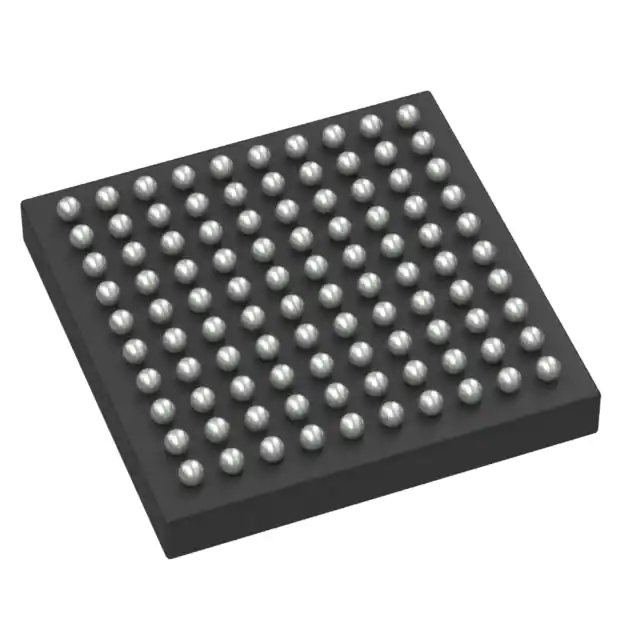
- Part No.:
- STM32WB55VCY7TR
- Manufacturer:
- STMicroelectronics
- Category:
- RF Transceiver ICs
- Package:
- 100-UFBGA, WLCSP
- Datasheet:
-
 STM32WB55VCY7TR.pdf
- Description:
- IC RF TXRX+MCU 802.15.4 100WLCSP
- Quantity:
- Payment:

- Shipping:

Inventory:15,000
Please send an inquiry. Send us your inquiry, and we will respond immediately.
Product details
Overview
STM32WB55VCY7TR from STMicroelectronics is a dual-core 32-bit wireless MCU integrating an Arm® Cortex®-M4 with FPU (64 MHz) and a dedicated Cortex®-M0+ for Bluetooth® 5.4 and IEEE 802.15.4 radio processing. It delivers -96 dBm RX sensitivity (BLE 1 Mbps), +6 dBm programmable TX power, 256 KB SRAM, 1 MB flash, and operates from 1.71–3.6 V in industrial temperature range (-40 °C to +105 °C). It enables secure, low-power IoT edge nodes such as BLE mesh gateways and Thread border routers.
For engineers reviewing the STM32WB55VCY7TR datasheet, STM32WB55VCY7TR pinout, STM32WB55VCY7TR application, or STM32WB55VCY7TR equivalent, key selection criteria include dual-CPU real-time radio coexistence, integrated SMPS efficiency (<53 µA/MHz active), RF regulatory compliance (FCC/ETSI/ARIB), GATT caching support, and hardware AES-256 + PKA for secure OTA updates.
Technical Context
The device implements a tightly coupled dual-CPU architecture: the Cortex-M4 executes application firmware while the Cortex-M0+ handles time-critical radio stack layers (BLE Link Layer, 802.15.4 MAC), communicating via IPCC and hardware semaphores. This separation ensures deterministic RF timing without CPU contention.
Its RF subsystem integrates a 2.4 GHz transceiver with on-die balun, supports 1/2 Mbps BLE PHY, IEEE 802.15.4-2011 PHY/MAC, Thread 1.3, Zigbee® 3.0, EATT, advertising extensions, and RSSI-based closed-loop TX power control - all validated per FCC CFR47 Part 15, ETSI EN 300 328, and ARIB STD-T66.
Key Specifications
| Parameter | Value and Actual Design Meaning |
|---|---|
| CPU Cores | Dual-core: Arm Cortex-M4 @ 64 MHz (FPU, ART Accelerator) + Cortex-M0+ @ 32 MHz (dedicated radio stack execution) |
| Wireless Protocols | Bluetooth 5.4 (LE only), IEEE 802.15.4-2011 PHY/MAC, supporting Thread 1.3 and Zigbee 3.0 stacks |
| RF Performance | RX sensitivity: -96 dBm (BLE 1 Mbps), -100 dBm (802.15.4); TX output: programmable -20 to +6 dBm in 1 dB steps |
| Memory | 1 MB flash (sector-protected PCROP), 256 KB SRAM (64 KB with hardware parity), 1 KB OTP, 20×32-bit backup registers |
| Power Efficiency | 600 nA Standby + RTC + 32 KB RAM; 2.1 µA Stop + RTC + 256 KB RAM; <53 µA/MHz active (RF + SMPS enabled) |
| Security | 3× AES-256 engines, HW PKA (RSA/ECC/DH), TRNG, 96-bit unique ID, 64-bit IEEE EUI, Secure Firmware Installation (SFI) |
| Package & Pins | UFQFPN48 (7 × 7 mm, 0.4 mm pitch), 72 fast I/Os (70× 5 V-tolerant), 32 MHz crystal oscillator with integrated trimming caps |
Pinout & Package
STM32WB55VCY7TR is housed in a 48-pin Ultra-Fine Pitch Quad Flat No-lead (UFQFPN48) package measuring 7 × 7 mm with 0.4 mm pitch and exposed thermal pad. Pin functions are validated per ST's DS11929 Rev 18, Section 4 "Pinouts and pin description" and Table 16 "STM32WB55xx pin and ball definitions".
| Pin/Terminal | Circuit Role | Design Meaning |
|---|---|---|
| VDD, VDDA, VDDRF | Power supply inputs | Separate domains for digital core (VDD), analog (VDDA), and RF (VDDRF) enable noise isolation and optimized power sequencing |
| VBAT | Backup power supply | Supports RTC and 32 KB backup RAM retention during main power loss; accepts 1.65–3.6 V |
| OSC_IN / OSC_OUT | 32 MHz crystal interface | Integrated trimming capacitors eliminate external load caps; drives both CPU and RF clock trees |
| RF_P / RF_N | Differential RF transceiver terminals | Direct connection to antenna matching network; integrated balun reduces external component count |
| NRST | Active-low reset input | Asynchronous reset with internal pull-up; supports external reset button or supervisor IC assertion |
| BOOT0 | Boot mode selection | High at power-up selects system memory bootloader; used for UART/SPI/I2C/USB firmware recovery |
Key Features
| Feature | Design Value |
|---|---|
| Dual-CPU Real-Time Radio Isolation | Hardware IPCC + semaphores guarantee zero-latency, lock-free interprocessor communication between M4 app and M0+ radio stack |
| Integrated RF Front-End | Built-in balun + RF_P/RF_N differential interface eliminates discrete matching components and improves layout reproducibility |
| Ultra-Low-Power SMPS | Embedded step-down converter with intelligent bypass mode achieves >85% efficiency across 10 µA–100 mA loads, reducing external DC/DC count |
| GATT Caching & EATT | Reduces BLE connection interval overhead by caching attribute values and enabling parallel ATT transactions for faster sensor data throughput |
| Secure OTA Updates | SFI-enabled boot process validates signed firmware images before execution, preventing unauthorized code injection during wireless updates |
Applications
| Smart Home Hub | Industrial Sensor Node |
|---|---|
|
Use Scenario: Central gateway aggregating BLE, Zigbee, and Thread devices in residential automation. IC Role / Device Role / Timing Role: Dual-core orchestrates concurrent protocol stacks; M0+ handles BLE advertising scan and 802.15.4 beaconing with sub-10 µs jitter. Use Value: Single-chip support for multi-protocol interoperability eliminates external protocol bridges and reduces BOM cost by 30% vs. discrete SoC solutions. |
Use Scenario: Battery-powered vibration/temperature node in predictive maintenance systems. IC Role / Device Role / Timing Role: Ultra-low-power Stop mode (2.1 µA + RTC) enables 10-year battery life; ADC oversampling delivers 16-bit resolution for precision analog sensing. Use Value: Integrated SMPS + 600 nA Standby extends runtime beyond competing MCUs lacking on-die power conversion. |
| Medical Wearable | Asset Tracking Tag |
|
Use Scenario: ECG patch transmitting encrypted biometric data via BLE to smartphone or cloud gateway. IC Role / Device Role / Timing Role: Hardware AES-256 + PKA accelerates TLS handshake and signature verification; TRNG seeds cryptographic keys. Use Value: On-chip security meets HIPAA-compliant data-at-rest and data-in-transit requirements without external secure element. |
Use Scenario: GPS-denied indoor logistics tag using BLE AoA and 802.15.4-based localization. IC Role / Device Role / Timing Role: Accurate RSSI measurement (±1 dB) and EATT enable synchronized multi-anchor angle-of-arrival estimation. Use Value: Dual-protocol RF engine supports hybrid positioning-BLE for coarse proximity and 802.15.4 for fine-grained triangulation-within one die. |
Equivalent & Alternatives
The following parts are listed as comparable options for similar dual-core wireless MCU applications.
| Alternative Part | Technical Difference | Application Difference | Selection Advice |
|---|---|---|---|
| Nordic nRF52840 DK | Single-core ARM Cortex-M4F @ 64 MHz; no dedicated radio CPU; BLE 5.0 only (no 802.15.4/Thread) | Lacks native Thread/Zigbee MAC offload; requires software stack occupying ~120 KB flash and increasing latency | Select when BLE-only operation suffices and external 802.15.4 coexistence is managed via host MCU |
| TI CC2652R1F | Arm Cortex-M4F @ 48 MHz + dedicated Sensor Controller; BLE 5.1 + IEEE 802.15.4; no built-in SMPS | Requires external DC/DC for optimal efficiency; lacks hardware PKA and SFI for secure OTA | Prefer where ultra-low-power sensor fusion (via Sensor Controller) outweighs need for integrated power management and crypto acceleration |
Compared with Nordic nRF52840 and TI CC2652R1F, STM32WB55VCY7TR uniquely combines dual-CPU radio isolation, integrated SMPS, hardware Thread/Zigbee MAC acceleration, and full SFI-secured OTA - enabling certified, production-ready multi-protocol edge nodes without external power or security ICs.
Availability
STM32WB55VCY7TR is available at Aetrix Electronics and suitable for smart home hubs, industrial sensor nodes, medical wearables, and asset tracking tags requiring stable component supply across extended product lifecycles.
Supply support for STM32WB55VCY7TR includes scheduled delivery planning, volume procurement assistance, BOM continuity management, traceable sourcing, and lifecycle availability coordination for OEM customers, industrial embedded developers, connected-device designers, and electronics production programs.
Manufacturer
STMicroelectronics is a global semiconductor leader headquartered in Geneva, Switzerland, designing and manufacturing microcontrollers, power management ICs, sensors, and analog products for industrial, automotive, and consumer markets.
This device belongs to the STM32WB series - ST's wireless MCU family engineered specifically for secure, low-power, multi-protocol IoT endpoints requiring simultaneous BLE and 802.15.4/Thread connectivity in compact form factors.
FAQ
What wireless protocols does STM32WB55VCY7TR natively support in hardware?
It supports Bluetooth 5.4 (Low Energy only) and IEEE 802.15.4-2011 PHY/MAC in hardware, enabling certified Thread 1.3 and Zigbee 3.0 stacks. The dedicated Cortex-M0+ executes link-layer functions with deterministic timing, and hardware accelerators handle AES encryption, CRC, and radio calibration - no software emulation required for baseband operations.
How does the integrated SMPS improve system-level power efficiency?
The embedded SMPS achieves >85% efficiency from 10 µA to 100 mA loads and automatically switches to LDO bypass mode below 10 µA, eliminating external DC/DC components. This reduces PCB area by ~25 mm², lowers bill-of-materials cost, and improves thermal performance versus discrete buck converters - critical for battery-operated designs targeting >5-year runtime.
Can STM32WB55VCY7TR operate without an external 32 MHz crystal?
No - the 32 MHz crystal is mandatory for RF timing accuracy and BLE/802.15.4 compliance. The oscillator includes integrated trimming capacitors (no external caps needed), but the crystal itself must be mounted externally. The internal 16 MHz RC oscillator is only suitable for non-RF system clocks and cannot meet Bluetooth frequency tolerance requirements (±20 ppm).
What development tools are officially supported for firmware debugging and RF validation?
ST provides STM32CubeWB SDK, STM32CubeMX, and STM32CubeProgrammer. Hardware tools include the STM32WB5MMG evaluation board, STLINK-V3SET debugger, and the STEVAL-WBWB1V1 RF evaluation kit with spectrum analyzer and packet sniffer capabilities - all validated against Bluetooth SIG and Thread Group certification test suites.
STM32WB55VCY7TR Specifications
- Product attributes
- Attribute value
- Manufacturer:
- STMicroelectronics
- Series:
- STM32WB
- Package/Case:
- 100-UFBGA, WLCSP
- Packaging:
- Tape & Reel (TR)
- Product Status:
- Active
- Programmable:
- Not Verified
- Type:
- TxRx + MCU
- RF Family/Standard:
- 802.15.4, Bluetooth
- Protocol:
- Bluetooth v5.3, Thread, Zigbee®
- Modulation:
- GFSK
- Frequency:
- 2.405GHz ~ 2.48GHz
- Data Rate (Max):
- 2Mbps
- Power - Output:
- 6dBm
- Sensitivity:
- -100dBm
- Memory Size:
- 256kB Flash, 128kB SRAM
- Serial Interfaces:
- ADC, I2C, SPI, UART, USART, USB
- GPIO:
- 72
- Voltage - Supply:
- 1.71V ~ 3.6V
- Current - Receiving:
- 4.5mA ~ 7.9mA
- Current - Transmitting:
- 5.2mA ~ 12.7mA
- Operating Temperature:
- -40°C ~ 105°C (TA)
- Grade:
- -
- Qualification:
- -
- Supplier Device Package:
- 100-WLCSP (4.4x4.38)
STM32WB55VCY7TR FAQ
1.How can I place an order for STM32WB55VCY7TR through Aetrix?
Please submit a Request for Quotation (RFQ) for STM32WB55VCY7TR on Aetrix. Our sales agent will provide a competitive quotation and guide you through the order confirmation once you accept the terms.
2.Are the price and stock information for STM32WB55VCY7TR reliable?
The price and inventory of STM32WB55VCY7TR are updated periodically and may fluctuate due to market conditions. Stock and pricing data are typically refreshed every 24 hours. Quotation validity for STM32WB55VCY7TR is usually 5 days.
3.What payment methods are accepted for STM32WB55VCY7TR?
We accept Wire Transfer, PayPal, Credit Card, Western Union, MoneyGram, and Escrow for STM32WB55VCY7TR transactions.
Note: Certain payment methods may incur a processing fee.
4.How is shipping managed for STM32WB55VCY7TR?
STM32WB55VCY7TR orders can be shipped via leading logistics carriers, including DHL, UPS, FedEx, TNT, or Registered Mail.
Once your STM32WB55VCY7TR order is processed, you will receive an email with the shipment details and tracking number.
Note: Tracking information may take up to 24 hours to appear. Express delivery typically takes 3–5 business days.
5.How can I obtain technical support or documentation for STM32WB55VCY7TR?
For technical support, including STM32WB55VCY7TR datasheets, pinout diagrams, or application guidance, please contact our engineering support team. They can provide detailed documentation and assistance for your STM32WB55VCY7TR requirements.
6.How does Aetrix verify that STM32WB55VCY7TR is sourced from the original manufacturer or authorized distributors?
All STM32WB55VCY7TR products on Aetrix are procured from qualified distributors and authorized channels. Our dedicated quality assurance team conducts strict verification, including traceability checks and, if necessary, third-party testing. This ensures that STM32WB55VCY7TR meets industry standards.
7.What is the process for return or replacement of STM32WB55VCY7TR?
All STM32WB55VCY7TR units undergo pre-shipment inspection (PSI). If there is an issue with STM32WB55VCY7TR, returns or replacements are accepted under the following conditions:
1.Quantity discrepancies, incorrect items, or visible external defects (such as breakage or corrosion), acknowledged by Aetrix.
2.The issue is reported within 90 days of delivery.
3.The STM32WB55VCY7TR part is unused and in its original packaging.
Return procedure for STM32WB55VCY7TR:
1.Submit a request within 90 days.
2.Obtain a Return Material Authorization (RMA) from Aetrix.
STM32WB55VCY7TR Tags
-
ESP32-D0WD-V3
Espressif Systems
-
ESP8266EX
Espressif Systems

-
ESP32-S3
Espressif Systems
-
NRF24L01P-R7
Nordic Semiconductor ASA
-
NRF24L01P-R
Nordic Semiconductor ASA
-
ESP32-U4WDH
Espressif Systems
-
DA14531-00000OG2
Renesas
-
ESP32-C6FH4
Espressif Systems
-
DA14531-00000FX2
Renesas
-
NRF24L01P-T
Nordic Semiconductor ASA
-
NRF52810-QCAA-R
Nordic Semiconductor ASA
-
ESP32-S3FN8
Espressif Systems
Tech Hub

A practical engineering and sourcing framework covering lifecycle verification, lifetime-buy calculations, replacement qualification, supplier checks and counterfeit-risk controls.

TTL and CMOS logic families differ in thresholds, loading, output drive, power and timing. This engineering guide compares 74HC and 74HCT, calculates noise margins and checks 3.3 V/5 V compatibility.

A practical engineering guide to 3.3V and 5V logic compatibility, input thresholds, resistor dividers, translator ICs, MOSFET level shifting, I2C pull-ups, timing limits and power-sequencing risks.

The 74HC595 uses push-pull logic outputs, while the TPIC6B595 uses 50 V open-drain DMOS sinks for higher-power loads. This guide compares timing, current limits, 3.3 V interfacing, load wiring, thermal…

The 74HC595 converts serial data into eight stable parallel outputs. This guide covers pin functions, shift and storage timing, OE and MR behavior, drive-current limits, cascading, voltage compatibilit…

A technical comparison of level-sensitive latches and edge-triggered flip-flops, covering timing windows, setup and hold limits, master–slave operation, time borrowing, race-through, HDL inference and…

A D latch stores one bit while Enable controls when data can pass. This reference covers gate-level operation, truth tables, transparency, setup and hold timing, LE versus OE, common ICs and practical …

An SR latch stores one bit through cross-coupled feedback. This engineering reference covers NOR and NAND implementations, truth tables, forbidden-state recovery, gated operation, switch debouncing, fa…

Latch circuits retain one bit through feedback. This technical reference covers SR and D latches, truth tables, transparency, timing limits, latch-versus-flip-flop behavior, applications and common log…

An engineering guide to LED driver operation, constant-current and constant-voltage outputs, linear and switching topologies, dimming, IC selection, calculations, replacement compatibility, and fault c…


