
 My Inquiry
 My Account


STMicroelectronics STM706RDS6F
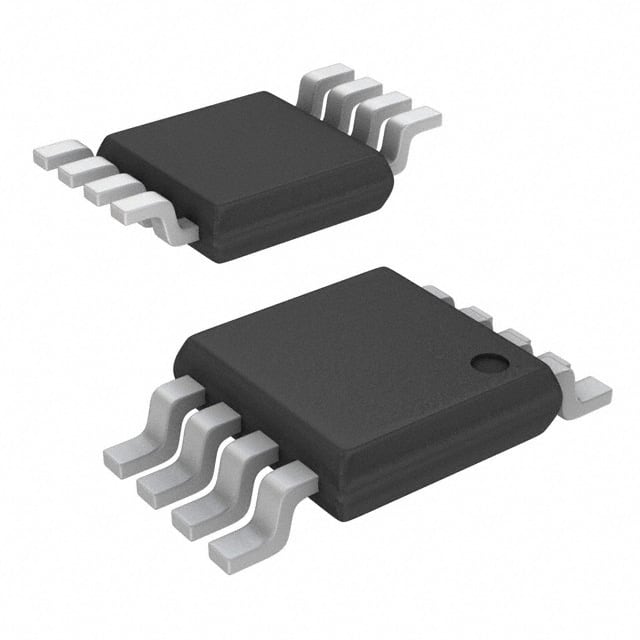
- Part No.:
- STM706RDS6F
- Manufacturer:
- STMicroelectronics
- Category:
- Supervisors
- Package:
- 8-TSSOP, 8-MSOP (0.118", 3.00mm Width)
- Datasheet:
-
 STM706RDS6F.pdf
- Description:
- IC SUPERVISOR 1 CHANNEL 8TSSOP
- Quantity:
- Payment:

- Shipping:

Inventory:1,421
Please send an inquiry. Send us your inquiry, and we will respond immediately.
Product details
Overview
STM706RDS6F from STMicroelectronics is a precision 3 V supply voltage supervisor IC with active-low reset output, watchdog timer, manual reset input, and power-fail comparator. It asserts RST low for ≥200 ms when VCC drops below 2.59–2.70 V, supports watchdog timeout at 1.6 s (typ.), draws only 40 µA (typ.) supply current, and operates from –40 °C to +85 °C. It is used in industrial controllers to ensure reliable microprocessor reset during brownout or software lockup.
For engineers reviewing the STM706RDS6F datasheet, STM706RDS6F pinout, STM706RDS6F application, or STM706RDS6F equivalent, key selection criteria include reset threshold accuracy, guaranteed RST assertion down to VCC = 1.0 V, push-pull RST/RST/WDO/PFO outputs, trec timing stability over temperature, and compatibility with bi-directional MCU reset pins via series resistor interface.
Technical Context
The STM706RDS6F integrates a precision bandgap-based voltage reference and comparator to monitor VCC against a fixed 2.59–2.70 V reset threshold. Its internal reset timeout generator ensures ≥200 ms RST pulse width after power-up or MR release, independent of VCC slew rate.
It implements a 1.6 s (typ.) watchdog timer cleared by WDI edge transitions; WDO is a push-pull output that can be looped to MR for autonomous system recovery. The PFI/PFO pair provides independent undervoltage detection using a 1.25 V (typ.) reference, decoupled from the main reset comparator.
Key Specifications
| Parameter | Value and Actual Design Meaning |
|---|---|
| Reset Threshold | 2.59–2.70 V - precisely defined window for reliable 3 V system brownout detection |
| Reset Timeout (trec) | 200 ms (typ.) - guarantees minimum reset pulse width for full MCU initialization |
| Watchdog Timeout | 1.6 s (typ.) - sufficient margin to detect firmware hangs without false triggers |
| Supply Current | 40 µA (typ.) - enables use in always-on monitoring without significant power penalty |
| VCC Range for RST Assertion | Down to 1.0 V - ensures valid reset signal even during deep brownout or battery sag |
| Operating Temperature | –40 °C to +85 °C - qualified for industrial-grade embedded control environments |
| Power-Fail Threshold (VPFI) | 1.25 V (typ.) - independent reference enabling early warning of supply collapse before VCC reset threshold is breached |
Pinout & Package
STM706RDS6F is housed in an 8-pin TSSOP package (3 × 3 mm body, DS suffix), optimized for space-constrained PCB layouts while maintaining thermal and electrical performance comparable to SO8.
| Pin/Terminal | Circuit Role | Design Meaning |
|---|---|---|
| 1 (PFO) | Power-fail output | Push-pull active-low signal indicating PFI < VPFI; can drive MR directly for cascaded reset |
| 2 (PFI) | Power-fail input | Analog input for external voltage divider; monitors pre-regulator or backup rail |
| 3 (WDI) | Watchdog input | Edge-sensitive input; toggling within 1.6 s prevents WDO assertion |
| 4 (RST) | Active-high reset output | Push-pull output asserted high during reset; not used on STM706R variant |
| 5 (VCC) | Supply voltage | Primary power input (2.7–5.5 V); powers all internal comparators and timers |
| 6 (MR) | Manual reset input | Active-low input with 40 kΩ internal pull-up; debounced by trec timer |
| 7 (RST) | Active-low reset output | Primary push-pull reset signal; guaranteed low down to VCC = 1.0 V |
| 8 (WDO) | Watchdog output | Push-pull active-low output triggered by WDI timeout or VCC drop; self-clearing on WDI edge |
Key Features
| Feature | Design Value |
|---|---|
| Dual reset outputs | RST (active-low) and RST (active-high) enable flexible interface to diverse MCU reset pin logic types |
| Guaranteed reset assertion | RST remains valid down to VCC = 1.0 V - critical for fail-safe behavior during severe brownout |
| Independent power-fail detection | PFI/PFO uses separate 1.25 V reference - allows early warning before main VCC falls below reset threshold |
| Watchdog with auto-clear | WDI edge-triggered timer clears on any transition - eliminates need for precise timing windows in firmware |
| No external components required | Internal pull-up on MR and precision references eliminate need for external resistors or capacitors in basic configuration |
Applications
| Industrial PLC Controller | Medical Diagnostic Instrument |
|---|---|
Use Scenario: Monitors 3.3 V supply rail in a programmable logic controller subjected to EMI-rich factory floor environments and frequent power cycling. IC Role / Device Role / Timing Role: Primary supervisor providing power-on reset, brownout protection, and software watchdog supervision for ARM Cortex-M7 host MCU. Use Value: Prevents corrupted firmware execution during voltage transients by guaranteeing ≥200 ms RST pulse and asserting reset down to VCC = 1.0 V. | Use Scenario: Embedded in portable ultrasound equipment requiring fail-safe boot integrity and battery voltage monitoring during standby-to-active transitions. IC Role / Device Role / Timing Role: Dual-role supervisor: VCC monitor for main SoC and PFI-based early warning for Li-ion battery discharge threshold. Use Value: Enables graceful shutdown initiation via PFO→MR linkage 10–15 ms before VCC crosses 2.59 V, preserving data and state. |
| Smart Energy Meter | Automated Test Equipment (ATE) |
Use Scenario: Secures boot sequence in ANSI C12.22-compliant electricity meter exposed to wide ambient temperature swings and grid voltage sags. IC Role / Device Role / Timing Role: Reset supervisor with watchdog guarding the metrology DSP and secure bootloader execution flow. Use Value: 1.6 s watchdog timeout matches typical firmware watchdog service interval, preventing lockup without compromising responsiveness. | Use Scenario: Integrated into modular ATE mainframe where multiple instrument cards require synchronized, glitch-free power-up sequencing. IC Role / Device Role / Timing Role: Centralized reset arbiter coordinating power-good signaling across FPGA, ADC, and DAC subsystems via RST fanout. Use Value: Push-pull RST output drives multiple loads without external buffer; trec stability over –40 °C to +85 °C ensures consistent timing across environmental test chambers. |
Equivalent & Alternatives
The following parts are listed as comparable options for similar voltage supervisor applications.
| Alternative Part | Technical Difference | Application Difference | Selection Advice |
|---|---|---|---|
| STM706TDS6F | Reset threshold 3.00–3.15 V; identical pinout, timing, and feature set | Suitable for 3.3 V systems requiring tighter upper threshold margin | Select when VCC nominal is 3.3 V with minimal tolerance spread and higher reset threshold improves noise immunity |
| TPS3808G12DBVR | Adjustable reset threshold (via external resistor divider); 35 µA quiescent current; no integrated watchdog | Lacks WDI/WDO functionality; requires external RC for delay tuning | Choose when design requires programmable reset voltage or lower supply current outweighs loss of watchdog autonomy |
Compared with STM706TDS6F, the STM706RDS6F offers lower reset threshold for earlier intervention in 3 V systems, while the TPS3808G12DBVR trades integrated watchdog capability for threshold flexibility and slightly lower ICC, making it suitable for simpler monitoring tasks where software-level watchdogs already exist.
Availability
STM706RDS6F is available at Aetrix Electronics and suitable for industrial PLC controllers, medical diagnostic instruments, smart energy meters, and automated test equipment requiring stable component supply across extended temperature ranges and long production lifecycles.
Supply support for STM706RDS6F includes scheduled delivery planning, volume procurement assistance, BOM continuity management, traceable sourcing, and lifecycle availability coordination for OEM customers, industrial embedded developers, connected-device designers, and electronics production programs.
Manufacturer
STMicroelectronics is a global semiconductor leader designing and manufacturing microcontrollers, analog ICs, power management devices, and sensors for industrial, automotive, and consumer applications.
The STM70x series is a dedicated family of voltage supervisors engineered for robust, single-chip power monitoring in resource-constrained embedded systems - emphasizing precision thresholding, guaranteed low-VCC operation, and integrated fault-detection features like watchdog and power-fail comparison.
FAQ
What is the function of the WDO pin on STM706RDS6F?
The WDO (Watchdog Output) pin is a push-pull active-low output that asserts when the WDI pin remains static for ≥1.6 s (typ.), indicating a potential MCU firmware hang. It de-asserts immediately upon detecting an edge on WDI or when VCC rises above the reset threshold. WDO can be connected to MR to generate an autonomous hardware reset without processor intervention.
Can STM706RDS6F be used with a microcontroller that has a bidirectional reset pin?
Yes - connect a 4.7 kΩ series resistor between STM706RDS6F's RST pin and the MCU's bidirectional reset I/O. This prevents signal contention when both devices attempt to drive the line simultaneously. The resistor value ensures adequate noise immunity while allowing the MCU to override reset during debug or recovery sequences without loading the supervisor output.
How does the PFI/PFO function differ from the main VCC reset monitoring?
PFI/PFO uses a separate 1.25 V internal reference and comparator, independent of the 2.59–2.70 V VCC reset threshold. This allows PFI to monitor a different rail (e.g., unregulated input or battery voltage) and assert PFO before VCC drops to the reset level - enabling early-warning shutdown or data save operations. PFO is push-pull and can directly drive MR for cascaded reset initiation.
Is the MR pin internally pulled up, and what happens if left unconnected?
Yes, MR has a 40 kΩ internal pull-up resistor to VCC. If left unconnected (floating), MR remains logic high and does not trigger reset. This eliminates the need for an external pull-up in most designs. For noisy environments or long PCB traces, a 0.1 µF capacitor from MR to GND is recommended to suppress EMI-induced glitches.
STM706RDS6F Specifications
- Product attributes
- Attribute value
- Manufacturer:
- STMicroelectronics
- Series:
- -
- Package/Case:
- 8-TSSOP, 8-MSOP (0.118", 3.00mm Width)
- Packaging:
- Tape & Reel (TR)
- Product Status:
- Obsolete
- Programmable:
- Not Verified
- Type:
- Simple Reset/Power-On Reset
- Number of Voltages Monitored:
- 1
- Voltage - Threshold:
- 2.63V
- Output:
- Push-Pull, Totem Pole
- Reset:
- Active Low
- Reset Timeout:
- 140ms Minimum
- Operating Temperature:
- -40°C ~ 85°C (TA)
- Grade:
- -
- Qualification:
- -
- Mounting Type:
- Surface Mount
- Supplier Device Package:
- 8-TSSOP
STM706RDS6F FAQ
1.How can I place an order for STM706RDS6F through Aetrix?
Please submit a Request for Quotation (RFQ) for STM706RDS6F on Aetrix. Our sales agent will provide a competitive quotation and guide you through the order confirmation once you accept the terms.
2.Are the price and stock information for STM706RDS6F reliable?
The price and inventory of STM706RDS6F are updated periodically and may fluctuate due to market conditions. Stock and pricing data are typically refreshed every 24 hours. Quotation validity for STM706RDS6F is usually 5 days.
3.What payment methods are accepted for STM706RDS6F?
We accept Wire Transfer, PayPal, Credit Card, Western Union, MoneyGram, and Escrow for STM706RDS6F transactions.
Note: Certain payment methods may incur a processing fee.
4.How is shipping managed for STM706RDS6F?
STM706RDS6F orders can be shipped via leading logistics carriers, including DHL, UPS, FedEx, TNT, or Registered Mail.
Once your STM706RDS6F order is processed, you will receive an email with the shipment details and tracking number.
Note: Tracking information may take up to 24 hours to appear. Express delivery typically takes 3–5 business days.
5.How can I obtain technical support or documentation for STM706RDS6F?
For technical support, including STM706RDS6F datasheets, pinout diagrams, or application guidance, please contact our engineering support team. They can provide detailed documentation and assistance for your STM706RDS6F requirements.
6.How does Aetrix verify that STM706RDS6F is sourced from the original manufacturer or authorized distributors?
All STM706RDS6F products on Aetrix are procured from qualified distributors and authorized channels. Our dedicated quality assurance team conducts strict verification, including traceability checks and, if necessary, third-party testing. This ensures that STM706RDS6F meets industry standards.
7.What is the process for return or replacement of STM706RDS6F?
All STM706RDS6F units undergo pre-shipment inspection (PSI). If there is an issue with STM706RDS6F, returns or replacements are accepted under the following conditions:
1.Quantity discrepancies, incorrect items, or visible external defects (such as breakage or corrosion), acknowledged by Aetrix.
2.The issue is reported within 90 days of delivery.
3.The STM706RDS6F part is unused and in its original packaging.
Return procedure for STM706RDS6F:
1.Submit a request within 90 days.
2.Obtain a Return Material Authorization (RMA) from Aetrix.
STM706RDS6F Tags
-
MIC826SYMT-TR
Microchip Technology
-
APX803S-31SA-7
Diodes Incorporated
-
APX803L20-29SA-7
Diodes Incorporated
-
TPS3828-33DBVR
Texas Instruments

-
V6340RSP3B+
EM Microelectronic
-
EM6325CXSP5B-2.9+
EM Microelectronic
-
MCP120T-300I/TT
Microchip Technology
-
MCP130T-315I/TT
Microchip Technology
-
MCP120T-475I/TT
Microchip Technology
-
MCP111T-300E/TT
Microchip Technology
-
MCP120T-315I/TT
Microchip Technology
-
MCP809T-315I/TT
Microchip Technology
Tech Hub

A practical engineering guide to 3.3V and 5V logic compatibility, input thresholds, resistor dividers, translator ICs, MOSFET level shifting, I2C pull-ups, timing limits and power-sequencing risks.

The 74HC595 uses push-pull logic outputs, while the TPIC6B595 uses 50 V open-drain DMOS sinks for higher-power loads. This guide compares timing, current limits, 3.3 V interfacing, load wiring, thermal…

The 74HC595 converts serial data into eight stable parallel outputs. This guide covers pin functions, shift and storage timing, OE and MR behavior, drive-current limits, cascading, voltage compatibilit…

A technical comparison of level-sensitive latches and edge-triggered flip-flops, covering timing windows, setup and hold limits, master–slave operation, time borrowing, race-through, HDL inference and…

A D latch stores one bit while Enable controls when data can pass. This reference covers gate-level operation, truth tables, transparency, setup and hold timing, LE versus OE, common ICs and practical …

An SR latch stores one bit through cross-coupled feedback. This engineering reference covers NOR and NAND implementations, truth tables, forbidden-state recovery, gated operation, switch debouncing, fa…

Latch circuits retain one bit through feedback. This technical reference covers SR and D latches, truth tables, transparency, timing limits, latch-versus-flip-flop behavior, applications and common log…

An engineering guide to LED driver operation, constant-current and constant-voltage outputs, linear and switching topologies, dimming, IC selection, calculations, replacement compatibility, and fault c…

Operational amplifier guide covering op amp basics, feedback, ideal vs real op amps, common configurations, buffer circuits, offset, bias current, gain-bandwidth, slew rate, rail-to-rail limits and sel…

Jumper cables guide covering safe connection order, red and black clamp placement, final ground connection, cable gauge, length, clamp quality, copper vs CCA cables, jump starter comparison and battery…


