
 My Inquiry
 My Account


STMicroelectronics STM8TL53C4U6
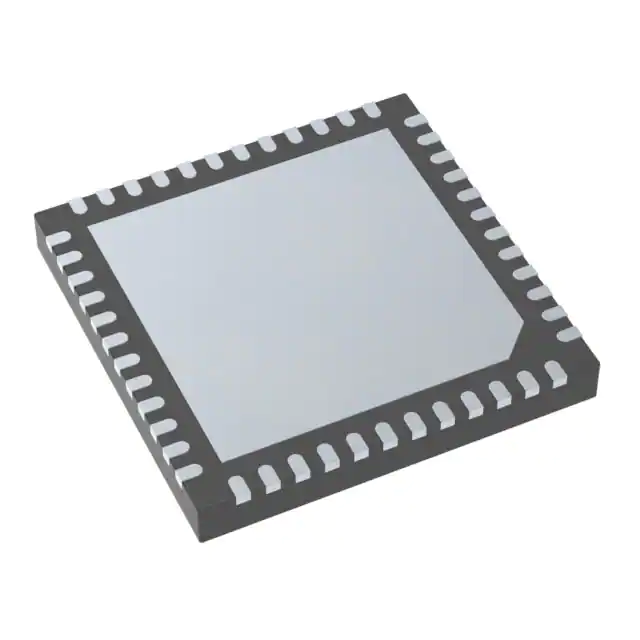
- Part No.:
- STM8TL53C4U6
- Manufacturer:
- STMicroelectronics
- Category:
- Microcontrollers
- Package:
- 48-UFQFN Exposed Pad
- Datasheet:
-
 STM8TL53C4U6.pdf
- Description:
- IC MCU 8BIT 16KB FLASH 48UFQFPN
- Quantity:
- Payment:

- Shipping:

Inventory:2,177
Please send an inquiry. Send us your inquiry, and we will respond immediately.
Product details
Overview
STM8TL53C4U6 from STMicroelectronics is an 8-bit ultra-low-power touch-sensing microcontroller featuring 16 Kbyte Flash, ProxSense™ capacitive proximity acquisition, 16 MHz STM8 core, and integrated peripherals including USART, SPI, I²C, two 16-bit timers, and beeper timer. It operates from 1.65 V to 3.6 V across –40 °C to +85 °C and targets battery-powered human-interface applications such as touch-enabled remote controls and smart appliance panels.
For engineers reviewing the STM8TL53C4U6 datasheet, STM8TL53C4U6 pinout, STM8TL53C4U6 application, or STM8TL53C4U6 equivalent, key selection criteria include ProxSense™ channel count (up to 300), ultra-low Halt-mode current (0.4 µA), 23 I/Os with programmable pull-ups, SWIM debug interface, and UFQFPN28 package compatibility for space-constrained designs.
Technical Context
The STM8TL53C4U6 implements a Harvard-architecture STM8 core with 3-stage pipeline, delivering 16 CISC MIPS at 16 MHz. Its dual-voltage regulator architecture separates main logic (VDD) from ProxSense™ analog circuitry (VDD_PXS), enabling independent optimization of noise immunity and power efficiency during capacitive sensing.
ProxSense™ employs patented transmitter/receiver channel pairing-supporting up to 20 TX/RX and 15 TX-only channels-to implement projected capacitive proximity detection without external components. The peripheral set includes dedicated hardware for auto-wakeup (AWU), independent/window watchdogs, and fractional-baud-rate USART for robust serial communication in low-power systems.
Key Specifications
| Parameter | Value and Actual Design Meaning |
|---|---|
| Core Architecture | STM8 8-bit Harvard, 3-stage pipeline, 16 CISC MIPS peak at 16 MHz - enables deterministic real-time response in touch firmware stacks. |
| Flash / EEPROM | 16 Kbyte Flash (with ECC) + 2 Kbyte data EEPROM - supports field firmware updates and nonvolatile parameter storage without external memory. |
| Low-Power Modes | Halt (0.4 µA), Active-halt with ProxSense™ (10 µA @ 5 Hz scan), Wait (1 µA with AWU) - extends coin-cell battery life to multi-year operation. |
| ProxSense™ Channels | Up to 300 virtual channels via 20 RX/TX + 15 TX-only physical pins - enables high-resolution proximity gesture recognition on curved or sealed surfaces. |
| I/O Count & Capability | 23 I/Os, 22 mappable to external interrupts, 50 nA leakage per I/O - ensures reliable wake-on-touch while minimizing standby current in industrial enclosures. |
| Communication Interfaces | SPI (master/slave), I²C (400 kHz multimaster), USART (fractional baud rate) - supports sensor fusion, display control, and host MCU coordination in compact HMI nodes. |
| Clock Sources | Internal 16 MHz factory-trimmed RC (±2% over VDD/temp), 38 kHz LSI for AWU/IWDG - eliminates need for external crystals in cost-sensitive consumer designs. |
Pinout & Package
The STM8TL53C4U6 is housed in a 28-pin UFQFPN (7 × 7 mm, 0.5 mm pitch) package with exposed thermal pad. Pin functions are validated per Figure 3 ("STM8TL53G4U6 28-pin UFQFPN package pinout") in DocID022344 Rev 7.
| Pin/Terminal | Circuit Role | Design Meaning |
|---|---|---|
| VDD, VSS | Main power supply and ground | Separate VDD/VSS pair for digital core; decoupling required within 1 cm for stable 16 MHz operation and ProxSense™ noise rejection. |
| VDD_PXS, VSS_PXS | ProxSense™ analog power and ground | Dedicated low-noise supply domain isolates capacitive sensing circuitry from digital switching noise - mandatory for <10 µA active-halt current. |
| PA0–PA7, PB0–PB7, PC0–PC7, PD0–PD7 | General-purpose I/Os | 23 total I/Os; up to 20 configurable as ProxSense™ TX/RX; all support programmable pull-ups and interrupt mapping - enables flexible PCB layout for touch electrode routing. |
| NRST | Active-low reset input | Internal pull-up enabled; accepts external push-pull or open-drain reset sources - supports both manual and system-initiated recovery without external components. |
| SWIM | Single-wire debug interface | Asynchronous bidirectional pin for programming and real-time debugging via ST-LINK - occupies only one I/O, preserving resources for application use. |
Key Features
| Feature | Design Value |
|---|---|
| ProxSense™ Acquisition Engine | Hardware-accelerated projected capacitive sensing with automatic baseline compensation and noise filtering - reduces firmware overhead by >70% vs. software-based charge-transfer methods. |
| Ultra-Low Leakage I/Os | 50 nA max leakage per pin at 85 °C - maintains system integrity in humid environments and prevents false touch triggers during long-term standby. |
| Dual Voltage Regulator | Independent VDD (digital) and VDD_PXS (analog) domains - enables simultaneous low-noise sensing and low-power CPU operation without shared supply coupling. |
| SWIM Debug Interface | Single-pin, non-intrusive in-circuit emulation and flash programming - allows full development and field updates without reserving UART or SWD pins. |
| Beeper Timer | Integrated 1/2/4 kHz tone generator driving internal or external piezo elements - delivers audible feedback without external drivers or timing components. |
Applications
| Smart Remote Controls | Appliance Touch Panels |
|---|---|
Use Scenario: Battery-powered infrared remote with proximity wake-up and gesture navigation. IC Role / Device Role / Timing Role: Primary MCU executing touch firmware, managing IR transmission timing, and coordinating low-power state transitions. Use Value: 0.4 µA Halt current enables >2-year coin-cell life; ProxSense™ detects hand approach before button press, eliminating mechanical switches. |
Use Scenario: Sealed glass control panel for washing machine or oven with water-resistant proximity activation. IC Role / Device Role / Timing Role: Dedicated touch controller interfacing with main system MCU via I²C, handling electrode scanning and debounce. Use Value: 300-channel ProxSense™ supports large-area electrode grids behind thick overlays; 10 µA active-halt mode sustains background scanning without draining system power. |
| Interactive Kiosks | Medical Device Interfaces |
Use Scenario: Public information kiosk with glove-compatible proximity wake and hygiene-conscious touchless interaction. IC Role / Device Role / Timing Role: Standalone proximity sensor node triggering display backlight and main processor wake-up via GPIO interrupt. Use Value: Fast 4.7 µs wakeup from Halt ensures immediate UI responsiveness; 23 I/Os allow direct connection to multiple electrode zones without multiplexers. |
Use Scenario: Portable patient monitor with sealed front panel requiring ESD-safe, low-leakage touch activation. IC Role / Device Role / Timing Role: Safety-isolated touch subsystem communicating over isolated UART to main controller. Use Value: 50 nA I/O leakage meets IEC 60601 creepage requirements; ECC-protected Flash ensures firmware integrity in critical care environments. |
Equivalent & Alternatives
The following parts are listed as comparable options for similar ultra-low-power touch-sensing microcontroller applications.
| Alternative Part | Technical Difference | Application Difference | Selection Advice |
|---|---|---|---|
| STM8L152C6U6 | No ProxSense™ engine; only standard capacitive sensing via GPIO/timers; 128-byte EEPROM, no beeper timer. | Limited to basic button/slider touch; requires custom firmware for proximity; unsuitable for gesture or multi-zone detection. | Select when ProxSense™ hardware acceleration is unnecessary and cost is primary constraint. |
| STM32L053R8T6 | 32-bit ARM Cortex-M0+, 64 Kbyte Flash, no integrated ProxSense™ but supports touch libraries; higher active current (160 µA/MHz). | Higher performance for complex UIs; requires external ADC or dedicated touch IC for comparable proximity fidelity. | Select when future scalability to BLE connectivity or advanced graphics is required, accepting higher BOM count and power budget. |
Compared with STM8L152C6U6, the STM8TL53C4U6 delivers hardware-accelerated proximity with 30× lower active-halt current; versus STM32L053R8T6, it offers turnkey capacitive sensing at half the active power and simpler firmware stack, ideal for cost- and battery-sensitive HMI endpoints.
Availability
STM8TL53C4U6 is available at Aetrix Electronics and suitable for smart remote controls, appliance touch panels, interactive kiosks, and medical device interfaces requiring stable component supply, long-lifecycle support, and guaranteed traceability for industrial and consumer OEM programs.
Supply support for STM8TL53C4U6 includes scheduled delivery planning, volume procurement assistance, BOM continuity management, traceable sourcing, and lifecycle availability coordination for OEM customers, industrial embedded developers, connected-device designers, and electronics production programs.
Manufacturer
STMicroelectronics is a global semiconductor leader headquartered in Geneva, Switzerland, designing and manufacturing microcontrollers, power management ICs, sensors, and analog devices for automotive, industrial, and consumer markets.
The STM8TL5xxx series was developed specifically for ultra-low-power human-machine interface applications, integrating ProxSense™ capacitive sensing technology to eliminate mechanical buttons and enable robust, sealed, gesture-capable user interfaces.
FAQ
What is the maximum operating frequency and core performance of the STM8TL53C4U6?
The STM8TL53C4U6 features an STM8 8-bit core with a maximum clock frequency of 16 MHz and delivers 16 CISC MIPS peak performance. Its Harvard architecture with 3-stage pipeline ensures deterministic instruction execution, making it suitable for real-time touch firmware with sub-millisecond response requirements.
How does the ProxSense™ technology differ from standard capacitive touch implementations?
ProxSense™ is a patented hardware-accelerated acquisition engine supporting up to 300 virtual touch channels using dedicated TX/RX pin pairs. Unlike software-based charge-transfer methods, it integrates analog front-end filtering, automatic baseline tracking, and noise suppression - reducing CPU load and enabling reliable proximity detection through thick overlays without external components.
What package and pin count does the STM8TL53C4U6 use, and are thermal pads supported?
The STM8TL53C4U6 uses a 28-pin UFQFPN package (7 × 7 mm, 0.5 mm pitch) with an exposed thermal pad on the underside. This pad must be soldered to a PCB thermal plane for optimal thermal dissipation and noise immunity, especially during ProxSense™ operation where analog stability is critical.
Can the STM8TL53C4U6 operate from a single power supply, or are separate supplies required?
The STM8TL53C4U6 requires two independent power domains: VDD/VSS for digital logic and VDD_PXS/VSS_PXS for the ProxSense™ analog circuitry. These must be supplied separately - even if derived from the same source - with dedicated decoupling and routing to prevent noise coupling that would degrade proximity sensitivity and increase active-halt current.
STM8TL53C4U6 Specifications
- Product attributes
- Attribute value
- Manufacturer:
- STMicroelectronics
- Package/Case:
- 48-UFQFN Exposed Pad
- Series:
- STM8T
- Packaging:
- Tray
- Product Status:
- Active
- Programmable:
- Not Verified
- Core Processor:
- STM8
- Core Size:
- 8-Bit
- Speed:
- 16MHz
- Connectivity:
- I2C, SPI, UART/USART
- Peripherals:
- POR, ProxSense, PWM, WDT
- Number of I/O:
- 23
- Program Memory Size:
- 16KB (16K x 8)
- Program Memory Type:
- FLASH
- EEPROM Size:
- 2K x 8
- RAM Size:
- 4K x 8
- Voltage - Supply (Vcc/Vdd):
- 1.65V ~ 3.6V
- Data Converters:
- -
- Oscillator Type:
- Internal
- Operating Temperature:
- -40°C ~ 85°C (TA)
- Grade:
- -
- Qualification:
- -
- Mounting Type:
- Surface Mount
- Supplier Device Package:
STM8TL53C4U6 FAQ
1.How can I place an order for STM8TL53C4U6 through Aetrix?
Please submit a Request for Quotation (RFQ) for STM8TL53C4U6 on Aetrix. Our sales agent will provide a competitive quotation and guide you through the order confirmation once you accept the terms.
2.Are the price and stock information for STM8TL53C4U6 reliable?
The price and inventory of STM8TL53C4U6 are updated periodically and may fluctuate due to market conditions. Stock and pricing data are typically refreshed every 24 hours. Quotation validity for STM8TL53C4U6 is usually 5 days.
3.What payment methods are accepted for STM8TL53C4U6?
We accept Wire Transfer, PayPal, Credit Card, Western Union, MoneyGram, and Escrow for STM8TL53C4U6 transactions.
Note: Certain payment methods may incur a processing fee.
4.How is shipping managed for STM8TL53C4U6?
STM8TL53C4U6 orders can be shipped via leading logistics carriers, including DHL, UPS, FedEx, TNT, or Registered Mail.
Once your STM8TL53C4U6 order is processed, you will receive an email with the shipment details and tracking number.
Note: Tracking information may take up to 24 hours to appear. Express delivery typically takes 3–5 business days.
5.How can I obtain technical support or documentation for STM8TL53C4U6?
For technical support, including STM8TL53C4U6 datasheets, pinout diagrams, or application guidance, please contact our engineering support team. They can provide detailed documentation and assistance for your STM8TL53C4U6 requirements.
6.How does Aetrix verify that STM8TL53C4U6 is sourced from the original manufacturer or authorized distributors?
All STM8TL53C4U6 products on Aetrix are procured from qualified distributors and authorized channels. Our dedicated quality assurance team conducts strict verification, including traceability checks and, if necessary, third-party testing. This ensures that STM8TL53C4U6 meets industry standards.
7.What is the process for return or replacement of STM8TL53C4U6?
All STM8TL53C4U6 units undergo pre-shipment inspection (PSI). If there is an issue with STM8TL53C4U6, returns or replacements are accepted under the following conditions:
1.Quantity discrepancies, incorrect items, or visible external defects (such as breakage or corrosion), acknowledged by Aetrix.
2.The issue is reported within 90 days of delivery.
3.The STM8TL53C4U6 part is unused and in its original packaging.
Return procedure for STM8TL53C4U6:
1.Submit a request within 90 days.
2.Obtain a Return Material Authorization (RMA) from Aetrix.
STM8TL53C4U6 Tags

-
ATTINY4-TSHR
Microchip Technology
-
ATTINY10-TSHR
Microchip Technology
-
ATTINY10-TS8R
Microchip Technology

-
ATTINY202-SSNR
Microchip Technology
-
ATTINY202-SSFR
Microchip Technology
-
ATTINY402-SSNR
Microchip Technology
-
PIC16F15213T-I/MF
Microchip Technology
-
PIC16F15213-E/MF
Microchip Technology

-
PIC10F200T-I/OT
Microchip Technology
-
ATTINY412-SSNR
Microchip Technology
-
PIC10F202T-I/OT
Microchip Technology
-
ATTINY404-SSNR
Microchip Technology
Tech Hub

A practical engineering guide to 3.3V and 5V logic compatibility, input thresholds, resistor dividers, translator ICs, MOSFET level shifting, I2C pull-ups, timing limits and power-sequencing risks.

The 74HC595 uses push-pull logic outputs, while the TPIC6B595 uses 50 V open-drain DMOS sinks for higher-power loads. This guide compares timing, current limits, 3.3 V interfacing, load wiring, thermal…

The 74HC595 converts serial data into eight stable parallel outputs. This guide covers pin functions, shift and storage timing, OE and MR behavior, drive-current limits, cascading, voltage compatibilit…

A technical comparison of level-sensitive latches and edge-triggered flip-flops, covering timing windows, setup and hold limits, master–slave operation, time borrowing, race-through, HDL inference and…

A D latch stores one bit while Enable controls when data can pass. This reference covers gate-level operation, truth tables, transparency, setup and hold timing, LE versus OE, common ICs and practical …

An SR latch stores one bit through cross-coupled feedback. This engineering reference covers NOR and NAND implementations, truth tables, forbidden-state recovery, gated operation, switch debouncing, fa…

Latch circuits retain one bit through feedback. This technical reference covers SR and D latches, truth tables, transparency, timing limits, latch-versus-flip-flop behavior, applications and common log…

An engineering guide to LED driver operation, constant-current and constant-voltage outputs, linear and switching topologies, dimming, IC selection, calculations, replacement compatibility, and fault c…

Operational amplifier guide covering op amp basics, feedback, ideal vs real op amps, common configurations, buffer circuits, offset, bias current, gain-bandwidth, slew rate, rail-to-rail limits and sel…

Jumper cables guide covering safe connection order, red and black clamp placement, final ground connection, cable gauge, length, clamp quality, copper vs CCA cables, jump starter comparison and battery…


