
 My Inquiry
 My Account


STMicroelectronics STMAV335TTR
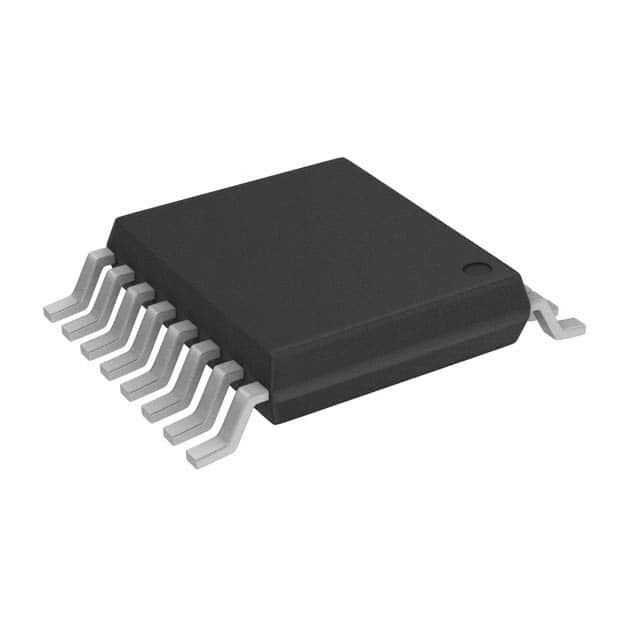
- Part No.:
- STMAV335TTR
- Manufacturer:
- STMicroelectronics
- Category:
- Analog Switches - Special Purpose
- Package:
- 16-TSSOP (0.173", 4.40mm Width)
- Datasheet:
-
 STMAV335TTR.pdf
- Description:
- IC VIDEO SWITCH SP3T 16TSSOP
- Quantity:
- Payment:

- Shipping:

Inventory:377
Please send an inquiry. Send us your inquiry, and we will respond immediately.
Product details
Overview
STMAV335TTR from STMicroelectronics is a bi-directional triple SP3T analog video switch optimized for RGB and YPbPr component video routing in consumer displays. It delivers 300 MHz bandwidth, 3 Ω typical ON-resistance (at VIN = 1.0 V, ION = 13 mA), <7 pF I/O capacitance, –60 dB OFF-isolation at 10 MHz, and operates from 4.0–5.5 V over –40°C to +85°C - enabling high-fidelity signal switching in LCD TVs and front projectors.
For engineers reviewing the STMAV335TTR datasheet, STMAV335TTR pinout, STMAV335TTR application, or STMAV335TTR equivalent, key selection criteria include channel-to-channel RON matching (<±0.5 Ω), propagation delay (<5.7 ns enable/disable), differential gain (0.64%), and TSSOP16 footprint compatibility with legacy video routing designs.
Technical Context
The STMAV335TTR implements a CMOS-based 3×3 analog switch matrix controlled by dual TTL-compatible SEL1/SEL2 inputs, selecting among three independent video paths: YPbPr1, YPbPr2, or RGB. Its flow-through architecture ensures zero bounce during switching transitions and eliminates ground noise coupling between channels.
Designed for minimal signal degradation, it achieves low crosstalk (–58 dB at 10 MHz) and high channel-to-channel isolation via matched RON, symmetric layout, and integrated undershoot clamp diodes on all data and control pins - critical for maintaining NTSC/PAL timing integrity and color fidelity in multi-source display systems.
Key Specifications
| Parameter | Value and Actual Design Meaning |
|---|---|
| Bandwidth (–3 dB) | 300 MHz - supports full HD (1080p) analog video signals without attenuation |
| ON Resistance (RON) | 3 Ω typ. at 1.0 V - minimizes voltage drop and DC offset in RGB/YPbPr paths |
| RON Matching | ≤0.5 Ω max. between channels - preserves color balance and luminance uniformity |
| I/O Capacitance | 7 pF (Y/R, Pb/G, Pr/B) - reduces high-frequency loading and edge distortion |
| OFF-Isolation | –60 dB at 10 MHz - suppresses leakage from active to inactive video channels |
| Differential Gain/Phase | 0.64% / 0.1° - meets broadcast-grade video fidelity requirements for consumer displays |
| ESD Rating (HBM) | >2 kV - protects against handling damage during PCB assembly and system integration |
Pinout & Package
TSSOP16 package (4.9 × 6.4 mm, 0.65 mm pitch), lead-free ECOPACK® compliant, with exposed pad not electrically connected.
| Pin/Terminal | Circuit Role | Design Meaning |
|---|---|---|
| 1, 2, 3, 4, 5, 6, 7, 10, 11, 12, 13, 14, 15, 16 | Analog I/O (Y1, Pb1, Pr1, Y2, Pb2, Pr2, R, G, B, Y/R, Pb/G, Pr/B) | Bidirectional video signal paths; each pair forms one SP3T channel with matched RON and CI/O |
| 8, 9 | Control Inputs (SEL1, SEL2) | TTL-compatible select lines determining active channel (YPbPr1/YPbPr2/RGB); tied high via pull-up when unused |
| 16 | VCC | 4.0–5.5 V supply; must be powered before applying video or control signals |
| 8 | GND | Signal and power reference plane; decoupling capacitor required near pin |
Key Features
| Feature | Design Value |
|---|---|
| Zero-bounce flow-through mode | Eliminates mechanical contact artifacts and ground bounce noise during channel switching |
| Undershoot clamp diodes | Integrated protection on all I/O and control pins prevents negative voltage excursions below –1.2 V |
| Low quiescent current | 3 µA typical ICC - enables always-on video routing in standby-capable consumer electronics |
| Channel-to-channel skew | <100 ps - maintains RGB/Y-Pb-Pr timing alignment for artifact-free image rendering |
| High ESD robustness | >2 kV HBM on all pins - reduces field failure risk in unshielded display interconnects |
Applications
| Advanced LCD TV | Front Projector |
|---|---|
Use Scenario: Switching between HDMI-scaled RGB, composite CVBS, and component YPbPr inputs to single panel driver. IC Role / Device Role / Timing Role: Analog multiplexer routing baseband video signals with sub-100 ps skew and no DC offset shift. Use Value: Preserves 1080p/60Hz timing integrity and color accuracy across input sources without external level-shifting or buffering. | Use Scenario: Selecting between two YPbPr sources (Blu-ray player and media server) feeding DMD or LCoS imaging engine. IC Role / Device Role / Timing Role: High-isolation SP3T switch ensuring >60 dB crosstalk suppression between adjacent video channels. Use Value: Prevents ghosting and color bleed during source transitions while maintaining differential gain <0.7%. |
| Notebook PC Docking Station | DVD Player with Multi-Output |
Use Scenario: Routing internal GPU RGB output to external VGA or internal LVDS panel while supporting hot-plug detection. IC Role / Device Role / Timing Role: Bidirectional analog switch enabling simultaneous display mirroring and independent scaling path selection. Use Value: Enables zero-latency source switching and eliminates need for discrete op-amp buffers in compact form factor. | Use Scenario: Distributing decoded YPbPr output to both main display and secondary zone (e.g., rear-seat monitor). IC Role / Device Role / Timing Role: 1-to-3 analog splitter using flow-through mode to drive multiple loads without gain loss. Use Value: Reduces BOM count by replacing three separate amplifiers with single low-RON switch and passive termination. |
Equivalent & Alternatives
The following parts are listed as comparable options for similar analog video switching applications.
| Alternative Part | Technical Difference | Application Difference | Selection Advice |
|---|---|---|---|
| TS3V330DBQR | Lower bandwidth (200 MHz), higher RON (6 Ω typ.), no integrated clamp diodes | Suitable only for SD/ED video; requires external ESD protection | Select if cost-sensitive and operating below 720p resolution |
| ADG774ARUZ | Quad SPDT instead of triple SP3T; 400 MHz bandwidth but 4.5 Ω RON; no video-optimized AC specs | Requires external logic for 3-input selection; lacks differential gain/phase characterization | Select only for non-broadcast applications where timing skew is less critical |
Compared with TS3V330DBQR and ADG774ARUZ, the STMAV335TTR uniquely combines triple SP3T topology, broadcast-grade video specs (DG/DP, crosstalk), and integrated clamping - making it irreplaceable for multi-format HD display switching where signal fidelity and layout simplicity are co-prioritized.
Availability
STMAV335TTR is available at Aetrix Electronics and suitable for advanced LCD TVs, front projectors, and notebook PC docking stations requiring stable component supply amid long product lifecycles and legacy design continuity.
Supply support for STMAV335TTR includes scheduled delivery planning, volume procurement assistance, BOM continuity management, traceable sourcing, and lifecycle availability coordination for OEM customers, industrial embedded developers, connected-device designers, and electronics production programs.
Manufacturer
STMicroelectronics is a global semiconductor leader headquartered in Geneva, Switzerland, specializing in automotive, industrial, and consumer ICs with strong emphasis on analog, power, and microcontroller solutions.
The STMAV335 belongs to ST's high-speed analog switch product line, engineered specifically for broadcast-compliant video routing in cost-sensitive, space-constrained consumer display equipment.
FAQ
What is the maximum video resolution supported by STMAV335TTR?
The STMAV335TTR supports up to 1080p/60Hz analog video signals, validated by its 300 MHz –3 dB bandwidth and <0.7% differential gain error at 3.58 MHz. Its low RON and matched channel characteristics preserve timing margins required for progressive-scan RGBHV and YPbPr interfaces without external equalization.
Can STMAV335TTR operate with 3.3 V logic control signals?
No - STMAV335TTR requires VCC ≥4.0 V and its SEL1/SEL2 inputs are TTL-compatible with VIL ≤0.8 V and VIH ≥2.0 V, but are not 3.3 V tolerant when VCC = 5 V. Direct connection to 3.3 V logic may cause undefined switching behavior; level translation or pull-up to VCC is mandatory.
Does STMAV335TTR require external termination resistors?
Yes - for optimal 75 Ω video impedance matching, 75 Ω series resistors should be placed at each analog output (Y1/Y2/R etc.) and 75 Ω parallel termination at the destination load. The device's 7 pF I/O capacitance and low RON minimize reflections, but proper termination remains essential for <1080p signal integrity.
Is STMAV335TTR still in production?
STMAV335TTR is marked as obsolete by STMicroelectronics per official documentation, but Aetrix Electronics maintains legacy inventory and offers extended lifecycle support including obsolescence forecasting, cross-reference assistance, and last-time-buy coordination for ongoing production programs.
STMAV335TTR Specifications
- Product attributes
- Attribute value
- Manufacturer:
- STMicroelectronics
- Series:
- -
- Package/Case:
- 16-TSSOP (0.173", 4.40mm Width)
- Packaging:
- Tape & Reel (TR)
- Product Status:
- Obsolete
- Applications:
- Video
- Multiplexer/Demultiplexer Circuit:
- 3:1
- Switch Circuit:
- SP3T
- Number of Channels:
- 1
- On-State Resistance (Max):
- 10Ohm
- Voltage - Supply, Single (V+):
- 4V ~ 5.5V
- Voltage - Supply, Dual (V±):
- -
- -3db Bandwidth:
- 300MHz (Min)
- Features:
- Bi-Directional
- Operating Temperature:
- -40°C ~ 85°C (TA)
- Grade:
- -
- Qualification:
- -
- Mounting Type:
- Surface Mount
- Supplier Device Package:
- 16-TSSOP
STMAV335TTR FAQ
1.How can I place an order for STMAV335TTR through Aetrix?
Please submit a Request for Quotation (RFQ) for STMAV335TTR on Aetrix. Our sales agent will provide a competitive quotation and guide you through the order confirmation once you accept the terms.
2.Are the price and stock information for STMAV335TTR reliable?
The price and inventory of STMAV335TTR are updated periodically and may fluctuate due to market conditions. Stock and pricing data are typically refreshed every 24 hours. Quotation validity for STMAV335TTR is usually 5 days.
3.What payment methods are accepted for STMAV335TTR?
We accept Wire Transfer, PayPal, Credit Card, Western Union, MoneyGram, and Escrow for STMAV335TTR transactions.
Note: Certain payment methods may incur a processing fee.
4.How is shipping managed for STMAV335TTR?
STMAV335TTR orders can be shipped via leading logistics carriers, including DHL, UPS, FedEx, TNT, or Registered Mail.
Once your STMAV335TTR order is processed, you will receive an email with the shipment details and tracking number.
Note: Tracking information may take up to 24 hours to appear. Express delivery typically takes 3–5 business days.
5.How can I obtain technical support or documentation for STMAV335TTR?
For technical support, including STMAV335TTR datasheets, pinout diagrams, or application guidance, please contact our engineering support team. They can provide detailed documentation and assistance for your STMAV335TTR requirements.
6.How does Aetrix verify that STMAV335TTR is sourced from the original manufacturer or authorized distributors?
All STMAV335TTR products on Aetrix are procured from qualified distributors and authorized channels. Our dedicated quality assurance team conducts strict verification, including traceability checks and, if necessary, third-party testing. This ensures that STMAV335TTR meets industry standards.
7.What is the process for return or replacement of STMAV335TTR?
All STMAV335TTR units undergo pre-shipment inspection (PSI). If there is an issue with STMAV335TTR, returns or replacements are accepted under the following conditions:
1.Quantity discrepancies, incorrect items, or visible external defects (such as breakage or corrosion), acknowledged by Aetrix.
2.The issue is reported within 90 days of delivery.
3.The STMAV335TTR part is unused and in its original packaging.
Return procedure for STMAV335TTR:
1.Submit a request within 90 days.
2.Obtain a Return Material Authorization (RMA) from Aetrix.
STMAV335TTR Tags
-
TS3USB221ARSER
Texas Instruments
-
TS3USB221AQRSERQ1
Texas Instruments
-
NX3DV221GM,115
NXP Semiconductors
-
NX3DV2567GU,115
NXP Semiconductors
-
TS3USB221RSER
Texas Instruments
-
TS3USB221ERSER
Texas Instruments
-
TC7USB40MU,LF(S2E
Toshiba Semiconductor and Storage
-
TS3USB30EDGSR
Texas Instruments
-
PI3USB221AZUAEX
Diodes Incorporated
-
FSUSB42UMX
onsemi
-
CBTL01023GM,115
NXP Semiconductors
-
TS3USB30ERSWR
Texas Instruments
Tech Hub

A practical engineering and sourcing framework covering lifecycle verification, lifetime-buy calculations, replacement qualification, supplier checks and counterfeit-risk controls.

TTL and CMOS logic families differ in thresholds, loading, output drive, power and timing. This engineering guide compares 74HC and 74HCT, calculates noise margins and checks 3.3 V/5 V compatibility.

A practical engineering guide to 3.3V and 5V logic compatibility, input thresholds, resistor dividers, translator ICs, MOSFET level shifting, I2C pull-ups, timing limits and power-sequencing risks.

The 74HC595 uses push-pull logic outputs, while the TPIC6B595 uses 50 V open-drain DMOS sinks for higher-power loads. This guide compares timing, current limits, 3.3 V interfacing, load wiring, thermal…

The 74HC595 converts serial data into eight stable parallel outputs. This guide covers pin functions, shift and storage timing, OE and MR behavior, drive-current limits, cascading, voltage compatibilit…

A technical comparison of level-sensitive latches and edge-triggered flip-flops, covering timing windows, setup and hold limits, master–slave operation, time borrowing, race-through, HDL inference and…

A D latch stores one bit while Enable controls when data can pass. This reference covers gate-level operation, truth tables, transparency, setup and hold timing, LE versus OE, common ICs and practical …

An SR latch stores one bit through cross-coupled feedback. This engineering reference covers NOR and NAND implementations, truth tables, forbidden-state recovery, gated operation, switch debouncing, fa…

Latch circuits retain one bit through feedback. This technical reference covers SR and D latches, truth tables, transparency, timing limits, latch-versus-flip-flop behavior, applications and common log…

An engineering guide to LED driver operation, constant-current and constant-voltage outputs, linear and switching topologies, dimming, IC selection, calculations, replacement compatibility, and fault c…


