
 My Inquiry
 My Account


STMicroelectronics STOD14PUR
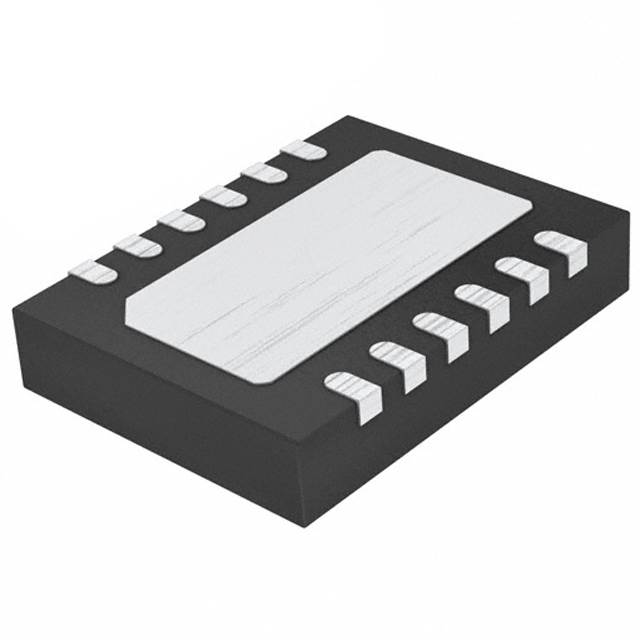
- Part No.:
- STOD14PUR
- Manufacturer:
- STMicroelectronics
- Category:
- Special Purpose Regulators
- Package:
- 12-WFDFN Exposed Pad
- Datasheet:
-
 STOD14PUR.pdf
- Description:
- IC REG AMOLED DISPLAY 2OUT 12DFN
- Quantity:
- Payment:

- Shipping:

Inventory:2,945
Please send an inquiry. Send us your inquiry, and we will respond immediately.
Product details
Overview
STOD14PUR from STMicroelectronics is a dual-channel synchronous DC-DC converter IC designed specifically for AMOLED display biasing, integrating a 4.6 V fixed buck converter and a programmable inverting converter (–2.4 V to –6.0 V) with 700 mA output capability per channel, 1.6 MHz PWM switching, and S-WIRE digital voltage programming - deployed in ultra-mobile PCs and portable media players.
For engineers reviewing the STOD14PUR datasheet, STOD14PUR pinout, STOD14PUR application, or STOD14PUR equivalent, key selection criteria include its dual-rail output architecture, true shutdown with fast discharge, integrated short-circuit and overtemperature protection, and compatibility with low-ESR ceramic external components for compact AMOLED power solutions.
Technical Context
The STOD14PUR implements average current-mode control for both converters, ensuring stable regulation across input voltages (6–13 V), load currents (0–700 mA), and temperature (–40 °C to 85 °C). Its synchronous rectification uses internal P- and N-channel MOSFETs with RDS(ON) ≤ 0.5 Ω (buck) and ≤ 0.5 Ω (inverter), enabling 85% typical system efficiency.
Startup sequencing includes controlled soft-start (6 ms total), short-circuit startup detection on VO1, and independent fast discharge paths for both outputs. The S-WIRE interface supports 41 discrete negative voltage settings (100 mV steps) using single-wire CMOS-level signaling without external clock or handshake.
Key Specifications
| Parameter | Value and Actual Design Meaning |
|---|---|
| Output Configuration | Dual-rail: fixed +4.6 V buck + programmable –2.4 V to –6.0 V inverter |
| Max Output Current | 700 mA per rail - sufficient to drive medium-sized AMOLED source/gate drivers |
| Switching Frequency | 1.6 MHz (±10%) - enables use of small 4.7 µH inductors and 0805/0603 ceramics |
| Efficiency | 85% typical at 150 mA - reduces thermal load in sealed portable enclosures |
| Protection Features | Short-circuit (SCP), overload (OLP), overtemperature (OTP), UVLO, and fast discharge - no external fault-handling circuitry required |
| Control Interface | S-WIRE single-wire protocol - 41 voltage steps, no clock, 250 kHz max bit rate, CMOS/TTL compatible |
| Shutdown Mode | True shutdown with IQ ≤ 5 µA and fast discharge (15 ms, 300 Ω internal path) - prevents battery drain in standby |
Pinout & Package
STOD14PUR is housed in a thermally enhanced DFN12L package (4 mm × 4 mm, 0.5 mm pitch, 0.75 mm height) with exposed pad tied to AGND/PGND for optimal thermal dissipation (RthJA = 33 °C/W).
| Pin/Terminal | Circuit Role | Design Meaning |
|---|---|---|
| VO1 (Pin 7) | Positive output | Fixed 4.6 V buck output; supplies AMOLED VDD/VSP rails; capable of 700 mA continuous |
| VO2 (Pin 1) | Negative output | Programmable –2.4 V to –6.0 V inverter output; supplies AMOLED VSN/VSS rails |
| LX1 (Pin 5) | Buck switching node | Connects to buck inductor; requires low-inductance layout to minimize EMI and ringing |
| LX2 (Pin 2) | Inverter switching node | Connects to inverter inductor; shares same high-frequency layout constraints as LX1 |
| SWIRE (Pin 9) | Digital programming input | Single-wire interface for MCU-controlled negative voltage selection; no pull-up needed |
| EN (Pin 11) | Enable control | Active-high logic input; initiates full startup sequence including soft-start and SSD check |
| VREF (Pin 12) | Internal reference output | 1.211 V ±1.1% reference; bypassed with 1 µF capacitor for stable feedback loop operation |
| PGND (Pin 6) & AGND (Pin 8) | Ground terminals | Separate power and analog grounds - must be joined only at exposed pad to avoid noise coupling |
Key Features
| Feature | Design Value |
|---|---|
| Integrated dual-converter topology | Eliminates need for two separate DC-DC ICs and associated external components - reduces BOM count by ≥40% |
| Synchronous rectification | Internal MOSFETs replace external diodes - improves efficiency by ≥12% vs. asynchronous designs at 150 mA |
| Short-circuit startup detection (SSD) | Monitors VO1 during soft-start to halt startup if panel damage or short is detected - prevents latch-up and field failures |
| Fast output discharge | 300 Ω internal discharge path discharges VO1/VO2 to <10% in 15 ms - meets AMOLED panel reset timing requirements |
| Thermal and electrical protection | OTP (150 °C), SCP, OLP, and UVLO operate autonomously - no firmware or external supervision required |
Applications
| Digital Photo Frames | Ultra-Mobile PCs |
|---|---|
|
Use Scenario: Powering 4.3–7-inch AMOLED panels in battery-operated photo frames with automatic brightness adjustment. IC Role / Device Role / Timing Role: Dual-rail bias generator providing regulated +4.6 V (VSP) and programmable –4.9 V (VSN) for OLED pixel driving and gate control. Use Value: S-WIRE programmability allows dynamic VSN tuning to maintain contrast across ambient temperature shifts without MCU GPIO expansion. |
Use Scenario: Supplying bias voltages for high-resolution AMOLED displays in fanless sub-1 kg notebooks with strict thermal envelope limits. IC Role / Device Role / Timing Role: Primary display power IC delivering 700 mA per rail with 1.6 MHz switching to minimize inductor size and PCB area. Use Value: 85% efficiency and true shutdown reduce quiescent power loss to ≤5 µA - extends standby time beyond 14 days. |
| Mobile Internet Devices | Digital Still Cameras |
|
Use Scenario: Supporting always-on display features in LTE-connected handheld devices with intermittent connectivity and variable screen usage. IC Role / Device Role / Timing Role: Dual-output converter enabling rapid panel wake-up from deep sleep via EN pin assertion and fast discharge reset. Use Value: 6 ms full regulation time and 15 ms fast discharge meet <100 ms display enable/reset timing specs for UX responsiveness. |
Use Scenario: Biasing high-brightness AMOLED viewfinders and rear displays in DSLR/mirrorless cameras requiring burst-mode power stability. IC Role / Device Role / Timing Role: High PSRR (>60 dB @ 10 Hz) and low-noise regulation ensure clean VSP/VSN rails during image capture and playback. Use Value: Integrated soft-start and inrush limiting prevent battery sag during camera power-on - avoids brownout resets in cold environments. |
Equivalent & Alternatives
The following parts are listed as comparable options for similar dual-rail AMOLED bias converter applications.
| Alternative Part | Technical Difference | Application Difference | Selection Advice |
|---|---|---|---|
| TPS65136RGTR | Fixed –5.0 V (not programmable); lower 500 mA output; 2.2 MHz switching; no S-WIRE | Lacks dynamic negative voltage tuning - requires external DAC or resistor network for VSN adjustment | Choose when fixed negative rail suffices and board space permits larger inductors due to higher fSW |
| MAX17105ATI+T | Programmable –2.5 V to –6.5 V via I²C; 600 mA per rail; includes LDOs and GPIOs; larger 24-pin TQFN | Higher integration adds complexity and cost; I²C requires two pins vs. S-WIRE's single wire | Choose when system already uses I²C bus and needs auxiliary LDOs for display timing controllers |
Compared with TPS65136RGTR and MAX17105ATI+T, STOD14PUR uniquely combines S-WIRE simplicity, 700 mA per rail, and DFN12L compactness - making it optimal for space-constrained, thermally sensitive AMOLED designs requiring dynamic bias tuning without added interface overhead.
Availability
STOD14PUR is available at Aetrix Electronics and suitable for digital photo frames, ultra-mobile PCs, and mobile internet devices requiring stable component supply, long-term lifecycle support, and RoHS-compliant packaging.
Supply support for STOD14PUR includes scheduled delivery planning, volume procurement assistance, BOM continuity management, traceable sourcing, and lifecycle availability coordination for OEM customers, industrial embedded developers, connected-device designers, and electronics production programs.
Manufacturer
STMicroelectronics is a global semiconductor leader headquartered in Geneva, Switzerland, specializing in power management, microcontrollers, and analog ICs for automotive, industrial, and consumer markets.
The STOD14PUR belongs to ST's AMOLED display power management product line, engineered to replace discrete multi-IC solutions with highly integrated, thermally optimized dual-rail converters for portable visual interfaces.
FAQ
What is the purpose of the SWIRE pin, and how is it used in system design?
The SWIRE pin implements a single-wire digital interface that allows an MCU to program the negative output voltage (VO2) across 41 discrete levels from –2.4 V to –6.0 V in 100 mV steps. It uses CMOS/TTL logic levels (0.6 V low, 1.2 V high), requires no external clock or pull-up, and operates up to 250 kHz. In system design, it replaces resistor networks or DACs, reducing component count and enabling real-time VSN calibration for temperature or aging compensation.
How does the STOD14PUR handle startup under short-circuit conditions?
The STOD14PUR incorporates Short-Circuit Startup Detection (SSD) that monitors VO1 during the initial soft-start phase. If VO1 fails to reach nominal voltage within the expected window, the device halts startup and enters power-off state - preventing sustained fault current. Recovery requires a new EN pulse after the short is removed. This protects both the IC and the AMOLED panel from damage during manufacturing test or field faults.
Can the STOD14PUR operate with input voltages below 6 V?
No. The absolute minimum operating input voltage is 6 V, enforced by an undervoltage lockout (UVLO) with 5.2 V turn-on threshold and 4.8 V turn-off hysteresis. Below 6 V, the device remains in shutdown mode and delivers no output. This ensures stable regulation and prevents erratic behavior during battery discharge or transient dips - critical for reliable AMOLED panel operation.
What layout practices are essential for thermal and electrical performance?
Essential layout practices include connecting the exposed pad directly to both AGND and PGND using ≥6 thermal vias; separating analog (VINA) and power (VINP) inputs and joining them only at the CIN capacitor pad; placing input/output capacitors within 2 mm of respective pins; and routing LX1/LX2 traces wide and short with minimal loop area. These practices reduce thermal resistance (RthJA = 33 °C/W), suppress EMI, and maintain PSRR >60 dB at low frequencies.
STOD14PUR Specifications
- Product attributes
- Attribute value
- Manufacturer:
- STMicroelectronics
- Series:
- -
- Package/Case:
- 12-WFDFN Exposed Pad
- Packaging:
- Tape & Reel (TR)
- Product Status:
- Obsolete
- Applications:
- Converter, AMOLED Display
- Voltage - Input:
- 6V ~ 13V
- Number of Outputs:
- 2
- Voltage - Output:
- 4.6V, -2.4V ~ -6V
- Operating Temperature:
- -40°C ~ 85°C
- Grade:
- -
- Qualification:
- -
- Mounting Type:
- Surface Mount
- Supplier Device Package:
- 12-DFN (4x4)
STOD14PUR FAQ
1.How can I place an order for STOD14PUR through Aetrix?
Please submit a Request for Quotation (RFQ) for STOD14PUR on Aetrix. Our sales agent will provide a competitive quotation and guide you through the order confirmation once you accept the terms.
2.Are the price and stock information for STOD14PUR reliable?
The price and inventory of STOD14PUR are updated periodically and may fluctuate due to market conditions. Stock and pricing data are typically refreshed every 24 hours. Quotation validity for STOD14PUR is usually 5 days.
3.What payment methods are accepted for STOD14PUR?
We accept Wire Transfer, PayPal, Credit Card, Western Union, MoneyGram, and Escrow for STOD14PUR transactions.
Note: Certain payment methods may incur a processing fee.
4.How is shipping managed for STOD14PUR?
STOD14PUR orders can be shipped via leading logistics carriers, including DHL, UPS, FedEx, TNT, or Registered Mail.
Once your STOD14PUR order is processed, you will receive an email with the shipment details and tracking number.
Note: Tracking information may take up to 24 hours to appear. Express delivery typically takes 3–5 business days.
5.How can I obtain technical support or documentation for STOD14PUR?
For technical support, including STOD14PUR datasheets, pinout diagrams, or application guidance, please contact our engineering support team. They can provide detailed documentation and assistance for your STOD14PUR requirements.
6.How does Aetrix verify that STOD14PUR is sourced from the original manufacturer or authorized distributors?
All STOD14PUR products on Aetrix are procured from qualified distributors and authorized channels. Our dedicated quality assurance team conducts strict verification, including traceability checks and, if necessary, third-party testing. This ensures that STOD14PUR meets industry standards.
7.What is the process for return or replacement of STOD14PUR?
All STOD14PUR units undergo pre-shipment inspection (PSI). If there is an issue with STOD14PUR, returns or replacements are accepted under the following conditions:
1.Quantity discrepancies, incorrect items, or visible external defects (such as breakage or corrosion), acknowledged by Aetrix.
2.The issue is reported within 90 days of delivery.
3.The STOD14PUR part is unused and in its original packaging.
Return procedure for STOD14PUR:
1.Submit a request within 90 days.
2.Obtain a Return Material Authorization (RMA) from Aetrix.
STOD14PUR Tags
-
TPS51206DSQR
Texas Instruments
-
TPS51200DRCR
Texas Instruments
-
TPS51200DRCT
Texas Instruments
-
TPS62740DSSR
Texas Instruments
-
TPS51100DGQR
Texas Instruments
-
NCP51200MNTXG
onsemi
-
NCP51400MNTXG
onsemi
-
RT9026GSP
Richtek USA Inc.
-
LP2998MRX/NOPB
Texas Instruments
-
TPS51200QDRCRQ1
Texas Instruments
-
DPA423GN-TL
Power Integrations
-
LM10011SD/NOPB
Texas Instruments
Tech Hub

A practical engineering and sourcing framework covering lifecycle verification, lifetime-buy calculations, replacement qualification, supplier checks and counterfeit-risk controls.

TTL and CMOS logic families differ in thresholds, loading, output drive, power and timing. This engineering guide compares 74HC and 74HCT, calculates noise margins and checks 3.3 V/5 V compatibility.

A practical engineering guide to 3.3V and 5V logic compatibility, input thresholds, resistor dividers, translator ICs, MOSFET level shifting, I2C pull-ups, timing limits and power-sequencing risks.

The 74HC595 uses push-pull logic outputs, while the TPIC6B595 uses 50 V open-drain DMOS sinks for higher-power loads. This guide compares timing, current limits, 3.3 V interfacing, load wiring, thermal…

The 74HC595 converts serial data into eight stable parallel outputs. This guide covers pin functions, shift and storage timing, OE and MR behavior, drive-current limits, cascading, voltage compatibilit…

A technical comparison of level-sensitive latches and edge-triggered flip-flops, covering timing windows, setup and hold limits, master–slave operation, time borrowing, race-through, HDL inference and…

A D latch stores one bit while Enable controls when data can pass. This reference covers gate-level operation, truth tables, transparency, setup and hold timing, LE versus OE, common ICs and practical …

An SR latch stores one bit through cross-coupled feedback. This engineering reference covers NOR and NAND implementations, truth tables, forbidden-state recovery, gated operation, switch debouncing, fa…

Latch circuits retain one bit through feedback. This technical reference covers SR and D latches, truth tables, transparency, timing limits, latch-versus-flip-flop behavior, applications and common log…

An engineering guide to LED driver operation, constant-current and constant-voltage outputs, linear and switching topologies, dimming, IC selection, calculations, replacement compatibility, and fault c…


