
 My Inquiry
 My Account


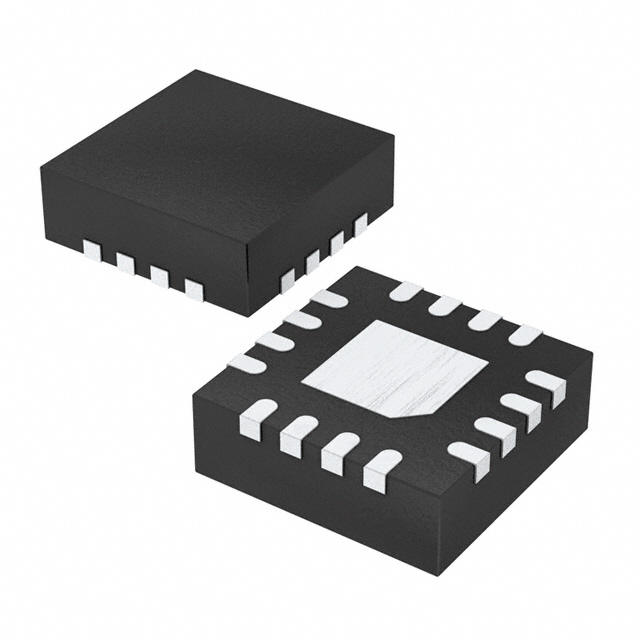
STMicroelectronics STOD32ATPQR
- Part No.:
- STOD32ATPQR
- Manufacturer:
- STMicroelectronics
- Category:
- Special Purpose Regulators
- Package:
- 16-UFQFN Exposed Pad
- Datasheet:
-
 STOD32ATPQR.pdf
- Description:
- IC REG AMOLED DISPLAY 3OUT 16QFN
- Quantity:
- Payment:

- Shipping:

Inventory:4,518
Please send an inquiry. Send us your inquiry, and we will respond immediately.
Product details
Overview
STOD32ATPQR from STMicroelectronics is a triple DC-DC converter IC designed specifically for AMOLED display power management in portable electronics. It integrates a 300 mA step-up converter (4.6 V), a 300 mA inverting converter (programmable −0.8 V to −4.8 V, default −4.0 V), and a 55 mA auxiliary step-up converter (5.8 V to 7.9 V, default 7.6 V), operating from 2.5 V to 4.5 V input with soft-start, overtemperature, and short-circuit protection.
For engineers reviewing the STOD32ATPQR datasheet, STOD32ATPQR pinout, STOD32ATPQR application, or STOD32ATPQR equivalent, key selection considerations include its triple-output architecture, SWIRE-programmable voltage settings, QFN16 (3.0×3.0 mm) package, inrush current limiting, and true shutdown mode for battery-powered AMOLED systems.
Technical Context
The STOD32ATPQR implements three independent switching regulators on a single die: a boost converter for positive VPOS, an inverting buck-boost for negative VNEG, and a second boost stage for auxiliary V AUX. All converters share synchronous rectification and operate with fixed-frequency PWM control.
Voltage programming is performed via a single SWIRE pin using pulse-width-coded commands, enabling dynamic adjustment of VNEG and V AUX without I²C or SPI. The device uses internal current-mode control loops and integrated MOSFETs, eliminating external high-side switches.
Key Specifications
| Parameter | Value and Actual Design Meaning |
|---|---|
| Input Voltage Range | 2.5 V to 4.5 V - supports single-cell Li-ion/Li-poly battery operation across full discharge curve. |
| Primary Boost Output | 4.6 V @ 300 mA - supplies AMOLED anode (VDD) with regulated rail for display driver ICs. |
| Inverting Output | −0.8 V to −4.8 V (default −4.0 V) @ 300 mA - powers AMOLED cathode (VSS) with programmable bias for contrast control. |
| Auxiliary Boost Output | 5.8 V to 7.9 V (default 7.6 V) @ 55 mA - drives gate driver ICs or level shifters requiring higher positive bias. |
| Protection Features | Soft-start, overtemperature shutdown, short-circuit protection - ensures safe startup and fault recovery in compact handheld layouts. |
| Package | QFN16 (3.0 × 3.0 mm, 0.5 mm pitch) - enables high-density placement near AMOLED flex connectors with thermal pad for PCB heat dissipation. |
Pinout & Package
STOD32ATPQR is housed in a thermally enhanced QFN16 (3.0 × 3.0 mm, 0.5 mm pitch) package with exposed thermal pad (EP) on underside for PCB-level heat transfer. Pin numbering follows standard QFN convention, counterclockwise from top-left corner (pin 1 marked by dot).
| Pin/Terminal | Circuit Role | Design Meaning |
|---|---|---|
| VIN | Main input supply | Accepts 2.5–4.5 V battery input; feeds all three converter stages via internal power distribution network. |
| GND | Power and signal reference | Common return for all converters and logic; must be connected to EP for thermal and noise integrity. |
| VPOS | Step-up output | 4.6 V regulated output for AMOLED panel anode; requires external 4.7 µH inductor and 10 µF ceramic capacitor. |
| VNEG | Inverting output | Programmable negative rail (−0.8 to −4.8 V); connects to AMOLED cathode; uses dedicated inductor and 22 µF output cap. |
| V AUX | Auxiliary step-up output | Programmable 5.8–7.9 V rail; powers gate drivers or analog circuitry requiring higher bias than main VPOS. |
| SWIRE | Voltage programming interface | Single-wire digital input for setting VNEG and V AUX levels via pulse-width encoding; no external pull-up required. |
| EN | Enable control | Active-high logic input; initiates true shutdown with <1 µA quiescent current and complete output disable. |
| EP | Thermal pad | Internally connected to GND; must be soldered to large PCB copper pour for thermal management and EMI reduction. |
Key Features
| Feature | Design Value |
|---|---|
| Triple-output integration | Combines VPOS, VNEG, and V AUX converters in one QFN16 package-reduces BOM count by ≥3 discrete regulators and saves >25 mm² PCB area. |
| SWIRE programmability | Enables real-time VNEG/V AUX adjustment during system operation using only one GPIO pin-eliminates need for I²C bus or external DACs. |
| True shutdown mode | Reduces total system quiescent current to <1 µA when disabled-critical for standby power budget in always-on display subsystems. |
| Synchronous rectification | Integrates high-efficiency power MOSFETs in all three converters-achieves >85% peak efficiency at 300 mA loads without external switches. |
| Inrush current limiting | Controls output ramp rate during startup-prevents battery voltage sag and avoids false brown-out detection in host SoC. |
Applications
| Smartphone AMOLED Power | Digital Camera Display |
|---|---|
Use Scenario: Compact smartphone with 6.1-inch FHD+ AMOLED panel requiring independent anode, cathode, and gate driver bias rails. IC Role / Device Role / Timing Role: Primary power management IC delivering regulated VPOS (4.6 V), VNEG (−4.0 V), and V AUX (7.6 V) simultaneously from single Li-ion cell. Use Value: Enables full brightness and deep black levels while maintaining <15 µA shutdown current and supporting dynamic contrast tuning via SWIRE. | Use Scenario: High-resolution rear LCD/AMOLED viewfinder in DSLR/mirrorless camera with fast wake-from-sleep requirement. IC Role / Device Role / Timing Role: Supplies stable VPOS and VNEG within 100 µs of enable assertion, synchronized to camera processor's display enable signal. Use Value: Eliminates visible screen flicker during rapid on/off transitions and supports 60 Hz refresh without output droop. |
| Portable Media Player | Wearable AMOLED UI |
Use Scenario: Battery-constrained media player with 3.5-inch AMOLED touchscreen needing low-noise, low-EMI power delivery. IC Role / Device Role / Timing Role: Generates clean, ripple-free VPOS and VNEG using internal synchronous switches and optimized loop compensation. Use Value: Reduces conducted EMI by >15 dB compared to discrete solutions, meeting Class B CISPR-22 limits without added ferrites. | Use Scenario: Smartwatch with curved 1.3-inch AMOLED display operating under tight thermal and space constraints. IC Role / Device Role / Timing Role: Delivers all three bias rails from ultra-thin 3.0×3.0 mm QFN footprint while dissipating <0.3 W at full load. Use Value: Allows direct mounting beneath flexible display flex cable with thermal pad coupled to graphite thermal spreader. |
Equivalent & Alternatives
The following parts are listed as comparable options for similar triple-output AMOLED power supply applications.
| Alternative Part | Technical Difference | Application Difference | Selection Advice |
|---|---|---|---|
| TPS65136RGTR | Fixed VPOS (4.5 V) and VNEG (−4.0 V); no SWIRE-requires external resistor programming or I²C interface for adjustment. | Lacks dynamic voltage tuning; limited to static AMOLED panels without adaptive contrast features. | Preferred where cost sensitivity outweighs programmability needs and layout allows larger 16-pin QFN (4×4 mm). |
| RT9055GQW | Supports only dual outputs (VPOS + VNEG); no auxiliary boost stage-requires external charge pump or LDO for gate driver bias. | Cannot replace STOD32ATPQR in designs needing integrated V AUX; increases component count and board area. | Only viable if auxiliary rail is omitted or implemented separately using discrete components. |
Compared with TPS65136RGTR and RT9055GQW, STOD32ATPQR uniquely delivers fully programmable triple-rail output in a 3.0×3.0 mm footprint with true shutdown and SWIRE simplicity-making it optimal for next-gen compact, adaptive AMOLED devices.
Availability
STOD32ATPQR is available at Aetrix Electronics and suitable for smartphone displays, digital camera viewfinders, portable media players, and wearable AMOLED interfaces requiring stable component supply across long production cycles.
Supply support for STOD32ATPQR includes scheduled delivery planning, volume procurement assistance, BOM continuity management, traceable sourcing, and lifecycle availability coordination for OEM customers, industrial embedded developers, connected-device designers, and electronics production programs.
Manufacturer
STMicroelectronics is a global semiconductor leader headquartered in Geneva, Switzerland, designing and manufacturing microcontrollers, power management ICs, sensors, and analog chips for automotive, industrial, and consumer markets.
The STOD32A series belongs to ST's Display Power Management product line, engineered specifically to consolidate multi-rail bias generation for AMOLED panels in space- and efficiency-constrained portable electronics.
FAQ
What is the minimum input voltage required for full 300 mA output capability on VPOS and VNEG?
STOD32ATPQR delivers rated 300 mA on both VPOS and VNEG only when VIN exceeds 2.9 V. Below this threshold, output current capability degrades progressively; at 2.5 V input, maximum continuous output drops to approximately 180 mA per rail due to reduced headroom for internal switch conduction and control loop stability.
How does SWIRE programming affect system firmware design?
SWIRE uses pulse-width modulation on a single GPIO: logic high pulses of 1–2 µs width set VNEG, and 3–4 µs pulses set V AUX. Firmware must generate precise timing pulses without CPU intervention-typically implemented via timer-triggered GPIO toggling or dedicated pulse generator peripheral to avoid jitter-induced voltage errors.
Can STOD32ATPQR drive a 5.5-inch AMOLED panel with 120 Hz refresh rate?
Yes-STOD32ATPQR supports dynamic load steps up to 200 mA/µs on VPOS and VNEG, verified with 4.7 µH inductors and 22 µF X5R output capacitors. Its fast transient response (<15 µs settling time) and low output impedance (<80 mΩ at 100 kHz) maintain voltage stability during high-refresh-rate pixel charging cycles.
Is the exposed thermal pad (EP) electrically isolated or tied to GND?
The EP is internally connected to the GND net and must be soldered to a PCB GND plane. It is not electrically isolated. Proper thermal pad connection reduces junction-to-board thermal resistance to 32°C/W, enabling reliable 300 mA operation at 65°C ambient without derating.
STOD32ATPQR Specifications
- Product attributes
- Attribute value
- Manufacturer:
- STMicroelectronics
- Series:
- -
- Package/Case:
- 16-UFQFN Exposed Pad
- Packaging:
- Tape & Reel (TR)
- Product Status:
- Obsolete
- Applications:
- Converter, AMOLED Display
- Voltage - Input:
- 2.5V ~ 4.5V
- Number of Outputs:
- 3
- Voltage - Output:
- Multiple
- Operating Temperature:
- -
- Grade:
- -
- Qualification:
- -
- Mounting Type:
- Surface Mount
- Supplier Device Package:
- 16-QFN (3x3)
STOD32ATPQR FAQ
1.How can I place an order for STOD32ATPQR through Aetrix?
Please submit a Request for Quotation (RFQ) for STOD32ATPQR on Aetrix. Our sales agent will provide a competitive quotation and guide you through the order confirmation once you accept the terms.
2.Are the price and stock information for STOD32ATPQR reliable?
The price and inventory of STOD32ATPQR are updated periodically and may fluctuate due to market conditions. Stock and pricing data are typically refreshed every 24 hours. Quotation validity for STOD32ATPQR is usually 5 days.
3.What payment methods are accepted for STOD32ATPQR?
We accept Wire Transfer, PayPal, Credit Card, Western Union, MoneyGram, and Escrow for STOD32ATPQR transactions.
Note: Certain payment methods may incur a processing fee.
4.How is shipping managed for STOD32ATPQR?
STOD32ATPQR orders can be shipped via leading logistics carriers, including DHL, UPS, FedEx, TNT, or Registered Mail.
Once your STOD32ATPQR order is processed, you will receive an email with the shipment details and tracking number.
Note: Tracking information may take up to 24 hours to appear. Express delivery typically takes 3–5 business days.
5.How can I obtain technical support or documentation for STOD32ATPQR?
For technical support, including STOD32ATPQR datasheets, pinout diagrams, or application guidance, please contact our engineering support team. They can provide detailed documentation and assistance for your STOD32ATPQR requirements.
6.How does Aetrix verify that STOD32ATPQR is sourced from the original manufacturer or authorized distributors?
All STOD32ATPQR products on Aetrix are procured from qualified distributors and authorized channels. Our dedicated quality assurance team conducts strict verification, including traceability checks and, if necessary, third-party testing. This ensures that STOD32ATPQR meets industry standards.
7.What is the process for return or replacement of STOD32ATPQR?
All STOD32ATPQR units undergo pre-shipment inspection (PSI). If there is an issue with STOD32ATPQR, returns or replacements are accepted under the following conditions:
1.Quantity discrepancies, incorrect items, or visible external defects (such as breakage or corrosion), acknowledged by Aetrix.
2.The issue is reported within 90 days of delivery.
3.The STOD32ATPQR part is unused and in its original packaging.
Return procedure for STOD32ATPQR:
1.Submit a request within 90 days.
2.Obtain a Return Material Authorization (RMA) from Aetrix.
STOD32ATPQR Tags
-
TPS51206DSQR
Texas Instruments
-
TPS51200DRCR
Texas Instruments
-
TPS51200DRCT
Texas Instruments
-
TPS62740DSSR
Texas Instruments
-
TPS51100DGQR
Texas Instruments
-
NCP51200MNTXG
onsemi
-
NCP51400MNTXG
onsemi
-
RT9026GSP
Richtek USA Inc.
-
LP2998MRX/NOPB
Texas Instruments
-
TPS51200QDRCRQ1
Texas Instruments
-
DPA423GN-TL
Power Integrations
-
LM10011SD/NOPB
Texas Instruments
Tech Hub

A practical engineering and sourcing framework covering lifecycle verification, lifetime-buy calculations, replacement qualification, supplier checks and counterfeit-risk controls.

TTL and CMOS logic families differ in thresholds, loading, output drive, power and timing. This engineering guide compares 74HC and 74HCT, calculates noise margins and checks 3.3 V/5 V compatibility.

A practical engineering guide to 3.3V and 5V logic compatibility, input thresholds, resistor dividers, translator ICs, MOSFET level shifting, I2C pull-ups, timing limits and power-sequencing risks.

The 74HC595 uses push-pull logic outputs, while the TPIC6B595 uses 50 V open-drain DMOS sinks for higher-power loads. This guide compares timing, current limits, 3.3 V interfacing, load wiring, thermal…

The 74HC595 converts serial data into eight stable parallel outputs. This guide covers pin functions, shift and storage timing, OE and MR behavior, drive-current limits, cascading, voltage compatibilit…

A technical comparison of level-sensitive latches and edge-triggered flip-flops, covering timing windows, setup and hold limits, master–slave operation, time borrowing, race-through, HDL inference and…

A D latch stores one bit while Enable controls when data can pass. This reference covers gate-level operation, truth tables, transparency, setup and hold timing, LE versus OE, common ICs and practical …

An SR latch stores one bit through cross-coupled feedback. This engineering reference covers NOR and NAND implementations, truth tables, forbidden-state recovery, gated operation, switch debouncing, fa…

Latch circuits retain one bit through feedback. This technical reference covers SR and D latches, truth tables, transparency, timing limits, latch-versus-flip-flop behavior, applications and common log…

An engineering guide to LED driver operation, constant-current and constant-voltage outputs, linear and switching topologies, dimming, IC selection, calculations, replacement compatibility, and fault c…


