
 My Inquiry
 My Account


STMicroelectronics STP16CPC05PTR
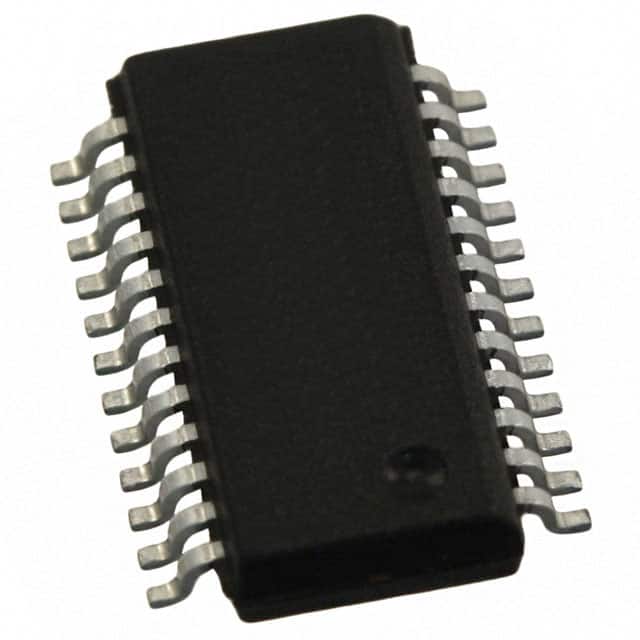
- Part No.:
- STP16CPC05PTR
- Manufacturer:
- STMicroelectronics
- Category:
- LED Drivers
- Package:
- 24-SSOP (0.154", 3.90mm Width)
- Datasheet:
-
 STP16CPC05PTR.pdf
- Description:
- IC LED DRVR LINEAR 100MA 24QSOP
- Quantity:
- Payment:

- Shipping:

Inventory:3,867
Please send an inquiry. Send us your inquiry, and we will respond immediately.
Product details
Overview
STP16CPC05PTR from STMicroelectronics is a 16-channel constant-current LED sink driver IC with serial-in/parallel-out shift register architecture, designed for LED panel displays. It delivers adjustable output current (5–100 mA per channel), supports 3.3 V microcontroller interfacing, operates up to 30 MHz clock frequency, and features balanced 100 ns rise/fall times for reduced system noise in high-density LED arrays.
For engineers reviewing the STP16CPC05PTR datasheet, STP16CPC05PTR pinout, STP16CPC05PTR application, or STP16CPC05PTR equivalent, key selection criteria include output current accuracy (±1.5% between bits), 20 V output voltage capability, thermal protection at 170 °C, SO-24/TSSOP24/QSOP-24 package compatibility, and REXT-based current programming.
Technical Context
The device integrates a 16-bit serial-in, parallel-out shift register cascaded with a 16-bit D-type storage latch, enabling precise data staging before output update. Its output stage uses sixteen matched regulated current sinks with independent ON/OFF control via serial data and latch enable (LE) signals.
Output current is set by an external resistor (REXT) connected to pin 23, allowing fine-tuned brightness control across all channels. The active-low output enable (OE) provides global blanking, while serial data out (SDO) supports daisy-chaining multiple devices without additional buffering.
Key Specifications
| Parameter | Value and Actual Design Meaning |
|---|---|
| Output channels | 16 independent constant-current sinks for LED anode-common configurations |
| Output current range | 5–100 mA per channel, set by external REXT (200 Ω to 7.37 kΩ) |
| Current accuracy | ±1.5% typical between bits at 25 °C, enabling uniform LED brightness |
| Max clock frequency | 30 MHz - supports high-refresh-rate LED panels (e.g., >1 kHz frame rates) |
| Output voltage capability | 20 V - allows driving up to 6–7 standard red/green LEDs in series per channel |
| Rise/fall time | 108–150 ns (tON/tOFF at VDD = 3.3–5 V) - minimizes switching-induced ringing in parasitic-inductive layouts |
| Supply voltage | 3.0–5.5 V - compatible with both 3.3 V and 5 V logic systems and mixed-voltage designs |
Pinout & Package
STP16CPC05PTR is packaged in QSOP-24 (4.01 mm × 3.91 mm × 1.20 mm), featuring a compact footprint with exposed pad option variants for enhanced thermal performance. Pin 1 is marked by a dot or notch; the exposed pad (if present in other variants) must be soldered to PCB ground or isolated metal land per layout guidelines.
| Pin/Terminal | Circuit Role | Design Meaning |
|---|---|---|
| 1 GND | Ground reference | Primary return path for all internal circuits and output current sinks |
| 2 SDI | Serial data input | Accepts 3.3 V–compatible CMOS-level data stream for shift register loading |
| 3 CLK | Shift clock input | Drives internal shift register on rising edge; max 30 MHz operation |
| 4 LE | Latch enable | Transfers shift register contents to output latches on rising edge; high = transparent mode |
| 5–20 OUT0–OUT15 | Constant-current outputs | Sink terminals delivering programmed current to LED cathodes; each rated for 100 mA continuous |
| 21 OE | Output enable (active low) | Global blanking control - pulls all outputs OFF when high; enables PWM dimming synchronization |
| 22 SDO | Serial data output | Daisy-chain interface - forwards shifted-out bit to next device's SDI |
| 23 R-EXT | Current-setting resistor terminal | Connects external precision resistor to define IOUT; sets full-scale current per channel |
| 24 VDD | Positive supply | Power rail for logic and output stages; decoupling capacitor required near pin |
Key Features
| Feature | Design Value |
|---|---|
| Balanced output switching | 100 ns typical tON/tOFF symmetry reduces EMI and eliminates need for large bypass capacitors in noisy LED backlights |
| Adjustable current per channel | Single REXT sets identical current across all 16 outputs - simplifies BOM and calibration vs per-channel resistors |
| High-speed serial interface | 30 MHz clock tolerance enables >1 Mbit/s data throughput - suitable for real-time video-driven LED signage |
| Thermal protection | 170 °C junction shutdown prevents damage during overcurrent or poor heatsinking in enclosed displays |
| ESD robustness | 2.5 kV HBM / 200 V MM rating - withstands handling and board-level transients in manufacturing and field service |
Applications
| LED Video Wall Panels | Industrial HMI Displays |
|---|---|
|
Use Scenario: High-resolution indoor LED video walls requiring uniform brightness and fast refresh rates. IC Role / Device Role / Timing Role: Constant-current sink driver controlling individual LED pixels in multiplexed matrix arrays. Use Value: ±1.5% current matching ensures pixel-to-pixel luminance consistency; 30 MHz clock supports 1920×1080 @ 60 Hz with minimal latency. |
Use Scenario: Operator interface panels in factory automation with ambient light variability and long operational life. IC Role / Device Role / Timing Role: LED backlight driver for segmented status indicators and alphanumeric displays. Use Value: 20 V output headroom accommodates aging LEDs with rising forward voltage; thermal shutdown prevents field failures. |
| Automotive Interior Lighting | Architectural LED Strips |
|
Use Scenario: Dynamic mood lighting and customizable dashboard illumination meeting AEC-Q100 stress requirements. IC Role / Device Role / Timing Role: Channelized current source for RGB LED clusters with synchronized PWM dimming. Use Value: Active-low OE enables precise frame-synchronized blanking; -40 to +125 °C operating range covers automotive cabin extremes. |
Use Scenario: Long linear LED installations (e.g., retail coves, signage) requiring consistent color and intensity over meters. IC Role / Device Role / Timing Role: Distributed current regulation node in daisy-chained LED driver architecture. Use Value: SDO/SDI cascade capability reduces controller GPIO count; REXT trimming compensates for PCB trace resistance variation. |
Equivalent & Alternatives
The following parts are listed as comparable options for similar 16-channel constant-current LED driver applications.
| Alternative Part | Technical Difference | Application Difference | Selection Advice |
|---|---|---|---|
| TLC59283RTJR | Higher max current (120 mA), but only ±3% inter-channel accuracy; requires separate VREF for current setting | Preferred for higher-brightness outdoor signage where absolute current tolerance is less critical than peak drive capability | Select when needing >100 mA per channel and can accept looser current matching (±3% vs ±1.5%) |
| MAX6966ATL+T | I²C interface instead of SPI-like serial shift; integrated PWM dimming registers; lower max clock (10 MHz) | Better suited for microcontroller-constrained systems with limited GPIO but available I²C bus | Choose for simplified firmware integration and per-channel grayscale control - not for high-speed streaming |
Compared with TLC59283RTJR and MAX6966ATL+T, STP16CPC05PTR offers superior current matching and faster data throughput, making it optimal for high-fidelity LED video applications where timing precision and uniformity outweigh interface flexibility.
Availability
STP16CPC05PTR is available at Aetrix Electronics and suitable for LED video wall panels, industrial HMI displays, automotive interior lighting, and architectural LED strips requiring stable component supply across multi-year production cycles.
Supply support for STP16CPC05PTR includes scheduled delivery planning, volume procurement assistance, BOM continuity management, traceable sourcing, and lifecycle availability coordination for OEM customers, industrial embedded developers, connected-device designers, and electronics production programs.
Manufacturer
STMicroelectronics is a global semiconductor leader headquartered in Geneva, Switzerland, specializing in power management, analog, MEMS, and microcontroller technologies for industrial, automotive, and consumer markets.
The STP16CPC05PTR belongs to ST's LED driver portfolio, engineered specifically for high-reliability, high-density LED display systems demanding precise current regulation and noise-immune digital control.
FAQ
What is the minimum recommended REXT value for STP16CPC05PTR?
The minimum recommended REXT is 200 Ω, which sets the maximum output current to 100 mA per channel at VDD = 5 V. Using lower resistance risks exceeding absolute maximum ratings and may trigger thermal shutdown. Table 9 in DS6083 Rev 6 confirms 200 Ω yields 100 mA typical output under specified conditions.
Can STP16CPC05PTR drive LEDs with forward voltage above 5 V?
Yes - its 20 V output voltage capability allows series connection of multiple LEDs per channel. For example, with red LEDs (VF ≈ 2.1 V), up to nine can be driven in series; with blue/white LEDs (VF ≈ 3.2 V), up to six are supported. Output compliance is maintained as long as total VF ≤ 20 V minus dropout voltage (e.g., 880 mV at 100 mA).
Is the exposed pad in TSSOP24 variants electrically connected internally?
No - the exposed pad in TSSOP24 (exposed pad) variants is not internally connected to any die node. Per DS6083 Section 8.4, it must be either electrically isolated or soldered to PCB ground for thermal conduction. ST explicitly states it is "electrically isolated" and serves only as a thermal path.
How does propagation delay vary with supply voltage?
tPLH and tPHL decrease with higher VDD: at VDD = 5 V, CLK→OUT propagation is 159–206 ns (typ/max), versus 175–227 ns at 3.3 V. This 10–15% reduction improves timing margin in high-speed cascaded configurations, especially when operating near the 30 MHz limit.
STP16CPC05PTR Specifications
- Product attributes
- Attribute value
- Manufacturer:
- STMicroelectronics
- Series:
- -
- Package/Case:
- 24-SSOP (0.154", 3.90mm Width)
- Packaging:
- Tape & Reel (TR)
- Product Status:
- Obsolete
- Type:
- Linear
- Topology:
- Shift Register
- Internal Switch(s):
- Yes
- Number of Outputs:
- 16
- Voltage - Supply (Min):
- 3V
- Voltage - Supply (Max):
- 5.5V
- Voltage - Output:
- 20V
- Current - Output / Channel:
- 100mA
- Frequency:
- 30MHz
- Dimming:
- -
- Applications:
- -
- Operating Temperature:
- -40°C ~ 125°C (TA)
- Grade:
- -
- Qualification:
- -
- Mounting Type:
- Surface Mount
- Supplier Device Package:
- 24-QSOP
STP16CPC05PTR FAQ
1.How can I place an order for STP16CPC05PTR through Aetrix?
Please submit a Request for Quotation (RFQ) for STP16CPC05PTR on Aetrix. Our sales agent will provide a competitive quotation and guide you through the order confirmation once you accept the terms.
2.Are the price and stock information for STP16CPC05PTR reliable?
The price and inventory of STP16CPC05PTR are updated periodically and may fluctuate due to market conditions. Stock and pricing data are typically refreshed every 24 hours. Quotation validity for STP16CPC05PTR is usually 5 days.
3.What payment methods are accepted for STP16CPC05PTR?
We accept Wire Transfer, PayPal, Credit Card, Western Union, MoneyGram, and Escrow for STP16CPC05PTR transactions.
Note: Certain payment methods may incur a processing fee.
4.How is shipping managed for STP16CPC05PTR?
STP16CPC05PTR orders can be shipped via leading logistics carriers, including DHL, UPS, FedEx, TNT, or Registered Mail.
Once your STP16CPC05PTR order is processed, you will receive an email with the shipment details and tracking number.
Note: Tracking information may take up to 24 hours to appear. Express delivery typically takes 3–5 business days.
5.How can I obtain technical support or documentation for STP16CPC05PTR?
For technical support, including STP16CPC05PTR datasheets, pinout diagrams, or application guidance, please contact our engineering support team. They can provide detailed documentation and assistance for your STP16CPC05PTR requirements.
6.How does Aetrix verify that STP16CPC05PTR is sourced from the original manufacturer or authorized distributors?
All STP16CPC05PTR products on Aetrix are procured from qualified distributors and authorized channels. Our dedicated quality assurance team conducts strict verification, including traceability checks and, if necessary, third-party testing. This ensures that STP16CPC05PTR meets industry standards.
7.What is the process for return or replacement of STP16CPC05PTR?
All STP16CPC05PTR units undergo pre-shipment inspection (PSI). If there is an issue with STP16CPC05PTR, returns or replacements are accepted under the following conditions:
1.Quantity discrepancies, incorrect items, or visible external defects (such as breakage or corrosion), acknowledged by Aetrix.
2.The issue is reported within 90 days of delivery.
3.The STP16CPC05PTR part is unused and in its original packaging.
Return procedure for STP16CPC05PTR:
1.Submit a request within 90 days.
2.Obtain a Return Material Authorization (RMA) from Aetrix.
STP16CPC05PTR Tags
-
BCR402RE6327HTSA1
Infineon Technologies

-
BCR430UXTSA2
Infineon Technologies
-
BCR420UE6433HTMA1
Infineon Technologies
-
BCR420UE6327HTSA1
Infineon Technologies
-
BCR421UE6327HTSA1
Infineon Technologies
-
LYT1604D-TL
Power Integrations

-
HV9910CLG-G
Microchip Technology
-
CL2N8-G
Microchip Technology
-
BCR420UW6-7
Diodes Incorporated
-
BCR421UW6-7
Diodes Incorporated
-
BCR420UFD-7
Diodes Incorporated
-
BCR421UFD-7
Diodes Incorporated
Tech Hub

A practical engineering and sourcing framework covering lifecycle verification, lifetime-buy calculations, replacement qualification, supplier checks and counterfeit-risk controls.

TTL and CMOS logic families differ in thresholds, loading, output drive, power and timing. This engineering guide compares 74HC and 74HCT, calculates noise margins and checks 3.3 V/5 V compatibility.

A practical engineering guide to 3.3V and 5V logic compatibility, input thresholds, resistor dividers, translator ICs, MOSFET level shifting, I2C pull-ups, timing limits and power-sequencing risks.

The 74HC595 uses push-pull logic outputs, while the TPIC6B595 uses 50 V open-drain DMOS sinks for higher-power loads. This guide compares timing, current limits, 3.3 V interfacing, load wiring, thermal…

The 74HC595 converts serial data into eight stable parallel outputs. This guide covers pin functions, shift and storage timing, OE and MR behavior, drive-current limits, cascading, voltage compatibilit…

A technical comparison of level-sensitive latches and edge-triggered flip-flops, covering timing windows, setup and hold limits, master–slave operation, time borrowing, race-through, HDL inference and…

A D latch stores one bit while Enable controls when data can pass. This reference covers gate-level operation, truth tables, transparency, setup and hold timing, LE versus OE, common ICs and practical …

An SR latch stores one bit through cross-coupled feedback. This engineering reference covers NOR and NAND implementations, truth tables, forbidden-state recovery, gated operation, switch debouncing, fa…

Latch circuits retain one bit through feedback. This technical reference covers SR and D latches, truth tables, transparency, timing limits, latch-versus-flip-flop behavior, applications and common log…

An engineering guide to LED driver operation, constant-current and constant-voltage outputs, linear and switching topologies, dimming, IC selection, calculations, replacement compatibility, and fault c…


