
 My Inquiry
 My Account


STMicroelectronics STPMS2H-PUR
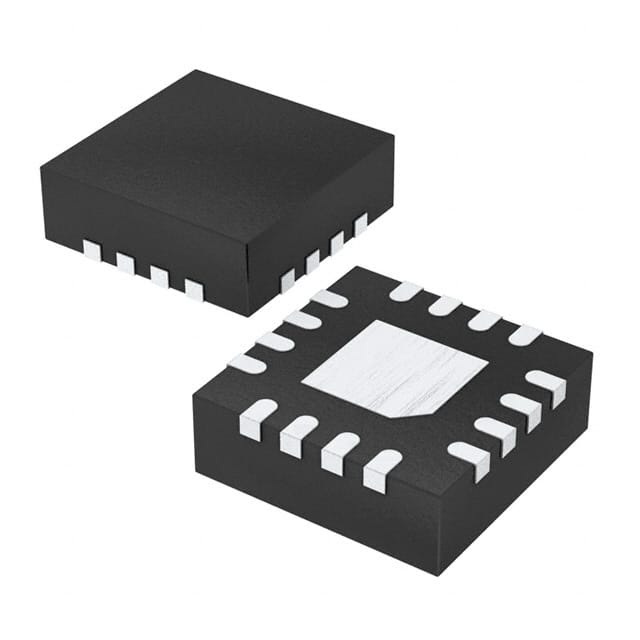
- Part No.:
- STPMS2H-PUR
- Manufacturer:
- STMicroelectronics
- Category:
- Sensor and Detector Interfaces
- Package:
- 16-VFQFN Exposed Pad
- Datasheet:
-
 STPMS2H-PUR.pdf
- Description:
- IC SMART SENSOR II 2CH 16QFN
- Quantity:
- Payment:

- Shipping:

Inventory:2,605
Please send an inquiry. Send us your inquiry, and we will respond immediately.
Product details
Overview
STPMS2H-PUR from STMicroelectronics is a dual-channel, second-order sigma-delta modulator with integrated chopper-stabilized programmable-gain amplifier (PGLNA), 4 MHz clock support, 1.23 V temperature-compensated reference, and internal 3.0 V LDO regulator. It serves as an analog front-end for precision AC energy metering systems using shunt, CT, or Rogowski sensors, delivering ≤0.5% error over 1:5000 dynamic range in class 0.2 meters per IEC 62053-22.
For engineers reviewing the STPMS2H-PUR datasheet, STPMS2H-PUR pinout, STPMS2H-PUR application, or STPMS2H-PUR equivalent, key selection criteria include its dual ΣΔ channel architecture, programmable gain amplifier offset/noise performance, EN 50470/IEC 62053 compliance support, and compatibility with STPMC1 DSP-based metering platforms.
Technical Context
The STPMS2H-PUR integrates two independent second-order sigma-delta modulators-one for current (CIP/CIN) and one for voltage (VIP/VIN)-each with dedicated analog signal paths, non-overlapping clock control, and crosstalk isolation >130 dB. Its chopper-stabilized PGLNA supports gain settings of 2×, 4×, 8×, and 16×, enabling high-resolution current measurement down to ±37.5 mV full-scale at 16× gain.
Digital operation includes hard mode (fixed configuration), soft mode (SPI-configurable via MS0–MS3), and BIST-enabled test mode. Clock input accepts 1.0–4.9 MHz, with high-precision mode (4.19 MHz nominal) delivering 0–4 kHz effective bandwidth and low-power mode (1.229 MHz) reducing quiescent current to 1.5 mA while narrowing bandwidth to 0–1 kHz.
Key Specifications
| Parameter | Value and Actual Design Meaning |
|---|---|
| VCC Range | 3.2 V to 5.5 V - supports direct connection to industrial 3.3 V or 5 V rails without external regulators |
| Modulator Order | Second-order ΣΔ - provides inherent noise shaping for improved SNR in narrowband metering bands (50/60 Hz) |
| Reference Voltage | 1.23 V ±20 mV, TC = 30–50 ppm/°C - enables stable ADC scaling across -40°C to +85°C ambient |
| Current Channel INL | 3.3 LSB (16-bit word, HP mode) - ensures <0.05% linearity error over full dynamic range |
| PSRRAC | 120 dB @ 100 Hz - rejects mains-borne supply ripple critical for class 0.2 meter accuracy |
| Effective Bandwidth | 0–4 kHz (HP mode) - matches IEC 62053-21/22 harmonic analysis requirements up to 200th order |
| Quiescent Current | 1.5 mA (LP mode, 3.3 V) - enables battery-backed or ultra-low-power meter designs |
Pinout & Package
STPMS2H-PUR is housed in a QFN16 (4 mm × 4 mm, 0.5 mm pitch) package with wettable flanks, optimized for automated optical inspection and thermal dissipation in compact meter PCBs. The exposed pad must be soldered to GND for optimal EMI immunity and thermal performance.
| Pin/Terminal | Circuit Role | Design Meaning |
|---|---|---|
| VCC | Unregulated system supply input | Bias source for pad ring, bandgap, LDO, and level shifters; requires local 1 µF decoupling |
| VDDac / VDDav | Analog modulator supply inputs | Independent power domains per channel-enables differential supply rejection and noise isolation |
| CIP / CIN / VIP / VIN | Differential analog inputs | High-impedance (35–400 kΩ) inputs accepting ±0.3 V max; support shunt, CT, or Rogowski sensor interfaces |
| DAT / DATn | Multiplexed ΣΔ bitstream outputs | Differential Manchester-encoded output carrying interleaved current/voltage bitstreams for FPGA/DSP decoding |
| CLK | External master clock input | Accepts 1.0–4.9 MHz CMOS clock; determines sampling rate, bandwidth, and power mode selection |
| MS0–MS3 | Configuration mode select inputs | Set hard/soft/test mode and enable BIST; pulled high/low at power-on to define startup behavior |
Key Features
| Feature | Design Value |
|---|---|
| Programmable Gain Amplifier | Chopper-stabilized, 2×/4×/8×/16× gain - reduces offset drift to <±20 µV and enables sub-millivolt-level current sensing |
| Dual Independent ΣΔ Modulators | Non-overlapping clocking and isolated analog paths - eliminates inter-channel crosstalk (<-130 dB) in multi-sensor systems |
| Integrated 3.0 V LDO Regulator | Low-dropout, 3.00 V ±50 mV output - powers internal analog blocks without external regulators, simplifying BOM |
| Temperature-Compensated Reference | 1.23 V ±20 mV, 30–50 ppm/°C TC - maintains ADC scaling accuracy across industrial temperature range |
| Built-in Self-Test (BIST) | Configurable digital and analog loopback modes - enables production test and field diagnostics without external stimulus |
Applications
| Smart Electricity Meter | Industrial Motor Control |
|---|---|
Use Scenario: Single- or three-phase residential/commercial meter measuring active/reactive energy per IEC 62053-22 class 0.2. IC Role / Device Role / Timing Role: Analog front-end digitizing voltage and current simultaneously; provides bitstream input to STPMC1 or FPGA-based DSP engine. Use Value: Enables ≤0.5% total error over 1:5000 dynamic range with no external op-amps or references required. | Use Scenario: Closed-loop torque/speed control in HVAC compressors or pump drives using shunt-based current feedback. IC Role / Device Role / Timing Role: High-SNR current sensing front-end feeding real-time current data to motor control MCU or FOC engine. Use Value: Delivers 82 dB SNR at 55 Hz with 2× gain, supporting precise phase current reconstruction under PWM switching noise. |
| Weight Scale Transducer Interface | Pressure Transducer Signal Conditioning |
Use Scenario: High-accuracy platform scale using strain-gauge bridge with 2 mV/V sensitivity and 1:10,000 resolution requirement. IC Role / Device Role / Timing Role: Precision ΔΣ modulator replacing discrete instrumentation amp + ADC; handles ratiometric bridge excitation and differential sensing. Use Value: Achieves 16-bit effective resolution with <3.3 LSB INL, eliminating need for post-fabrication calibration trim resistors. | Use Scenario: Industrial pressure transmitter with piezoresistive sensor requiring low-drift, high-PSRR signal chain for 4–20 mA loop output. IC Role / Device Role / Timing Role: Low-noise, high-PSRR analog front-end digitizing bridge output; supplies clean reference and regulated bias to sensor. Use Value: 120 dB PSRRAC and 95 dB SNR on voltage channel ensure stable output under noisy plant-floor supply conditions. |
Equivalent & Alternatives
The following parts are listed as comparable options for similar dual-channel sigma-delta modulator applications.
| Alternative Part | Technical Difference | Application Difference | Selection Advice |
|---|---|---|---|
| AMC1305M05 | Galvanically isolated modulator; 5 kVRMS reinforced isolation; single-channel only; no integrated LDO or reference | Requires external isolated power and reference; suited for high-side current sensing in inverter legs | Select when creepage/clearance or functional isolation is mandatory; not drop-in for STPMS2H-PUR's dual-channel metering role |
| AD7403 | Single-channel isolated modulator; 20 MHz clock; no programmable gain; 16-bit resolution; external reference required | Lacks dual-channel capability and PGLNA; needs external gain stage and reference for metering-grade accuracy | Choose for high-speed motor control where isolation dominates over multi-sensor integration and low-power operation |
Compared with AMC1305M05 and AD7403, the STPMS2H-PUR uniquely integrates dual ΣΔ channels, chopper-stabilized PGLNA, on-chip LDO and TC reference-reducing bill-of-materials count by ≥4 components and enabling class 0.2 meter compliance without external calibration circuitry.
Availability
STPMS2H-PUR is available at Aetrix Electronics and suitable for smart electricity metering, industrial motor control, and precision transducer interface applications requiring stable component supply, long-lifecycle availability, and full traceability to STMicroelectronics wafer lots.
Supply support for STPMS2H-PUR includes scheduled delivery planning, volume procurement assistance, BOM continuity management, traceable sourcing, and lifecycle availability coordination for OEM customers, industrial embedded developers, connected-device designers, and electronics production programs.
Manufacturer
STMicroelectronics is a global semiconductor leader headquartered in Geneva, Switzerland, designing and manufacturing microcontrollers, power ICs, sensors, and analog/mixed-signal devices for automotive, industrial, and consumer markets.
The STPMS2 product line targets high-accuracy energy measurement systems, combining precision analog front-ends with digital configurability to simplify compliance with international metering standards including IEC 62053 and EN 50470.
FAQ
What is the difference between STPMS2H-PUR and STPMS2L-PUR?
The STPMS2H-PUR and STPMS2L-PUR share identical architecture, pinout, and electrical specifications, but differ in factory-trimmed performance: STPMS2L-PUR guarantees <0.5% error over 1:5000 dynamic range per IEC 62053-22 class 0.2, while STPMS2H-PUR is characterized for high-precision metering applications with tighter gain/offset tolerances and extended temperature validation. Both use the same QFN16 package and are functionally interchangeable in design.
Can STPMS2H-PUR operate without an external clock source?
No. STPMS2H-PUR requires an external CMOS-compatible clock signal applied to the CLK pin within 1.0–4.9 MHz. It has no internal oscillator. Clock frequency directly determines operating mode (low-power vs. high-precision), effective bandwidth (0–1 kHz or 0–4 kHz), and sampling resolution. Omitting the clock halts all analog-to-bitstream conversion.
How does the programmable gain amplifier (PGLNA) interface with Rogowski coil sensors?
The PGLNA accepts differential inputs at CIP/CIN with ±0.3 V maximum swing. For Rogowski coils, a passive integrator (RC network) converts di/dt output to proportional voltage, which is then scaled via external resistors to fit within the PGLNA's input range. Gain selection (2×–16×) sets full-scale sensitivity-for example, 16× gain allows ±37.5 mV input to produce full-scale bitstream, matching typical coil integrator outputs.
Is STPMS2H-PUR compatible with STPMC1, and what interface signals are required?
Yes. STPMS2H-PUR is co-designed with STPMC1: DAT and DATn provide differential bitstream outputs synchronized to CLK; STPMC1 decodes these into 24-bit voltage/current samples. No SPI or parallel bus is needed-the interface is purely synchronous serial. MS0–MS3 pins configure STPMS2H-PUR startup mode, but once running in hard mode, only CLK, DAT, DATn, and power/GND are required for continuous operation with STPMC1.
STPMS2H-PUR Specifications
- Product attributes
- Attribute value
- Manufacturer:
- STMicroelectronics
- Package/Case:
- 16-VFQFN Exposed Pad
- Series:
- -
- Packaging:
- Tape & Reel (TR)
- Product Status:
- Obsolete
- Programmable:
- Not Verified
- Type:
- Smart Sensor
- Input Type:
- Analog
- Output Type:
- Digital
- Current - Supply:
- -
- Operating Temperature:
- -
- Grade:
- -
- Qualification:
- -
- Mounting Type:
- Surface Mount
- Supplier Device Package:
- 16-QFN (4x4)
STPMS2H-PUR FAQ
1.How can I place an order for STPMS2H-PUR through Aetrix?
Please submit a Request for Quotation (RFQ) for STPMS2H-PUR on Aetrix. Our sales agent will provide a competitive quotation and guide you through the order confirmation once you accept the terms.
2.Are the price and stock information for STPMS2H-PUR reliable?
The price and inventory of STPMS2H-PUR are updated periodically and may fluctuate due to market conditions. Stock and pricing data are typically refreshed every 24 hours. Quotation validity for STPMS2H-PUR is usually 5 days.
3.What payment methods are accepted for STPMS2H-PUR?
We accept Wire Transfer, PayPal, Credit Card, Western Union, MoneyGram, and Escrow for STPMS2H-PUR transactions.
Note: Certain payment methods may incur a processing fee.
4.How is shipping managed for STPMS2H-PUR?
STPMS2H-PUR orders can be shipped via leading logistics carriers, including DHL, UPS, FedEx, TNT, or Registered Mail.
Once your STPMS2H-PUR order is processed, you will receive an email with the shipment details and tracking number.
Note: Tracking information may take up to 24 hours to appear. Express delivery typically takes 3–5 business days.
5.How can I obtain technical support or documentation for STPMS2H-PUR?
For technical support, including STPMS2H-PUR datasheets, pinout diagrams, or application guidance, please contact our engineering support team. They can provide detailed documentation and assistance for your STPMS2H-PUR requirements.
6.How does Aetrix verify that STPMS2H-PUR is sourced from the original manufacturer or authorized distributors?
All STPMS2H-PUR products on Aetrix are procured from qualified distributors and authorized channels. Our dedicated quality assurance team conducts strict verification, including traceability checks and, if necessary, third-party testing. This ensures that STPMS2H-PUR meets industry standards.
7.What is the process for return or replacement of STPMS2H-PUR?
All STPMS2H-PUR units undergo pre-shipment inspection (PSI). If there is an issue with STPMS2H-PUR, returns or replacements are accepted under the following conditions:
1.Quantity discrepancies, incorrect items, or visible external defects (such as breakage or corrosion), acknowledged by Aetrix.
2.The issue is reported within 90 days of delivery.
3.The STPMS2H-PUR part is unused and in its original packaging.
Return procedure for STPMS2H-PUR:
1.Submit a request within 90 days.
2.Obtain a Return Material Authorization (RMA) from Aetrix.
STPMS2H-PUR Tags

-
RE46C100S8TF
Microchip Technology
-
XTR111AIDRCR
Texas Instruments
-
XTR111AIDGQR
Texas Instruments
-
XTR117AIDGKR
Texas Instruments
-
XTR111AIDGQT
Texas Instruments

-
XTR115UA/2K5
Texas Instruments
-
MAX14626ETT+T
Analog Devices Inc./Maxim Integrated
-
XTR116UA/2K5
Texas Instruments
-
XTR115U/2K5
Texas Instruments
-
XTR116U/2K5
Texas Instruments
-
PGA308AIDGSR
Texas Instruments
-
XTR300AIRGWR
Texas Instruments
Tech Hub

A practical engineering and sourcing framework covering lifecycle verification, lifetime-buy calculations, replacement qualification, supplier checks and counterfeit-risk controls.

TTL and CMOS logic families differ in thresholds, loading, output drive, power and timing. This engineering guide compares 74HC and 74HCT, calculates noise margins and checks 3.3 V/5 V compatibility.

A practical engineering guide to 3.3V and 5V logic compatibility, input thresholds, resistor dividers, translator ICs, MOSFET level shifting, I2C pull-ups, timing limits and power-sequencing risks.

The 74HC595 uses push-pull logic outputs, while the TPIC6B595 uses 50 V open-drain DMOS sinks for higher-power loads. This guide compares timing, current limits, 3.3 V interfacing, load wiring, thermal…

The 74HC595 converts serial data into eight stable parallel outputs. This guide covers pin functions, shift and storage timing, OE and MR behavior, drive-current limits, cascading, voltage compatibilit…

A technical comparison of level-sensitive latches and edge-triggered flip-flops, covering timing windows, setup and hold limits, master–slave operation, time borrowing, race-through, HDL inference and…

A D latch stores one bit while Enable controls when data can pass. This reference covers gate-level operation, truth tables, transparency, setup and hold timing, LE versus OE, common ICs and practical …

An SR latch stores one bit through cross-coupled feedback. This engineering reference covers NOR and NAND implementations, truth tables, forbidden-state recovery, gated operation, switch debouncing, fa…

Latch circuits retain one bit through feedback. This technical reference covers SR and D latches, truth tables, transparency, timing limits, latch-versus-flip-flop behavior, applications and common log…

An engineering guide to LED driver operation, constant-current and constant-voltage outputs, linear and switching topologies, dimming, IC selection, calculations, replacement compatibility, and fault c…


