
 My Inquiry
 My Account


STMicroelectronics STR485LVQT
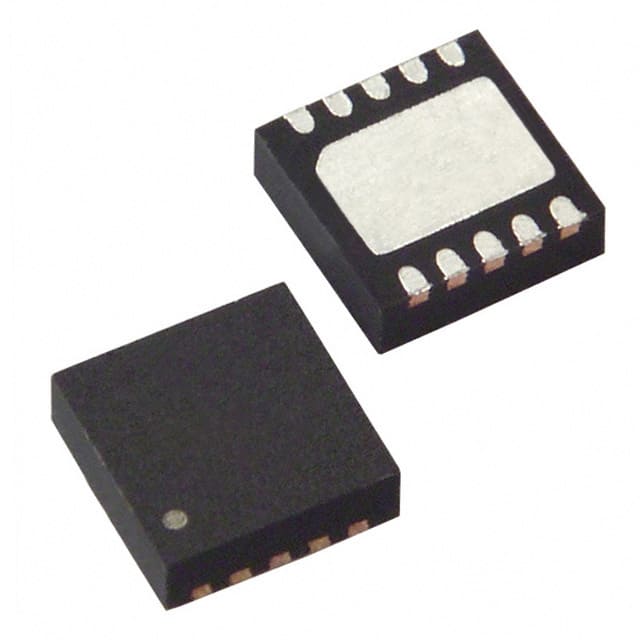
- Part No.:
- STR485LVQT
- Manufacturer:
- STMicroelectronics
- Category:
- Drivers, Receivers, Transceivers
- Package:
- 10-VFDFN Exposed Pad
- Datasheet:
-
 STR485LVQT.pdf
- Description:
- IC TRANSCEIVER HALF 1/1 10DFN
- Quantity:
- Payment:

- Shipping:

Inventory:23,305
Please send an inquiry. Send us your inquiry, and we will respond immediately.
Product details
Overview
STR485LVQT from STMicroelectronics is a half-duplex RS-485 transceiver with dual supply domains (VL = 1.65–3.6 V for logic, VCC = 3.0–3.6 V for bus), 20 Mbps high-speed or 250 kbps low-slew-rate operation selectable via SLR pin, fail-safe receiver, and ±16 kV IEC61000-4-2 air-gap ESD protection - deployed in industrial automation networks requiring robust long-haul serial communication.
For engineers reviewing the STR485LVQT datasheet, STR485LVQT pinout, STR485LVQT application, or STR485LVQT equivalent, this device supports critical design decisions involving voltage domain isolation (VL vs. VCC), slew-rate–dependent signal integrity over 1 km cables, thermal shutdown behavior under bus contention, and fail-safe logic state assurance during open/short/idle bus conditions.
Technical Context
The STR485LVQT integrates independent logic and bus supply domains to decouple I/O voltage compatibility (1.8 V or 3.3 V logic) from RS-485 bus drive capability (3.3 V). Its SLR pin configures driver output edge rate: 7 ns rise/fall time at 20 Mbps (SLR = GND/open) or 200 ns at 250 kbps (SLR = VL), directly impacting EMI and cable-length-limited timing margins.
Receiver features fail-safe biasing that guarantees high R output when A–B differential voltage is near zero (open, shorted, or terminated idle bus), with input thresholds VIT+ = –20 mV and VIT– = –130 mV and 70 mV hysteresis. Thermal shutdown activates at TJ = 165 °C, forcing driver outputs into high-Z to prevent latch-up during sustained bus faults.
Key Specifications
| Parameter | Value and Actual Design Meaning |
|---|---|
| Data rate | 20 Mbps (SLR = GND/open) or 250 kbps (SLR = VL): enables trade-off between noise immunity and maximum cable length. |
| Logic supply (VL) | 1.65 V to 3.6 V: supports direct interface with 1.8 V or 3.3 V microcontrollers without level shifters. |
| Bus supply (VCC) | 3.0 V to 3.6 V: ensures compliant RS-485 differential output voltage ≥1.5 V into 54 Ω load. |
| ESD protection | ±16 kV IEC61000-4-2 air discharge on A/B pins: eliminates need for external TVS in many industrial enclosures. |
| Fail-safe receiver | Guarantees high R output for |VA–VB| < 20 mV: prevents undefined UART framing during bus disconnection or termination loss. |
| Thermal shutdown | Triggers at TJ = 165 °C with 15 °C hysteresis: protects against damage during sustained short-circuit or contention events. |
| Unit load count | 256 devices per bus: achieved via >96 kΩ receiver input impedance up to +105 °C, meeting RS-485 UL scaling rules. |
Pinout & Package
STR485LVQT is housed in a thermally enhanced DFN10 (3 mm × 3 mm, 0.5 mm pitch) package with exposed thermal pad (pin 6 = GND), optimized for PCB heat dissipation in dense industrial modules.
| Pin/Terminal | Circuit Role | Design Meaning |
|---|---|---|
| VL (Pin 1) | Logic supply input | Provides power to all digital I/Os (D, DE, RE, SLR, R); must be ≤ VCC and ≥1.65 V for guaranteed operation. |
| R (Pin 2) | Receiver data output | CMOS-compatible digital output; high-Z when nRE = VL (receiver disabled); fails high on open/short/idle bus. |
| DE (Pin 3) | Driver enable input | Active-high enable with internal 150 Ω series + 2.5 MΩ pull-down to GND; drives bus only when asserted. |
| nRE (Pin 4) | Receiver enable input | Active-low enable with internal 150 Ω series + 2.5 MΩ pull-up to VL; disables receiver and forces R high-Z. |
| D (Pin 5) | Driver data input | CMOS-level input; inverted logic path to A/B outputs; requires stable setup/hold relative to DE assertion. |
| GND (Pin 6) | Ground reference | Common return for VL, logic circuitry, and thermal pad; must be low-inductance connection for EMI control. |
| SLR (Pin 7) | Slew rate select input | Configures driver edge rate: low = 20 Mbps (7 ns tr/tf), high = 250 kbps (200 ns tr/tf); floating defaults to high speed. |
| A (Pin 8) | Bus non-inverting terminal | RS-485 differential bus line; internally protected to ±16 kV air discharge; connects to A-line of twisted pair. |
| B (Pin 9) | Bus inverting terminal | RS-485 differential bus line; complementary to A; same ESD rating and common-mode range (–7 V to +12 V). |
| VCC (Pin 10) | Bus supply input | Supplies driver output stage; must be ≥ VL and ≤3.6 V; requires ≥1 µF local decoupling capacitance. |
Key Features
| Feature | Design Value |
|---|---|
| Dual independent supply domains | Enables 1.8 V MCU interfacing while maintaining 3.3 V RS-485 bus drive compliance without external level translation. |
| Selectably slew-controlled driver | SLR pin toggles between 20 Mbps (low EMI risk on short runs) and 250 kbps (reduced reflections on 1 km+ cables). |
| Fail-safe receiver with wide common-mode range | Outputs logic high for VA–VB ∈ [–20 mV, +20 mV], covering open, shorted, and properly terminated idle states across –7 V to +12 V CM. |
| Integrated high-level ESD protection | Meets IEC61000-4-2 Level 4 (±8 kV contact / ±16 kV air) on A/B pins - reduces BOM count and layout area vs. discrete TVS diodes. |
| Thermal shutdown with hysteresis | Disables driver at TJ = 165 °C and re-enables only after cooling to 150 °C, preventing oscillation during fault recovery. |
Applications
| Industrial PLC Backplane Communication | Smart Meter Data Concentrator |
|---|---|
|
Use Scenario: Multi-drop RS-485 network linking 32+ remote I/O modules to a central PLC CPU over 500 m shielded twisted pair in factory environments with 4 kV EFT noise. IC Role / Device Role / Timing Role: Half-duplex transceiver managing bidirectional command/response traffic; SLR pin fixed low for 20 Mbps throughput on short backplane segments. Use Value: Dual-supply architecture allows direct connection to 1.8 V FPGA control logic while delivering 1.8 Vpp differential swing into 54 Ω load - eliminating level-shifter ICs and associated timing skew. |
Use Scenario: Substation-level meter data aggregation hub collecting consumption logs from 256 smart meters via daisy-chained RS-485 lines spanning 1.2 km total distance. IC Role / Device Role / Timing Role: Bus node transceiver operating in low-slew mode (SLR = VL) to suppress intersymbol interference on long unterminated runs. Use Value: Fail-safe receiver ensures UART RX stays high during meter removal or cable cut, preventing spurious framing errors and false data commits in the concentrator's buffer. |
| Building Automation BACnet MS/TP Node | Medical Infusion Pump Serial Interface |
|
Use Scenario: Field controller in HVAC system using BACnet MS/TP protocol over RS-485 at 76.8 kbps, co-located with variable-frequency drives generating 2 kV fast transient bursts. IC Role / Device Role / Timing Role: Isolated transceiver node handling master/slave polling; leverages ±16 kV air-gap ESD rating to pass IEC61000-4-2 pre-compliance testing. Use Value: Thermal shutdown prevents latch-up during 2 kV EFT-induced bus contention, allowing automatic recovery without system reset - critical for unattended operation. |
Use Scenario: Embedded serial interface in Class II medical infusion pump connecting to central nursing station via hospital-grade RS-485 cabling routed alongside AC power lines. IC Role / Device Role / Timing Role: Safety-critical transceiver where receiver fail-safe behavior guarantees "no dose" default state if bus disconnects mid-infusion cycle. Use Value: Guaranteed high R output during open-circuit bus condition maintains UART break signal, triggering pump halt and alarm - satisfying IEC62304 hazard analysis requirements. |
Equivalent & Alternatives
The following parts are listed as comparable options for similar half-duplex RS-485 transceiver applications.
| Alternative Part | Technical Difference | Application Difference | Selection Advice |
|---|---|---|---|
| MAX13487EASA+ | Single 3.3 V supply (no VL/VCC separation); 16 Mbps max; ±15 kV ESD; no SLR pin - fixed slew rate. | Lacks dual-supply flexibility and slew-rate selection; requires external level shifter for 1.8 V MCUs. | Choose when board space is constrained and 1.8 V logic interface is not required. |
| SN65HVD72DR | 3.3 V only; 16 Mbps; ±16 kV ESD; includes auto-direction control (no DE pin); thermal shutdown absent. | No driver enable control granularity; no overtemperature protection - unsuitable for contested bus environments. | Prefer for simple point-to-point links where automatic direction sensing suffices and thermal faults are mitigated externally. |
Compared with MAX13487EASA+ and SN65HVD72DR, STR485LVQT uniquely supports independent logic/bus supplies and user-selectable slew rate - enabling optimized signal integrity across both short high-speed and long low-speed RS-485 deployments without compromising ESD robustness or fail-safe reliability.
Availability
STR485LVQT is available at Aetrix Electronics and suitable for industrial automation, smart grid infrastructure, building management systems, and medical device serial interfaces requiring stable component supply across extended temperature and ESD stress conditions.
Supply support for STR485LVQT includes scheduled delivery planning, volume procurement assistance, BOM continuity management, traceable sourcing, and lifecycle availability coordination for OEM customers, industrial embedded developers, connected-device designers, and electronics production programs.
Manufacturer
STMicroelectronics is a global semiconductor leader headquartered in Geneva, Switzerland, designing and manufacturing analog, MCU, power, and sensor solutions for industrial, automotive, and consumer markets.
The STR485 product line targets robust industrial communications, delivering RS-485 transceivers with integrated protection, dual-supply flexibility, and fail-safe operation for mission-critical wired networks.
FAQ
What is the minimum recommended decoupling capacitance for VL and VCC supplies?
STMicroelectronics specifies a minimum 0.1 µF ceramic capacitor placed as close as possible to each supply pin (VL and VCC), with an additional bulk capacitor of at least 1 µF nearby. This ensures stable operation during fast driver switching and prevents ground bounce-induced receiver misreads, especially at 20 Mbps.
Can the SLR pin be left unconnected, and what is the resulting data rate?
Yes, SLR may float, and the device defaults to high-speed mode (20 Mbps) due to internal biasing. However, ST recommends explicit connection - to GND for 20 Mbps or to VL for 250 kbps - to avoid noise-induced transitions and ensure deterministic slew rate selection in noisy industrial environments.
How does the fail-safe receiver behave when the bus is terminated but idle?
When the RS-485 bus is properly terminated (120 Ω across A–B) and driven neither high nor low, the differential voltage settles near 0 V. The STR485LVQT's receiver interprets this as a valid logic high (R = high) due to its –20 mV VIT+ threshold and built-in fail-safe biasing - ensuring UART receives consistent idle framing.
Is thermal shutdown reversible, and what is the recovery behavior?
Yes - thermal shutdown is fully reversible. When junction temperature exceeds 165 °C, the driver outputs go high-Z; recovery occurs only after temperature falls below 150 °C (15 °C hysteresis), preventing oscillation. No external reset or power cycle is needed, and receiver remains functional during shutdown.
STR485LVQT Specifications
- Product attributes
- Attribute value
- Manufacturer:
- STMicroelectronics
- Series:
- -
- Package/Case:
- 10-VFDFN Exposed Pad
- Packaging:
- Tape & Reel (TR)
- Product Status:
- Active
- Type:
- Transceiver
- Protocol:
- RS485
- Number of Drivers/Receivers:
- 1/1
- Duplex:
- Half
- Receiver Hysteresis:
- 70 mV
- Data Rate:
- 20Mbps
- Voltage - Supply:
- 1.65V ~ 3.6V
- Operating Temperature:
- -40°C ~ 105°C
- Grade:
- -
- Qualification:
- -
- Mounting Type:
- Surface Mount
- Supplier Device Package:
- 10-DFN (3x3)
STR485LVQT FAQ
1.How can I place an order for STR485LVQT through Aetrix?
Please submit a Request for Quotation (RFQ) for STR485LVQT on Aetrix. Our sales agent will provide a competitive quotation and guide you through the order confirmation once you accept the terms.
2.Are the price and stock information for STR485LVQT reliable?
The price and inventory of STR485LVQT are updated periodically and may fluctuate due to market conditions. Stock and pricing data are typically refreshed every 24 hours. Quotation validity for STR485LVQT is usually 5 days.
3.What payment methods are accepted for STR485LVQT?
We accept Wire Transfer, PayPal, Credit Card, Western Union, MoneyGram, and Escrow for STR485LVQT transactions.
Note: Certain payment methods may incur a processing fee.
4.How is shipping managed for STR485LVQT?
STR485LVQT orders can be shipped via leading logistics carriers, including DHL, UPS, FedEx, TNT, or Registered Mail.
Once your STR485LVQT order is processed, you will receive an email with the shipment details and tracking number.
Note: Tracking information may take up to 24 hours to appear. Express delivery typically takes 3–5 business days.
5.How can I obtain technical support or documentation for STR485LVQT?
For technical support, including STR485LVQT datasheets, pinout diagrams, or application guidance, please contact our engineering support team. They can provide detailed documentation and assistance for your STR485LVQT requirements.
6.How does Aetrix verify that STR485LVQT is sourced from the original manufacturer or authorized distributors?
All STR485LVQT products on Aetrix are procured from qualified distributors and authorized channels. Our dedicated quality assurance team conducts strict verification, including traceability checks and, if necessary, third-party testing. This ensures that STR485LVQT meets industry standards.
7.What is the process for return or replacement of STR485LVQT?
All STR485LVQT units undergo pre-shipment inspection (PSI). If there is an issue with STR485LVQT, returns or replacements are accepted under the following conditions:
1.Quantity discrepancies, incorrect items, or visible external defects (such as breakage or corrosion), acknowledged by Aetrix.
2.The issue is reported within 90 days of delivery.
3.The STR485LVQT part is unused and in its original packaging.
Return procedure for STR485LVQT:
1.Submit a request within 90 days.
2.Obtain a Return Material Authorization (RMA) from Aetrix.
STR485LVQT Tags

-
ATA6561-GAQW-N
Microchip Technology
-
ATA6561-GBQW-N
Microchip Technology
-
AM26LS32ACDR
Texas Instruments

-
SP485CN-L/TR
MaxLinear, Inc.
-
SP485EN-L/TR
MaxLinear, Inc.
-
SP485EEN-L/TR
MaxLinear, Inc.
-
SP485ECN-L/TR
MaxLinear, Inc.
-
THVD1400DR
Texas Instruments
-
AM26C31IDR
Texas Instruments

-
TLIN1021ADRQ1
Texas Instruments
-
MAX232IDR
Texas Instruments
-
AM26C32IDR
Texas Instruments
Tech Hub

A practical engineering and sourcing framework covering lifecycle verification, lifetime-buy calculations, replacement qualification, supplier checks and counterfeit-risk controls.

TTL and CMOS logic families differ in thresholds, loading, output drive, power and timing. This engineering guide compares 74HC and 74HCT, calculates noise margins and checks 3.3 V/5 V compatibility.

A practical engineering guide to 3.3V and 5V logic compatibility, input thresholds, resistor dividers, translator ICs, MOSFET level shifting, I2C pull-ups, timing limits and power-sequencing risks.

The 74HC595 uses push-pull logic outputs, while the TPIC6B595 uses 50 V open-drain DMOS sinks for higher-power loads. This guide compares timing, current limits, 3.3 V interfacing, load wiring, thermal…

The 74HC595 converts serial data into eight stable parallel outputs. This guide covers pin functions, shift and storage timing, OE and MR behavior, drive-current limits, cascading, voltage compatibilit…

A technical comparison of level-sensitive latches and edge-triggered flip-flops, covering timing windows, setup and hold limits, master–slave operation, time borrowing, race-through, HDL inference and…

A D latch stores one bit while Enable controls when data can pass. This reference covers gate-level operation, truth tables, transparency, setup and hold timing, LE versus OE, common ICs and practical …

An SR latch stores one bit through cross-coupled feedback. This engineering reference covers NOR and NAND implementations, truth tables, forbidden-state recovery, gated operation, switch debouncing, fa…

Latch circuits retain one bit through feedback. This technical reference covers SR and D latches, truth tables, transparency, timing limits, latch-versus-flip-flop behavior, applications and common log…

An engineering guide to LED driver operation, constant-current and constant-voltage outputs, linear and switching topologies, dimming, IC selection, calculations, replacement compatibility, and fault c…


