
 My Inquiry
 My Account


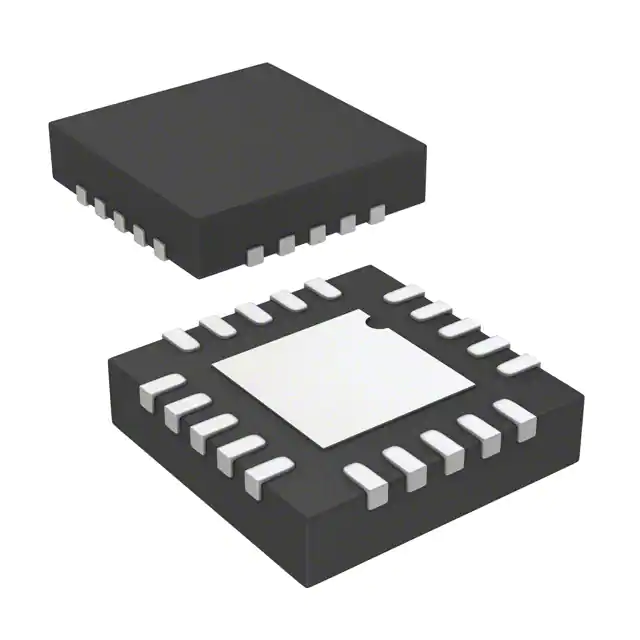
STMicroelectronics STS1TXQTR
- Part No.:
- STS1TXQTR
- Manufacturer:
- STMicroelectronics
- Category:
- RF Transmitters
- Package:
- 20-VFQFN Exposed Pad
- Datasheet:
-
 STS1TXQTR.pdf
- Description:
- RF TX IC ASK 169/315MHZ 20VQFN
- Quantity:
- Payment:

- Shipping:

Inventory:1,223
Please send an inquiry. Send us your inquiry, and we will respond immediately.
Product details
Overview
STS1TXQTR from STMicroelectronics is a low-power, sub-1GHz RF transmitter IC designed for license-free ISM/SRD bands (150–174, 300–348, 387–470, 779–956 MHz). It supports 2-FSK/GFSK/MSK/GMSK/OOK/ASK modulation, delivers up to +16 dBm output power, consumes only 21 mA at +11 dBm, and integrates AES-128 encryption, 96-byte TX FIFO, and ultra-low-power RC oscillator - enabling secure, battery-operated AMR and WSN nodes.
For engineers reviewing the STS1TXQTR datasheet, STS1TXQTR pinout, STS1TXQTR application, or STS1TXQTR equivalent, key selection criteria include programmable channel spacing (≥12.5 kHz), fast 6 µs synthesizer settling, EN 300 220/FCC/ARIB compliance, SPI-configurable packet handling, and integrated temperature/battery sensing for autonomous wireless sensor deployments.
Technical Context
The STS1TXQTR implements a direct-synthesis RF architecture with an N-fractional ΣΔ frequency synthesizer driving a fully integrated PA. Its digital baseband supports dynamic payload length, automatic CRC, FEC with interleaving, and data whitening - all configurable via SPI register map.
Power management includes an on-chip SMPS (80%+ efficiency) supporting 1.8–3.6 V operation, dual clock sources (26 MHz crystal or external clock on XIN/XOUT), and a 34.7 kHz RC oscillator for ultra-low-power sleep timing. Wakeup occurs on internal timer expiry or external GPIO event.
Key Specifications
| Parameter | Value and Actual Design Meaning |
|---|---|
| Frequency Bands | 150–174, 300–348, 387–470, 779–956 MHz - covers global sub-GHz ISM/SRD allocations including 169/315/433/868/915 MHz. |
| Air Data Rate | 1–500 kbps - enables flexible trade-off between range (low rate) and throughput (high rate) in constrained wireless links. |
| Output Power Range | –30 to +16 dBm in 0.5 dB steps - supports long-range point-to-point links or ultra-low-power mesh node transmission. |
| TX Current @ +11 dBm | 21 mA - enables >10-year battery life in coin-cell-powered AMR meters operating at duty-cycled transmit intervals. |
| Modulation Schemes | 2-FSK, GFSK, MSK, GMSK, OOK, ASK - provides regulatory compliance and robustness across diverse regional spectral masks and interference environments. |
| Integrated Features | AES-128 co-processor, 96-byte TX FIFO, temperature sensor, battery detector, programmable channel spacing (min. 12.5 kHz) - reduces host MCU overhead and external component count. |
| Synthesizer Settling | 6 µs - enables rapid frequency hopping and low-latency channel switching for anti-jamming and multi-channel protocols. |
Pinout & Package
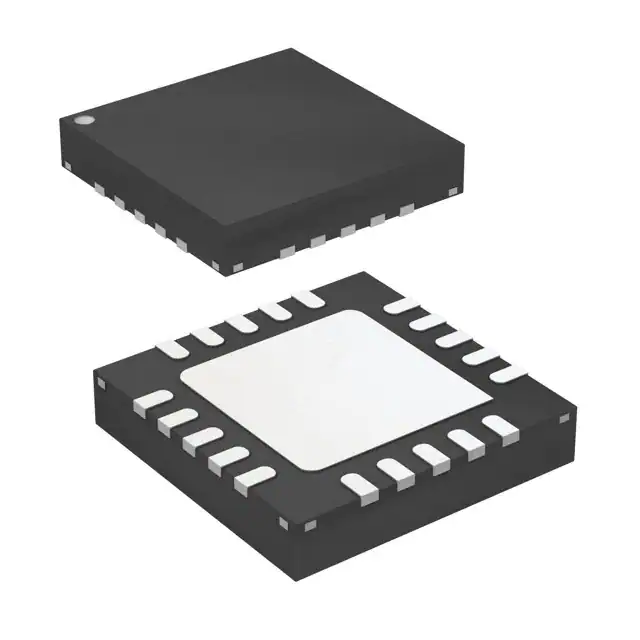
STS1TXQTR is housed in a RoHS-compliant QFN20 package (4 × 4 mm, 0.5 mm pitch) with exposed thermal pad. Pin functions are validated per STMicroelectronics DocID025109 Rev 1, Section 4 (Pinout) and Figure 2 (Typical Application Diagram).
| Pin/Terminal | Circuit Role | Design Meaning |
|---|---|---|
| 1 GPIO_0 | Configurable I/O | Can serve as TX data input (direct mode), interrupt output, or general-purpose signal - reduces need for external logic in simple transmitters. |
| 2 SDO (MISO) | SPI Output | Serial data output from STS1TXQTR during SPI read operations - enables status register polling and FIFO readback. |
| 3 SDI (MOSI) | SPI Input | Serial data input for configuration writes, register access, and TX FIFO loading - supports full device control over 4-wire SPI. |
| 4 SCLK | SPI Clock | Master-generated clock synchronizing all SPI transfers - operates up to 10 MHz, enabling fast register updates and burst FIFO writes. |
| 5 CSn | SPI Chip Select | Active-low enable for SPI communication - allows shared bus operation with other peripherals in multi-device systems. |
| 6 XOUT | Clock Oscillator Output | Drives external 26 MHz crystal (with C9/C10); left floating when using external clock on XIN - defines system timing reference. |
| 7 XIN | Clock Oscillator Input | Accepts 26 MHz crystal or external CMOS clock source - enables precise frequency stability or clock synchronization in networked devices. |
| 11 GND PA | RF Ground | Dedicated ground for power amplifier section - isolates sensitive RF return path from digital noise, critical for spectral purity. |
| 12 TX | RF Output | 50 Ω matched RF output port - connects directly to antenna matching network (e.g., L1/L2/C1/C2) without external PA stage. |
| 13–15 SMPS Ext1/Ext2 | SMPS External Components | Connects to external inductor (L0) and capacitor (C11/C12) - forms high-efficiency switched-mode regulator for wide-input-voltage operation. |
| 16 VDD SMPS | SMPS Supply Input | Input for internal SMPS (1.8–3.6 V) - powers analog/RF blocks with regulated voltage, improving PSRR and reducing supply ripple sensitivity. |
| 17 VR DIG | Digital LDO Output | Internal 1.5 V LDO output for digital core - eliminates need for external low-noise regulator in space-constrained designs. |
| 18–20 GPIO_1–GPIO_3 | Configurable I/O | Support interrupt generation, status indication, or auxiliary control signals - enables hardware handshaking and low-latency event response. |
Key Features
| Feature | Design Value |
|---|---|
| Sub-GHz RF Transmitter | Single-chip solution covering all major license-free bands - eliminates band-specific SKU proliferation and simplifies global certification. |
| Programmable Modem | Fully configurable baseband supporting M-Bus (EN 13757-4), proprietary packet formats, and dynamic payload length - enables protocol agility without firmware changes. |
| Integrated Security | Dedicated AES-128 co-processor with key storage - performs encryption/decryption in hardware, preventing side-channel leakage and offloading host MCU. |
| Ultra-Low-Power Operation | 21 mA TX current at +11 dBm and 6 µs wake-up time - extends battery life in intermittent-transmit applications such as utility metering and environmental sensors. |
| Regulatory Compliance Engine | Built-in support for EN 300 220, FCC Part 15, ARIB STD T-67/T-93/T-108 - reduces pre-compliance testing effort and accelerates time-to-market for certified products. |
Applications
| Smart Utility Metering | Home Automation Sensors |
|---|---|
|
Use Scenario: Battery-powered gas/water/electricity meters transmitting consumption data hourly to concentrators via star topology. IC Role / Device Role / Timing Role: Sub-GHz RF transmitter handling M-Bus-compliant packets with AES-128 encryption and CRC integrity checks. Use Value: 21 mA TX current at +11 dBm enables >15-year coin-cell lifetime; programmable channel spacing ensures coexistence in dense urban deployments. |
Use Scenario: Wireless door/window contact sensors and temperature/humidity nodes reporting to a central hub in Zigbee- or proprietary 868 MHz networks. IC Role / Device Role / Timing Role: Low-duty-cycle transmitter with wakeup-on-timer and integrated battery monitoring for self-maintaining endpoint operation. Use Value: 6 µs synthesizer settling enables rapid channel hopping to avoid interference; 96-byte TX FIFO buffers burst sensor readings during MCU sleep. |
| Industrial Wireless Sensor Networks | Fire & Security Alarm Systems |
|
Use Scenario: Corrosion-resistant, IP67-rated vibration/temperature/pressure sensors deployed in oil & gas refineries with infrequent but mission-critical alerts. IC Role / Device Role / Timing Role: Robust RF link layer with FEC, interleaving, and data whitening operating in noisy EMI environments (–40 °C to +85 °C). Use Value: Integrated temperature sensor enables on-chip compensation of PA gain drift; SMPS regulator maintains stable RF performance across 1.8–3.6 V battery discharge curve. |
Use Scenario: Smoke/CO detectors and panic buttons transmitting encrypted alarm events to panel receivers with guaranteed latency under 100 ms. IC Role / Device Role / Timing Role: Fast-starting transmitter with GPIO-triggered immediate TX mode and low-battery alert signaling. Use Value: Wakeup-on-external-event capability enables instant transmission upon sensor activation; AES-128 prevents replay attacks on life-safety messages. |
Equivalent & Alternatives
The following parts are listed as comparable options for similar sub-GHz RF transmitter applications.
| Alternative Part | Technical Difference | Application Difference | Selection Advice |
|---|---|---|---|
| SX1276IMLTRT | LoRa-capable transceiver (RX + TX), higher RX sensitivity (–137 dBm), wider bandwidth support, but higher TX current (45 mA @ +20 dBm) and no integrated AES. | Better suited for long-range, low-data-rate LPWAN where bidirectional communication and adaptive data rate are required. | Select SX1276 when link budget >150 dB is needed and host MCU can manage LoRa stack; STS1TXQTR remains optimal for cost-sensitive, TX-only, AES-secured AMR. |
| CC1125RHBR | Higher RF performance (–120 dBm RX sensitivity), broader frequency coverage (169–960 MHz), but requires external crystal load caps and lacks integrated SMPS or AES engine. | Preferred for high-reliability industrial telemetry requiring narrowband FSK with <1 ppm frequency stability and external precision references. | Choose CC1125 for demanding narrowband applications needing superior phase noise and adjacent channel rejection; STS1TXQTR offers lower BOM count and faster time-to-certification. |
Compared with SX1276 and CC1125, STS1TXQTR delivers best-in-class integration for secure, battery-operated TX-only nodes - combining AES-128, SMPS, RC oscillator, and regulatory firmware stacks in one QFN20 package, minimizing external components and qualification effort.
Availability
STS1TXQTR is available at Aetrix Electronics and suitable for automatic meter reading (AMR), wireless sensor networks (WSN), and industrial monitoring applications requiring stable component supply, long-term lifecycle assurance, and RoHS-compliant packaging.
Supply support for STS1TXQTR includes scheduled delivery planning, volume procurement assistance, BOM continuity management, traceable sourcing, and lifecycle availability coordination for OEM customers, industrial embedded developers, connected-device designers, and electronics production programs.
Manufacturer
STMicroelectronics is a global semiconductor leader headquartered in Geneva, Switzerland, designing and manufacturing microcontrollers, analog ICs, MEMS, and power management solutions for automotive, industrial, and consumer markets.
STS1TXQTR belongs to ST's Spirit1 family of ultra-low-power sub-GHz RF transceivers - engineered specifically for secure, battery-operated wireless endpoints in smart utility, building automation, and industrial IoT applications.
FAQ
What crystal frequency is required for STS1TXQTR operation?
The STS1TXQTR requires a 26 MHz fundamental-mode crystal connected between XIN and XOUT pins, with recommended load capacitance of 12 pF (C9) and 10 pF (C10) per the datasheet. An external 26 MHz CMOS clock may alternatively drive XIN, with XOUT left unconnected.
Does STS1TXQTR support receive functionality?
No, STS1TXQTR is a transmit-only RF IC. It lacks an RF receiver path, LNA, or demodulator circuitry. For transceiver applications, ST offers the pin-compatible STS1RXQTR or the integrated STS1TRQTR dual-mode variant.
How is AES-128 encryption implemented in STS1TXQTR?
STS1TXQTR contains a dedicated hardware AES-128 co-processor that performs encryption/decryption independently of the host MCU. Keys are loaded via SPI into protected registers, and data is processed in-place within the TX FIFO before modulation - ensuring zero software exposure of keys or plaintext.
What is the role of the SMPS Ext1 and Ext2 pins?
SMPS Ext1 and Ext2 connect to an external inductor (L0) and capacitor (C11/C12) to form a high-efficiency switched-mode power supply. This internal SMPS regulates the 1.8–3.6 V input down to ~1.8 V for analog/RF blocks, improving power conversion efficiency (>80%) and reducing heat dissipation versus linear regulators.
STS1TXQTR Specifications
- Product attributes
- Attribute value
- Manufacturer:
- STMicroelectronics
- Series:
- -
- Package/Case:
- 20-VFQFN Exposed Pad
- Packaging:
- Tape & Reel (TR)
- Product Status:
- Discontinued at Digi-Key
- Programmable:
- Not Verified
- Frequency:
- 169MHz, 315MHz, 433MHz, 868MHz, 915MHz
- Applications:
- Home/Building Automation, Industrial Control and Monitoring
- Modulation or Protocol:
- ASK, FSK, GFSK, MSK, OOK
- Data Rate (Max):
- 500kbps
- Power - Output:
- 16dBm
- Current - Transmitting:
- 21mA
- Data Interface:
- PCB, Surface Mount
- Antenna Connector:
- PCB, Surface Mount
- Memory Size:
- -
- Features:
- -
- Voltage - Supply:
- 1.8V ~ 3.6V
- Operating Temperature:
- -40°C ~ 85°C
- Grade:
- -
- Qualification:
- -
- Mounting Type:
- Surface Mount
- Supplier Device Package:
- 20-QFN (4x4)
STS1TXQTR FAQ
1.How can I place an order for STS1TXQTR through Aetrix?
Please submit a Request for Quotation (RFQ) for STS1TXQTR on Aetrix. Our sales agent will provide a competitive quotation and guide you through the order confirmation once you accept the terms.
2.Are the price and stock information for STS1TXQTR reliable?
The price and inventory of STS1TXQTR are updated periodically and may fluctuate due to market conditions. Stock and pricing data are typically refreshed every 24 hours. Quotation validity for STS1TXQTR is usually 5 days.
3.What payment methods are accepted for STS1TXQTR?
We accept Wire Transfer, PayPal, Credit Card, Western Union, MoneyGram, and Escrow for STS1TXQTR transactions.
Note: Certain payment methods may incur a processing fee.
4.How is shipping managed for STS1TXQTR?
STS1TXQTR orders can be shipped via leading logistics carriers, including DHL, UPS, FedEx, TNT, or Registered Mail.
Once your STS1TXQTR order is processed, you will receive an email with the shipment details and tracking number.
Note: Tracking information may take up to 24 hours to appear. Express delivery typically takes 3–5 business days.
5.How can I obtain technical support or documentation for STS1TXQTR?
For technical support, including STS1TXQTR datasheets, pinout diagrams, or application guidance, please contact our engineering support team. They can provide detailed documentation and assistance for your STS1TXQTR requirements.
6.How does Aetrix verify that STS1TXQTR is sourced from the original manufacturer or authorized distributors?
All STS1TXQTR products on Aetrix are procured from qualified distributors and authorized channels. Our dedicated quality assurance team conducts strict verification, including traceability checks and, if necessary, third-party testing. This ensures that STS1TXQTR meets industry standards.
7.What is the process for return or replacement of STS1TXQTR?
All STS1TXQTR units undergo pre-shipment inspection (PSI). If there is an issue with STS1TXQTR, returns or replacements are accepted under the following conditions:
1.Quantity discrepancies, incorrect items, or visible external defects (such as breakage or corrosion), acknowledged by Aetrix.
2.The issue is reported within 90 days of delivery.
3.The STS1TXQTR part is unused and in its original packaging.
Return procedure for STS1TXQTR:
1.Submit a request within 90 days.
2.Obtain a Return Material Authorization (RMA) from Aetrix.
STS1TXQTR Tags

-
MICRF113YM6-TR
Microchip Technology
-
PIC12LF1840T39AT-I/ST
Microchip Technology

-
MAX41460GUB+T
Analog Devices Inc./Maxim Integrated
-
SX1230I066TRT
Semtech Corporation
-
SI4010-C2-GS
Silicon Labs
-
CC1070RSQR
Texas Instruments
-
TXM-418-LR
TE Connectivity Linx
-
TXM-433-LR
TE Connectivity Linx
-
TXM-418-KH3
TE Connectivity Linx

-
TX7332ZBX
Texas Instruments
-
MICRF114T-I/OT
Microchip Technology
-
MICRF112YMM-TR
Microchip Technology
Tech Hub

A practical engineering and sourcing framework covering lifecycle verification, lifetime-buy calculations, replacement qualification, supplier checks and counterfeit-risk controls.

TTL and CMOS logic families differ in thresholds, loading, output drive, power and timing. This engineering guide compares 74HC and 74HCT, calculates noise margins and checks 3.3 V/5 V compatibility.

A practical engineering guide to 3.3V and 5V logic compatibility, input thresholds, resistor dividers, translator ICs, MOSFET level shifting, I2C pull-ups, timing limits and power-sequencing risks.

The 74HC595 uses push-pull logic outputs, while the TPIC6B595 uses 50 V open-drain DMOS sinks for higher-power loads. This guide compares timing, current limits, 3.3 V interfacing, load wiring, thermal…

The 74HC595 converts serial data into eight stable parallel outputs. This guide covers pin functions, shift and storage timing, OE and MR behavior, drive-current limits, cascading, voltage compatibilit…

A technical comparison of level-sensitive latches and edge-triggered flip-flops, covering timing windows, setup and hold limits, master–slave operation, time borrowing, race-through, HDL inference and…

A D latch stores one bit while Enable controls when data can pass. This reference covers gate-level operation, truth tables, transparency, setup and hold timing, LE versus OE, common ICs and practical …

An SR latch stores one bit through cross-coupled feedback. This engineering reference covers NOR and NAND implementations, truth tables, forbidden-state recovery, gated operation, switch debouncing, fa…

Latch circuits retain one bit through feedback. This technical reference covers SR and D latches, truth tables, transparency, timing limits, latch-versus-flip-flop behavior, applications and common log…

An engineering guide to LED driver operation, constant-current and constant-voltage outputs, linear and switching topologies, dimming, IC selection, calculations, replacement compatibility, and fault c…


