
 My Inquiry
 My Account


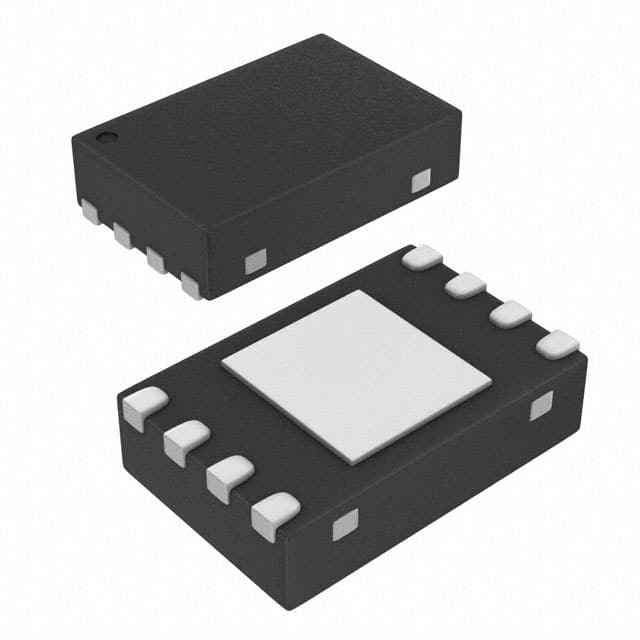
STMicroelectronics STTS2002B2DN3F
- Part No.:
- STTS2002B2DN3F
- Manufacturer:
- STMicroelectronics
- Category:
- Thermal Management
- Package:
- 8-WFDFN Exposed Pad
- Datasheet:
-
 STTS2002B2DN3F.pdf
- Description:
- IC MEMORY MOD TEMP SENSOR 8TDFN
- Quantity:
- Payment:

- Shipping:

Inventory:4,229
Please send an inquiry. Send us your inquiry, and we will respond immediately.
Product details
Overview
STTS2002B2DN3F from STMicroelectronics is a JEDEC TSE2002a2-compliant memory module temperature sensor with integrated 2 Kb SPD EEPROM, designed for DDR3/DDR4 DIMMs in laptops and servers. It delivers programmable 9–12-bit temperature resolution (0.25 °C/LSB default), ±1 °C accuracy from +75 °C to +95 °C, and operates from 2.3 V to 3.6 V in a 2 mm × 3 mm TDFN8 package.
For engineers reviewing the STTS2002B2DN3F datasheet, STTS2002B2DN3F pinout, STTS2002B2DN3F application, or STTS2002B2DN3F equivalent, this device supports SMBus/I²C up to 400 kHz, provides open-drain EVENT output for thermal alarm signaling, integrates write-protected SPD EEPROM for DRAM configuration storage, and enables per-module thermal monitoring without external components.
Technical Context
The STTS2002B2DN3F implements a sigma-delta ADC for direct ambient temperature digitization and stores calibrated °C values in a read-only temperature register. Its dual-address architecture uses separate I²C DTI codes ('0011' for TS, '1010' for EEPROM) to isolate sensor and memory access on the same bus.
It supports programmable hysteresis (0/1.5/3/6 °C), comparator or interrupt mode on the EVENT pin, and configurable trip points (alarm window, critical threshold). The 2 Kb SPD EEPROM (256 × 8 bits) features permanent/reversible software write protection for the upper 128 bytes (00h–7Fh), matching JEDEC SPD requirements for DRAM modules.
Key Specifications
| Parameter | Value and Actual Design Meaning |
|---|---|
| Temp resolution | Programmable 9–12 bits; 0.25 °C/LSB default enables fine-grained DIMM thermal profiling |
| Accuracy | ±1 °C from +75 °C to +95 °C - meets JEDEC TSE2002a2 critical monitor range |
| Supply voltage | 2.3 V to 3.6 V - compatible with DDR3/DDR4 VDDQ and SPD bus voltage domains |
| EEPROM size | 2 Kb (256 × 8 bits) - stores full JEDEC SPD data block including timing, density, and vendor info |
| I²C speed | Up to 400 kHz - supports fast SPD read during system boot without clock stretching |
| Package | TDFN8 (2 mm × 3 mm, 0.80 mm max height) - JEDEC MO-229 WCED-3 compliant for space-constrained DIMM PCBs |
| Operating temp | −40 °C to +125 °C - covers full industrial and server memory module thermal envelope |
Pinout & Package
STTS2002B2DN3F uses an 8-lead TDFN package (2 mm × 3 mm, max height 0.80 mm), JEDEC MO-229 WCED-3 compliant, RoHS and halogen-free.
| Pin/Terminal | Circuit Role | Design Meaning |
|---|---|---|
| A0, A1, A2 | I²C address LSB inputs | Set unique slave address (up to 8 devices per bus); tied to VDD/VSS to configure DIMM slot addressing |
| VSS | Ground reference | System ground connection; required for stable ADC reference and EEPROM operation |
| SDA | Open-drain serial data | Bi-directional SMBus/I²C data line; shares bus with other SPD devices without contention |
| SCL | Serial clock input | Master-generated clock; no internal clock stretching ensures deterministic SPD read timing |
| EVENT | Open-drain alarm output | Active-low signal triggered by temperature crossing programmable thresholds; drives motherboard thermal interrupt logic |
| VDD | Power supply | 2.3–3.6 V input; powers both sensor and EEPROM; low 160 µA standby current minimizes DIMM power budget impact |
Key Features
| Feature | Design Value |
|---|---|
| JEDEC TSE2002a2 compliance | Guarantees interoperability with standard memory controller thermal management firmware across laptop/server platforms |
| Dual DTI addressing | Separate '0011' (TS) and '1010' (EEPROM) I²C addresses prevent register collision during simultaneous sensor/SPD access |
| Upper 128-byte write lock | Permanently protects SPD configuration data (e.g., CAS latency, tRCD, module size) from accidental overwrite during field updates |
| Configurable EVENT output | Switchable between comparator (thermostat) and interrupt modes to match host BIOS or BMC thermal policy implementation |
| Programmable hysteresis | 0/1.5/3/6 °C selection prevents thermal chatter at trip boundaries in dynamic load environments |
Applications
| Laptop DDR4 DIMM Thermal Monitoring | Server RDIMM SPD & Temp Integration |
|---|---|
Use Scenario: Real-time temperature tracking of DDR4 SO-DIMMs in ultrabooks under sustained CPU/GPU load. IC Role / Device Role / Timing Role: Primary thermal sensor and SPD EEPROM for JEDEC-compliant memory configuration storage. Use Value: Enables dynamic memory throttling when die temperature exceeds +85 °C, preserving data integrity without requiring discrete sensor placement. | Use Scenario: Dual-rank RDIMM in 2U rack server with BMC-initiated thermal polling every 2 seconds. IC Role / Device Role / Timing Role: Co-located SPD + temperature source for memory subsystem health reporting via IPMI. Use Value: Reduces BOM count by eliminating separate SPD EEPROM and thermal sensor, cutting DIMM layer count and assembly cost. |
| Industrial Embedded Memory Module | Memory Test Equipment Calibration |
Use Scenario: Fanless industrial PC using DDR3L modules operating continuously at 70 °C ambient. IC Role / Device Role / Timing Role: High-accuracy thermal guardrail for memory controller thermal shutdown logic. Use Value: ±1 °C accuracy in +75 °C to +95 °C range ensures reliable early-warning alarms before JEDEC thermal derating thresholds are breached. | Use Scenario: Automated memory tester validating SPD data integrity and thermal response across 100+ DIMM samples/hour. IC Role / Device Role / Timing Role: Reference-grade temperature source with traceable calibration for test fixture correlation. Use Value: Factory-calibrated sensor eliminates need for external thermocouple compensation during high-throughput SPD programming verification. |
Equivalent & Alternatives
The following parts are listed as comparable options for similar memory module thermal sensing and SPD storage applications.
| Alternative Part | Technical Difference | Application Difference | Selection Advice |
|---|---|---|---|
| AT24C02D-SSHM-T | Standalone 2 Kb I²C EEPROM only; no integrated temperature sensor or EVENT pin | Requires external thermal IC (e.g., STLM20) and additional routing; increases DIMM footprint and bill-of-materials | Select only if SPD-only function is needed and thermal monitoring is handled separately |
| MAX6602AESA+ | Dedicated 2-wire temperature sensor; no EEPROM; ±0.5 °C accuracy but lacks SPD functionality and JEDEC TSE2002a2 compliance | Cannot store or serve SPD data; incompatible with memory controller SPD read sequences | Use only for non-DIMM applications where SPD is irrelevant and higher sensor accuracy is prioritized |
Compared with AT24C02D-SSHM-T and MAX6602AESA+, the STTS2002B2DN3F uniquely combines JEDEC-compliant thermal sensing and SPD EEPROM in one TDFN8 package, enabling single-component DIMM integration while meeting both JEDEC TSE2002a2 and SPD specification requirements.
Availability
STTS2002B2DN3F is available at Aetrix Electronics and suitable for laptop DDR4 thermal management, server RDIMM SPD integration, and industrial embedded memory modules requiring stable component supply across extended product lifecycles.
Supply support for STTS2002B2DN3F includes scheduled delivery planning, volume procurement assistance, BOM continuity management, traceable sourcing, and lifecycle availability coordination for OEM customers, industrial embedded developers, connected-device designers, and electronics production programs.
Manufacturer
STMicroelectronics is a global semiconductor leader headquartered in Geneva, Switzerland, delivering automotive, industrial, and power management solutions with emphasis on reliability and system-level integration.
The STTS2002 series belongs to ST's memory interface and thermal management product line, engineered specifically to consolidate SPD EEPROM and JEDEC-compliant temperature sensing into a single compact package for DDR memory modules.
FAQ
What is the factory-default temperature resolution setting?
The STTS2002B2DN3F powers up with 10-bit resolution enabled by default, yielding 0.25 °C per LSB. This value is stored in the Temperature Resolution Register (TRES) and can be changed via I²C write to addresses 0x0E–0x0F. No external calibration is required, as the ADC is factory-trimmed for offset and gain across the full −40 °C to +125 °C range.
How does the EVENT pin behave in comparator versus interrupt mode?
In comparator mode, EVENT asserts low when temperature crosses the upper or lower alarm boundary and remains low until it returns within the hysteresis band. In interrupt mode, EVENT pulses low for 100 ms upon threshold crossing and requires software clearing of the status bit in the Configuration Register to reset. Both modes use the same trip point registers but differ in latching behavior and host software handling.
Can the SPD EEPROM be fully write-protected, including the lower 128 bytes?
Yes - the lower 128 bytes (80h–FFh) support two software write protection mechanisms: reversible (via SWP/CWP commands) and permanent (via PSWP command). Once PSWP is set, the entire array becomes read-only until power cycle, but the upper 128 bytes retain permanent lock capability independent of PSWP state. Protection status is verified by reading the Capability Register bit 4.
Is SMBus timeout supported, and what are its timing limits?
Yes - the STTS2002B2DN3F supports configurable SMBus timeout from 25 ms to 35 ms, controlled via the SMBus Timeout Register (address 0x0D). This prevents bus lock-up during communication errors and aligns with SMBus 2.0 specification requirements. Timeout recovery is automatic: the device resets its internal state and releases SDA after timeout expiration, allowing the master to reinitialize the transaction.
STTS2002B2DN3F Specifications
- Product attributes
- Attribute value
- Manufacturer:
- STMicroelectronics
- Series:
- -
- Package/Case:
- 8-WFDFN Exposed Pad
- Packaging:
- Tape & Reel (TR)
- Product Status:
- Obsolete
- Function:
- Temp Monitoring System (Sensor)
- Sensor Type:
- Internal
- Sensing Temperature:
- -40°C ~ 125°C
- Accuracy:
- ±3°C(Max)
- Topology:
- ADC (Sigma Delta), EEPROM, Register Bank
- Output Type:
- I2C/SMBus
- Output Alarm:
- Yes
- Output Fan:
- No
- Voltage - Supply:
- 2.3V ~ 3.6V
- Operating Temperature:
- -40°C ~ 125°C
- Grade:
- -
- Qualification:
- -
- Mounting Type:
- Surface Mount
- Supplier Device Package:
- 8-TDFN (2x3)
STTS2002B2DN3F FAQ
1.How can I place an order for STTS2002B2DN3F through Aetrix?
Please submit a Request for Quotation (RFQ) for STTS2002B2DN3F on Aetrix. Our sales agent will provide a competitive quotation and guide you through the order confirmation once you accept the terms.
2.Are the price and stock information for STTS2002B2DN3F reliable?
The price and inventory of STTS2002B2DN3F are updated periodically and may fluctuate due to market conditions. Stock and pricing data are typically refreshed every 24 hours. Quotation validity for STTS2002B2DN3F is usually 5 days.
3.What payment methods are accepted for STTS2002B2DN3F?
We accept Wire Transfer, PayPal, Credit Card, Western Union, MoneyGram, and Escrow for STTS2002B2DN3F transactions.
Note: Certain payment methods may incur a processing fee.
4.How is shipping managed for STTS2002B2DN3F?
STTS2002B2DN3F orders can be shipped via leading logistics carriers, including DHL, UPS, FedEx, TNT, or Registered Mail.
Once your STTS2002B2DN3F order is processed, you will receive an email with the shipment details and tracking number.
Note: Tracking information may take up to 24 hours to appear. Express delivery typically takes 3–5 business days.
5.How can I obtain technical support or documentation for STTS2002B2DN3F?
For technical support, including STTS2002B2DN3F datasheets, pinout diagrams, or application guidance, please contact our engineering support team. They can provide detailed documentation and assistance for your STTS2002B2DN3F requirements.
6.How does Aetrix verify that STTS2002B2DN3F is sourced from the original manufacturer or authorized distributors?
All STTS2002B2DN3F products on Aetrix are procured from qualified distributors and authorized channels. Our dedicated quality assurance team conducts strict verification, including traceability checks and, if necessary, third-party testing. This ensures that STTS2002B2DN3F meets industry standards.
7.What is the process for return or replacement of STTS2002B2DN3F?
All STTS2002B2DN3F units undergo pre-shipment inspection (PSI). If there is an issue with STTS2002B2DN3F, returns or replacements are accepted under the following conditions:
1.Quantity discrepancies, incorrect items, or visible external defects (such as breakage or corrosion), acknowledged by Aetrix.
2.The issue is reported within 90 days of delivery.
3.The STTS2002B2DN3F part is unused and in its original packaging.
Return procedure for STTS2002B2DN3F:
1.Submit a request within 90 days.
2.Obtain a Return Material Authorization (RMA) from Aetrix.
STTS2002B2DN3F Tags
-
EMC2101-ACZL-TR
Microchip Technology
-
MCP9844T-BE/MNY
Microchip Technology
-
EMC2101-R-ACZL-TR
Microchip Technology
-
MCP98244T-BE/MNY
Microchip Technology

-
TC670ECHTR
Microchip Technology
-
SE98ATP,547
NXP Semiconductors
-
AMC6821SDBQR
Texas Instruments

-
MAX6604AATA+T
Analog Devices Inc./Maxim Integrated
-
ADT7475ARQZ-REEL
onsemi
-
MAX6643LBBAEE+
Analog Devices Inc./Maxim Integrated
-
MAX6684ESA+T
Analog Devices Inc./Maxim Integrated
-
MAX6639AEE+
Analog Devices Inc./Maxim Integrated
Tech Hub

A practical engineering and sourcing framework covering lifecycle verification, lifetime-buy calculations, replacement qualification, supplier checks and counterfeit-risk controls.

TTL and CMOS logic families differ in thresholds, loading, output drive, power and timing. This engineering guide compares 74HC and 74HCT, calculates noise margins and checks 3.3 V/5 V compatibility.

A practical engineering guide to 3.3V and 5V logic compatibility, input thresholds, resistor dividers, translator ICs, MOSFET level shifting, I2C pull-ups, timing limits and power-sequencing risks.

The 74HC595 uses push-pull logic outputs, while the TPIC6B595 uses 50 V open-drain DMOS sinks for higher-power loads. This guide compares timing, current limits, 3.3 V interfacing, load wiring, thermal…

The 74HC595 converts serial data into eight stable parallel outputs. This guide covers pin functions, shift and storage timing, OE and MR behavior, drive-current limits, cascading, voltage compatibilit…

A technical comparison of level-sensitive latches and edge-triggered flip-flops, covering timing windows, setup and hold limits, master–slave operation, time borrowing, race-through, HDL inference and…

A D latch stores one bit while Enable controls when data can pass. This reference covers gate-level operation, truth tables, transparency, setup and hold timing, LE versus OE, common ICs and practical …

An SR latch stores one bit through cross-coupled feedback. This engineering reference covers NOR and NAND implementations, truth tables, forbidden-state recovery, gated operation, switch debouncing, fa…

Latch circuits retain one bit through feedback. This technical reference covers SR and D latches, truth tables, transparency, timing limits, latch-versus-flip-flop behavior, applications and common log…

An engineering guide to LED driver operation, constant-current and constant-voltage outputs, linear and switching topologies, dimming, IC selection, calculations, replacement compatibility, and fault c…


