
 My Inquiry
 My Account


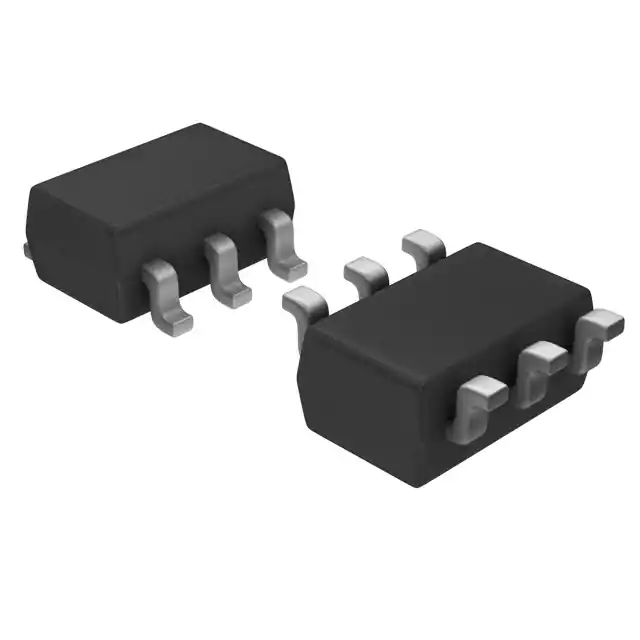
STMicroelectronics STTS751-0WB3F
- Part No.:
- STTS751-0WB3F
- Manufacturer:
- STMicroelectronics
- Category:
- Analog and Digital Output
- Package:
- SOT-23-6
- Datasheet:
-
 STTS751-0WB3F.pdf
- Description:
- SENSOR DIGITAL -40C-125C SOT23-6
- Quantity:
- Payment:

- Shipping:

Inventory:4,785
Please send an inquiry. Send us your inquiry, and we will respond immediately.
Product details
Overview
STTS751-0WB3F from STMicroelectronics is a low-voltage SMBus 2.0–compatible digital temperature sensor in UDFN-6L (2 mm × 2 mm) package, operating from 2.25 V to 3.6 V across –40 °C to +125 °C. It delivers programmable resolution (9–12-bit), ±0.5 °C accuracy over full range, and 21 ms typical conversion time at 10-bit mode-used for thermal monitoring in SSDs, servers, and smart batteries.
For engineers reviewing the STTS751-0WB3F datasheet, STTS751-0WB3F pinout, STTS751-0WB3F application, or STTS751-0WB3F equivalent, key selection criteria include SMBus address configurability via Addr/Therm pull-up resistor, EVENT open-drain alert output with ARA support, one-shot conversion mode for ultra-low-power operation, and guaranteed accuracy over industrial temperature extremes.
Technical Context
The STTS751-0WB3F implements a sigma-delta ADC with digital post-processing to generate two's complement temperature values stored in 16-bit registers (split across high/low bytes). Its SMBus interface supports full protocol compliance-including WRITE/READ/SEND/RECEIVE byte commands, timeout (25–35 ms), and Alert Response Address (ARA) polling-enabling multi-device bus arbitration without address conflict.
Configuration is managed through dedicated registers: Configuration (0x03) controls resolution and standby mode; Conversion Rate (0x04) sets sample rates from 0.0625 to 32 Hz in powers-of-two steps; Status (0x01) reports conversion completion and alarm flags; and Therm limit/hysteresis (0x20/0x21) define hardware-triggered fan control thresholds independent of host polling.
Key Specifications
| Parameter | Value and Actual Design Meaning |
|---|---|
| Supply Voltage | 2.25 V to 3.6 V - enables direct integration into 2.5 V/3.3 V logic domains without level-shifting. |
| Temperature Range | –40 °C to +125 °C - validated for use in server CPU zones, SSD controller die proximity, and telecom power stages. |
| Accuracy | ±0.5 °C (typ) - specified over full range, eliminating need for system-level calibration in industrial applications. |
| Resolution & LSB | 9-bit (0.5 °C/LSB) to 12-bit (0.0625 °C/LSB); default 10-bit (0.25 °C/LSB) - trade-off between precision and conversion latency. |
| Conversion Time | 21 ms (typ) at 10-bit - allows rapid thermal response for dynamic throttling decisions in real-time systems. |
| Standby Current | 3 μA (typ) - supports battery-backed thermal logging in portable electronics with multi-week runtime. |
| SMBus Speed | Up to 400 kHz - compatible with standard I²C/SMBus controllers without clock stretching or custom timing. |
Pinout & Package
UDFN-6L (2 mm × 2 mm × 0.5 mm) package with wettable flanks, RoHS/green compliant, designed for automated optical inspection (AOI) and high-density PCB layouts.
| Pin/Terminal | Circuit Role | Design Meaning |
|---|---|---|
| 1 SCL | SMBus clock input | Asynchronous edge-triggered input; no internal pull-up; requires external 2.2–10 kΩ pull-up to VDD. |
| 2 EVENT | Open-drain alert output | Asserts low on high/low limit breach; supports SMBus ARA; must be pulled up externally (≥2.2 kΩ). |
| 3 VDD | Power supply | 2.25–3.6 V input; decoupling capacitor (100 nF) required within 1 mm of pin per layout guidelines. |
| 4 Addr/Therm | Configurable address select / thermal status output | Pull-up resistor selects one of four SMBus addresses; when driven low by host, enables thermally triggered fan/CPU throttle. |
| 5 GND | Ground reference | Dedicated analog/digital ground; must connect to lowest-noise PCB plane with short, low-inductance trace. |
| 6 SDA | SMBus data I/O | Open-drain bidirectional line; shares bus with other SMBus devices; requires external pull-up resistor. |
Key Features
| Feature | Design Value |
|---|---|
| Four SMBus slave addresses | Selected via single pull-up resistor on Addr/Therm pin - eliminates address jumpers and simplifies multi-sensor board design. |
| One-shot conversion mode | Initiated by write to 0x0F register - reduces average current to <1 μA in intermittent monitoring applications. |
| Hardware thermal event signaling | EVENT pin asserts independently of host polling - enables immediate system response without software overhead. |
| Therm output functionality | Addr/Therm pin doubles as open-drain thermal control signal - drives fan MOSFETs or throttles CPU clocks directly. |
| SMBus timeout protection | 25–35 ms automatic bus recovery - prevents lockup during SCL/SDA contention or host reset scenarios. |
Applications
| Solid State Drives (SSD) | Notebook Computers |
|---|---|
Use Scenario: Real-time NAND flash die temperature monitoring during sustained write operations. IC Role / Device Role / Timing Role: Local temperature sensor with EVENT-driven interrupt to trigger DRAM refresh rate adjustment and NAND throttling. Use Value: Prevents thermal runaway and extends flash endurance by enforcing JEDEC JESD22-A104 temperature limits. | Use Scenario: CPU/GPU hotspot tracking adjacent to heat pipes and thermal pads. IC Role / Device Role / Timing Role: SMBus-addressable local sensor feeding thermal management firmware via ACPI _TMP method. Use Value: Enables precise fan speed ramping and processor DVFS without adding microcontroller overhead. |
| Smart Batteries | Servers |
Use Scenario: Cell pack temperature sensing in Li-ion battery packs with SMBus fuel gauge ICs. IC Role / Device Role / Timing Role: Secondary thermal monitor interfacing directly with bq20zxx/bq20z45 fuel gauges via shared SMBus. Use Value: Provides redundant overtemperature protection independent of fuel gauge ADC path. | Use Scenario: DIMM slot and VRM phase temperature monitoring in dual-socket x86 servers. IC Role / Device Role / Timing Role: Distributed thermal node reporting to BMC via IPMI SEL and SMBus-based sensor inventory. Use Value: Supports ASHRAE A3/A4 environmental compliance and predictive fan failure analytics. |
Equivalent & Alternatives
The following parts are listed as comparable options for similar digital temperature sensor applications.
| Alternative Part | Technical Difference | Application Difference | Selection Advice |
|---|---|---|---|
| LM75BIMM/NOPB | Fixed 12-bit resolution (0.0625 °C/LSB); no one-shot mode; ±2 °C accuracy over –25 °C to +100 °C. | Lacks EVENT output and ARA support; limited to ambient-only monitoring in non-critical consumer gear. | Select only if SMBus address flexibility and industrial-grade accuracy are not required. |
| MAX31875R2+ | Higher accuracy (±0.25 °C typ); integrated 10-bit ADC; supports I²C only (no SMBus timeout/ARA). | No hardware alert output; relies on polled reads - unsuitable for real-time thermal shutdown paths. | Prefer where precision outweighs interrupt latency and SMBus ecosystem compatibility. |
Compared with LM75BIMM/NOPB and MAX31875R2+, the STTS751-0WB3F uniquely combines SMBus ARA responsiveness, user-selectable slave addressing, and guaranteed ±0.5 °C accuracy across –40 °C to +125 °C-making it the only choice for fault-tolerant, multi-node thermal management in enterprise storage and computing platforms.
Availability
STTS751-0WB3F is available at Aetrix Electronics and suitable for solid state drives, notebook computers, and smart batteries requiring stable component supply, long-term lifecycle support, and RoHS/green compliance.
Supply support for STTS751-0WB3F includes scheduled delivery planning, volume procurement assistance, BOM continuity management, traceable sourcing, and lifecycle availability coordination for OEM customers, industrial embedded developers, connected-device designers, and electronics production programs.
Manufacturer
STMicroelectronics is a global semiconductor leader headquartered in Geneva, Switzerland, designing and manufacturing analog, MCU, power, and sensor solutions for industrial, automotive, and consumer markets.
The STTS751 belongs to ST's precision analog temperature sensor product line, engineered specifically for SMBus-based thermal monitoring in space-constrained, power-sensitive computing and storage systems.
FAQ
What SMBus addresses does STTS751-0WB3F support?
The STTS751-0WB3F supports four SMBus slave addresses (1001000b, 1001001b, 0111000b, 0111001b) determined by the pull-up resistor value on the Addr/Therm pin. It belongs to the STTS751-0 family, distinct from STTS751-1 which uses 1001010b–0111011b. No external address pins or configuration registers are needed-address selection is purely resistor-based.
How does the EVENT pin function in alarm conditions?
The EVENT pin is an open-drain output that pulls low when the measured temperature exceeds the programmed high limit or falls below the low limit. It remains asserted until the condition clears and the status register is read. When used with SMBus ARA, the host polls address 0x0C (0001100b) and receives the STTS751-0WB3F's slave address in response-enabling automatic identification of which sensor triggered the alert on a shared bus.
Can STTS751-0WB3F operate in one-shot mode without continuous polling?
Yes. In standby mode, writing any value to the one-shot register (0x0F) initiates a single temperature conversion. Upon completion, the result updates the temperature register, triggers EVENT if limits are breached, and the device automatically re-enters standby-drawing only 3 μA. This eliminates background polling and reduces host firmware complexity for infrequent thermal checks.
What is the role of the Addr/Therm pin beyond address selection?
When configured as Therm output (via register bit), the Addr/Therm pin becomes an open-drain driver capable of sinking ≥4 mA. It can directly control external N-channel MOSFETs for fan activation or CPU clock throttling upon overtemperature detection-bypassing the host processor entirely. This provides hardware-fail-safe thermal response independent of software execution.
STTS751-0WB3F Specifications
- Product attributes
- Attribute value
- Manufacturer:
- STMicroelectronics
- Series:
- -
- Package/Case:
- SOT-23-6
- Packaging:
- Tape & Reel (TR)
- Product Status:
- Obsolete
- Sensor Type:
- Digital, Local
- Sensing Temperature - Local:
- -40°C ~ 125°C
- Sensing Temperature - Remote:
- -
- Output Type:
- SMBus
- Voltage - Supply:
- 2.25V ~ 3.6V
- Resolution:
- 11 b
- Features:
- One-Shot, Output Switch, Programmable Limit, Programmable Resolution, Standby Mode
- Accuracy - Highest (Lowest):
- ±1.5°C (±2.5°C)
- Test Condition:
- 0°C ~ 85°C (-40°C ~ 125°C)
- Operating Temperature:
- -40°C ~ 125°C
- Mounting Type:
- Surface Mount
- Grade:
- -
- Qualification:
- -
- Supplier Device Package:
- SOT-23-6
STTS751-0WB3F FAQ
1.How can I place an order for STTS751-0WB3F through Aetrix?
Please submit a Request for Quotation (RFQ) for STTS751-0WB3F on Aetrix. Our sales agent will provide a competitive quotation and guide you through the order confirmation once you accept the terms.
2.Are the price and stock information for STTS751-0WB3F reliable?
The price and inventory of STTS751-0WB3F are updated periodically and may fluctuate due to market conditions. Stock and pricing data are typically refreshed every 24 hours. Quotation validity for STTS751-0WB3F is usually 5 days.
3.What payment methods are accepted for STTS751-0WB3F?
We accept Wire Transfer, PayPal, Credit Card, Western Union, MoneyGram, and Escrow for STTS751-0WB3F transactions.
Note: Certain payment methods may incur a processing fee.
4.How is shipping managed for STTS751-0WB3F?
STTS751-0WB3F orders can be shipped via leading logistics carriers, including DHL, UPS, FedEx, TNT, or Registered Mail.
Once your STTS751-0WB3F order is processed, you will receive an email with the shipment details and tracking number.
Note: Tracking information may take up to 24 hours to appear. Express delivery typically takes 3–5 business days.
5.How can I obtain technical support or documentation for STTS751-0WB3F?
For technical support, including STTS751-0WB3F datasheets, pinout diagrams, or application guidance, please contact our engineering support team. They can provide detailed documentation and assistance for your STTS751-0WB3F requirements.
6.How does Aetrix verify that STTS751-0WB3F is sourced from the original manufacturer or authorized distributors?
All STTS751-0WB3F products on Aetrix are procured from qualified distributors and authorized channels. Our dedicated quality assurance team conducts strict verification, including traceability checks and, if necessary, third-party testing. This ensures that STTS751-0WB3F meets industry standards.
7.What is the process for return or replacement of STTS751-0WB3F?
All STTS751-0WB3F units undergo pre-shipment inspection (PSI). If there is an issue with STTS751-0WB3F, returns or replacements are accepted under the following conditions:
1.Quantity discrepancies, incorrect items, or visible external defects (such as breakage or corrosion), acknowledged by Aetrix.
2.The issue is reported within 90 days of delivery.
3.The STTS751-0WB3F part is unused and in its original packaging.
Return procedure for STTS751-0WB3F:
1.Submit a request within 90 days.
2.Obtain a Return Material Authorization (RMA) from Aetrix.
STTS751-0WB3F Tags
-
MCP9700T-E/TT
Microchip Technology
-
MCP9700T-E/LT
Microchip Technology
-
MCP9701T-E/TT
Microchip Technology
-
MCP9701T-E/LT
Microchip Technology
-
TMP235A4DBZR
Texas Instruments
-
MCP9700AT-E/TT
Microchip Technology
-
MCP9700AT-E/LT
Microchip Technology
-
MCP9701AT-E/LT
Microchip Technology
-
MCP9701AT-E/TT
Microchip Technology
,TO-226_straightlead.jpg)
-
LM335Z
STMicroelectronics
-
TMP1075NDRLR
Texas Instruments
-
TMP1075DGKR
Texas Instruments
Tech Hub

A practical engineering guide to 3.3V and 5V logic compatibility, input thresholds, resistor dividers, translator ICs, MOSFET level shifting, I2C pull-ups, timing limits and power-sequencing risks.

The 74HC595 uses push-pull logic outputs, while the TPIC6B595 uses 50 V open-drain DMOS sinks for higher-power loads. This guide compares timing, current limits, 3.3 V interfacing, load wiring, thermal…

The 74HC595 converts serial data into eight stable parallel outputs. This guide covers pin functions, shift and storage timing, OE and MR behavior, drive-current limits, cascading, voltage compatibilit…

A technical comparison of level-sensitive latches and edge-triggered flip-flops, covering timing windows, setup and hold limits, master–slave operation, time borrowing, race-through, HDL inference and…

A D latch stores one bit while Enable controls when data can pass. This reference covers gate-level operation, truth tables, transparency, setup and hold timing, LE versus OE, common ICs and practical …

An SR latch stores one bit through cross-coupled feedback. This engineering reference covers NOR and NAND implementations, truth tables, forbidden-state recovery, gated operation, switch debouncing, fa…

Latch circuits retain one bit through feedback. This technical reference covers SR and D latches, truth tables, transparency, timing limits, latch-versus-flip-flop behavior, applications and common log…

An engineering guide to LED driver operation, constant-current and constant-voltage outputs, linear and switching topologies, dimming, IC selection, calculations, replacement compatibility, and fault c…

Operational amplifier guide covering op amp basics, feedback, ideal vs real op amps, common configurations, buffer circuits, offset, bias current, gain-bandwidth, slew rate, rail-to-rail limits and sel…

Jumper cables guide covering safe connection order, red and black clamp placement, final ground connection, cable gauge, length, clamp quality, copper vs CCA cables, jump starter comparison and battery…


